A helmet penetration test is a laboratory check in which a pointed object is dropped onto a helmet shell to see whether it can pierce through to the head underneath. The test is designed to find out whether the outer shell is tough enough to stop sharp objects, such as stones, branches, or broken debris, from reaching the wearer. If the pointed object breaks through the shell and touches the headform inside, the helmet fails the test.
Most riders think of helmet testing as a single hard knock, but a penetration test looks at a different kind of danger. A shell can be strong against a broad, flat blow and still be weak against a sharp point, because all of the force is focused on a tiny area. That is why test labs check penetration separately from the more familiar impact test, and why a helmet needs to pass both kinds of check before it can be sold as a safety helmet.
What happens during a helmet penetration test?
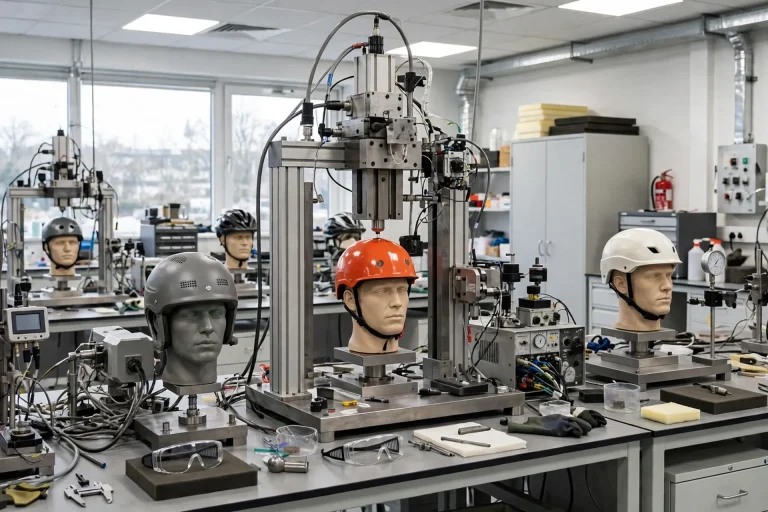
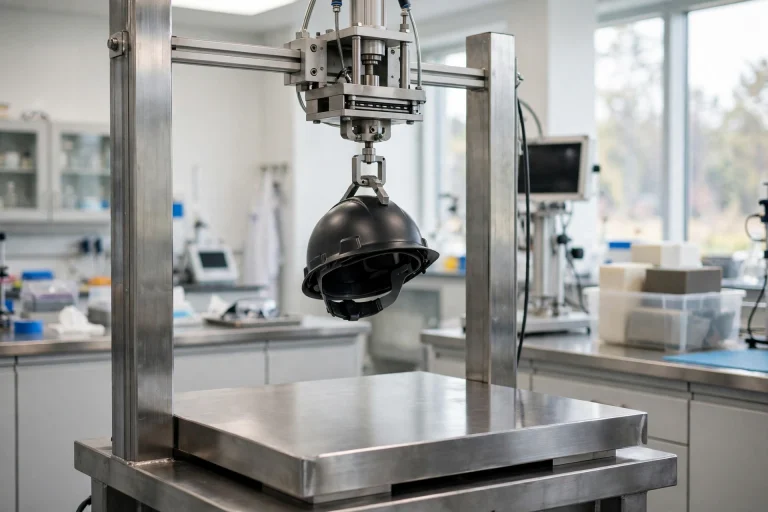
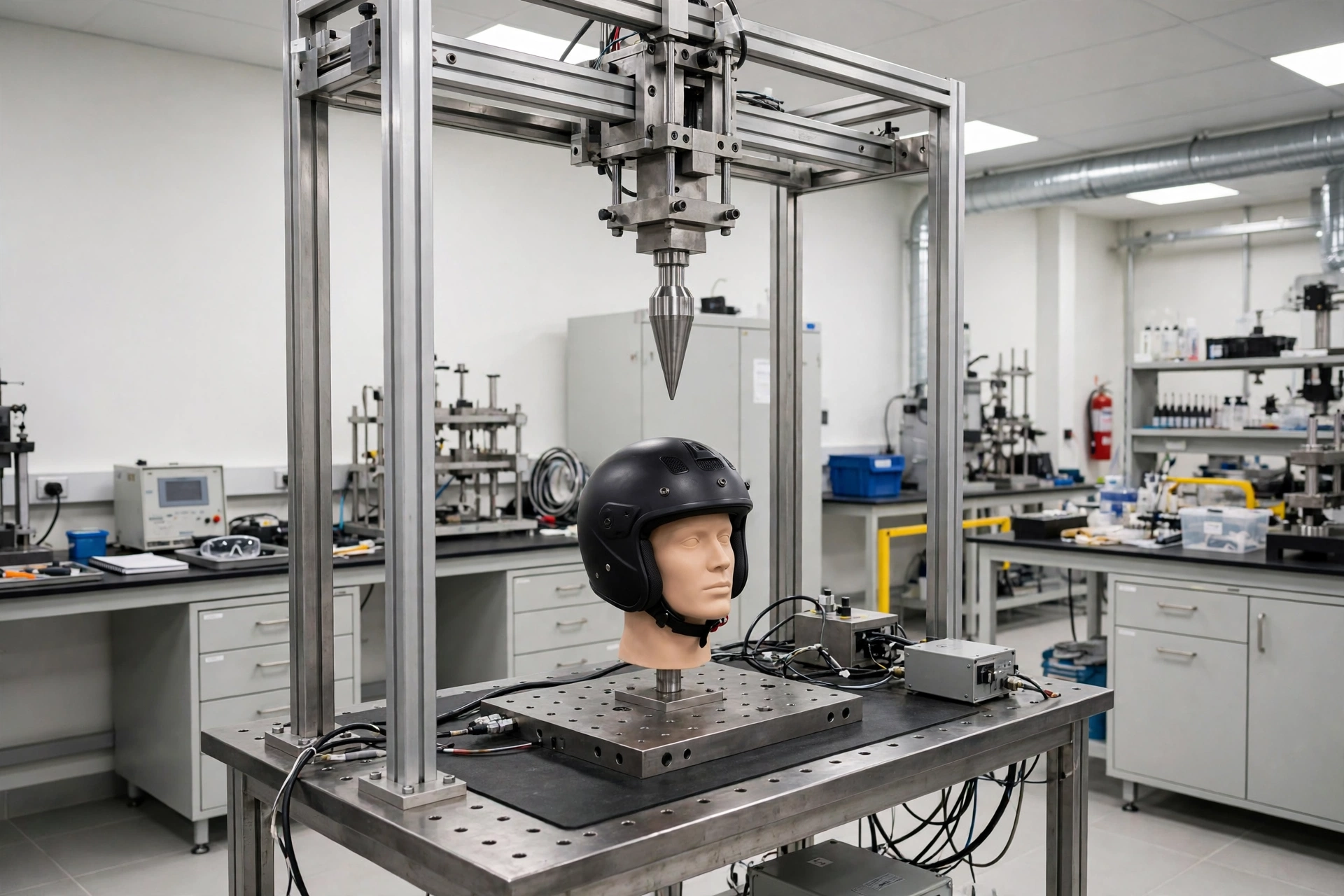
In general terms, the test starts with a helmet fitted onto a headform, which is a solid model of a human head made to a standard size and shape. The helmet is strapped on just as a rider would wear it, so the shell and the liner sit in their normal positions. A pointed striker, shaped a little like a sharp cone, is then released from above and allowed to fall onto the top or the side of the helmet under its own weight.
Why does the penetration test matter for riders?
On the road or the trail, sharp objects are a real hazard. A stone thrown up by a passing vehicle, a broken branch on a forest path, or a piece of metal on a building site can all strike a helmet with a sharp edge or point. A broad impact spreads its force across the shell, but a sharp object concentrates it, and that is exactly the situation the penetration test is built to copy.
How is a penetration test different from an impact test?
An impact test and a penetration test look like similar lab procedures, but they measure different things. In an impact test, a helmet is dropped onto a flat or rounded surface, and the lab measures how much of the blow reaches the head inside. The goal is to see how well the liner absorbs and spreads the energy of a broad knock, such as a fall onto the road.
A penetration test, on the other hand, is not mainly about absorbing energy. It is about whether the shell can be pierced at all. The object used is pointed rather than flat, and the question is a simple one: does it get through, or does it stop? A helmet can pass an impact test and still fail a penetration test, which is why both checks exist side by side in most helmet standards.
The two tests also use different equipment. An impact test needs sensors inside the headform to record the shock of the blow, while a penetration test can often be judged by whether the striker touches the headform. Together, they give a fuller picture of how a helmet behaves, because real crashes mix broad blows and sharp contacts, and a good helmet has to cope with both.
What does the lab look for when the test is over?
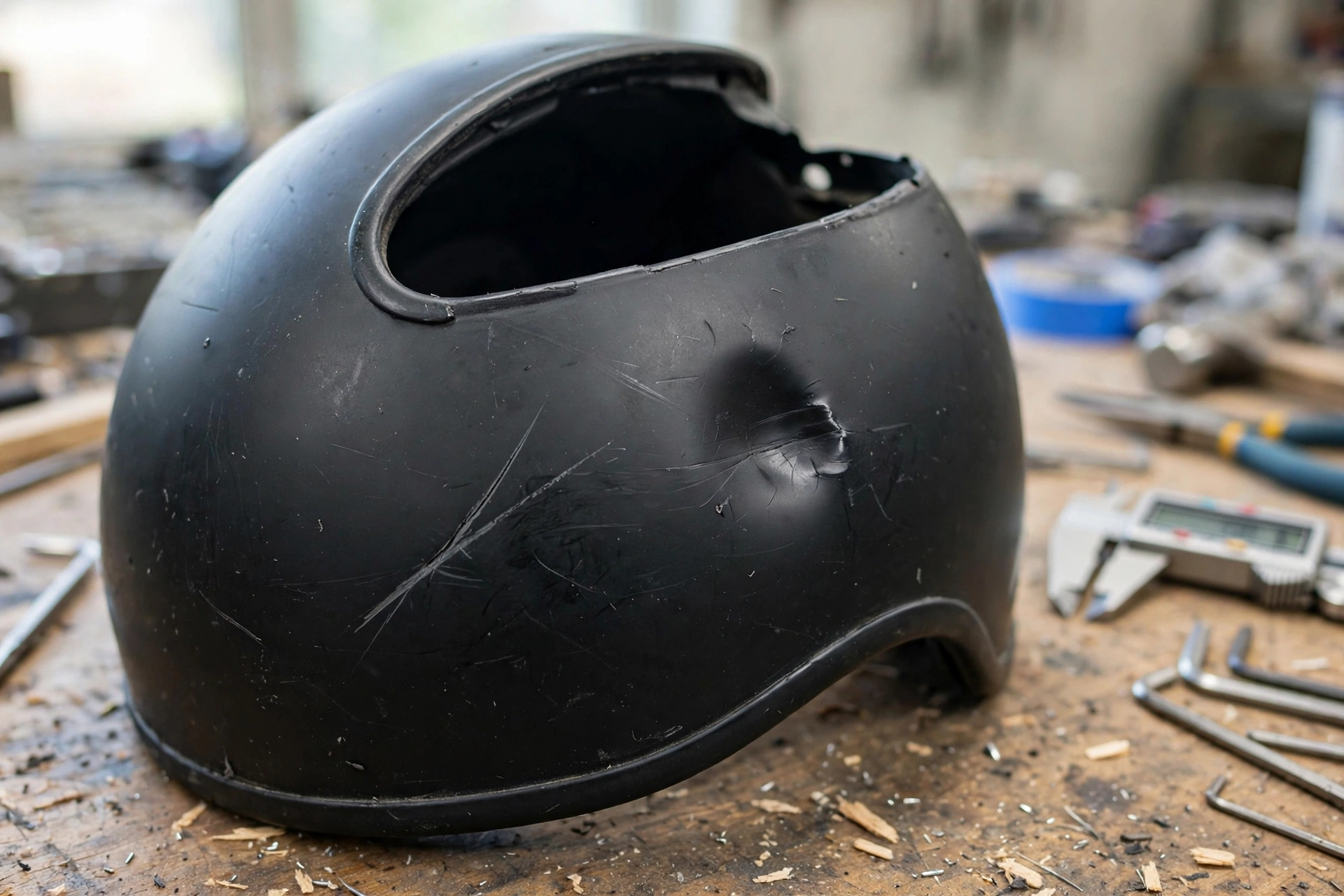
After the striker has fallen, the first thing the lab checks is whether it made contact with the headform. That is the pass or fail point, and it is recorded carefully for each test. If there is any sign that the point reached the headform, the helmet fails, even if the damage looks small from the outside.
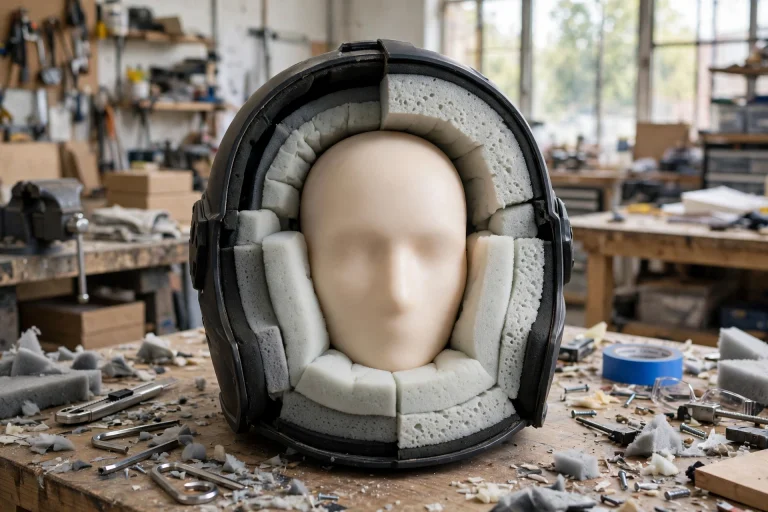
The lab also inspects the shell itself. A crack, a deep dent, or a split around the point of contact tells the testers how the shell behaved, and whether it bent, shattered, or held firm. A shell that cracks widely may still have stopped the point, but the pattern of damage helps the maker understand where the design needs to be stronger.
Do all helmets go through a penetration test?
Not every helmet on the market is tested in the same way, because different types of helmet follow different standards. Motorcycle helmets, for example, are usually tested against a standard that includes a penetration check, while some lighter helmets for other activities may be tested against a standard that focuses on impact alone. The rules depend on the activity the helmet is made for and the country where it is sold.
That does not mean a helmet without a penetration test is unsafe, but it does mean the buyer should check what the helmet was actually tested for. A certification label on the helmet or its box will usually name the standard it meets, and that standard will say which tests were carried out. If penetration resistance matters for the way you ride, look for a standard that includes it.
Manufacturers sometimes go further than the standard requires and test their helmets against extra checks of their own. This is common among larger brands, which run their own lab programmes alongside the official certification tests. A helmet that has been through extra testing is not automatically better, but it shows that the maker has taken the testing seriously.
What should you check before you buy a helmet?
Start by looking for a certification label that matches the activity you will use the helmet for. The label is usually found on the inside of the helmet or on the box, and it names the standard the helmet meets. If the helmet has no label at all, or the label looks vague, it is worth choosing a different helmet, because there is no independent proof that it was tested.
Finally, remember that the shell is only part of the protection. The liner, the fit, and the retention system all matter too, and a helmet with a modern liner system, such as a MIPS liner, can add an extra layer of protection against the twisting forces in a crash. A good helmet is a package, and the penetration test is one important check among several that prove the package works.
Can a helmet pass an impact test but fail a penetration test?
Yes, in general terms it can, because the two tests measure different things. An impact test checks how well the liner absorbs a broad blow, while a penetration test checks whether a sharp point can pierce the shell, so a helmet can do well on one and poorly on the other.
Does a penetration test damage the helmet?
Yes, a helmet used in a penetration test is damaged by the test and cannot be sold or worn afterwards. Test helmets are taken from the production line or from a batch set aside for testing, and they are destroyed in the process of proving the design is safe.
Should I worry about penetration if I only ride on the road?
Sharp objects are a risk on the road too, from stones thrown up by traffic to debris on the surface, so a shell that resists piercing is useful for road riders as well as off-road riders. Look for a helmet certified to a standard that includes a penetration check.

Olivia
Writer at Helmet Today, covering helmet reviews, fit and riding safety.