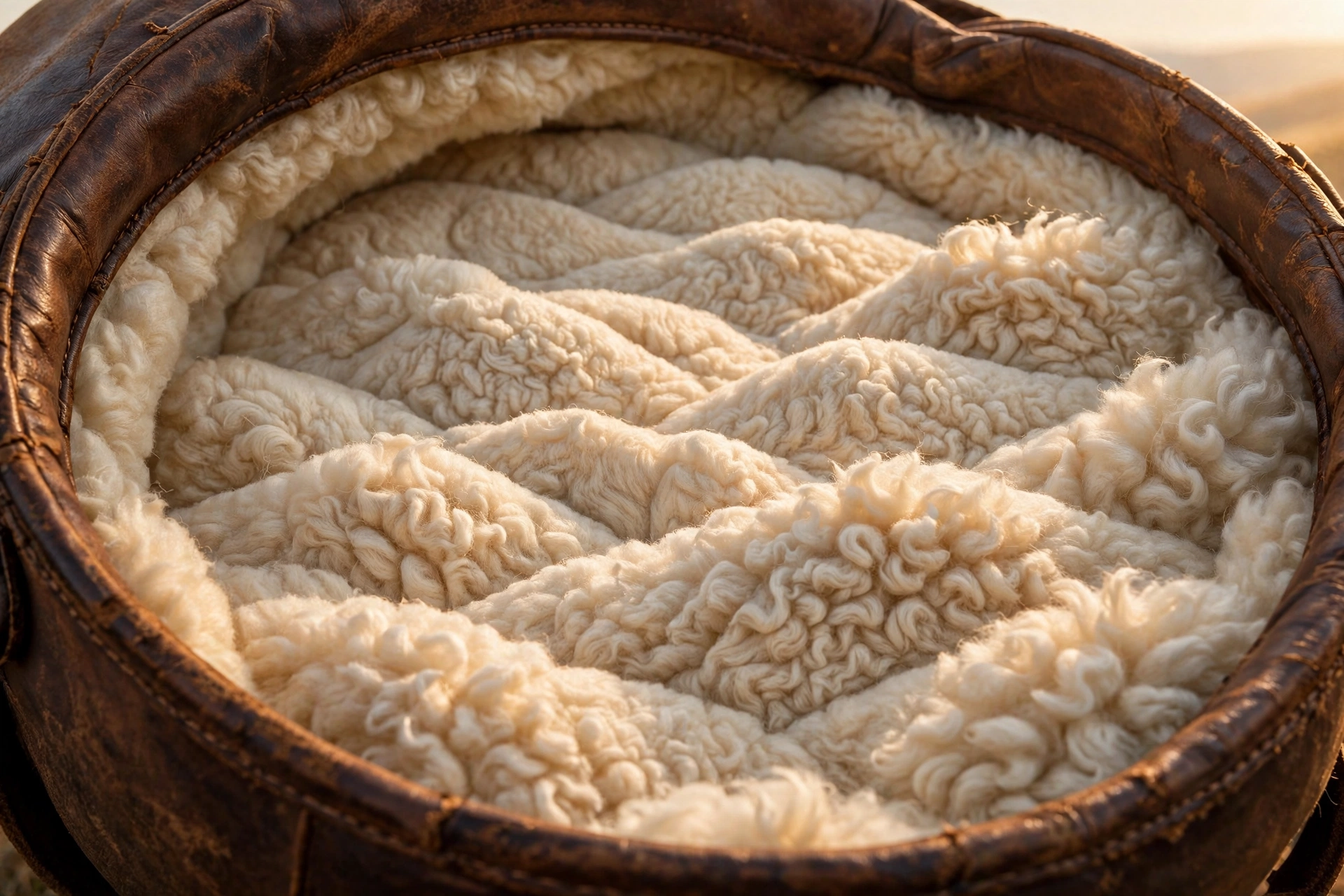
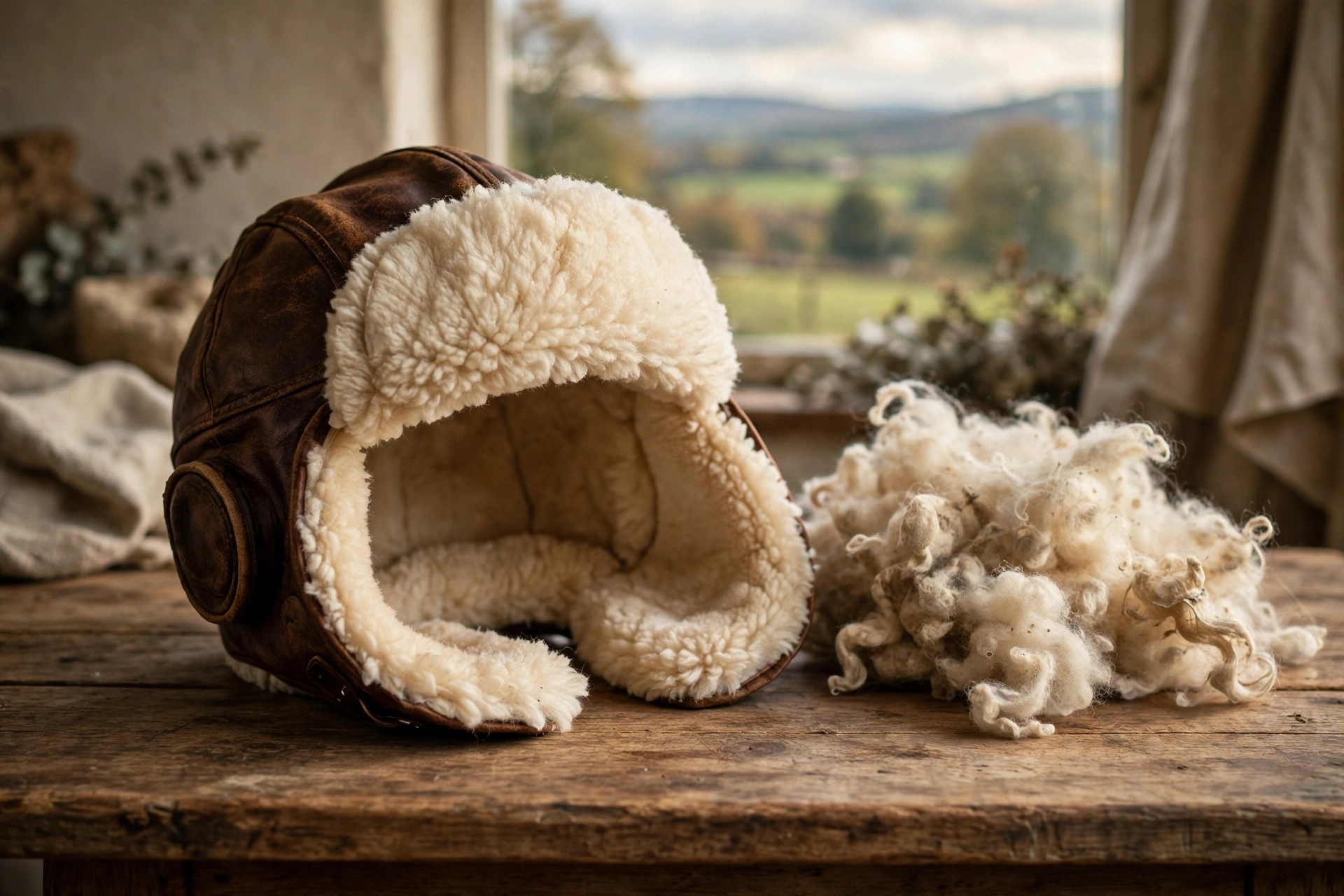
A sheepskin helmet liner is a soft inner lining made from the skin of a sheep with its wool still attached, used inside a helmet to add warmth, comfort, and a snug fit. The wool side sits against the head, while the skin side is fixed to the helmet, and the lining can often be removed for cleaning. Sheepskin liners are found mainly in cold-weather and vintage-style helmets, where warmth matters as much as protection.
Sheepskin is one of the oldest lining materials in use, and it was common in flying helmets and motorcycle helmets long before modern synthetic foams were invented. It is still used today because no synthetic material quite matches the feel of real wool against the skin, and because wool has natural properties that synthetics struggle to copy. If you have ever worn a sheepskin-lined hat on a cold day, you will know how warm and comfortable it can feel.
What is a sheepskin liner made from?
A sheepskin liner is made from a sheepskin, which is the skin of a sheep with the fleece left on. The skin is tanned, which is a process that preserves it and keeps it soft and flexible, and it is then cut to fit the inside of the helmet. The wool is left long and soft, and it forms a thick, cushioned layer between the head and the hard shell of the helmet.
The tanning process matters, because a badly tanned skin can become stiff, smelly, or prone to cracking. A good sheepskin liner is tanned with care, so that the skin stays supple and the wool stays clean and springy. The liner is usually stitched to a backing or fixed to the helmet with press studs or Velcro, so that it can be taken out for cleaning or replaced when it wears out.
Not all sheepskin is the same. The best liners use skins with dense, even wool, which gives the most warmth and the most comfortable fit. Cheaper liners may use thinner skins with patchy wool, which will not feel as warm or as soft. A good liner feels thick and even all round, with no bald patches or thin spots where the skin shows through.
Why do riders choose a sheepskin liner?
The main reason riders choose a sheepskin liner is warmth. Wool is a natural insulator, and it traps warm air close to the head, which keeps the rider warm in cold weather. A sheepskin liner can make a real difference on a winter ride, when a plain foam liner would let the cold through and leave the rider chilled. For riders in cold climates, that warmth is the main attraction.
Comfort is the second reason. Wool is soft against the skin, and it moulds to the shape of the head over time, giving a snug, personal fit that a stiff foam liner cannot match. The wool also cushions the head against the hard shell, so the helmet feels softer and more forgiving, especially on a long ride where a hard liner can become uncomfortable.
Sheepskin also handles moisture well. Wool can absorb a surprising amount of sweat without feeling wet, and it lets moisture escape slowly, which helps to keep the head dry and comfortable. This is useful in cold weather, when sweat can make a rider feel cold if it stays trapped against the skin. A sheepskin liner helps to manage that moisture naturally.
What are the downsides of a sheepskin liner?
The main downside is care. A sheepskin liner needs more attention than a synthetic liner, because wool and skin can be damaged by water, heat, and harsh cleaning products. A liner that is washed wrongly can shrink, stiffen, or lose its wool, and a liner that is left damp can develop a smell or grow mould. Riders who choose sheepskin need to be willing to look after it properly.
How do you clean a sheepskin helmet liner?
Cleaning a sheepskin liner starts with taking it out of the helmet, if it is removable. Shake it gently to remove loose dust and hair, and brush the wool lightly with a soft brush to lift the fibres and remove dirt. This simple brushing is often enough to freshen the liner, and it should be done regularly, rather than waiting until the liner is dirty.
For a deeper clean, follow the maker’s instructions, because different liners need different care. In general terms, a sheepskin liner should be washed by hand in cool water with a mild soap made for wool or leather, and it should never be put in a washing machine or tumble dryer. Hot water and harsh detergents can shrink the skin and mat the wool, and the damage is usually permanent.
After washing, let the liner dry naturally, away from direct heat and sunlight. Do not use a hairdryer or a radiator, because heat can stiffen the skin and make the wool brittle. While the liner is still slightly damp, gently stretch it back into shape, and brush the wool once it is dry to restore its softness. A well-cared-for liner can last for many years.
When is a sheepskin liner a good choice?
A sheepskin liner is a good choice for cold-weather riding, where warmth is the priority. It suits riders in winter, riders in cold climates, and riders who use open-face helmets, where the wind chill is greater and the head needs more insulation. It is also a good choice for vintage-style helmets, where the liner is part of the classic look and feel of the helmet.
It is less suitable for warm weather, where the extra warmth becomes a drawback, and for high-speed riding, where a modern foam liner with a MIPS system may offer better protection against the twisting forces of a crash. A sheepskin liner is mainly about comfort and warmth, while a modern liner is mainly about impact protection, and the rider has to decide which matters more for the way they ride.
What are the alternatives to sheepskin?
The most common alternative is a synthetic fleece liner, which copies the warmth and softness of wool without using animal products. Modern fleece is light, warm, and easy to wash, and it dries quickly, which makes it practical for riders who want warmth without the care that sheepskin needs. It does not feel quite the same as real wool, but it is close, and it is a good choice for riders who are allergic to wool.
Can a sheepskin liner be washed in a machine?
No, in general terms a sheepskin liner should never be machine washed or tumble dried. Wash it by hand in cool water with a mild soap made for wool or leather, and let it dry naturally away from heat, or the skin may shrink and the wool may mat.
Does a sheepskin liner make a helmet safer?
A sheepskin liner adds comfort and warmth, but it is not a substitute for the impact-absorbing foam liner that protects the head in a crash. Most helmets with a sheepskin liner still have a foam liner underneath, and it is the foam that does the protective work.
How long does a sheepskin liner last?
A well-cared-for sheepskin liner can last for many years, but it will wear out faster if it is washed wrongly, left damp, or exposed to strong heat. Brush it regularly, clean it gently, and replace it when the wool becomes thin or the skin becomes stiff or cracked.

Olivia
Writer at Helmet Today, covering helmet reviews, fit and riding safety.