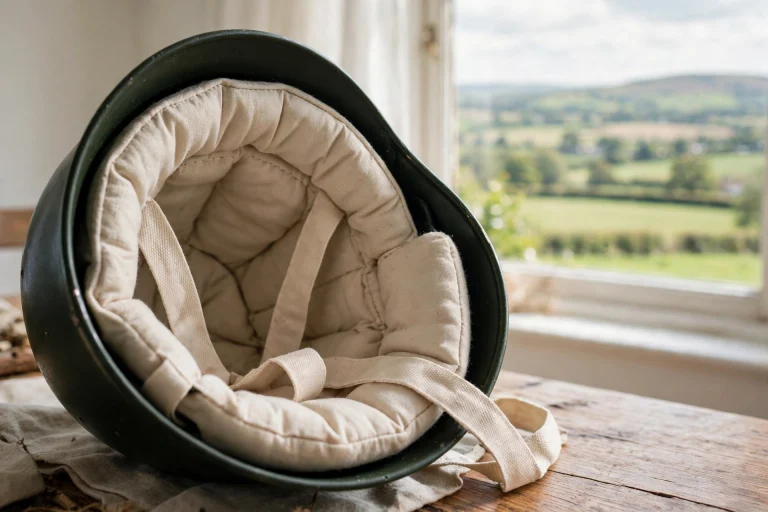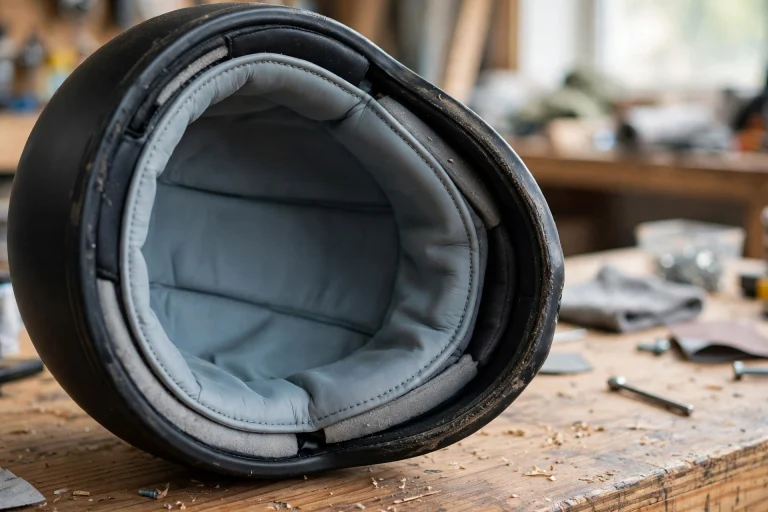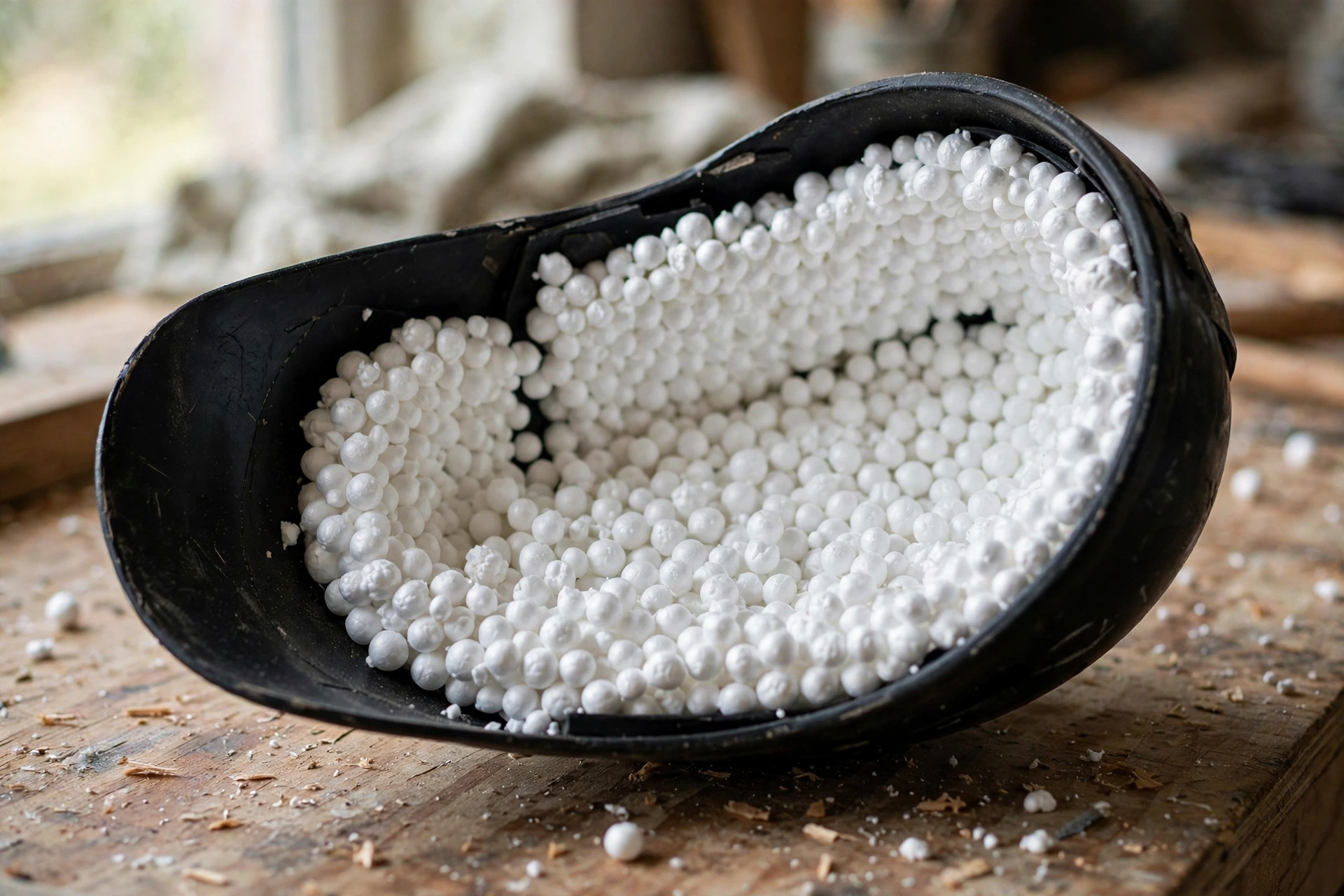
EPO foam in a helmet is expanded polyolefin, a light, springy foam used as a liner material that absorbs the energy of a blow and then bounces back towards its original shape. It is made from tiny beads of plastic that are expanded with heat and fused together, leaving a foam that is full of small air pockets. Those air pockets are what let the foam compress on impact and recover afterwards, which is why it is used inside helmets.
EPO foam is less well known than the more common EPS foam, which is the hard, white foam found in most helmets, but it is becoming more common as makers look for liners that can cope with more than one knock. If you have ever pressed a piece of packaging foam and watched it spring back, you have felt something close to how EPO behaves, and that springiness is its main selling point.
What is EPO foam made from?
EPO stands for expanded polyolefin, and it belongs to the same family of plastics as the material used in many food containers and car parts. The foam starts as small, hard beads of polyolefin plastic, which are placed in a mould and heated with steam. The heat makes the beads expand, and as they grow they press against each other and fuse into a single block of foam.
How does EPO foam protect your head?
When a helmet hits a hard surface, the liner is what slows the head down. Without a liner, the head would stop almost instantly, and that sudden stop is what causes injury. EPO foam slows the stop down by compressing, which stretches the blow out over a longer time and over a larger area, so less of the force reaches the head in a single moment.
The springy nature of EPO means it can absorb a blow and then recover, which is useful in the kind of crash where a helmet is struck more than once. A rider who falls and then slides, for example, may hit the ground several times, and a liner that recovers between blows can keep protecting through each one. In general terms, this is the main advantage EPO has over foams that crush and stay crushed.
EPO is also light, which matters for comfort. A heavy liner makes a helmet tiring to wear, especially on a long ride, and a light liner lets the maker build a helmet that protects well without weighing the rider down. The foam is also resistant to water and to many chemicals, so it does not soak up sweat or break down easily when it gets wet.
Where is EPO foam used in helmets?
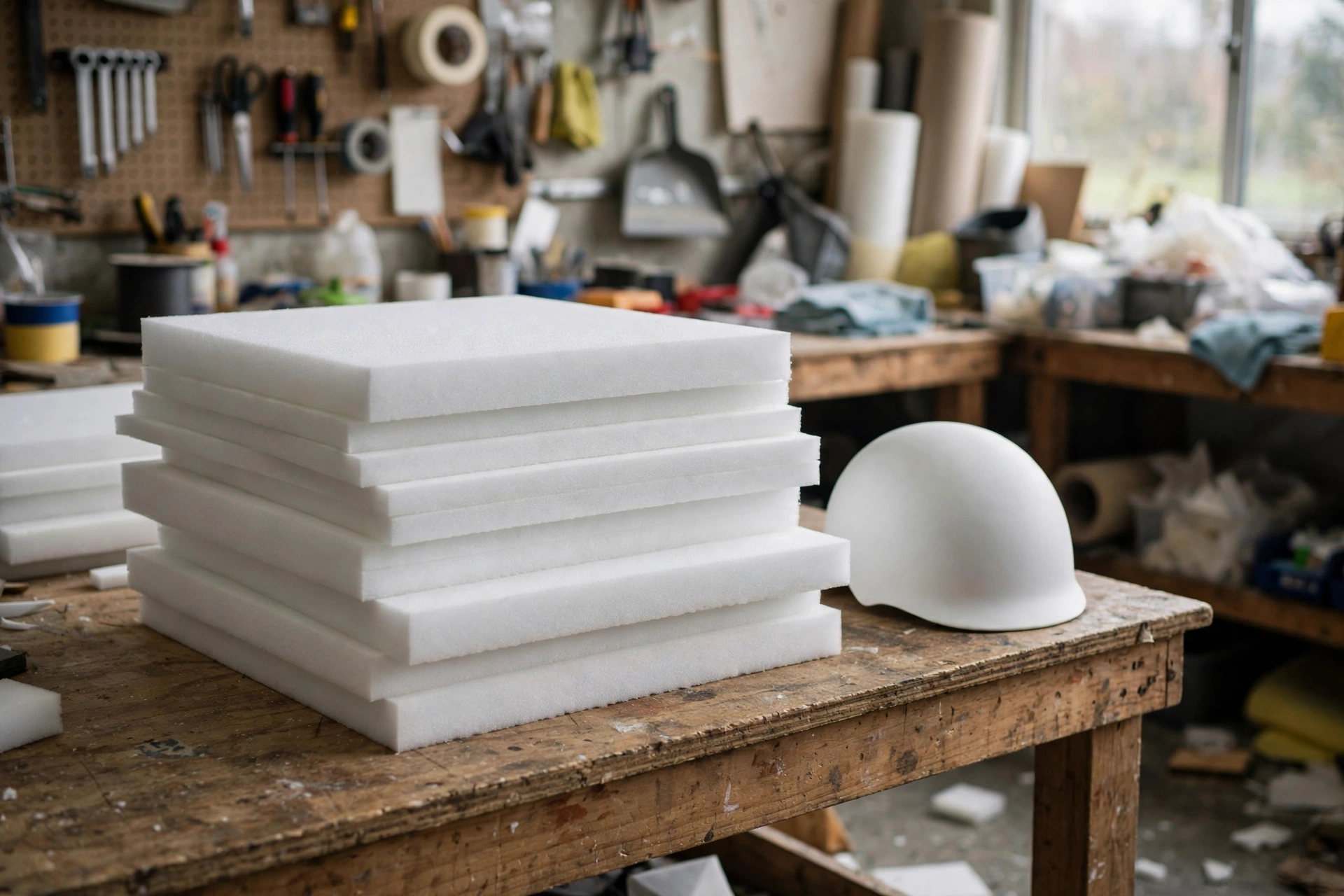
EPO foam is used as a liner in helmets for activities where more than one impact is likely, such as skateboarding, BMX, and some kinds of mountain biking. In these sports, a rider may fall, get up, and fall again, and a liner that can take repeated knocks is more useful than one that is only good for a single hard blow. That is why EPO is often found in helmets marketed as multi-impact.
It is also used in helmets for children, where a light, forgiving liner is a good match for smaller heads and lower-speed falls. A child’s helmet needs to protect against everyday knocks as well as serious crashes, and a foam that recovers after a small bump is well suited to that kind of use. Some makers also use EPO in the comfort padding, where its softness adds to the feel of the helmet.
You will not find EPO in every helmet, because it is not the right choice for every kind of riding. High-speed motorcycle helmets, for example, usually use EPS, because EPS is very good at absorbing a single very hard blow, and that is the main danger at speed. EPO is a specialist material, and it is chosen where its strengths match the risks of the activity.
How is EPO foam different from EPS foam?
The main difference is what happens after an impact. EPS foam crushes permanently when it is struck, and once it has crushed, it cannot protect as well again. That is why a helmet with an EPS liner must be replaced after a crash, even if the damage is not visible from the outside. EPO foam, on the other hand, springs back after a blow, so it can keep protecting through more than one knock.
What are the downsides of EPO foam?
The main downside of EPO is that it is not as good as EPS at absorbing a single very hard blow. For a high-speed crash, where the liner has to soak up a huge amount of energy in a single moment, EPS is usually the better choice, because it crushes and uses up all of its energy-absorbing ability at once. EPO spreads its ability over more than one blow, which is less useful when there is only one very hard blow to deal with.
How do you look after a helmet with an EPO liner?
Looking after an EPO liner is much like looking after any helmet liner. Keep the helmet out of direct sunlight and away from strong heat, because heat can change the shape of the foam over time. Store it in a cool, dry place, and do not leave it in a hot car or next to a radiator, where the foam can soften and lose its shape.
Clean the liner gently, following the maker’s instructions. Most EPO liners can be wiped with a damp cloth and mild soap, and some can be removed and washed. Never use harsh chemicals or solvents on the foam, because they can break down the plastic and weaken the liner. Let the helmet dry naturally, away from direct heat, before you wear it again.
Check the liner from time to time for signs of wear, such as cracks, dents that do not spring back, or areas that feel softer than the rest. If you find damage, or if the helmet has been in a crash, talk to the maker about whether it needs replacing. A helmet with a MIPS liner as well as EPO foam can give you two layers of protection, but both layers need to be in good condition to work properly.
Is EPO foam better than EPS foam?
Neither is better in every case. EPO is better at coping with repeated knocks and springs back after a blow, while EPS is better at absorbing a single very hard blow. The right choice depends on the activity, the speed, and the kind of falls the rider is likely to have.
Can a helmet with EPO foam be used after a crash?
In general terms, a helmet with EPO foam may survive a light knock, but you should still check it carefully and follow the maker’s guidance. If the crash was hard, or if the foam shows damage that does not spring back, replace the helmet rather than risking it.
Does EPO foam make a helmet heavier?
No, EPO foam is light, and a helmet with an EPO liner is often lighter than a similar helmet with an EPS liner of the same thickness. The weight of a helmet depends on the shell, the liner, and the fittings together, so the foam is only one part of the total.

Olivia
Writer at Helmet Today, covering helmet reviews, fit and riding safety.