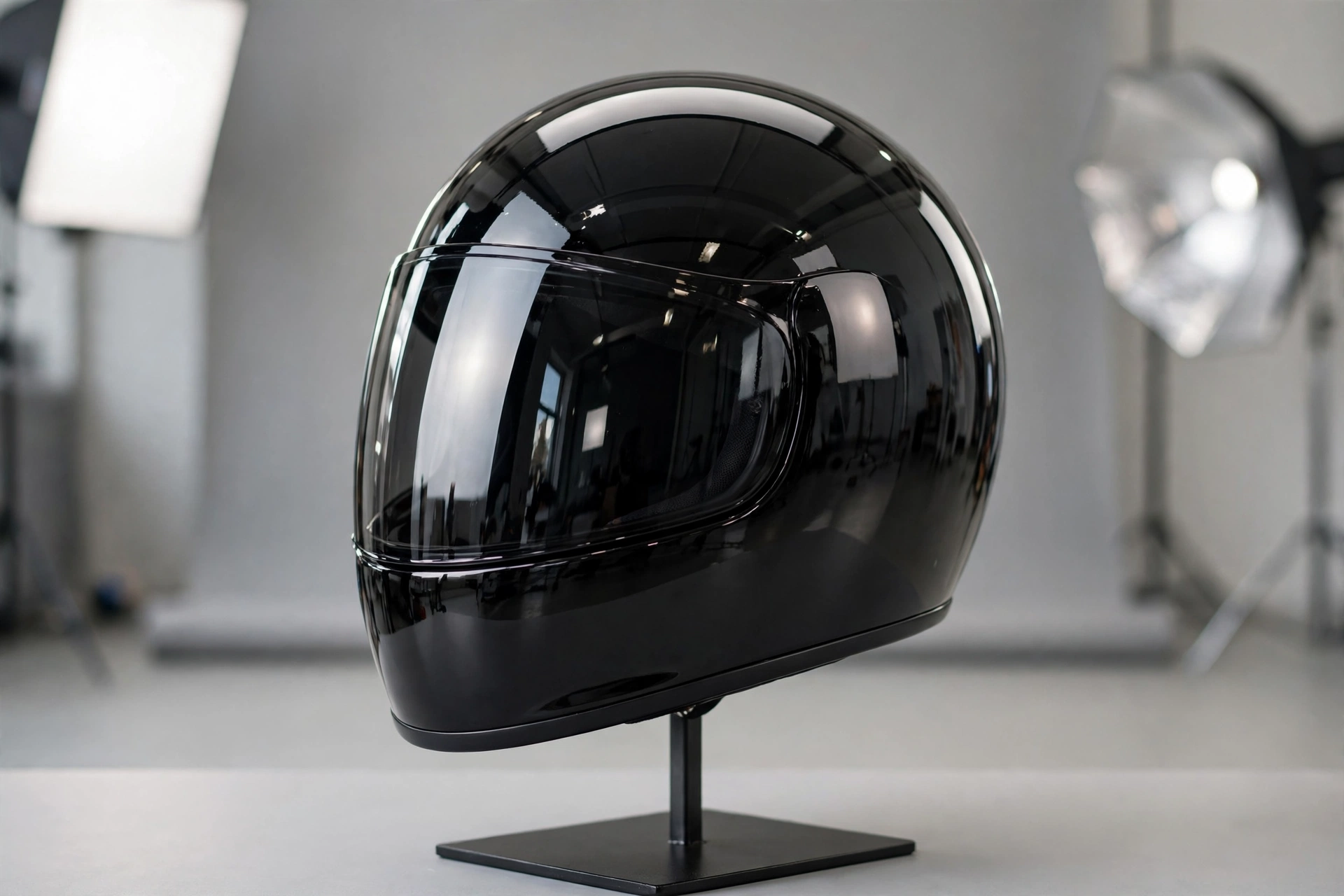
A gloss helmet finish is a smooth, shiny outer coating that gives a helmet a polished, mirror-like look, created by a clear coat or a polished shell surface that reflects light. It is the opposite of a matte finish, which looks flat and dull, and it is chosen mainly for style, although it can also make the shell easier to clean. A gloss finish does not make a helmet safer, but it does change how the helmet looks and how it ages.
Gloss is one of the oldest and most common helmet finishes, and it is found on helmets for almost every activity, from motorcycle helmets to cycling helmets. Riders choose it because it looks smart, because colours appear richer and deeper under a gloss coat, and because it is easy to wipe clean. If you have ever admired a helmet that seemed to shine in the sun, you were almost certainly looking at a gloss finish.
How is a gloss finish made?
A gloss finish is usually created by a clear coat, which is a transparent layer of paint or lacquer applied over the coloured shell. The shell is first painted in the chosen colour, and then the clear coat is sprayed on top in thin, even layers. Each layer is left to dry, and the final layer is polished to a smooth shine, which is what gives the helmet its mirror-like look.
What are the advantages of a gloss finish?
The main advantage of a gloss finish is how it looks. Colours appear brighter and deeper under a clear coat, and the helmet has a polished, premium feel that many riders like. A gloss helmet stands out in a crowd, and it photographs well, which is one reason it is popular for helmets that are meant to be seen, such as motorcycle and fashion cycling helmets.
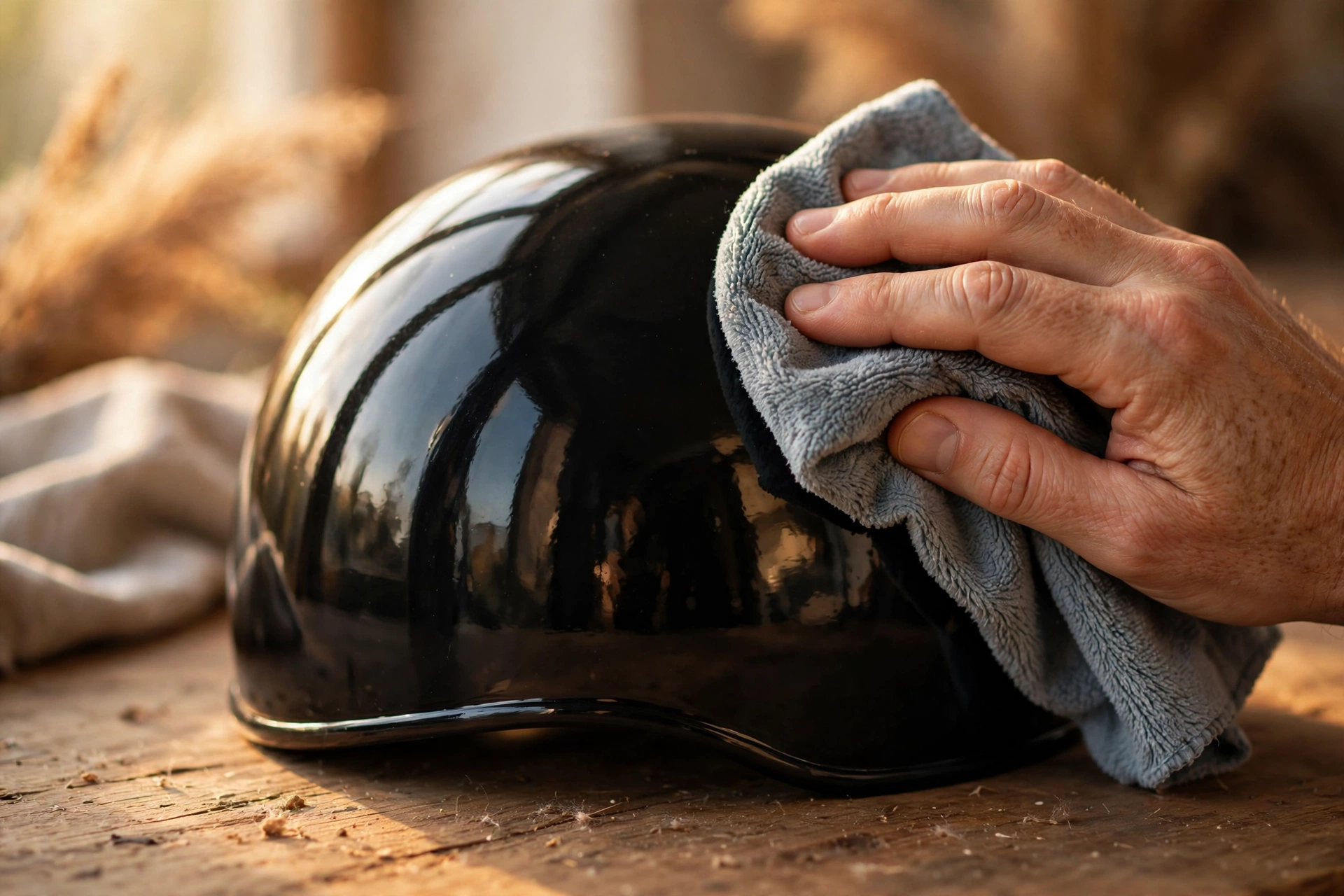
A gloss finish is also easy to clean. Dirt, bugs, and road grime wipe off a smooth, shiny surface more easily than they wipe off a rough matte surface, because there is nowhere for the dirt to grip. A quick wipe with a soft cloth and mild soap is usually enough to bring a gloss helmet back to looking new, and the smooth surface is less likely to hold onto stains.
What are the downsides of a gloss finish?
The main downside of a gloss finish is that it shows every mark. Scratches, scuffs, and fingerprints are all more visible on a shiny surface than on a matte one, because the smooth coat reflects light and any break in the surface stands out. A gloss helmet that is used hard will soon show swirl marks and light scratches, even if it is looked after carefully.
Gloss can also be slippery to hold, which is a small annoyance when you are carrying the helmet or putting it on with gloves. The smooth surface gives less grip than a matte finish, and a gloss helmet is more likely to slide off a seat or a table if it is put down carelessly. This is a minor issue, but it is one that riders notice in everyday use.
Another downside is glare. A very shiny helmet can reflect sunlight into the rider’s eyes, or into the eyes of other road users, especially on a bright day. This is rarely a serious problem, but it is worth thinking about if you ride in strong sun. A matte finish does not reflect light in the same way, and some riders prefer it for that reason.
How does gloss compare with a matte finish?
Gloss and matte are the two main helmet finishes, and they differ in look, feel, and care. Gloss is smooth and shiny, with a polished look that shows off colour, while matte is flat and dull, with a soft, chalky look that hides marks and fingerprints. Neither finish is better in an absolute sense; the choice is a matter of taste and use.
In terms of care, gloss is easier to clean but shows marks more, while matte hides marks but is harder to clean, because dirt can sit in the slightly rough surface. A matte finish can also be damaged by polishing, because polishing a matte surface will make it shiny in patches, while a gloss finish can be polished safely to remove light scratches.
In terms of safety, there is no difference between the two finishes. The finish is only a thin layer on the outside of the shell, and it does not affect how the shell or the liner absorbs a blow. A helmet with a MIPS liner will protect just as well with a gloss finish as with a matte one, and the choice of finish should be based on looks and care, not on safety.
How do you look after a gloss helmet finish?
Looking after a gloss finish starts with gentle cleaning. Use a soft cloth and mild soap with lukewarm water, and wipe the helmet in straight lines rather than circles, because circular wiping can leave swirl marks in the clear coat. Rinse the cloth often, so that dirt trapped in the cloth does not scratch the surface, and dry the helmet with a clean, soft towel.
When should you choose a gloss finish?
Choose a gloss finish if you like a polished, eye-catching look, and if you are happy to wipe the helmet clean often and take care when you put it down. Gloss suits riders who value appearance and who keep their helmet clean, and it is a good choice for a helmet that will be used for display as well as for riding, such as a show helmet or a much-loved motorcycle helmet.
Think twice about gloss if you ride in rough conditions, where the helmet will be knocked about, or if you dislike seeing every fingerprint and scratch. In that case, a matte finish may suit you better, because it hides marks and needs less careful handling. The best finish is the one that matches how you use your helmet, not the one that looks best on the shelf.
Whatever finish you choose, remember that the finish is the least important part of a helmet. The fit, the liner, and the certification are what protect your head, and a gloss helmet that fits badly is far worse than a matte helmet that fits well. Choose the helmet for safety first, and let the finish be the final touch, not the deciding factor.
Does a gloss finish make a helmet hotter?
In general terms, a gloss finish does not make a helmet noticeably hotter than a matte finish. Heat depends more on the colour of the helmet and the ventilation than on the finish, and a dark gloss helmet will be warmer in the sun than a light matte one, but the finish itself makes little difference.
Can a gloss finish be repaired if it is scratched?
Light scratches in the clear coat can often be polished out with a fine polish, but deeper scratches that go through to the colour may need a professional repair. If the clear coat is peeling, contact the maker for advice rather than trying to fix it yourself.
Does a gloss finish affect helmet safety?
No, a gloss finish is only a thin coating on the outside of the shell, and it does not affect how the shell or liner absorbs a blow. A gloss helmet and a matte helmet of the same model will pass the same safety tests, so the choice of finish is about looks and care, not protection.

Olivia
Writer at Helmet Today, covering helmet reviews, fit and riding safety.