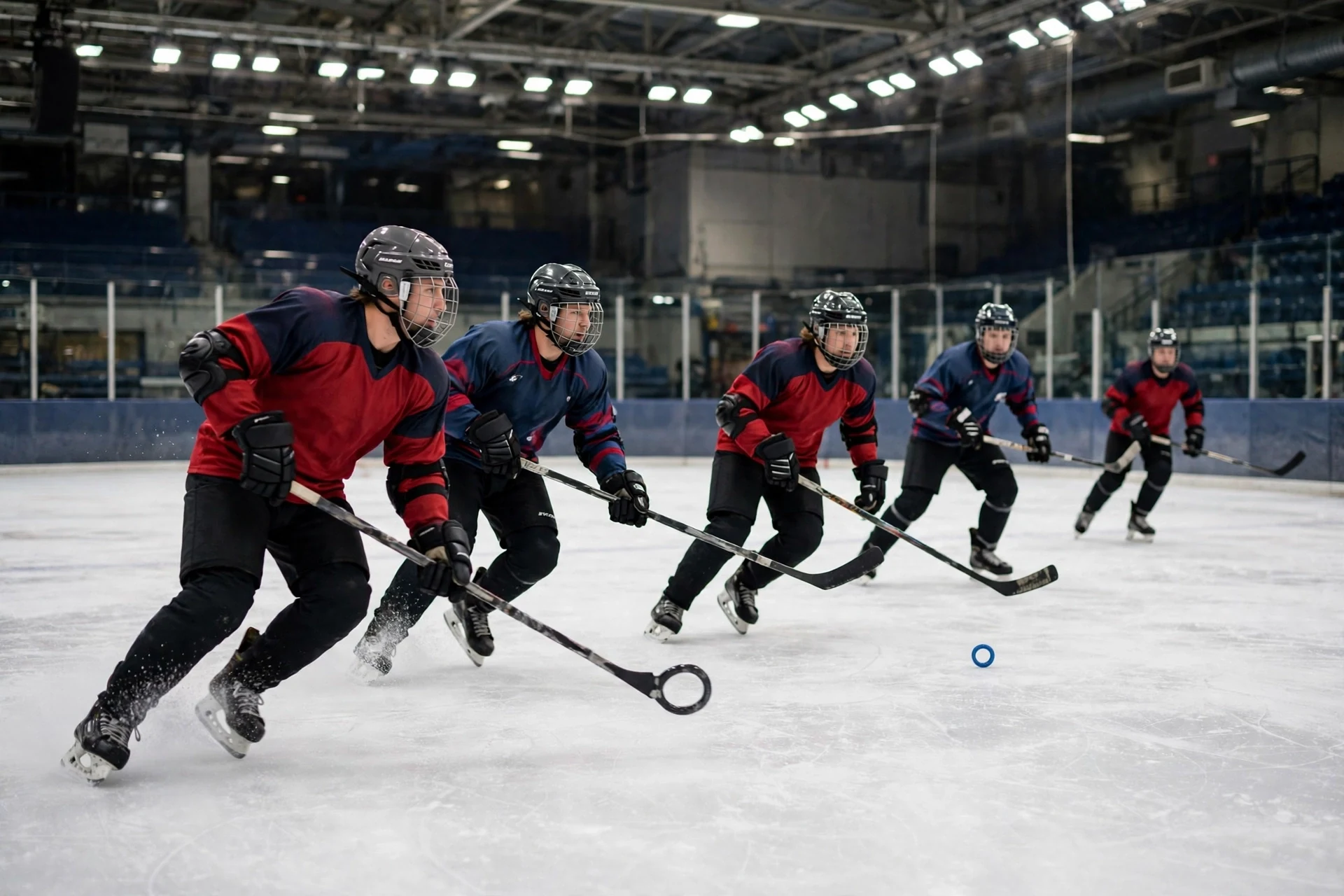
A helmet for ringette is a protective ice hockey style helmet, usually worn with a face cage, that protects a ringette player’s head and face from falls on the ice, the ring, and collisions with other players. Ringette is a Canadian ice sport played on skates, in which players use a straight stick to control a rubber ring and score goals. The game is fast, the ice is hard, and players skate close together, so a helmet with face protection is a central part of the kit.
Ringette is often compared with ice hockey, but it has its own character. There is no puck: players pass and shoot a hollow rubber ring, and the stick has no blade, so control comes from the tip of the stick and quick hands. The game is played mainly by girls and women in Canada, where it was invented, and it has spread to other countries as a team winter sport. A well-fitting helmet lets players skate hard and compete for the ring with confidence.
What is ringette?
Ringette is a team ice sport played on a hockey rink, with two teams of skaters trying to score goals by shooting a rubber ring into the other team’s net. Players carry a straight stick with no blade and use it to pass, carry, and shoot the ring along the ice. The game is played in periods, with face-offs and line changes much like ice hockey, and it is known for fast skating and quick passing.
One of the distinctive features of ringette is that only certain players may enter each zone of the rink, which keeps the play structured and the skating lanes clear. The goalkeeper defends the net with a stick and pads, and the rest of the team works the ring up the ice in passing moves. Because the ring moves quickly and players skate at speed, falls and collisions are part of the game, and that is why head protection matters.
Who wears a helmet in ringette?
Every ringette player on the ice wears a helmet, and it is part of the required kit in organised play. Forwards, defence players, and goalkeepers all wear one, and youth leagues ask young players to wear helmets with full face protection. The helmet is worn for every game and every practice, not just for matches, because falls can happen at any time on the ice.
Helmets are worn because the risks are real: a player can fall and hit the back or side of the head on the ice, collide with another skater, or be struck by a fast-moving ring or a raised stick. The face cage adds protection against the ring and sticks, which is why it is standard in ringette. If your league asks for a helmet with a cage, wear the full set every time you step onto the ice.
What does a ringette helmet look like?
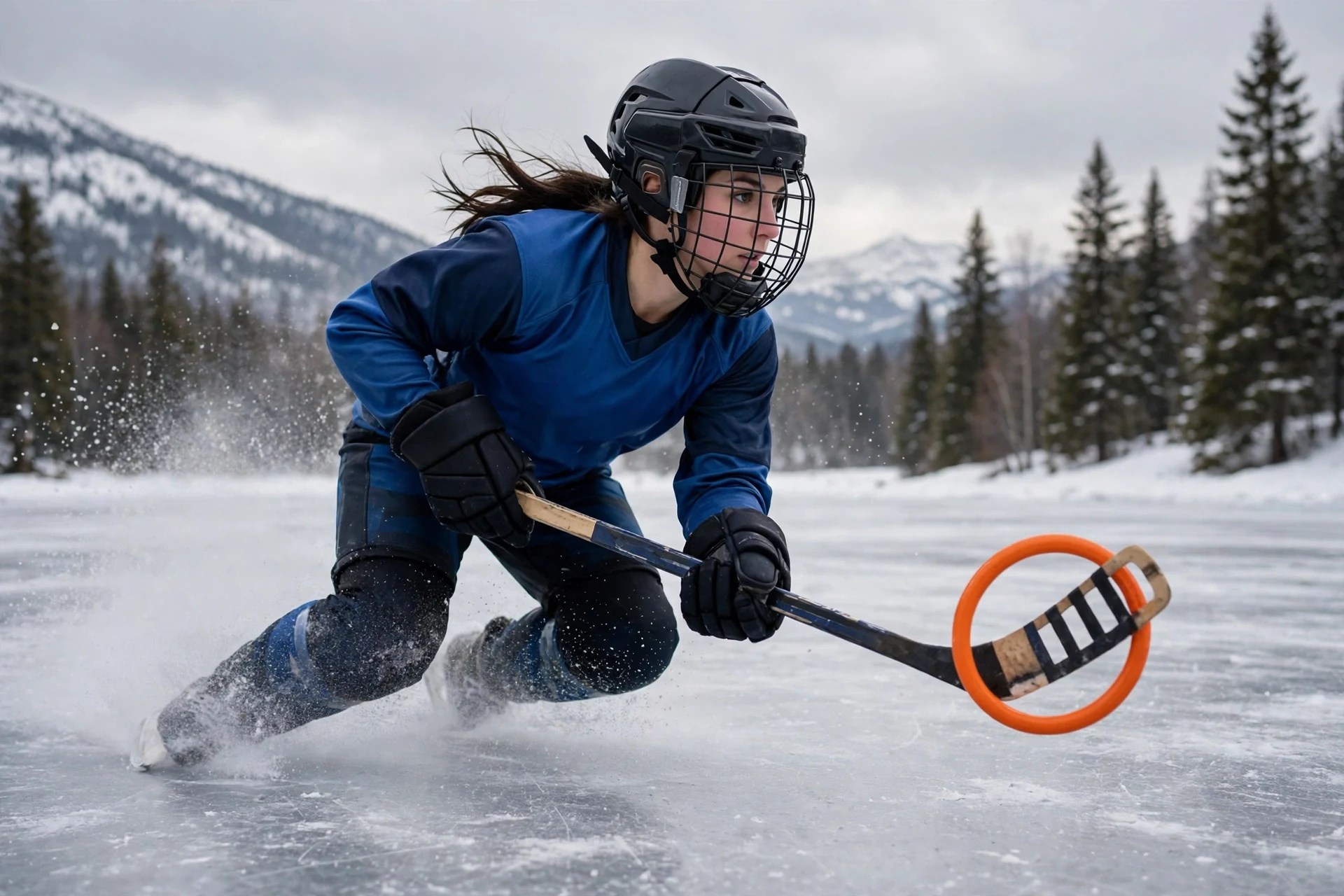
A ringette helmet looks like an ice hockey helmet, with a hard outer shell, foam padding inside, and a wire face cage or clear visor fixed to the front. The shell covers the top, sides, and back of the head, and the cage guards the face, the teeth, and the eyes. The helmet fastens with a chin strap, and the cage is held in place with clips or screws on the sides of the shell.
The shell is made of tough plastic, and the inside has foam padding that cushions the head and helps the helmet fit snugly. Vents let air through and help keep the player cool during a fast game. Many helmets are adjustable, so the fit can be tuned as a young player grows. The cage should sit close to the face without pressing on the nose or chin, and the whole helmet should feel solid and stable when it is fastened.
How should a ringette helmet fit?
A ringette helmet should fit snugly all round, without pressing painfully on the forehead or temples. It should sit level on the head, low enough at the front to protect the forehead, and it should not tip forward over the eyes or slide back when you skate. The chin strap should be snug enough that you can fit only a finger or two between the strap and your chin, and the helmet should stay put when you shake your head gently.
Fit is best checked in the shop, wearing any hair or headgear you will use under the helmet in a game. Try the helmet on with the face cage fitted, and check that the cage does not press on your face and that you can see clearly through it. Skate a few strides, turn, and stop to see if the helmet stays in place. A helmet that is too loose can shift in a fall and protect less well, while one that is too tight will give you a headache before the game ends.
How do you look after a ringette helmet?
After a game, wipe the shell and the face cage with a damp cloth to remove ice and dirt, and let the inside dry naturally, away from direct heat. Do not leave the helmet in a hot car or next to a radiator, as heat can damage the shell and the padding. Check the helmet after every game for cracks, dents, or loose parts, and check the chin strap, the buckle, and the cage fixings for wear.
Replace the helmet if it has taken a hard knock in a fall or a collision, if the shell is cracked, or if the padding has flattened so much that the fit has become loose. In general terms, a helmet that has protected you in a hard impact should not be relied on again. Some helmets include a system designed to reduce rotational forces in a fall, such as MIPS, and it is worth asking about when you choose a helmet for the ice.
Do young players need a ringette helmet?
Yes, young players need a ringette helmet with face protection whenever they are on the ice, and youth leagues ask for it as part of the kit. Young players are still learning to skate at speed and to control the ring, and falls are more common while they build those skills. A well-fitting helmet with a cage gives them confidence to skate hard and learn the game safely.
Parents and coaches should check that a young player’s helmet fits properly and is in good condition before each season, and adjust or replace it as the player grows. A helmet that is too small will press uncomfortably and may not cover the head fully, while one that is too big will slide about on the ice. Check the fit again partway through the season, as a good fit is what makes the helmet work.
Do ringette players wear a face cage?
Yes, in general terms ringette players wear a helmet with a wire face cage or a clear visor, as the cage protects the face from the ring and from sticks. Check your league’s guidance on which face protection is asked for.
Can I use an ice hockey helmet for ringette?
Yes, in general terms an ice hockey helmet with a face cage is the usual choice for ringette. Check with your league first, as they may have guidance on which helmets and cages are suitable.
When should a ringette helmet be replaced?
Replace it after a hard fall or collision, if the shell is cracked or dented, if the padding has worn thin, or if it no longer fits snugly. Check the maker’s guidance for your helmet as well.

Olivia
Writer at Helmet Today, covering helmet reviews, fit and riding safety.