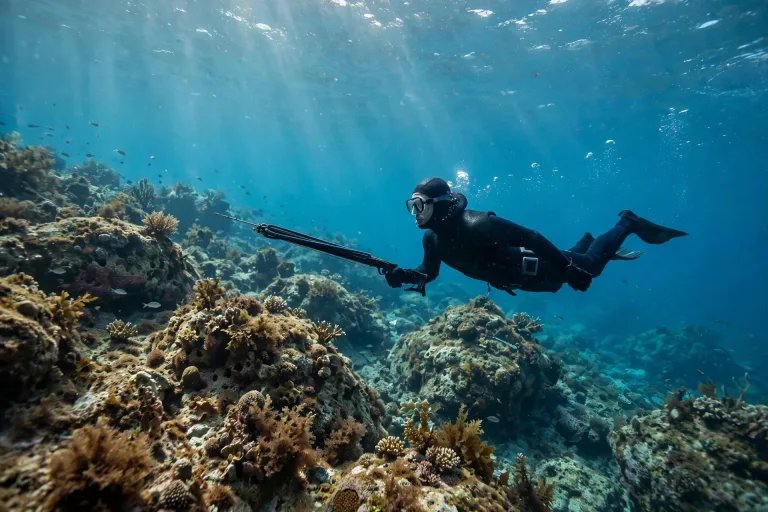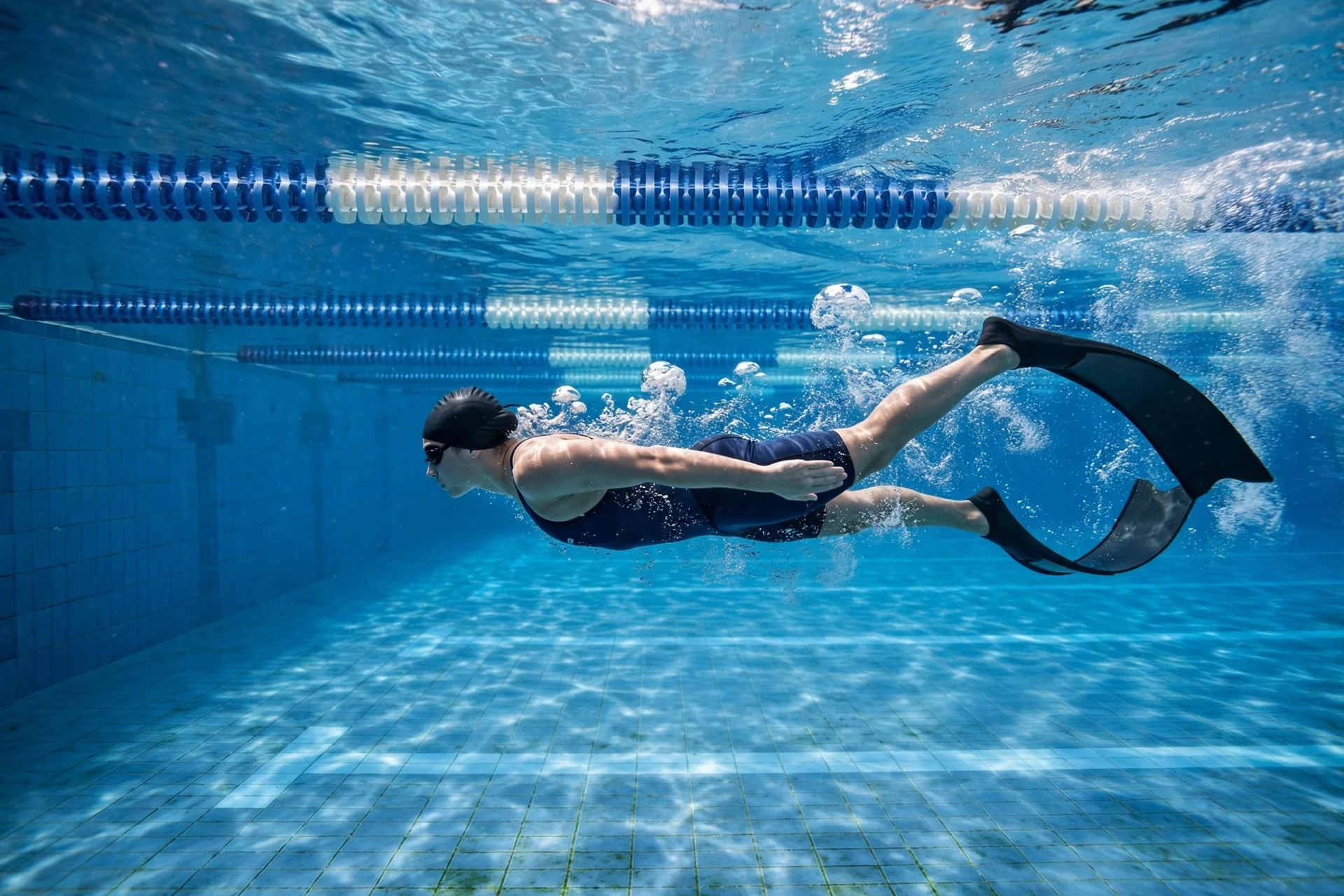
Finswimmers do not wear helmets in the pool, so there is no finswimming helmet as such; the headgear used in finswimming is a swim cap, and head safety in the sport comes from pool rules, good technique, and careful coaching. Finswimming is a competitive underwater sport in which swimmers race through the water wearing fins, and it is swum in a swimming pool. Because the sport takes place in clear pool water with no hard ball, no sticks, and no contact between swimmers, a hard helmet is not part of the kit.
That answer surprises some people, because helmets are so common in other sports. But finswimming is a water sport, and the risks are different from those on a field or an ice rink. The main dangers in the pool are collisions with the pool wall, other swimmers in the same lane, and the strain of swimming underwater at speed. A hard helmet would add drag, make breathing harder, and offer little help against the risks that actually exist in the water.
What is finswimming?
Finswimming is a competitive swimming sport in which athletes race underwater and on the surface using fins to move faster than a swimmer without them. There are two main styles: swimming with a single large monofin, worn on both feet together, and swimming with two separate fins, one on each foot. Races are held over set distances in a swimming pool, and swimmers use a snorkel to breathe while their face stays in the water.
The sport is swum in lanes, with each swimmer in their own lane, and races include surface events, underwater events with a breathing tank, and relay events with a team. Finswimmers train for speed, breath control, and smooth underwater technique, and the monofin stroke, with its dolphin-like kick, is the fastest way a human can move through water without a motor. It is a recognised competitive sport with clubs and championships in many countries.
Why don’t finswimmers wear helmets?
Finswimmers do not wear helmets because a helmet would slow them down and would not help with the risks of the sport. A hard shell would create drag in the water, catch on the surface, and make the streamlined position that finswimmers need impossible to hold. It would also make it harder to wear the mask, snorkel, and swim cap that finswimmers use, and it would add weight to the head during long underwater swims.
The risks in finswimming are also different from those in contact sports. There is no ball or stick to strike the head, and swimmers race in separate lanes, so collisions between swimmers are rare. The main head risks are bumping the pool wall at a turn or the finish, and swimming into another swimmer during a crowded warm-up. These risks are managed by lane discipline, clear pool rules, and good coaching, rather than by a helmet.
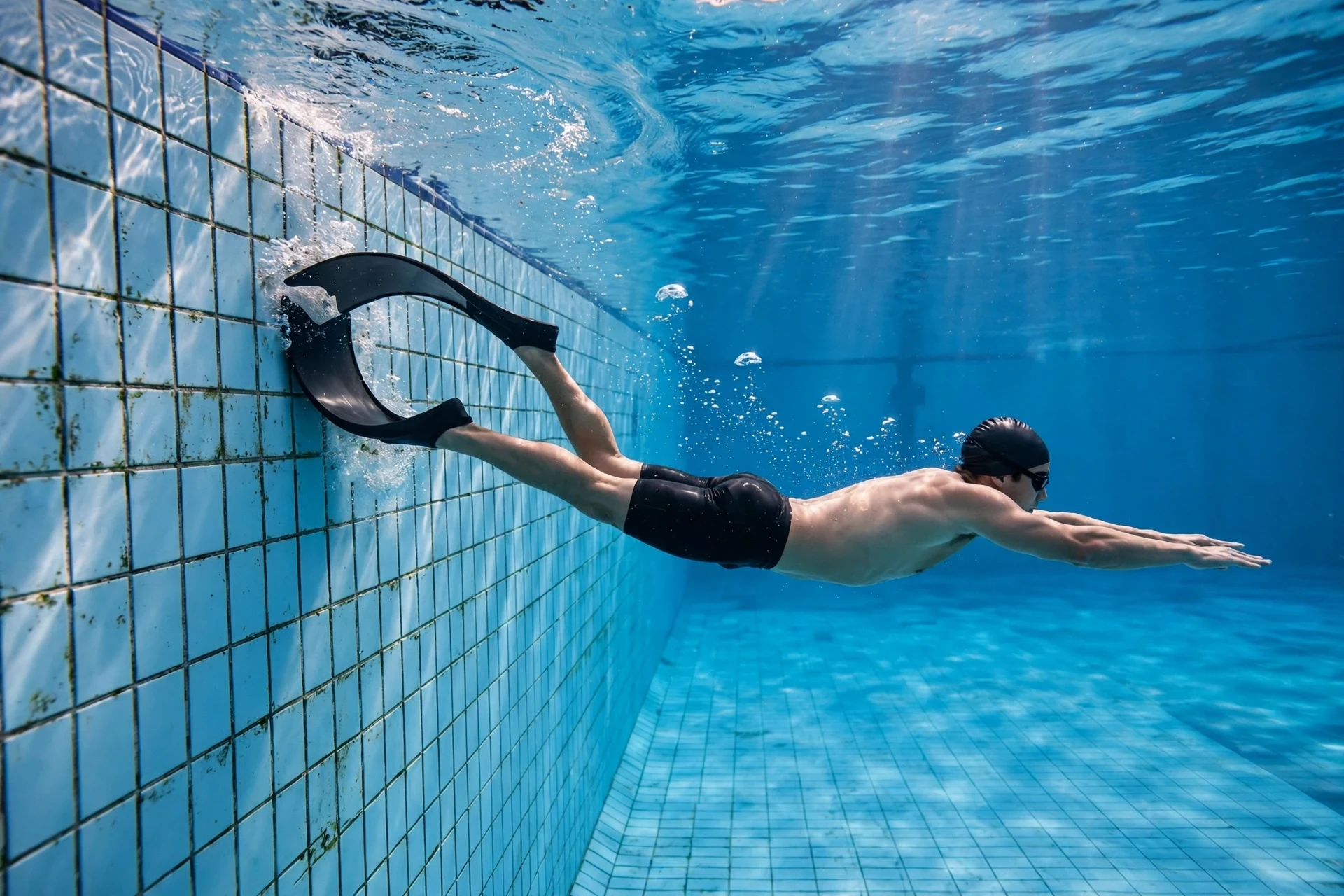
What do finswimmers wear on their heads?
Finswimmers wear a swim cap, which keeps the hair out of the way, reduces drag, and holds the snorkel strap in place. The cap is made of silicone or latex and fits closely over the head, and it is worn with a diving mask or goggles and a snorkel. Together, the cap, mask, and snorkel make up the headgear of the sport, and they are chosen for speed and comfort in the water.
Some finswimmers also wear a nose clip to stop water going up the nose during underwater swims. The mask or goggles protect the eyes and let the swimmer see the lane markings and the pool wall, which helps them judge turns and finishes. None of this headgear is protective in the way a helmet is: it is made for speed and vision, not for absorbing impacts, so swimmers rely on technique and pool safety to stay safe.
How do finswimmers stay safe without a helmet?
Finswimmers stay safe through pool rules, lane discipline, and good technique. Each swimmer races in their own lane, and turns are practised so the swimmer knows exactly where the wall is and how to push off without striking it. Coaches teach swimmers to look ahead with the mask, to judge distances, and to slow down safely at the end of a race rather than swimming hard into the wall.
Warm-ups are managed carefully too, as that is when lanes are most crowded and collisions are most likely. Lifeguards and coaches watch the pool, and swimmers are taught to signal if they are in trouble. Breathing technique matters as well: finswimmers learn to manage their breath on underwater swims and to surface safely. Good coaching and a well-run pool are the real safety measures in finswimming, and they work because the sport is swum in a controlled pool setting.
Are helmets used in any water sports?
Yes, helmets are used in some water sports, but not in finswimming. Whitewater kayakers and canoeists wear helmets to protect against rocks, and surfers in heavy waves sometimes wear them too. Water polo players wear soft caps with ear guards, and some board sports use light helmets for falls onto the board. In each case, the helmet matches a specific risk: a hard surface, a fast fall, or a collision.
Finswimming has none of those risks in the same form, which is why no helmet is worn. The pool is a smooth, controlled space, and the swimmer’s speed is high but the surroundings are soft water and smooth tiles. If you are moving from another water sport into finswimming, leave the helmet behind and ask your coach about the cap, mask, and snorkel that suit the sport. Some helmets in other sports include a system designed to reduce rotational forces in a fall, such as MIPS, but that kind of system is made for hard impacts on land, not for swimming in a pool.
What should a beginner finswimmer buy first?
A beginner finswimmer should start with the basics: a well-fitting swim cap, a comfortable mask or goggles, a snorkel, and a pair of fins suited to their level. A monofin is the usual choice for competitive finswimming, but many beginners start with two separate fins while they learn the kick and the breathing. A coach or a specialist shop can help you choose fins that fit well and are not too stiff for a new swimmer.
Do not buy a helmet for finswimming, as it is not used in the sport and would only get in the way. Instead, spend your time learning the dolphin kick, the turns, and the breathing, and listen to your coach about pool safety. A good cap and mask, fins that fit, and sound technique are what a beginner needs, and a club will usually have spare kit to try before you buy your own.
Do finswimmers wear helmets in competitions?
No, finswimmers do not wear helmets in competitions. They wear a swim cap, a mask or goggles, and a snorkel, and they race in lanes in a swimming pool.
Is finswimming safe without a helmet?
In general terms, yes, when it is swum in a well-run pool with lane discipline, good coaching, and proper technique. The main risks are wall bumps and crowded warm-ups, which are managed by rules and coaching rather than by a helmet.
What headgear should I buy for finswimming?
Buy a silicone swim cap, a mask or goggles that fit well, and a snorkel suited to finswimming. Ask your coach or a specialist shop for advice, and do not buy a helmet, as it is not used in the sport.

Olivia
Writer at Helmet Today, covering helmet reviews, fit and riding safety.