A helmet for high ropes courses is a protective helmet worn to guard your head from bumps, knocks, and falling objects while you climb, swing, and zip through a course set high up in the trees or on poles. High ropes courses are made of platforms, rope bridges, zip lines, and climbing elements strung between trees or tall posts, and most course operators provide a helmet as part of the safety kit.
In general terms, the helmet used on a high ropes course is a lightweight climbing-style helmet with a hard shell and a secure chin strap. It is there to protect you if you bump your head on a platform, a beam, or a zip line trolley, or if something small falls from above. It will not stop you from falling, because that is the job of your harness and the safety lines, but it is an important part of the kit.
What is a high ropes course?
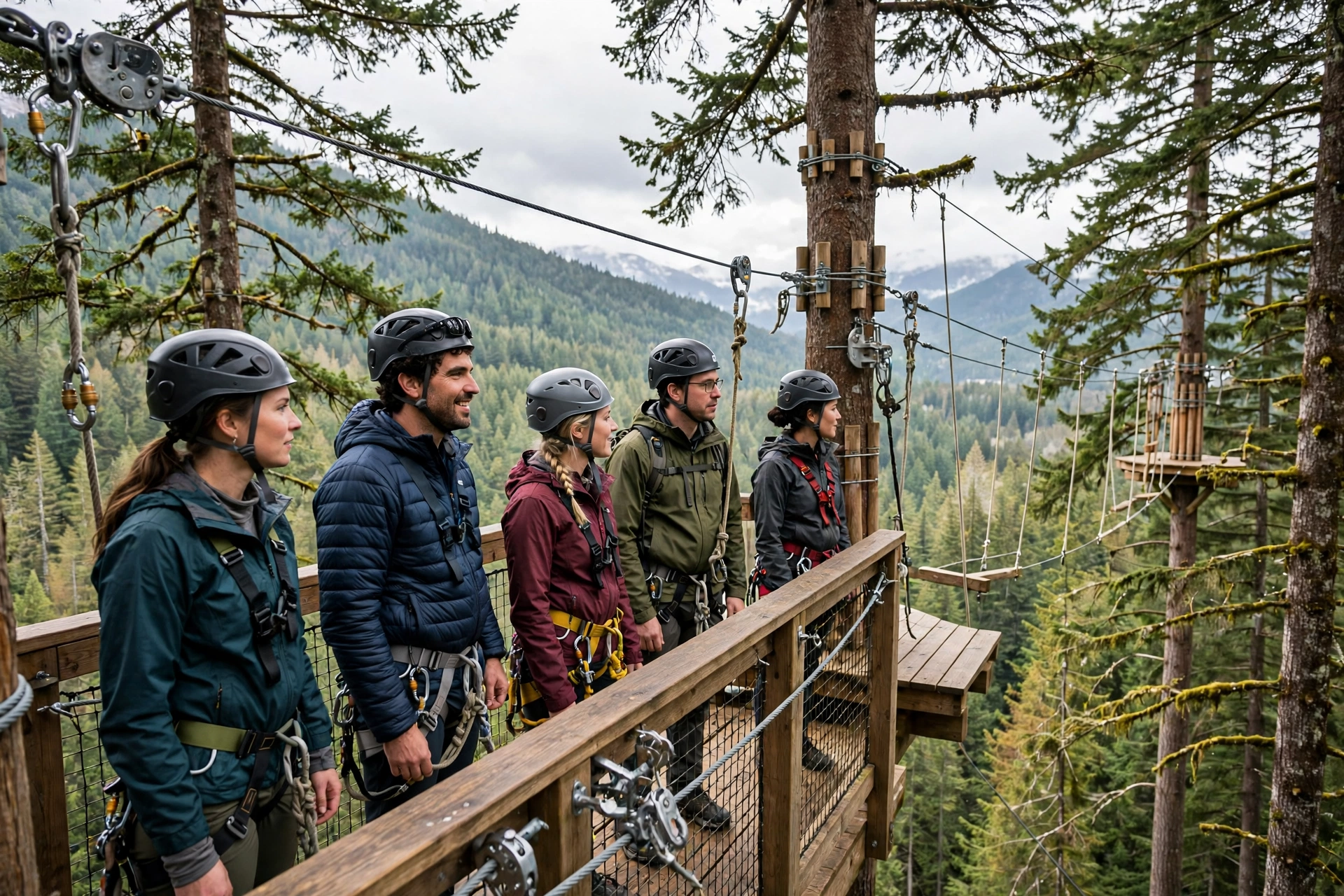
A high ropes course is an outdoor adventure activity built several metres above the ground, usually in woodland or on a purpose-built frame of tall poles. The course is made up of a series of challenges, such as rope bridges, swinging logs, cargo nets, and zip lines, linked by wooden platforms fixed to trees or posts.
Participants wear a harness and are attached to safety lines or a continuous belay system as they move from one element to the next. Courses are used for fun days out, school trips, team building, and confidence building. Some courses are low and gentle, while others are high and demanding, with long zip lines and wobbly crossings that test your balance and your nerve.
What kind of helmet do you wear on a high ropes course?
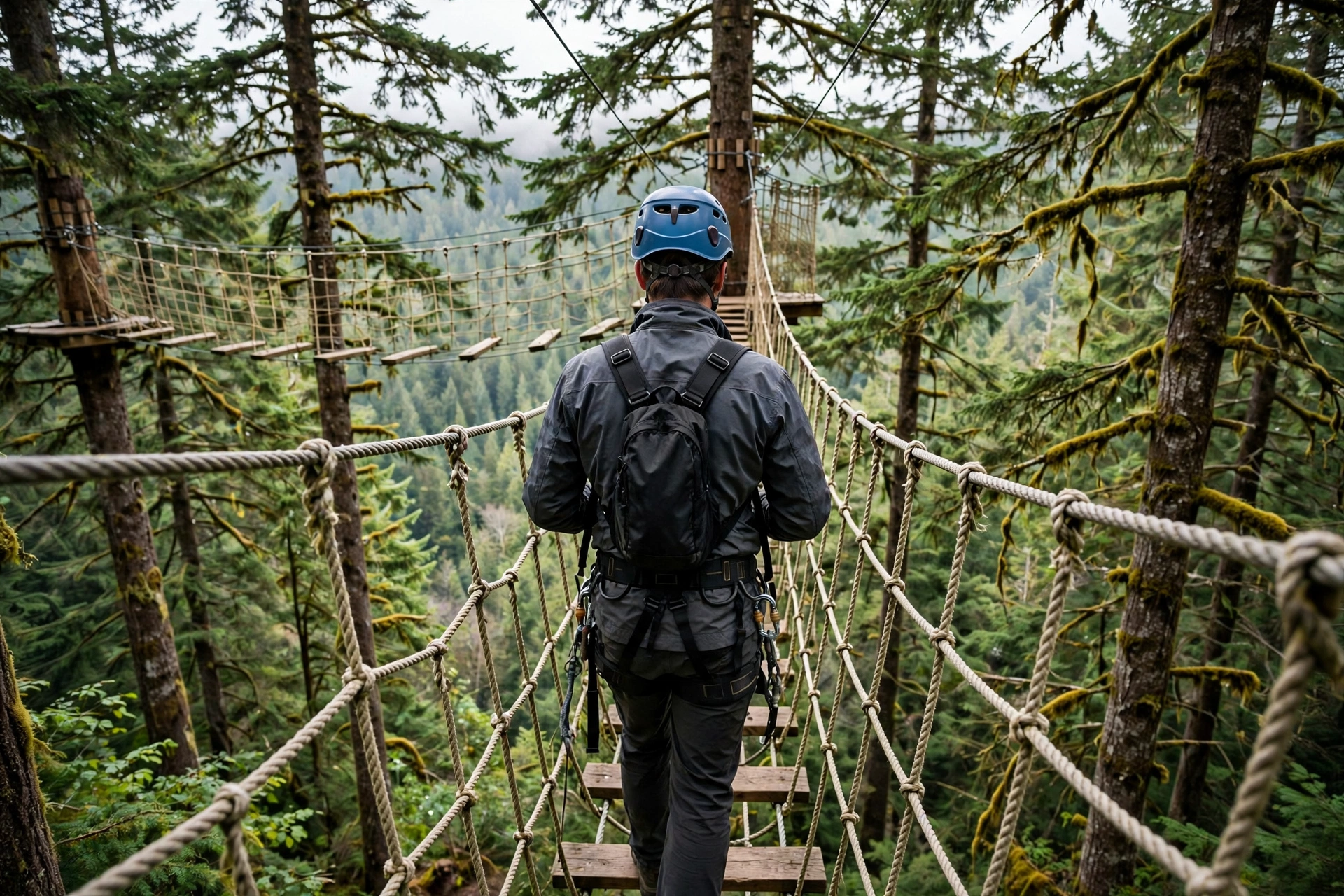
On a high ropes course you usually wear a climbing helmet, provided by the course operator. It is a light, hard-shell helmet that covers the top and sides of the head, with ventilation holes and an adjustable chin strap. The helmet is designed to protect against knocks from above and from the side, which matches the kind of bumps you are most likely to get on a course.
Some courses use a helmet that looks more like a cycle helmet, while others use a mountaineering-style climbing helmet with a dial at the back for adjustment. Either way, the operator will check the fit before you start. You should not bring your own bicycle helmet unless the operator says it is acceptable, because course helmets are chosen and checked to suit the activity.
How should a high ropes course helmet fit?
A high ropes course helmet should sit level on your head, low enough to cover your forehead, and snug all round without squeezing. The operator or instructor will usually adjust it for you, tightening the chin strap and the fit system at the back until the helmet stays put when you nod or shake your head gently.
If the helmet rocks forward over your eyes, it is too loose or sitting too low. If it presses painfully on your forehead or temples, it may be too small or the wrong shape for your head. Tell the instructor if it feels wrong. A helmet that fits well will feel secure but comfortable, and you should be able to hear instructions and see clearly in every direction while wearing it.
What else do you wear with a high ropes helmet?
The helmet is worn with a full-body or sit harness, which connects you to the safety system, and often with gloves to protect your hands on ropes and zip lines. You should wear closed-toe shoes with a good grip, and comfortable clothes that will not snag on ropes, clips, or platforms. Long hair should be tied back so it does not get caught, and loose jewellery is best left behind.
Some helmets include a system designed to reduce rotational forces in a fall, such as MIPS, though on a high ropes course the helmet is mainly there for bumps rather than high-speed falls. What matters most is that the helmet is the one the operator provides, that it is in good condition, and that it is worn and fastened correctly for the whole course.
Do children need helmets on high ropes courses?
Yes, children wear helmets on high ropes courses just like adults, and in general terms the rules are the same for everyone on the course. Operators keep helmets in a range of sizes, including smaller sizes for children, and the instructor will fit the helmet and check the strap before the child starts.
Children should be told in simple terms why the helmet matters: it protects their head if they bump into something or if something falls from above. Parents and teachers should check that the helmet stays on and fastened for the whole activity, and that the child knows not to take it off on a platform, even to scratch an itch or to take a photo.
What should you check before you start a high ropes course?
Before you start, check that your helmet is on straight, the chin strap is fastened and snug, and the fit system at the back is tightened. Check that your harness is fitted correctly and that you understand how the safety lines or clips work. Listen carefully to the safety briefing, and ask questions if anything is unclear.
During the course, keep your helmet on at all times, even on the platforms between elements. Do not lean out over the edge of a platform, and watch out for other people above or below you. When you finish, hand the helmet back to the operator so it can be checked and cleaned for the next person. If you notice any damage to a helmet, such as a crack or a broken strap, tell a member of staff straight away.
Do you have to wear a helmet on a high ropes course?
Yes, in general terms a helmet is required on a high ropes course. The operator provides one as part of the safety kit, and it must be worn and fastened for the whole activity.
Can you wear your own helmet on a high ropes course?
In general terms, no, unless the operator agrees. Course helmets are chosen and checked for the activity, so it is best to wear the one provided and let the instructor fit it for you.
What does a high ropes helmet protect you from?
It protects your head from bumps against platforms, beams, and zip line equipment, and from small objects falling from above. It does not stop you falling; that is the job of your harness and safety lines.

Olivia
Writer at Helmet Today, covering helmet reviews, fit and riding safety.