Helmet rules for school cycling trips are usually set by the school itself, and in general terms most schools ask pupils to wear a helmet on any cycling trip, so parents should check the school’s own rules before the trip. There is no single set of rules that covers every school, and the details can differ from one school to another, so the school’s trip letter or permission form is the best place to look.
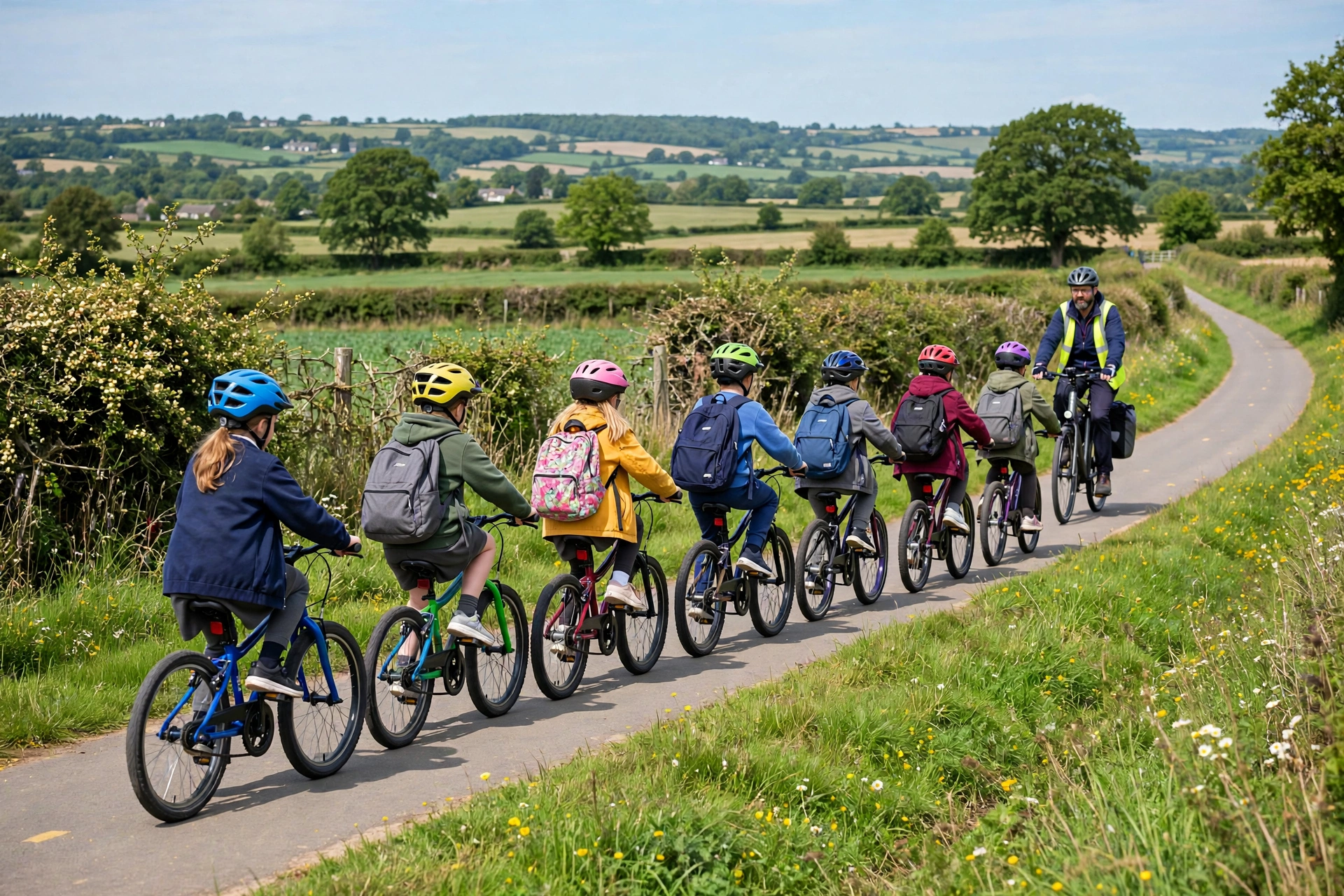
A school cycling trip might be a ride to a local park, a day out on a cycle path, or a longer residential trip with cycling as one of the activities. Whatever the trip, the school will have thought about safety in advance, and the helmet rule will be part of that plan. If the letter does not mention helmets, or if you are unsure what kind of helmet is needed, ask the teacher in charge before the day of the trip.
Who sets the helmet rules for a school cycling trip?
In general terms, the school sets the helmet rules for its own cycling trips. The head teacher and the staff organising the trip decide what kit pupils need, and they write it into the trip letter, the kit list, or the permission form sent home to parents. Some schools have a written policy that covers all cycling trips, while others set the rules trip by trip.
The school may also follow guidance from its local authority or from the organisation running the activity, if the trip is booked through an outdoor centre. Either way, the school is the one to ask. Parents should not guess what the rule is, and pupils should not assume that the rule for one trip is the same as the rule for another.
Do pupils have to wear a helmet on a school cycling trip?
In general terms, yes, most schools ask pupils to wear a helmet on a school cycling trip. The school will normally say so clearly in the trip information, and the teacher in charge will check helmets before the group sets off. A pupil who arrives without a helmet may not be allowed to ride, and the school may have a spare helmet to lend, though parents should not rely on that.
The rule is about keeping children safe on the ride. A helmet protects the head in a fall, and on a group ride with children of different abilities, falls can happen even on quiet paths. Wearing a helmet also sets a good example for other pupils, and it helps the teachers keep the whole group to the same standard of safety.
What kind of helmet should a pupil wear on a school trip?
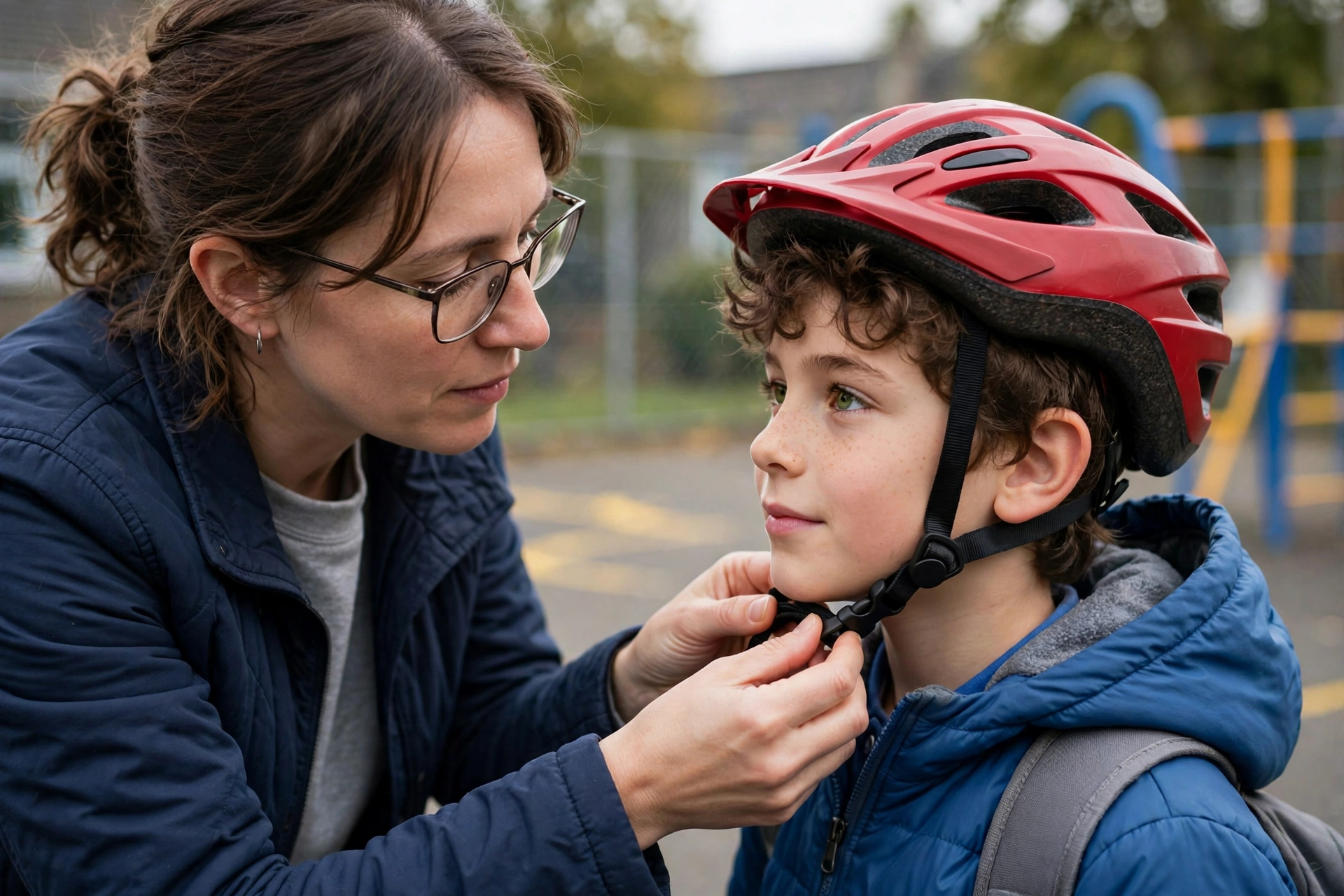
In general terms, a standard, well-fitting cycle helmet is what a pupil needs for a school cycling trip. It should be a proper cycle helmet, not a toy helmet or a helmet made for another sport, and it should be in good condition, with no cracks, dents, or damage to the shell or the lining.
The helmet should fit the child’s head, sit level, and fasten securely under the chin. If the school lends a helmet, the teacher should check the fit before the ride. If the pupil brings their own, parents should check the fit at home first, with the child wearing the helmet the way they will wear it on the ride. Some helmets include a system designed to reduce rotational forces in a fall, such as MIPS, but the most important thing is a good fit and a secure strap.
How should parents prepare a helmet for a school cycling trip?
Parents should check the helmet the night before the trip, not on the morning of it. Check the shell for cracks or dents, check the straps and buckle for wear, and check that the helmet still fits the child, because children grow quickly and a helmet that fitted last term may be too small now.
Label the helmet with the child’s name if the school asks for that, and pack it in a way that it will not be squashed in a bag. If the child is taking their own bike, check the bike too: tyres pumped up, brakes working, and the chain running smoothly. If anything is wrong with the helmet, tell the teacher in advance so a spare can be arranged if one is available.
What happens on the day of the trip?
On the day of the trip, the teacher in charge will usually check every pupil’s helmet before the group sets off. They will look at the fit, check the strap, and make sure the helmet sits level on the head. Pupils will be reminded to keep their helmets on for the whole ride, including stops, and to tell a teacher straight away if a helmet feels loose or uncomfortable.
The teacher will also give a short safety talk, covering how to ride in a group, how far apart to stay, and what to do if someone falls off. Pupils should listen carefully, ride at the pace the teacher sets, and stay with the group. If a pupil falls and knocks their helmet, the teacher should be told, and the helmet should be checked before it is used again.
What if a pupil does not have a helmet?
If a pupil does not have a helmet, parents should tell the school as soon as possible, ideally when the trip letter comes home. The school may be able to lend a helmet, or may be able to suggest where to borrow or buy one. What parents should not do is send the child without a helmet and hope it will be fine.
If no helmet can be found, the pupil may not be able to take part in the cycling part of the trip, and the school will usually arrange something else for them to do. This is not a punishment; it is the school keeping the child safe. In general terms, the simplest answer is to sort the helmet out early, so the child can enjoy the trip with everyone else.
Do schools require helmets on cycling trips?
In general terms, yes, most schools ask pupils to wear a helmet on a cycling trip. The exact rule is set by the school, so parents should check the trip letter or ask the teacher in charge.
What kind of helmet does a pupil need for a school cycling trip?
A standard, well-fitting cycle helmet in good condition, with a secure chin strap. It should be a proper cycle helmet, not a toy helmet, and it should fit the child’s head.
Can a school lend a helmet for a cycling trip?
Some schools can lend a spare helmet, but parents should not rely on that. Ask the school early if a helmet is needed, so there is time to arrange one before the trip.

Olivia
Writer at Helmet Today, covering helmet reviews, fit and riding safety.