You can tell if a helmet is too old by checking for cracks, faded or brittle foam, worn straps, a loose fit, and a lining that no longer holds its shape, and in general terms any of these signs means it is time to replace it. A helmet does not last forever, even if it has never been in a crash, because the materials inside it wear down slowly with age, heat, sweat, and everyday use.
Most riders keep a helmet for years without thinking about its age, and that is understandable. A helmet that looks fine from the outside can feel like it has plenty of life left. The trouble is that the parts that do the protecting are mostly hidden inside, and they can weaken without any obvious sign on the shell.
How long does a helmet last?
In general terms, many helmet makers suggest replacing a helmet after around five years of regular use, but that is a rough guide rather than a strict rule. A helmet used every day in hot weather will age faster than one used now and then, and a helmet stored in a cool, dry place will last longer than one left in a hot car.
The age of the helmet matters, but so does how it has been treated. A helmet that has been dropped, knocked about in a bag, or left in the sun for long stretches may be past its best well before five years. On the other hand, a helmet that has been gently used and stored well may still be in good shape after several years. Age alone is not the full story, which is why a hands-on check matters more than a date.
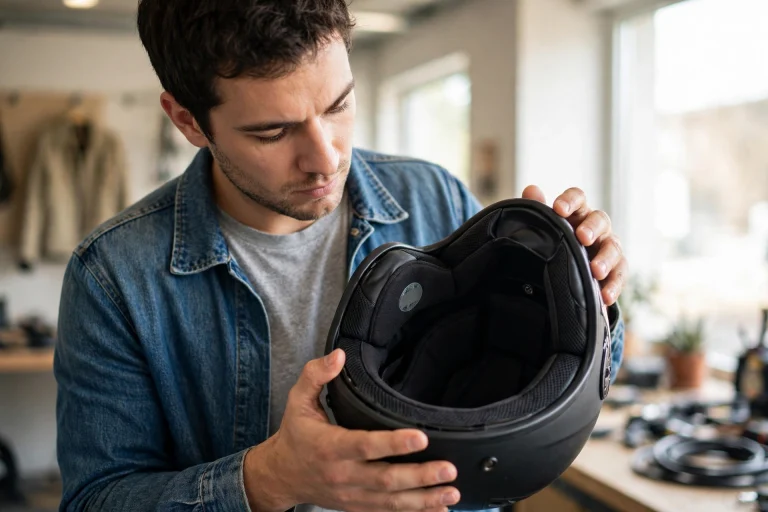
If you are not sure when your helmet was made, look for a label or sticker inside it. Many helmets carry a date of manufacture printed on a label under the lining or on the inside of the shell. That date is a better guide than the date you bought it, because a helmet can sit on a shop shelf for months first.
What are the signs that a helmet is too old?
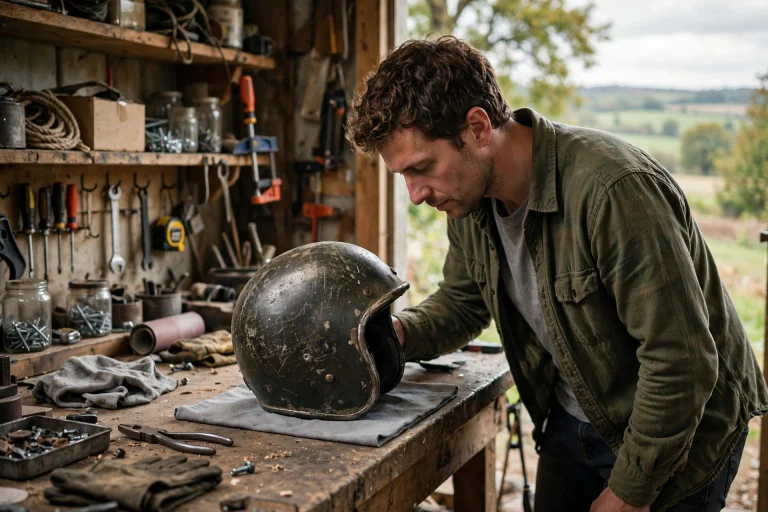
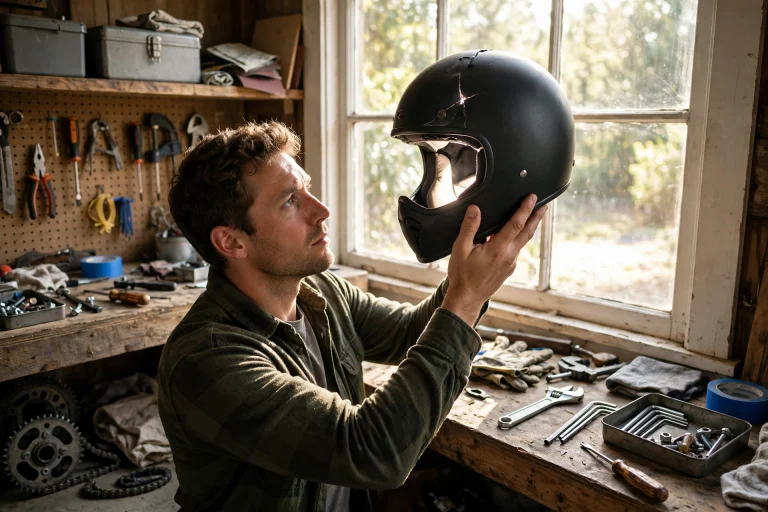
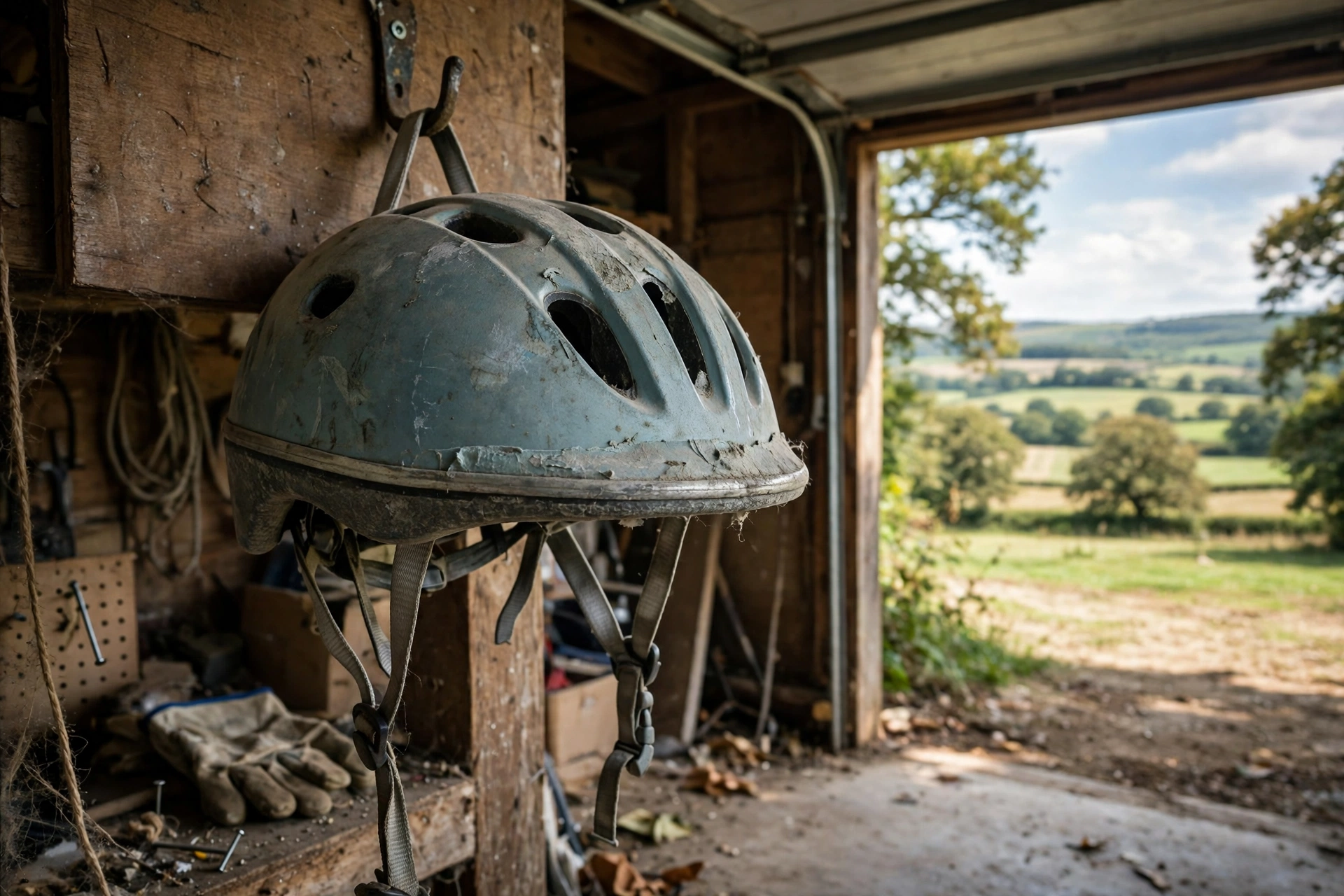
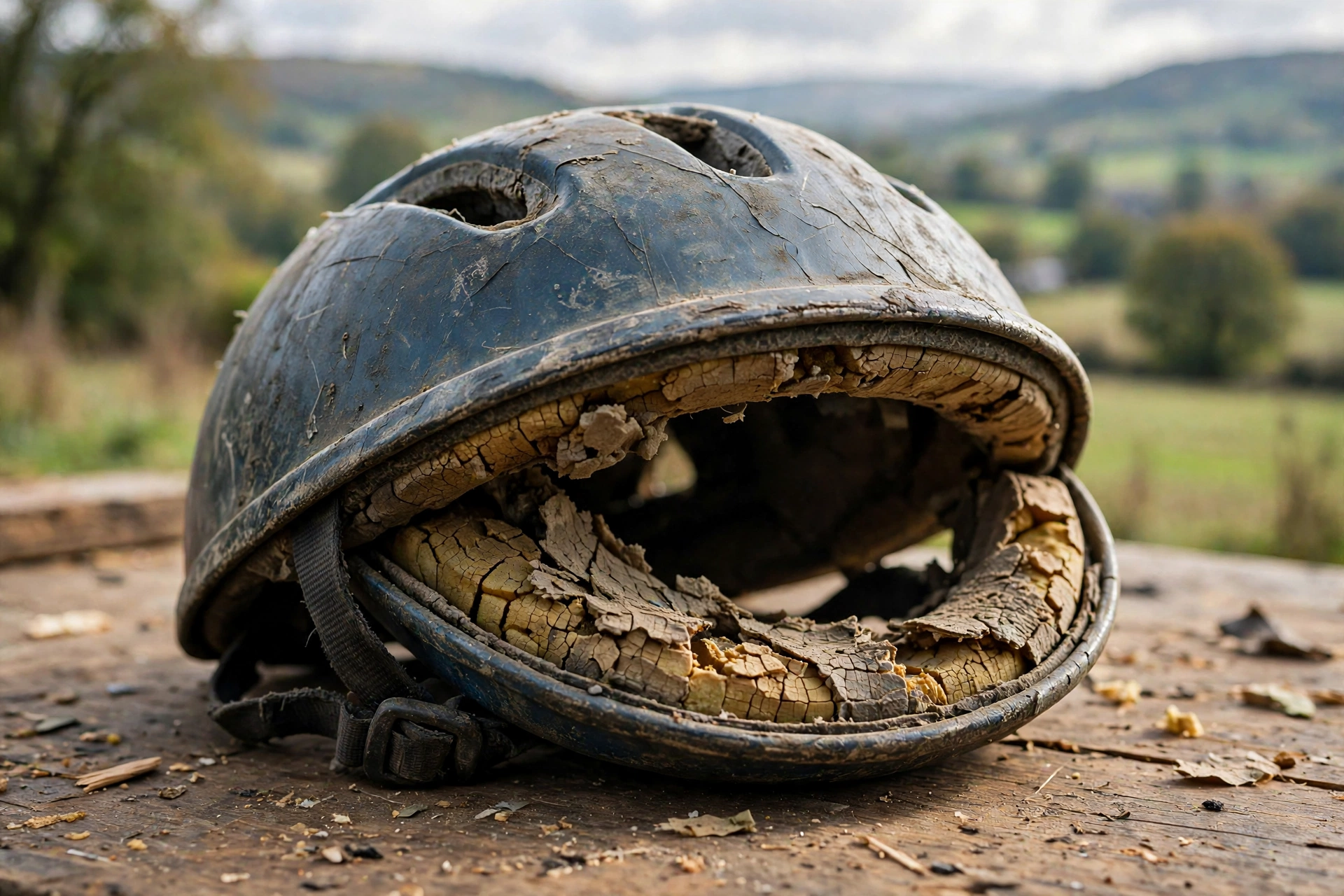
The first thing to check is the shell. Look for cracks, deep scratches, dents, or areas where the colour has faded badly. Fading can be a sign that the shell has spent a long time in sunlight, which can make the material brittle. Run your fingers over the shell and feel for any soft spots or rough patches that were not there when the helmet was new.
Next, check the foam lining inside. Press it gently with your thumb. In a helmet in good condition, the foam feels firm and springs back. In an old helmet, the foam may feel hard, crumbly, or compressed, and it may not spring back. Look for pieces flaking away, cracks in the foam, or gaps where the foam has pulled away from the shell.
Then check the straps and the buckle. Pull the straps and look for fraying, thinning, or stiffness. The buckle should click shut firmly and open without sticking. If the straps slip, or the buckle no longer holds, the helmet may not stay in place in a fall, which is a clear sign to replace it.
Does the fit change as a helmet gets older?
Yes, the fit of a helmet can change as it ages. The foam and the padding compress slowly over time, especially where they press against your head. A helmet that once felt snug can gradually feel loose, and you may find yourself tightening the straps or the fit dial more than you used to. That looseness is a warning sign.
A loose helmet can shift in a fall, slide forward over your eyes, or come off altogether. To test the fit, put the helmet on and fasten the strap. It should sit level, cover your forehead, and stay in place when you shake your head gently. If it rocks or slides easily, even after you adjust it, the helmet has likely lost its shape and should be replaced.
Children’s helmets are a special case. A child’s helmet may be outgrown long before it is worn out, and a helmet that is too small is just as unhelpful as one that is too old. Check the fit each season, and replace the helmet when the child’s head has grown beyond it, even if it still looks new.
Can an old helmet still protect you?
In general terms, an old helmet that looks undamaged may still offer some protection, but you cannot be sure how much. The materials inside a helmet are designed to absorb a single hard impact by compressing, and they weaken slowly with age, heat, and sweat. A helmet that has been used for many years may not absorb a knock as well as it did when it was new, even if it includes a system designed to reduce rotational forces in a fall, such as MIPS.
The honest answer is that there is no simple test you can do at home to prove an old helmet is still safe. You can check the shell, the foam, the straps, and the fit, and if all of those look good, the helmet is probably still usable. But if you have any real doubt, the safer choice is to replace it.
Some riders keep an old helmet as a spare for short rides or for lending to a friend. In general terms, that is not a good idea. If a helmet is too old or too worn for you, it is too old or too worn for anyone else too.
How should you look after a helmet so it lasts longer?
Good care can slow a helmet from ageing, though it cannot stop it. After a ride, wipe the shell clean and let the helmet dry naturally, away from direct heat. Do not leave it in a hot car, next to a radiator, or in strong sunlight for long stretches, as heat can damage the foam inside.
If the lining is removable, take it out and wash it following the maker’s instructions, and let it dry fully before you put it back. Sweat and grime build up over time and can break down the padding and the straps. Use mild soap and water on the shell, and avoid strong solvents or harsh cleaners, which can damage the materials.
It also helps to keep a rough note of when you bought the helmet and how much you use it. Some riders write the purchase date on a small label inside the helmet, which makes the yearly check much easier. And if the helmet takes a hard knock in a fall, replace it, even if it looks fine, because the inner foam may have been compressed.
How can you tell if a helmet is too old?
Check the shell for cracks and fading, press the foam to see if it is firm and springy, look for frayed straps and a worn buckle, and test whether the helmet still fits snugly. If any of these fail, replace it.
How long does a helmet last?
In general terms, many makers suggest around five years of regular use, but storage, heat, sweat and knocks matter as much as age. A hands-on check is a better guide than a date alone.
Should you replace a helmet after a crash?
Yes. In general terms, a helmet that has taken a hard knock in a fall should be replaced, even if it looks fine on the outside, because the inner foam may have been compressed and may not protect you again.

Olivia
Writer at Helmet Today, covering helmet reviews, fit and riding safety.