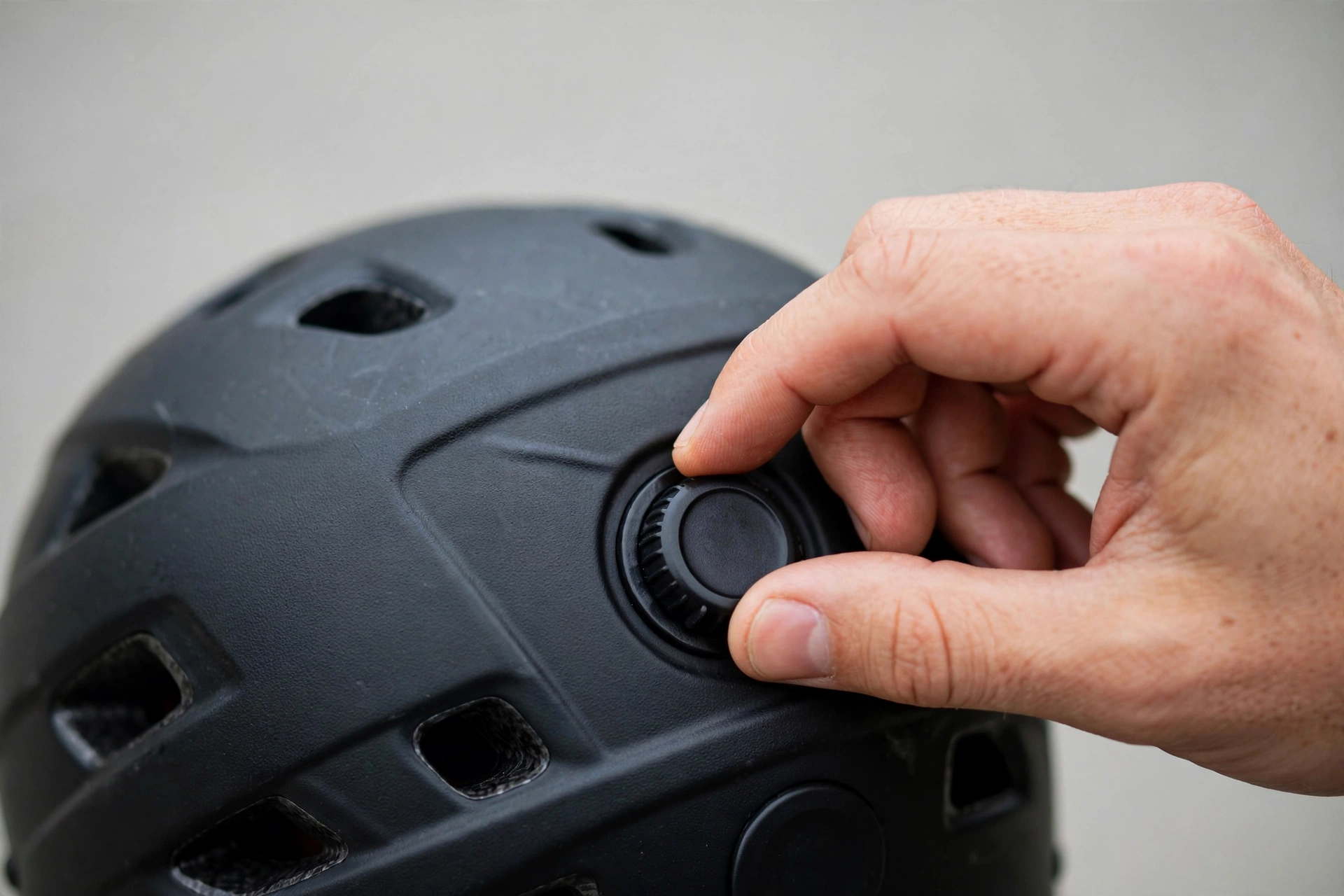
To adjust a skate helmet dial fit, put the helmet on level, then turn the dial at the back — clockwise to tighten, anticlockwise to loosen — until the helmet feels snug all round without pressing anywhere. The dial adjusts a cradle inside the helmet that grips the back of your head, and getting it right is the difference between a helmet that stays put in a fall and one that slides around.
Dial fit systems are common on modern skate-style helmets, but many riders never adjust them properly — they either leave the dial loose or crank it tight to compensate for the wrong shell size. This guide walks through the adjustment step by step, so your helmet fits the way it was designed to.
What Is a Dial Fit System?
A dial fit system is a small wheel, usually at the back of the helmet, connected to a flexible cradle or band that wraps around the lower back of your head. Turning the dial draws the cradle in or lets it out, fine-tuning how snugly the helmet grips your head. It works alongside the chin straps, not instead of them.
The advantage of a dial is precision. Foam pads alone come in fixed thicknesses, and swapping them is fiddly. A dial lets you make small adjustments in seconds, which is handy if you sometimes wear a thin beanie underneath, or if the helmet loosens slightly as the padding settles with use. It also helps a helmet fit head shapes that fall between standard sizes.
Not every skate helmet has a dial — many classic skate helmets rely on pads and straps alone, and that is perfectly fine. But if your helmet does have a dial, it is worth learning to use it, because it is the fastest way to get a consistent, snug fit every session.
How Do You Adjust the Dial Step by Step?
Start with the dial fully loosened. Turn it anticlockwise until it stops, then put the helmet on and settle it level on your head — about a finger’s width above your eyebrows, sitting straight rather than tipped forward or back. The helmet should already feel roughly the right size before you touch the dial; if it is swimming on your head, the shell is too big and no amount of dial adjustment will fix it.
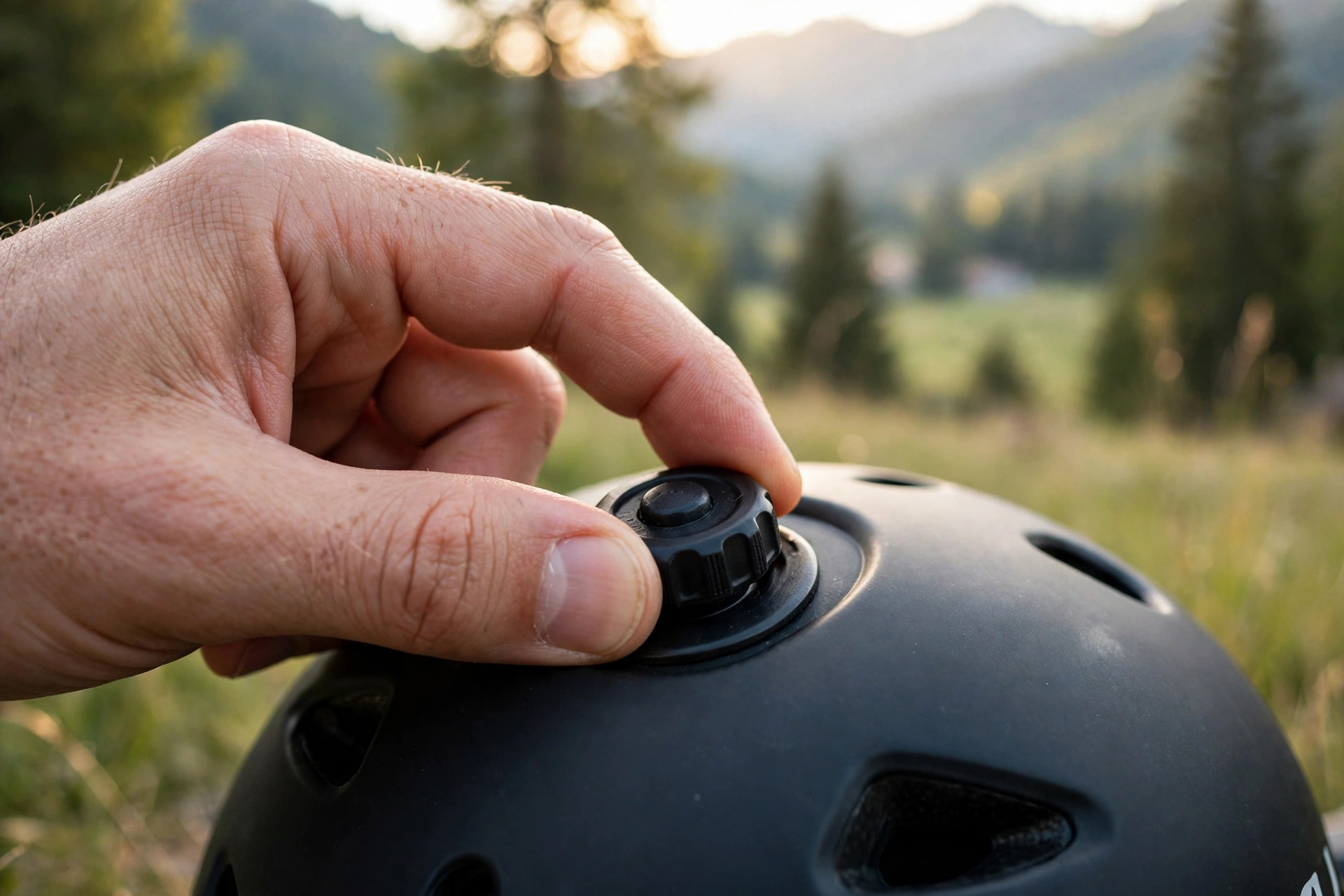
Now turn the dial clockwise in small increments, pausing after each few clicks to check the feel. You are aiming for snug and even pressure all round — the helmet should move with your head when you shake it gently, not slide independently. Stop as soon as it feels secure. Over-tightening causes pressure points and headaches, and it can distort the cradle so the fit actually gets worse.
Next, adjust the chin straps. The side straps should form a V just below each ear, and the buckle should sit snug under the chin with room for no more than one or two fingers underneath. Do the straps after the dial, because tightening the dial first sets the helmet’s position, and the straps then lock that position in place.
Finally, do a movement check. Crouch, look up, look down, and shake your head firmly side to side and front to back. The helmet should stay level and should not rock, lift at the back, or slide over your eyes. If it moves, go back to the dial and take up a little more slack, then re-check the straps.
What If the Dial Adjustment Does Not Fix the Fit?
If the dial is fully tightened and the helmet still feels loose, the shell is too large. Try a smaller size, or swap in thicker comfort padding if your helmet allows it — but treat thick padding as a fine adjustment, not a rescue for a helmet two sizes too big. A helmet that only fits because the dial is cranked to its limit will be uncomfortable and may not sit at the right height.
If the dial is fully loosened and the helmet still feels tight, the shell is too small. Pressure on the forehead or temples that does not ease after a few minutes means you need the next size up. A helmet that hurts will tempt you to loosen the straps or wear it tipped back, both of which undo its protection.
Uneven pressure — tight at the front but loose at the back, for example — usually means the helmet’s internal shape does not match your head shape. Different makers use different shell shapes, so trying another model often solves a fit problem that no adjustment can. Head shapes vary, and there is no shame in a helmet simply not suiting you.
How Often Should You Re-Adjust the Dial?
Check the dial every time you put the helmet on — a quick twist takes seconds and catches the times it has loosened in your bag. Re-adjust properly whenever anything changes: a new hairstyle, a beanie underneath in winter, replacement padding, or a helmet that has been lent to someone else.
Padding compresses over weeks and months of use, which gradually loosens the fit. If you find yourself tightening the dial a little more each month, that is normal wear, not a fault. But if the dial reaches its limit, the padding is probably worn out and should be replaced, or the helmet itself may be due for retirement.
Does the Dial Replace the Chin Strap?
No — the dial and the chin strap do different jobs, and you need both. The dial cradle grips the back of your head and stops the helmet rocking and sliding. The chin strap keeps the helmet on your head in a crash, when forces try to pull it off. A snug dial with a loose chin strap will still let the helmet come off in a hard fall.
Think of it as two systems working together: the dial sets the fit, the strap secures it. Skipping either one leaves the helmet able to move at the worst moment. Make both checks part of your routine — dial first, then straps, then a shake test — and it becomes a habit that takes under a minute.
One more point: some riders worry that a dial system adds weight or a weak point to the helmet. In general terms, dial systems on certified helmets are tested as part of the whole helmet, so a certified dial-fit helmet has passed its tests with the dial in place. The system is not a compromise on safety; it is a fit aid, and a well-fitting helmet protects better than a loose one. For more on how helmets manage impact forces, see this guide to what MIPS means for helmets.
Frequently Asked Questions
Q: Which way do I turn a helmet dial to tighten it?
A: In general terms, clockwise tightens and anticlockwise loosens on most dial systems. If your dial works the other way, follow the markings on your helmet, and adjust in small increments either way.
Q: Should the dial be tight enough that the helmet cannot move at all?
A: The helmet should move with your head, not independently of it, but it should not be painfully tight. Snug and comfortable is the goal — pressure points or headaches mean it is too tight.
Q: Can I adjust the dial while wearing gloves?
A: Most dials are designed to be turned with gloves on, which is handy for cold sessions. If your dial is hard to grip with gloves, adjust it bare-handed before you ride and check it again afterwards.

Olivia
Writer at Helmet Today, covering helmet reviews, fit and riding safety.