We may earn a commission when you buy through links on this page, at no extra cost to you. Learn more
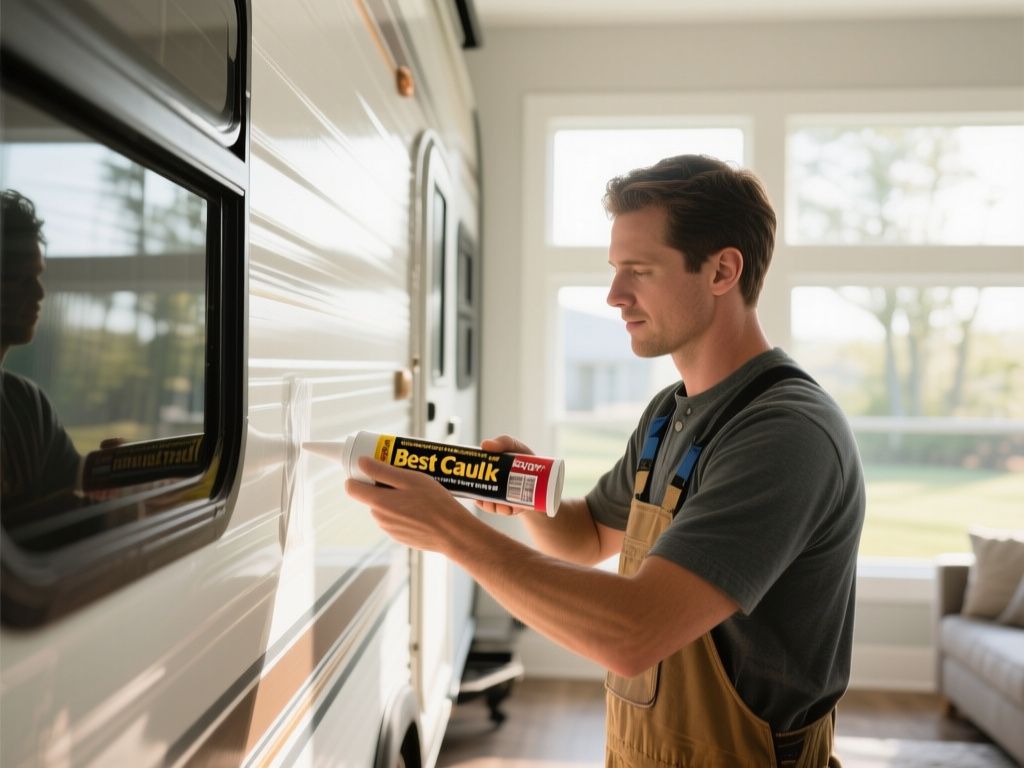
Choosing the Best Caulk for RV Exterior work starts with matching the sealant to the surface and job. Roof vents, seams, windows, doors, and sidewalls do not all need the same formula, especially when a product is designed to self-level on horizontal surfaces.
Flexibility matters on an RV because road vibration and temperature changes can stress a seal. Look for products that offer waterproofing, strong adhesion, UV or weather resistance, and compatibility with materials such as EPDM, TPO, fiberglass, aluminum, vinyl, and PVC.
Application details are just as important as the formula. Some sealants need clean, dry surfaces, some cannot go over silicone, and self-leveling products are intended to flow across horizontal roof details rather than fill vertical gaps or cracks.
| Product | Title | Key Features | Price |
|---|---|---|---|
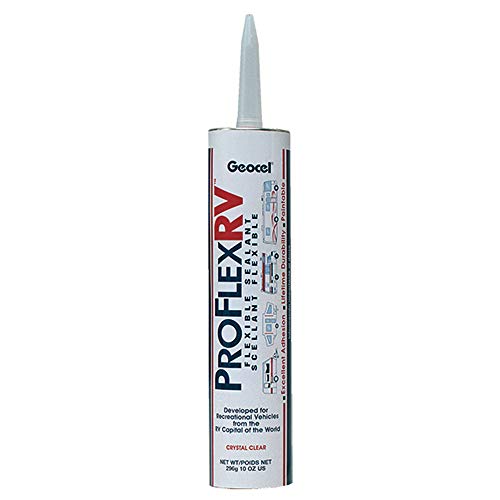 |
#1Best Clear Finish Geocel Pro Flex Clear Sealant Brand: Geocel
|
|
Check Latest Price |
|
#2Best Flexible White Geocel Pro Flex White Sealant Brand: Geocel
|
|
Check Latest Price |
 |
#3Best Roof Coverage Liquid Rubber RV Lap Sealant Brand: Liquid Rubber
|
|
Check Latest Price |
 |
#4Best Quick Cure WELLUCK Self-Leveling Roof Sealant Brand: WELLUCK
|
|
Check Latest Price |
 |
#5Best Roof Value Dicor Non-Leveling Lap Sealant Brand: Dicor
|
|
Check Latest Price |
 |
#6Best Budget Sealant GE Silicone Window Door Caulk Brand: GE
|
|
Check Latest Price |
 |
#7Best Window Maintenance Dicor Clear Cap Sealant Brand: Dicor
|
|
Check Latest Price |
What to Look for in Best Caulk For Rv Exterior
- Choose a self-leveling lap sealant for horizontal roof details such as vents, skylights, antenna mounts, and roof seams.
- Check compatibility with your RV roof material, particularly EPDM, TPO, fiberglass, metal, aluminum, PVC, or rubber.
- Prioritize flexibility, waterproofing, UV resistance, and crack resistance when the seal will face vibration and changing temperatures.
- Confirm surface preparation requirements, since some products require clean, dry surfaces and will not adhere to existing silicone.
- Compare tube size and coverage with the repair area, especially when sealing a long RV roof or several roof fixtures.
#1 · Best Clear Finish
Geocel Pro Flex Clear Sealant
Geocel Pro Flex RV Flexible Sealant is a practical choice when you want a clear exterior repair that does not cover the appearance of the surrounding surface. It offers excellent adhesion to many surfaces, including damp ones, and is designed for flexible RV sealing work. The resealable formula may also be applied over itself, giving it useful versatility for maintenance jobs that need a second pass.
This 10-ounce cartridge suits RV owners who want a paintable sealant that resists dirt pick-up. Its clear finish is particularly useful around exterior areas where a white bead would stand out. The product data also lists a 93-degree-Celsius flash point, so normal handling should still follow appropriate product and application precautions.
Pros
- Adheres to many surfaces, even when damp
- Resealable and can be applied over itself
- Paintable finish
- Resists dirt pick-up
- Clear appearance
Cons
- Does not offer a stated UV-resistance claim
- The data does not specify self-leveling use
- Flash point requires sensible handling
In real-world maintenance, the ability to adhere even when surfaces are damp can be helpful when conditions are less than perfect, although careful preparation remains worthwhile. The resealable feature is useful if a cartridge is not finished in one session, while the option to apply it over itself can simplify touch-ups or layered repairs.
Compared with the white Geocel option, this version is better suited to a less visible bead, while the roof-specific products provide more explicit lap-sealing or self-leveling guidance. It is a flexible, multipurpose pick for RV exterior sealing when appearance and reusability matter as much as adhesion.
#2 · Best Flexible White
Geocel Pro Flex White Sealant
Geocel Pro Flex White RV Flexible Sealant is aimed at exterior RV repairs where a white finish and flexible performance are desirable. Its listed strengths include crack resistance, exceptional flexibility, and excellent adhesion to many surfaces, even when damp. That combination makes it a sensible option for maintenance areas exposed to movement, changing conditions, and everyday outdoor wear.
The formula is also UV resistant, which gives it an advantage for exposed exterior applications compared with products whose data does not mention sunlight protection. The 10-ounce cartridge format is suited to caulking-gun application. Choose this version when a visible white bead works with the RV and you want a flexible sealant rather than a clear finish.
Pros
- Crack resistant
- Exceptionally flexible
- UV resistant
- Adheres to many surfaces, even when damp
- White finish suits many RV roofs
Cons
- Not identified as self-leveling
- The data does not state paintability
- No coverage figure is provided
This product makes sense for seams and exterior areas where cracking is a concern, particularly when the seal will remain exposed to sunlight. Its ability to adhere to damp surfaces can be convenient during RV maintenance, while the flexible formulation is intended to accommodate movement instead of becoming an overly rigid line.
Against the clear Geocel, this version prioritizes a conventional white appearance and specifically lists UV resistance and crack resistance. The roof lap sealants are more specialized for roof details, but Pro Flex White is a strong general exterior choice when you need flexibility and a coordinated finish.
#3 · Best Roof Coverage
Liquid Rubber RV Lap Sealant
Liquid Rubber RV Lap Sealant is designed specifically for horizontal RV roof details, including vents, skylights, AC units, antenna mounts, and roof seams. Its self-leveling formulation flows and smooths itself by design, creating a flexible, waterproof barrier. That makes it a focused choice for roof maintenance rather than a general-purpose sealant for vertical sidewalls or open gaps.
The four-pack provides a useful quantity for larger roof jobs, and each 10-ounce tube covers approximately 22 linear feet with a 5/16-inch bead. The product is compatible with EPDM, TPO, fiberglass, metal, aluminum, PVC, and ABS when properly prepared. Existing silicone must be fully removed because this sealant will not adhere to it.
Pros
- Self-leveling for horizontal roof details
- Flexible and waterproof
- Designed for vents, skylights, and roof seams
- Compatible with several RV materials
- Four-pack supports larger repairs
Cons
- Not intended for vertical surfaces or sidewalls
- Requires clean, dry surfaces
- Will not adhere to silicone
Application requires a standard caulking gun, cutting the nozzle, and puncturing the inner seal before dispensing. Flowing during application is normal, so it should be used where self-leveling is appropriate rather than treated like a stiff gap filler. The stated coverage helps estimate material needs; a typical 30-foot RV usually requires about four tubes.
This is the most clearly roof-focused option in the group, with explicit guidance for horizontal details and a complete RV roof system. For larger seams or movement areas, the product data recommends using it with Liquid Rubber Seam Tape and RV Roof Coating. It is less suitable than the window and door products for perimeter maintenance.
#4 · Best Quick Cure
WELLUCK Self-Leveling Roof Sealant
WELLUCK Self Leveling RV Roof Sealant is built for roof edges, air vents, and similar RV roof maintenance. It pumps out easily and levels itself, while the flexible formulation is designed to handle strong vibration and temperature fluctuations. The product is described as low odor and low VOC, which may appeal to owners who prefer a less intrusive repair material.
Its stated working temperature range is 0 to 104 degrees Fahrenheit, with about 10 minutes of working time and curing in 24 hours. WELLUCK adheres to EPDM, TPO, aluminum, steel, glass, PVC, and other listed materials. Surfaces other than EPDM can be used without primer, according to the product information.
Pros
- Self-leveling application
- Low odor and low VOC
- Ten minutes of working time
- Cures in 24 hours
- Adheres to many listed materials
Cons
- The data does not provide coverage per tube
- EPDM requires primer
- Intended mainly for roof maintenance
The self-leveling behavior is useful around roof edges and fixtures where an even bead is preferred. Its initial grab, working time, and 24-hour cure provide a clear application timeline, while the stated temperature range gives more context for planning a repair. The sealant is also described as waterproof and UV all-weather adhesive.
Compared with Liquid Rubber, WELLUCK offers similar roof-oriented self-leveling functionality but does not provide a linear coverage estimate in the product data. Its low-odor description and quick curing information may make it attractive for straightforward repairs, while the Geocel products are broader exterior choices rather than dedicated self-leveling roof sealants.
#5 · Best Roof Value
Dicor Non-Leveling Lap Sealant
Dicor 551LSW-1 Non-Leveling Lap Sealant is made for creating a watertight seal along RV roof edges, air vents, vent pipes, and screw heads. It remains flexible and offers excellent adhesion to aluminum, mortar, wood, vinyl, galvanized metal, and concrete. This makes it a practical choice for targeted roof maintenance where a non-leveling lap sealant is preferred.
The white 10.3-ounce tube is formulated for EPDM roofing and is also compatible with Dicor DiFlex II, Tufflex, PVC, and PriTEK TPO roofing. Its sun-ray-stabilized formulation is designed to avoid discoloration and staining the materials to which it is applied. That combination suits owners seeking a conventional white roof seal around common RV fixtures.
Pros
- Creates a watertight roof seal
- Remains flexible
- Compatible with several roofing materials
- Sun-ray stabilized
- Adheres to many common substrates
Cons
- Non-leveling rather than self-leveling
- No coverage figure is listed
- The data does not state cure time
For focused repairs, this product covers several common trouble spots: roof edges, vents, vent pipes, and screw heads. Its non-leveling format distinguishes it from the flowing roof products, so it is better suited to applications where controlled placement matters. The flexible seal and broad adhesion list support routine exterior roof maintenance.
At the listed price, it is the least expensive product in this selection, though price can change. It compares favorably with the self-leveling four-packs for smaller targeted jobs, while Liquid Rubber and WELLUCK offer more explicit self-leveling instructions. Dicor’s material compatibility and sun-ray stabilization are its strongest differentiators.
#6 · Best Budget Sealant
GE Silicone Window Door Caulk
GE Advanced Silicone Caulk is a clear, 100% silicone sealant intended for window and door applications. It is waterproof and weatherproof, permanently flexible, and designed to resist shrinking and cracking as temperatures change. The product also offers strong adhesion across many materials, including aluminum, composites, masonry, glass, drywall, ceramic, and porcelain tile.
This smaller 2.8-fluid-ounce tube is a sensible fit for limited exterior maintenance rather than a large RV roof project. It is rain-ready in as little as 30 minutes, and the cured sealant is resistant to stain-causing mold and mildew growth. Choose it for compatible window or door work where a clear silicone bead is appropriate.
Pros
- 100% waterproof and weatherproof
- Permanently flexible
- Clear finish
- Rain-ready in as little as 30 minutes
- Adheres to many materials
Cons
- Small 2.8-fluid-ounce tube
- Not described as an RV-specific sealant
- Silicone may not suit every RV repair
The product data lists 40% more flexibility than Class 25 sealants and five times stronger adhesion than GE Silicone 1, giving shoppers useful context within GE’s silicone range. Its freeze- and sun-proof positioning, along with resistance to temperature-related shrinking and cracking, supports exposed window and door maintenance.
This is the lowest-priced option in the group, but its small tube limits how much exterior work it can cover. It is not a roof lap sealant and does not provide RV-specific material guidance like the Liquid Rubber, WELLUCK, or Dicor products. For a modest compatible window or door seal, however, it offers a clear and weatherproof solution.
#7 · Best Window Maintenance
Dicor Clear Cap Sealant
Dicor 351CSCL-1 Cap Sealant is designed for sealing the perimeters of RV windows, entry doors, compartment doors, and joints. Its clear material allows the underlying RV surface to remain visible, while the paintable formula adds flexibility for maintenance work where a finished appearance matters. It is intended as a cap sealant and works with all Dicor sealants, tapes, and adhesives.
The 10.1-ounce size provides more material than the GE silicone tube and is designed for quick, simple installation with fast drying application. It can be applied to metal, wood, particleboard, plywood, rubber, concrete, masonry, glass, thermoplastics, fiberglass, and other fiber-reinforced plastic. This breadth makes it useful for varied RV perimeter repairs.
Pros
- Designed for RV windows and doors
- Clear finish
- Paintable
- Fast-drying application
- Compatible with all Dicor sealants, tapes, and adhesives
Cons
- Not intended as a roof lap sealant
- The data does not state waterproofing details
- No coverage figure is provided
This product is best matched to perimeter work rather than broad roof sealing. Its compatibility list includes many RV-relevant materials, and the clear, paintable finish can help preserve the appearance around windows, entry doors, and compartments. Fast-drying application also supports quick maintenance when the repair area is properly prepared.
Compared with GE’s silicone, Dicor offers a larger 10.1-ounce package and explicitly targets RV window, door, and joint maintenance. Compared with the roof products, it lacks self-leveling or roof-edge positioning. Select it when the repair is around an opening or joint and a clear, paintable cap seal is more useful than a roof lap formulation.
Frequently Asked Questions
What type of caulk is best for an RV exterior?
The best choice depends on the location. Use a self-leveling RV lap sealant for horizontal roof details, while flexible exterior or cap sealants are better suited to windows, doors, joints, and other perimeter work.
Can self-leveling RV sealant be used on sidewalls?
Liquid Rubber states that its self-leveling lap sealant is not intended for vertical surfaces, sidewalls, or filling open gaps and cracks. Use it specifically for suitable horizontal roof details.
Can RV sealant go over old silicone?
Not always. Liquid Rubber specifically states that it will not adhere to silicone, so existing silicone must be fully removed before application.
How much RV roof sealant do I need?
Liquid Rubber states that each 10-ounce tube covers approximately 22 linear feet with a 5/16-inch bead. It also estimates that a typical 30-foot RV usually requires about four tubes, though the actual amount depends on the repair layout.
Should I choose clear or white RV sealant?
Choose clear when you want the underlying surface to remain visible, as with the Geocel clear and Dicor cap sealant. White can coordinate better with many RV roofs and is available in the Geocel, WELLUCK, Liquid Rubber, and Dicor lap-sealant options.
Final Thoughts
For horizontal RV roof details, Liquid Rubber is the most purpose-built choice, with self-leveling behavior, broad material compatibility, and stated coverage. WELLUCK is another strong roof option when low odor, working time, and a 24-hour cure are priorities, while Dicor’s non-leveling lap sealant suits targeted roof-edge and fixture repairs.
For broader exterior flexibility, Geocel Pro Flex White offers crack resistance and UV resistance, while the clear Geocel version favors a less visible, paintable finish. Choose Dicor Clear for RV window and door perimeters, or GE Silicone for a smaller, budget-friendly compatible repair rather than a full roof job.

Olivia
Writer at Helmet Today, covering helmet reviews, fit and riding safety.