We may earn a commission when you buy through links on this page, at no extra cost to you. Learn more
If your legs feel heavy after a run, your back is tight after a long day at a desk, or you just want to recover faster between workouts, a foam roller can help. We compared density, length, texture and durability to find the best foam rollers in 2026.
Our top pick is the TriggerPoint GRID 1.0, a compact multi-density roller that works on almost every muscle group and keeps its shape for years. The other four picks cover tighter budgets, deeper tissue work, gentle beginner-friendly rolling and premium vibration.
As an Amazon Associate, Helmet Today earns from qualifying purchases — at no extra cost to you. Prices change often, so use the Check Price buttons to see today’s deal.
| Product | Key Features | Best For | Price |
|---|---|---|---|
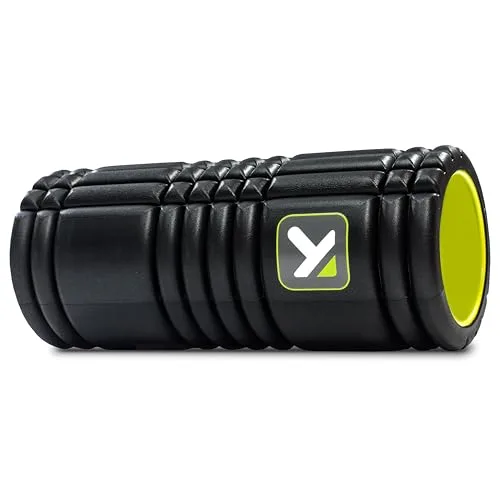 TriggerPoint GRID 1.0 |
Multi-density GRID surface; EVA foam over a rigid hollow core that supports up to 500 lb; compact 13-inch length | Best Overall | Check Price on Amazon |
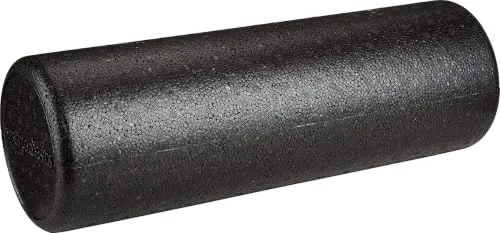 Amazon Basics High-Density Foam Roller |
High-density EPP foam; 18 x 6 inch size; molded edges, lightweight, smooth wipe-clean surface | Best Budget | Check Price on Amazon |
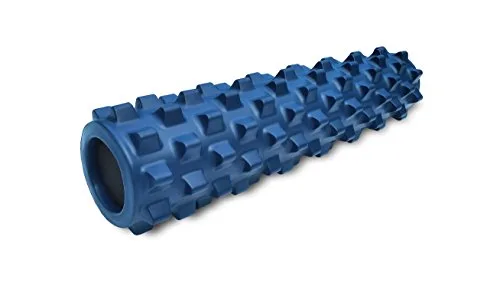 RumbleRoller Original |
Firm-but-flexible bumps that knead soft tissue; latex-free, waterproof EVA; 22-inch midsize | Best for Deep Tissue | Check Price on Amazon |
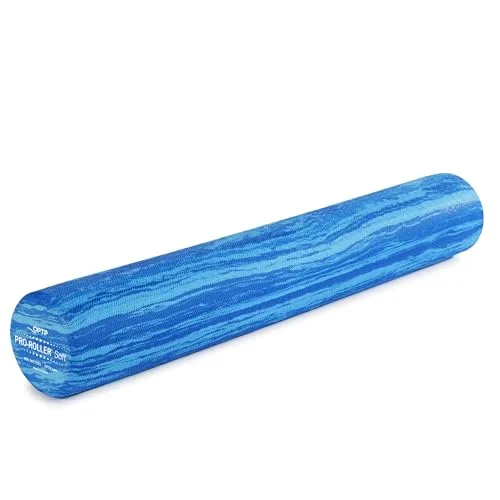 OPTP PRO-Roller Soft |
Soft-density closed-cell EVA foam; full 36-inch length; heat-molded, wipe-clean surface | Best for Beginners | Check Price on Amazon |
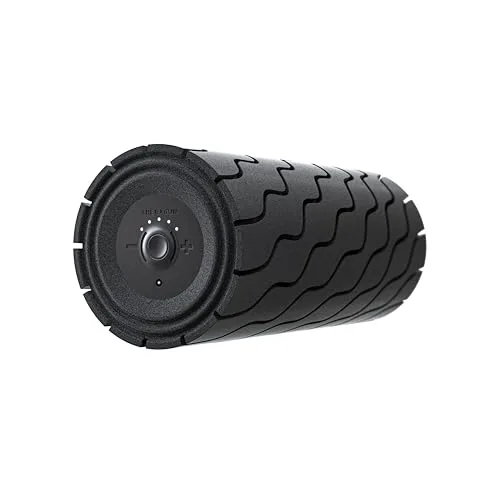 Therabody Wave Roller |
5 vibration settings; Bluetooth app control; hypoallergenic EVA with silicone wave grooves; 180-minute battery | Best Premium (Vibrating) | Check Price on Amazon |
1. TriggerPoint GRID 1.0 — Best Overall
The TriggerPoint GRID 1.0 is the roller most people should start with. Its patented multi-density surface has Distrodensity zones that mimic a massage therapist’s palms, fingers and thumbs, so you can vary the pressure just by shifting position. The EVA foam sits over a rigid hollow core that supports up to 500 lb and will not break down or lose shape.
At 13 inches it is compact enough to target calves, quads, glutes, back and lats, and it travels easily in a gym bag. TriggerPoint also includes a free online instructional video library, which helps beginners learn the right technique.
Key Features
- Patented multi-density GRID surface with Distrodensity zones that mimic a massage therapist’s palms, fingers and thumbs
- EVA foam over a rigid hollow core that supports up to 500 lb and will not break down or lose shape
- Compact 13-inch length targets calves, quads, glutes, back and lats and travels easily in a gym bag
Pros
- The most versatile roller here, works for almost every muscle group
- Hollow core keeps its shape for years
- Free video library helps beginners roll correctly
Cons
- Costs noticeably more than a plain smooth roller of the same size
- The textured surface can feel intense for first-time users; 13 inches is short for lying across the full back, so full-back work means repositioning
2. Amazon Basics High-Density Foam Roller — Best Budget
The Amazon Basics roller is the cheapest way into foam rolling that still works. Its high-density polypropylene (EPP) foam gives firm support that holds its shape under body weight, and the 18 x 6 inch size suits back, legs and core and balance work — a good first full-size roller.
Molded edges keep it comfortable to use, it is lightweight and easy to carry, and the smooth surface wipes clean in seconds. It will not do targeted trigger-point work, but for everyday rolling after workouts it is hard to beat.
Key Features
- High-density polypropylene (EPP) foam gives firm support that holds its shape under body weight
- 18 x 6 inch size suits back, legs and core and balance work, a good first full-size roller
- Molded edges for comfort, lightweight and easy to carry
- Smooth surface wipes clean in seconds
Pros
- The cheapest way into foam rolling that still works
- Full 18-inch size suits most exercises
- Wipes clean and weighs almost nothing
Cons
- Solid foam gradually compresses and softens with heavy daily use, faster than hollow-core rollers
- Completely smooth surface with no texture for targeted trigger-point pressure; very firm feel can be too much for beginners or sensitive areas
3. RumbleRoller Original — Best for Deep Tissue
The RumbleRoller is the specialist of the group. Its patented firm-but-flexible bumps flex under body weight and knead soft tissue like a massage therapist’s thumbs, eroding trigger points and stretching muscle and fascia in multiple directions while deflecting away from the spine and bony areas.
The EVA and polyolefin construction is latex-free, waterproof and non-porous, so it will not absorb sweat. At 22 inches, the midsize covers the back and both legs while staying far easier to store than the 31-inch full size.
Key Features
- Patented firm-but-flexible bumps that flex under body weight and knead soft tissue like a massage therapist’s thumbs
- Bumps erode trigger points and stretch muscle and fascia in multiple directions, deflecting away from the spine and bony areas
- EVA and polyolefin construction is latex-free, waterproof and non-porous so it will not absorb sweat
Pros
- The deepest, most targeted pressure of any roller here
- Bumps flex so it works around bones instead of grinding them
- Waterproof surface never absorbs sweat
Cons
- Genuinely painful for beginners, widely described as too aggressive for the IT band and tender areas, and bumps can leave temporary red marks
- Premium price for what is a specialist tool, not an everyday roller
4. OPTP PRO-Roller Soft — Best for Beginners
The OPTP PRO-Roller Soft is the gentle one — and that is the point. Its soft-density closed-cell EVA foam gives gentle pressure that beginners, rehab patients and sensitive users can actually tolerate, where a firm roller would just hurt.
The full 36-inch length supports the whole spine lying down, plus Pilates, balance and stability work. Heat-molded EVA construction outlasts cheap open-cell rollers, the closed-cell surface wipes clean, and this is the roller physical therapy clinics standardise on.
Key Features
- Soft-density closed-cell EVA foam gives gentle pressure that beginners, rehab patients and sensitive users can actually tolerate
- Full 36-inch length supports the whole spine lying down, plus Pilates, balance and stability work
- Heat-molded EVA construction outlasts cheap open-cell rollers and the closed-cell surface wipes clean
Pros
- Gentle enough for rehab and first-timers
- Full length supports the whole spine
- Clinic-grade build quality
Cons
- Too soft to dig out deep knots, experienced rollers will find it underpowered for serious trigger-point work
- 36-inch length is bulky to store and impractical to travel with; costs more than basic high-density EPP rollers
5. Therabody Wave Roller — Best Premium (Vibrating)
The Therabody Wave Roller is the only vibrating roller here, and the vibration changes the experience. Five intensity settings let vibration plus pressure reach deep tissue with less rolling effort, and Bluetooth control via the Therabody app pairs guided routines to each intensity.
The hypoallergenic high-density EVA foam has silicone wave grooves for traction and an extra dimension of pressure. At 12 x 5 inches it is built for large muscle groups, the internal battery runs 180 minutes per charge, and a carrying pouch and power adapter are included.
Key Features
- 5 vibration intensity settings — vibration plus pressure reaches deep tissue with less rolling effort
- Bluetooth control via the Therabody app with guided routines matched to each intensity
- Hypoallergenic high-density EVA foam with silicone wave grooves for traction and an extra dimension of pressure
- 12 x 5 inch size built for large muscle groups, internal battery runs 180 minutes per charge, carrying pouch and power adapter included
Pros
- Vibration does the deep work with far less effort
- App routines guide each session
- Premium build with a long 3-hour battery
Cons
- Several times the price of a quality plain roller, hard to justify for casual users
- 12-inch length is short for spine-length or full-back work; needs recharging, and a dead battery turns it into an ordinary expensive foam roller
Buying Guide: How to Choose the Best Foam Rollers
Density and firmness
Soft rollers suit beginners, rehab and sensitive areas; high-density firm rollers give deeper pressure but can be painful while you adapt.
Length
12–13 inch rollers target specific muscles and travel well; 18 inch is the versatile middle; 31–36 inch rollers support the full back and balance and Pilates work.
Surface texture
Smooth surfaces give even, gentle pressure; multi-density grids add targeted zones; aggressive bumps dig deepest but are not beginner-friendly.
Construction and durability
Solid EPP and EVA foam is cheap but softens over time; hollow-core rollers hold their shape for years and carry higher weight ratings (up to 500 lb).
Extras and budget
Vibration motors and app guidance multiply the price; decide whether you need the tech or whether a simple manual roller covers your routine.
Frequently Asked Questions
How often should you use a foam roller?
Most people roll for 5–10 minutes a day, or after workouts, focusing on the muscles that feel tight. Daily use is fine if you keep the pressure comfortable and skip any area that is injured or sharply painful. Short, regular sessions beat one long, aggressive session.
Does foam rolling actually help recovery?
Foam rolling is a form of self-massage that can ease muscle tightness and soreness after exercise and help you move more freely before a workout. It works best as part of a recovery routine alongside rest, hydration and gentle movement — it is a support tool, not a cure, and it will not fix an injury on its own.
What size foam roller should a beginner get?
An 18-inch roller is the best starting point for most beginners: long enough for the back and both legs, short enough to store and carry, and versatile enough for balance work. A compact 12–13 inch roller is better if you mainly target specific muscles or travel, while a 36-inch roller suits full-spine and Pilates work.
Conclusion
After comparing all five, the TriggerPoint GRID 1.0 is still our top pick: versatile, durable and easy to learn with, thanks to its multi-density surface and free video library. If you want the cheapest solid start instead, the Amazon Basics High-Density Foam Roller is the runner-up, with a full 18-inch size and firm support at a budget-friendly price. Whichever you choose, start gently, roll slowly, and let the roller support your recovery — not replace rest and movement.

Olivia
Writer at Helmet Today, covering helmet reviews, fit and riding safety.