We may earn a commission when you buy through links on this page, at no extra cost to you. Learn more
The best hand planes make controlled, clean cuts without turning every project into a struggle. The right choice depends on whether you need a compact block plane for trimming and detail work, or a larger bench plane for smoothing boards and removing more material.
Pay attention to blade quality, adjustment controls, body construction and handling. A plane with an adjustable cutting depth gives you more control, while a flat sole and comfortable grip make repeated passes easier and more consistent.
This selection covers compact metal block planes, full-size No. 4 bench planes and a traditional Japanese kanna. The ideal option will depend on your woodworking style, the scale of your projects and how much setup you want before making the first cut.
| Product | Title | Key Features | Price |
|---|---|---|---|
 |
#1Best Mini Plane Jorgensen No. 101 Mini Plane Brand: Jorgensen
|
|
Check Latest Price |
 |
#2Best Adjustable Block Jorgensen No. 60-1/2 Plane Brand: Jorgensen
|
|
Check Latest Price |
 |
#3Best Heavy Duty Jorgensen No. 4 Wood Plane Brand: Jorgensen
|
|
Check Latest Price |
 |
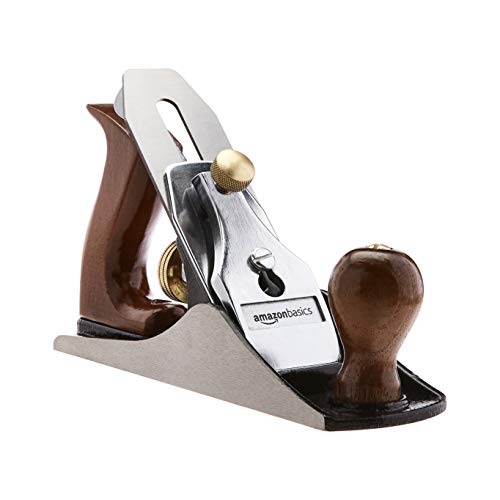
#4Best Value Bench Amazon Basics No. 4 Plane Brand: Amazon Basics
|
|
Check Latest Price |
 |
#5Best Wooden Grip Amazon Basics Wooden No. 4 Plane Brand: Amazon Basics
|
|
Check Latest Price |
 |
#6Best Low Angle Jorgensen No. 102 Block Plane Brand: Jorgensen
|
|
Check Latest Price |
 |
#7Best Traditional Plane KAKURI Japanese Hand Plane Brand: KAKURI
|
|
Check Latest Price |
What to Look for in Best Hand Planes
- Choose a compact block plane for trimming, deburring, chamfering and detailed woodworking, while a No. 4 plane suits broader smoothing work.
- Look for adjustable cutting depth so you can control how aggressively the blade removes material.
- A ductile-iron or cast-iron body adds stability, while a wooden body offers a traditional feel and lighter handling.
- Check whether the plane has an adjustable mouth, chipbreaker or other features that support finer control.
- Consider setup requirements: some planes are ready to use, while traditional designs may need blade tuning with a hammer.
#1 · Best Mini Plane
Jorgensen No. 101 Mini Plane
The JORGENSEN No. 101 is a compact metal hand plane for small woodworking jobs, crafts and detail adjustments. Its O1 tool-steel blade is finely sharpened and can be sharpened and adjusted repeatedly, making it useful for trimming, polishing, deburring and shaping smaller pieces. The ductile-iron body is drop-tested, while the zinc-alloy lever cap and stainless-steel parts give this miniature tool a notably sturdy construction.
Its adjustable cutting depth lets you change the blade projection with a turn of the knob, and the polished flat bottom is designed for smooth operation. The small size makes it portable and approachable for beginners, although users should take care around the sharp blade. It is especially well suited to anyone who wants a simple, space-saving plane for detail woodworking rather than broad stock removal.
Pros
- Compact and portable design
- Adjustable cutting depth
- O1 tool-steel blade can be resharpened
- Ductile-iron body
- Instruction manual included
Cons
- Less suited to large surfaces
- Small size may limit hand comfort
- Sharp blade requires careful handling
In practical use, this plane is aimed at controlled, short passes rather than flattening wide boards. Its flat sole and adjustable blade make it suitable for refining edges, removing small amounts of material and cleaning up surfaces during DIY or craft work. The durable body should also tolerate workshop use better than a lightweight, less substantial mini plane.
Among these options, the No. 101 is one of the most focused choices: smaller than the No. 60-1/2 and No. 102, and far more compact than the No. 4 models. It makes sense when portability and detail control matter more than reach. Buyers wanting a full-size smoothing plane should look elsewhere.
#2 · Best Adjustable Block
Jorgensen No. 60-1/2 Plane
The JORGENSEN No. 60-1/2 combines compact handling with more adjustment than the smaller No. 101. Its O1 tool-steel blade is intended for efficient cutting and can be sharpened and adjusted for continued use. The ductile-iron body is built for heavy-duty use, and the zinc-alloy lever cap and stainless-steel components give it a solid workshop feel.
A key advantage is the combination of adjustable cutting depth and adjustable mouth width. That gives woodworkers more control over the cut for trimming, polishing, deburring and other surface work. Its portable format suits DIY users and detail-focused makers, while the polished flat sole and included instructions make the plane less intimidating for beginners.
Pros
- Adjustable blade depth and mouth width
- Resharpenable O1 steel blade
- Sturdy ductile-iron body
- Portable block-plane format
- Suitable for beginners
Cons
- Not intended for broad stock removal
- More expensive than the mini plane
- Sharp blade needs careful handling
The adjustable mouth is useful when you want to tailor the opening to the work, while the depth knob helps regulate the bite. In a real workshop, that flexibility makes the No. 60-1/2 a versatile choice for edge work and small corrections. Its size remains manageable, so it can be kept close at hand instead of reserved for occasional use.
Compared with the No. 101, this model offers a wider adjustment range and a more capable block-plane setup. It remains much more compact than either No. 4 bench plane, so it will not replace them for smoothing larger areas. It is a sensible middle ground for users who want compactness without giving up mouth adjustment.
#3 · Best Heavy Duty
Jorgensen No. 4 Wood Plane
The JORGENSEN No. 4 is a full-size 10-inch hand plane intended for removing larger amounts of wood and preparing surfaces. Its O1 tool-steel blade is finely sharpened for efficient cutting and can be repeatedly sharpened and adjusted. The ductile-iron body is designed to withstand heavy-duty use, making this a more substantial option than the compact block planes in the range.
Handling is supported by a polished beech-wood handle with a smooth, burr-free surface and a flat bottom for steady movement. Cutting depth is adjustable, allowing the plane to handle different levels of material removal. It suits furniture, general woodworking and projects where a longer sole and full-size grip are more useful than compact portability.
Pros
- Full-size 10-inch format
- Designed for larger material removal
- Adjustable cutting depth
- Ductile-iron construction
- Comfortable polished beech handle
Cons
- Heavier and less portable than block planes
- Higher listed price
- Requires more space to store
This is the choice for making longer passes across boards and taking down more material than a small block plane can comfortably manage. The longer body can provide useful support across a broader surface, while the beech handle is shaped for a more comfortable grip. As with any sharp plane, careful blade handling and proper adjustment remain important.
The No. 4 stands apart from the other JORGENSEN models here because it is built around full-size bench-plane work. It costs more than the compact options and the Amazon Basics planes listed, but its materials and larger format target more demanding woodworking tasks. Choose it when reach, control and substantial construction matter more than minimum size.
#4 · Best Value Bench
Amazon Basics No. 4 Plane
This Amazon Basics No. 4 is a full-size adjustable bench plane designed for smoothing, trimming and finishing wood. Its 2-inch steel blade works with an adjustable mouth and depth gauge, giving users control over both the opening and cutting depth. The cast-iron body is intended to reduce vibration and provide stability during cuts, making it suitable for DIYers and more serious workshop users.
Front and rear handles provide two-handed control during extended use, while adjustment screws and a lever cap support blade positioning. The included user guidance addresses maintaining the sole flat for better results. It is a practical fit for furniture, cabinetry, door trimming and edge work when you want a conventional bench-plane layout at the listed price.
Pros
- 2-inch steel blade
- Adjustable mouth and depth gauge
- Stable cast-iron body
- Front and rear handles
- Suitable for DIY and professional use
Cons
- Sole maintenance is part of setup
- Larger than compact block planes
- No wooden-handle emphasis in the design
The two-handle arrangement should help users guide the plane through longer passes, especially when smoothing boards or trimming doors. Its cast-iron construction is aimed at stability and vibration reduction, while the adjustment system gives more control than a fixed-depth design. Buyers should be prepared to follow the manual’s guidance on keeping the sole flat.
Compared with the smaller JORGENSEN planes, this model is better suited to broad bench work and less convenient for tight, intricate tasks. It shares the No. 4 format with the other Amazon Basics option, but its listed features emphasize the adjustable mouth, depth gauge and user guidance. It offers a feature-rich route into full-size planing without the highest listed cost.
#5 · Best Wooden Grip
Amazon Basics Wooden No. 4 Plane
The Amazon Basics No. 4 adjustable precision smoothing plane is a traditional-style bench-plane option for woodworking and carpentry. It uses a durable cast-iron body for stability and strength, paired with a steel alloy blade for making smoothing cuts. The adjustable gear is intended to help users achieve more precise results across furniture, general carpentry and other workshop projects.
Its impact-resistant wooden handle has a contoured grip, giving this version a different hand feel from the other Amazon Basics No. 4. The full-size format is better suited to smoothing and finishing than small detail work. It is a straightforward option for shoppers who want a substantial cast-iron plane with wooden handling surfaces and an adjustable design.
Pros
- Cast-iron body
- Impact-resistant wooden handle
- Contoured grip
- Steel alloy blade
- Adjustable precision gear
Cons
- Less portable than block planes
- Feature information is less extensive
- Not the best fit for intricate small work
The wooden handle and contoured grip are the main practical distinction here, particularly for users who prefer contact with wood rather than an entirely modern handle arrangement. The cast-iron body adds weight and stability for bench work, while the adjustable gear allows the cut to be refined for different tasks.
This plane sits alongside the other Amazon Basics No. 4 as a full-size smoothing choice, rather than competing directly with the compact JORGENSEN block planes or KAKURI kanna. Choose it when a wooden grip is a priority and your projects involve boards, carpentry or general surface finishing. The simpler feature description may appeal to shoppers who prefer a less complicated specification.
#6 · Best Low Angle
Jorgensen No. 102 Block Plane
The JORGENSEN No. 102 is a low-angle block plane built for controlled trimming, polishing, deburring and shaping. Its O1 tool-steel blade is finely sharpened for precise woodworking and can be sharpened and adjusted repeatedly. The ductile-iron body, zinc-alloy lever cap and stainless-steel parts give it a durable construction suited to regular workshop use.
Its cutting depth is adjustable through the front knob, allowing users to change how deeply the blade engages the wood. The polished flat bottom is intended to move smoothly, and the included instruction manual makes the plane approachable for beginners. Its compact size also suits DIY and craft work where accurate control matters more than covering a wide area quickly.
Pros
- Low-angle block-plane design
- Adjustable cutting depth
- Resharpenable O1 blade
- Durable ductile-iron body
- Suitable for detail work
Cons
- Not designed for large boards
- Requires attention to blade sharpness
- Less adjustment than the No. 60-1/2
The No. 102 is well matched to short, controlled passes and edge refinement. Its low-angle format makes it a natural candidate for trimming and detailed surface processing, while the flat sole helps keep movement smooth. The adjustable depth is useful for starting gently and increasing the cut only when the material and task allow it.
Relative to the No. 101, this model offers a more specifically low-angle block-plane identity; compared with the No. 60-1/2, it does not list adjustable mouth width. It is therefore a focused choice for users who value compact precision and low-angle handling. The No. 4 planes remain better choices for broader smoothing work.
#7 · Best Traditional Plane
KAKURI Japanese Hand Plane
The KAKURI Japanese hand plane brings a traditional kanna design to detailed woodworking, smoothing and chamfering. Unlike Western-style planes, it is pulled toward the user, and its compact, lightweight body is intended to make intricate work manageable. The Japanese high-carbon steel blade is sharpened by expert craftsmen and is described as ready to use, while the two-blade structure with chipbreaker helps reduce splitting.
Its natural Japanese oak body has distinctive grain patterns associated with the company’s ECO oak material. The plane measures 5.9 by 2.1 by 1.6 inches, with a 42-millimeter blade and 36-millimeter cutting width. An English manual is included, but the blade must be fine-tuned with a hammer before use, so it suits shoppers interested in a hands-on traditional tool.
Pros
- Traditional pull-style operation
- Japanese high-carbon steel blade
- Two-blade chipbreaker structure
- Compact and lightweight
- English instructions included
Cons
- Requires hammer tuning before use
- Less familiar than Western planes
- Compact size limits broad work
In use, this plane offers a different technique from every metal Western-style option here: the cut is made by pulling the tool toward you. The compact oak body is suited to detailed tasks and chamfering, while the chipbreaker is designed to help prevent splitting. The required hammer tuning adds setup, but it is part of using this traditional format.
Compared with the JORGENSEN block planes, the KAKURI emphasizes Japanese construction, pull operation and a two-blade arrangement rather than a knob-based metal adjustment system. It is not the obvious pick for fast, broad stock removal, but it is appealing for woodworkers who want an authentic, compact kanna experience. The included English instructions make the learning curve more approachable.
Frequently Asked Questions
Which hand plane is best for beginners?
The JORGENSEN No. 101, No. 60-1/2 and No. 102 all include instruction manuals and adjustable cutting depth, making them approachable compact choices. The Amazon Basics No. 4 models are also suitable for beginners who want a full-size bench plane.
Should I choose a block plane or a No. 4 plane?
Choose a block plane for trimming, deburring, chamfering and smaller detail work. A No. 4 bench plane is better suited to longer passes, smoothing boards and removing larger amounts of wood.
Which plane has the most adjustment?
The JORGENSEN No. 60-1/2 lists both adjustable cutting depth and adjustable mouth width. The other JORGENSEN planes listed provide adjustable cutting depth, while the Amazon Basics models list adjustable features for precision control.
Does the KAKURI plane need setup?
Yes. Although its Japanese high-carbon steel blade is described as ready to use, the KAKURI requires fine-tuning with a hammer before use. It also operates by pulling the plane toward you rather than pushing it like a Western-style plane.
Which hand plane is best for detailed woodworking?
The compact JORGENSEN No. 101 and No. 102 are designed for controlled detail work, while the KAKURI is specifically compact and suited to intricate tasks. Your choice depends on whether you prefer adjustable metal construction or traditional Japanese pull-style operation.
Final Thoughts
For most workshop owners, the JORGENSEN No. 60-1/2 is the most flexible compact option because it combines adjustable cutting depth with adjustable mouth width. The JORGENSEN No. 4 is the stronger choice for larger work, while the Amazon Basics No. 4 offers a practical full-size alternative with useful bench-plane features.
Choose the JORGENSEN No. 101 or No. 102 when portability and detail control come first, and choose the KAKURI if you specifically want a traditional Japanese kanna. The two Amazon Basics models are worth considering when you prefer a full-size cast-iron plane, with the wooden-handled version standing out for its contoured grip.

Olivia
Writer at Helmet Today, covering helmet reviews, fit and riding safety.