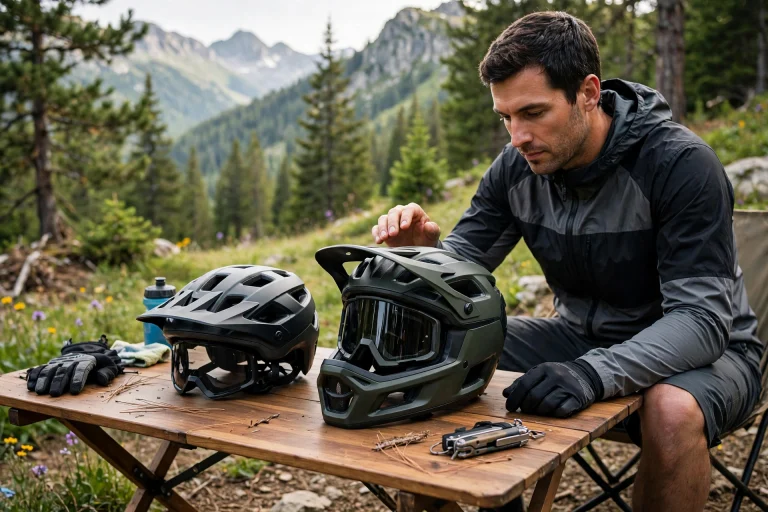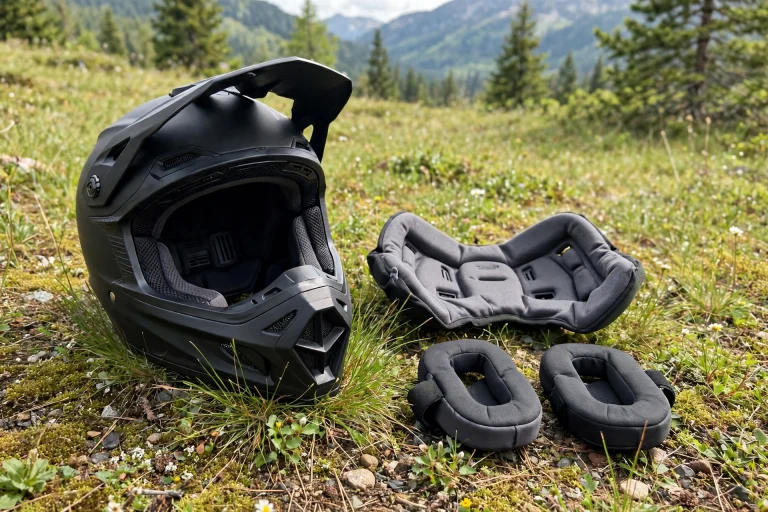
You can wear a bike helmet for skateboarding in a pinch, but it is not the ideal choice — and some skate parks will not accept one. Bike helmets and skateboard helmets are certified to different safety standards, cover different parts of your head, and are built to handle different kinds of impacts.
If you only cruise occasionally on flat ground, a certified bike helmet is far better than no helmet at all. But if you skate regularly, ride ramps or bowls, or are still learning tricks, a skate-specific or dual-certified helmet is the safer pick. Here is how the two helmet types actually differ.
Are Bike Helmets and Skateboard Helmets Certified to the Same Standard?
No, and the certification gap is the main reason the two helmets are not interchangeable. Every bike helmet sold in the United States must pass the CPSC bicycle helmet standard, which tests a helmet against a single hard impact. That standard is designed around the kind of fall a cyclist is most likely to take: one big hit, often at speed, usually toward the front or side of the head.
Skateboard helmets are tested differently. A true skate helmet meets ASTM F1492, the standard for helmets used in skateboarding and trick roller skating. That test uses a lower impact threshold applied multiple times, because skaters fall more often but usually at lower energy than cyclists. The F1492 test line also sits lower on the head, checking protection closer to the base of the skull.
A bike-only helmet has never been tested for those repeated, lower-force knocks. It may look similar on the shelf, but there is no guarantee it performs the way a skate helmet should once it starts taking small hits week after week.
How Does the Coverage Differ Between a Bike Helmet and a Skate Helmet?
Skate helmets cover more of the back and sides of your head. The shell drops lower over the occipital bone at the rear of the skull, because skaters fall backward often — a loop-out on a ramp or a slipped board sends you straight onto the back of your head. That extra rear coverage is one of the most important differences between the two designs.
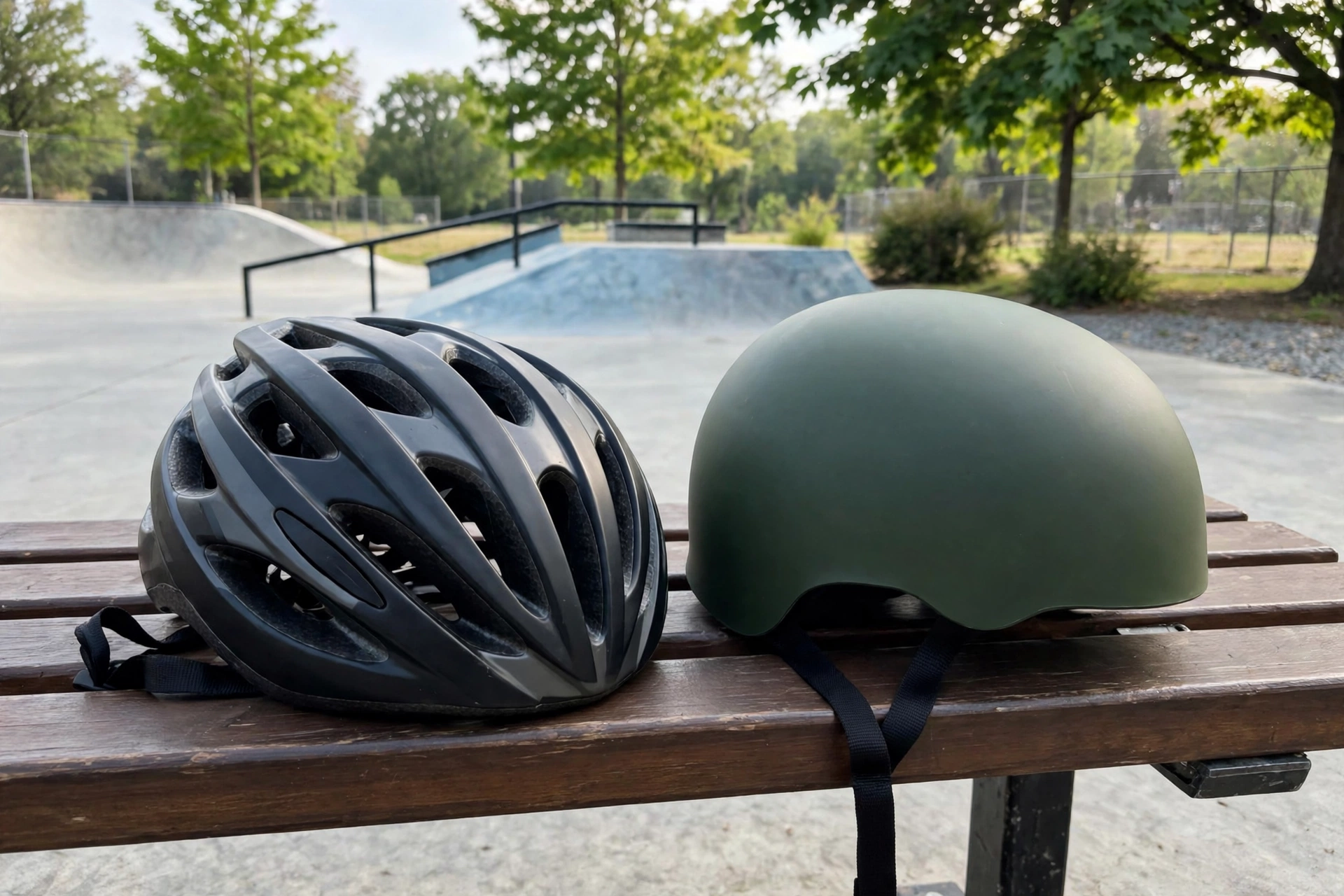
Bike helmets are shaped around a forward riding position. They tend to sit higher at the back, use deep ventilation channels, and carry less shell low on the skull. That shape is fine for cycling, where backward falls onto concrete are less common, but it leaves exactly the area a falling skater needs most with thinner protection.
Fit is different too. Skate helmets usually use thicker, softer comfort foam and a classic rounded shell, while bike helmets rely on a retention dial and thinner pads. Whichever style you wear, look for a model with rotational-impact protection such as a low-friction liner — our guide to what MIPS is for helmets explains how those systems work. The key point is that the base coverage has to be right for your sport first.
Why Does Single-Impact vs Multi-Impact Design Matter?
A bike helmet’s EPS foam liner is engineered to crush once. In a serious crash it deforms permanently, absorbing energy a single time — after that impact, the helmet is done and must be replaced, even if the shell looks fine. That is the right design for cycling, where crashes are rarer but more violent.
Skate helmets use a different liner approach, typically a softer foam designed to take repeated smaller impacts without losing its shape as quickly. Street and park skating involves exactly that pattern: dozens of low falls while you learn, bail, and try again. A bike helmet worn for skating can quietly accumulate damage from those knocks, because EPS that has partially compressed in a small fall gives you less protection in the next one.
This is also why you should never keep using a bike helmet for skating after it has taken any noticeable hit to the head area. The foam may already be compromised, and unlike a skate liner, it was never designed to bounce back.
What Is a Dual-Certified Helmet, and Is It the Best Compromise?
A dual-certified helmet passes both standards: CPSC for cycling and ASTM F1492 for skateboarding. These helmets usually look like classic skate helmets — round shell, low rear coverage — but carry both certification labels inside. For anyone who both rides a bike and skates, this is the helmet to buy.
Dual certification solves every problem above. You get the lower back-of-head coverage skaters need, a liner tested for repeated impacts, and full legal compliance as a bicycle helmet. You also only need to own, store, and maintain one helmet instead of two.
When you shop, check the labels inside the helmet rather than trusting the product name or the shelf it sits on. Some helmets marketed with a “skate style” look are only bike certified, and some skate-only helmets are not legal for cycling. The printed certifications are what count.
Do Skate Parks and Events Allow Bike Helmets?
Often, no. Many skate parks, contests, and organized events require an ASTM F1492 certified helmet, and staff can refuse entry to riders in bike-only helmets. Rules vary by city and venue, so it is worth checking before you travel to a park, but the trend is toward requiring skate certification where helmets are mandatory.
Even where a bike helmet is allowed, consider the riding you plan to do. Gentle cruising on a smooth path is low-risk, and a bike helmet gives reasonable protection there. Vert ramps, bowls, and street features where backward falls are routine are a different story — that is skate helmet territory.
The honest summary: a bike helmet is an acceptable short-term stand-in for easy skating, but it is the wrong long-term tool. If skating becomes a regular habit, put a skate-certified or dual-certified helmet on your list.
Frequently Asked Questions
Is it illegal to skateboard in a bike helmet?
There is generally no law against it for casual skating, but skate parks, contests, and some local rules can require an ASTM F1492 certified skate helmet. A bike-only helmet may be turned away at the gate.
Can I use a skateboard helmet for cycling instead?
Only if it is dual certified. A skate-only helmet that meets ASTM F1492 but not the CPSC bicycle standard does not meet the legal requirement for bike helmets sold in the US, and it has not been tested for a high-energy cycling crash.
How can I tell if my helmet is dual certified?
Look at the labels and stickers inside the helmet. A dual-certified model will list both the CPSC bicycle standard and ASTM F1492. If only one standard is printed, the helmet is certified for that sport only.

Olivia
Writer at Helmet Today, covering helmet reviews, fit and riding safety.