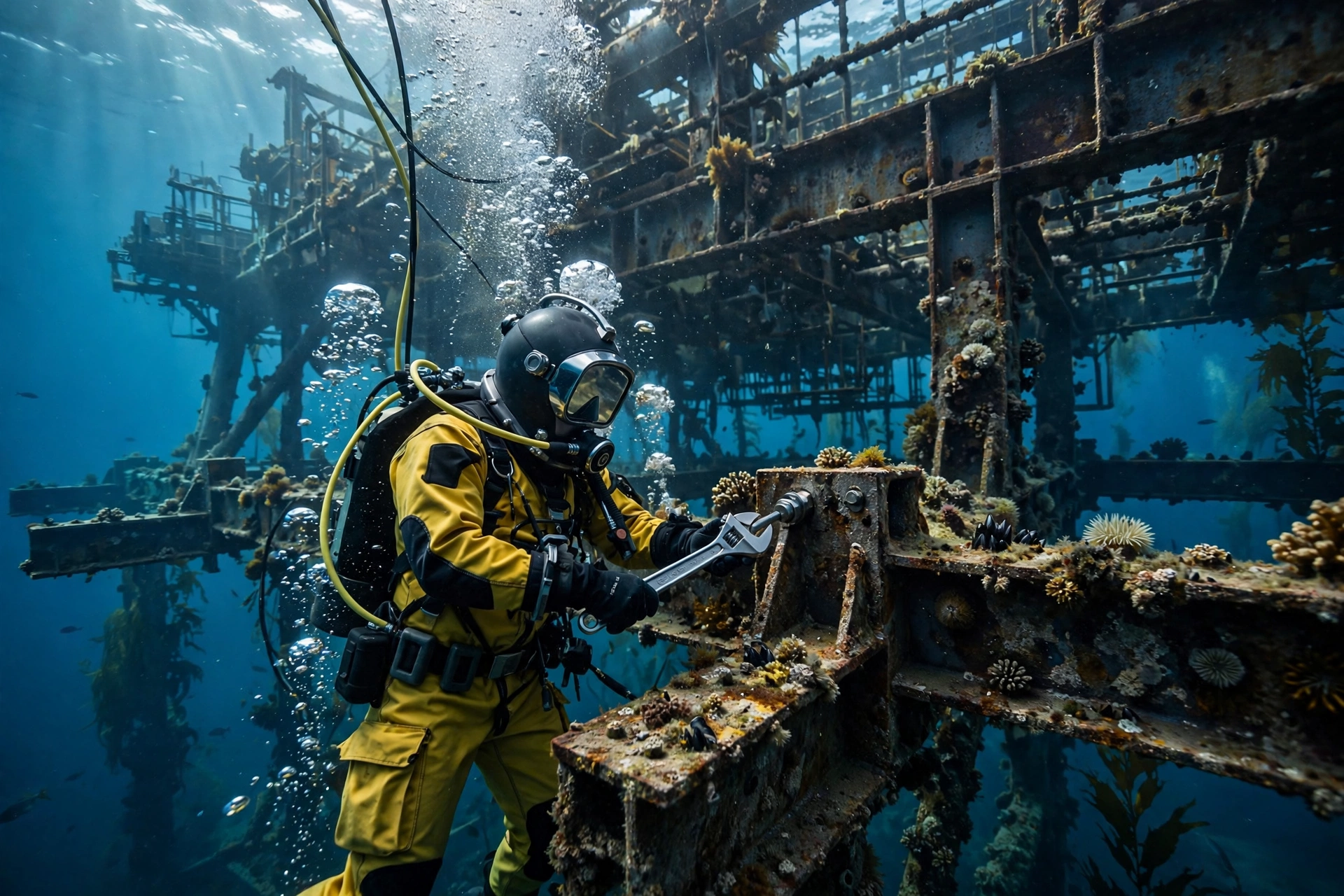
A commercial diving helmet is a heavy, sealed helmet worn by professional divers who work underwater on construction, inspection, salvage and maintenance jobs, supplying them with breathing gas, communication and protection from the water and the work around them. Unlike a recreational scuba mask, a commercial diving helmet covers the whole head, seals against the water, and connects to a surface supply of air through an umbilical hose.
Commercial diving is a demanding job. Divers work on oil platforms, bridges, dams, ships and pipelines, often in dark, cold water with low visibility, using tools and carrying out repairs. This guide explains what a commercial diving helmet is, how it works, and what makes it different from recreational diving kit.
What Is Commercial Diving?
Commercial diving is professional diving carried out for work, rather than for sport or leisure. Commercial divers inspect and repair underwater structures, build and maintain offshore platforms, work on ships and harbours, and carry out salvage and underwater construction. The work can take place in harbours, rivers, lakes and the open sea, often at depths well beyond recreational diving limits.
The jobs are varied and often physically demanding. A diver might cut and weld steel underwater, inspect a bridge pier for damage, clean a ship’s hull, or help install a pipeline on the seabed. The water can be cold, dark and murky, and the diver may be working in a current, near moving machinery, or in an environment with poor visibility.
Because the work is industrial, safety is managed carefully. Divers work as part of a team, with a supervisor on the surface, a standby diver ready to help, and a supply of breathing gas delivered through an umbilical. The helmet is a central part of that system, and it is chosen and maintained to a professional standard.
What Is a Commercial Diving Helmet?
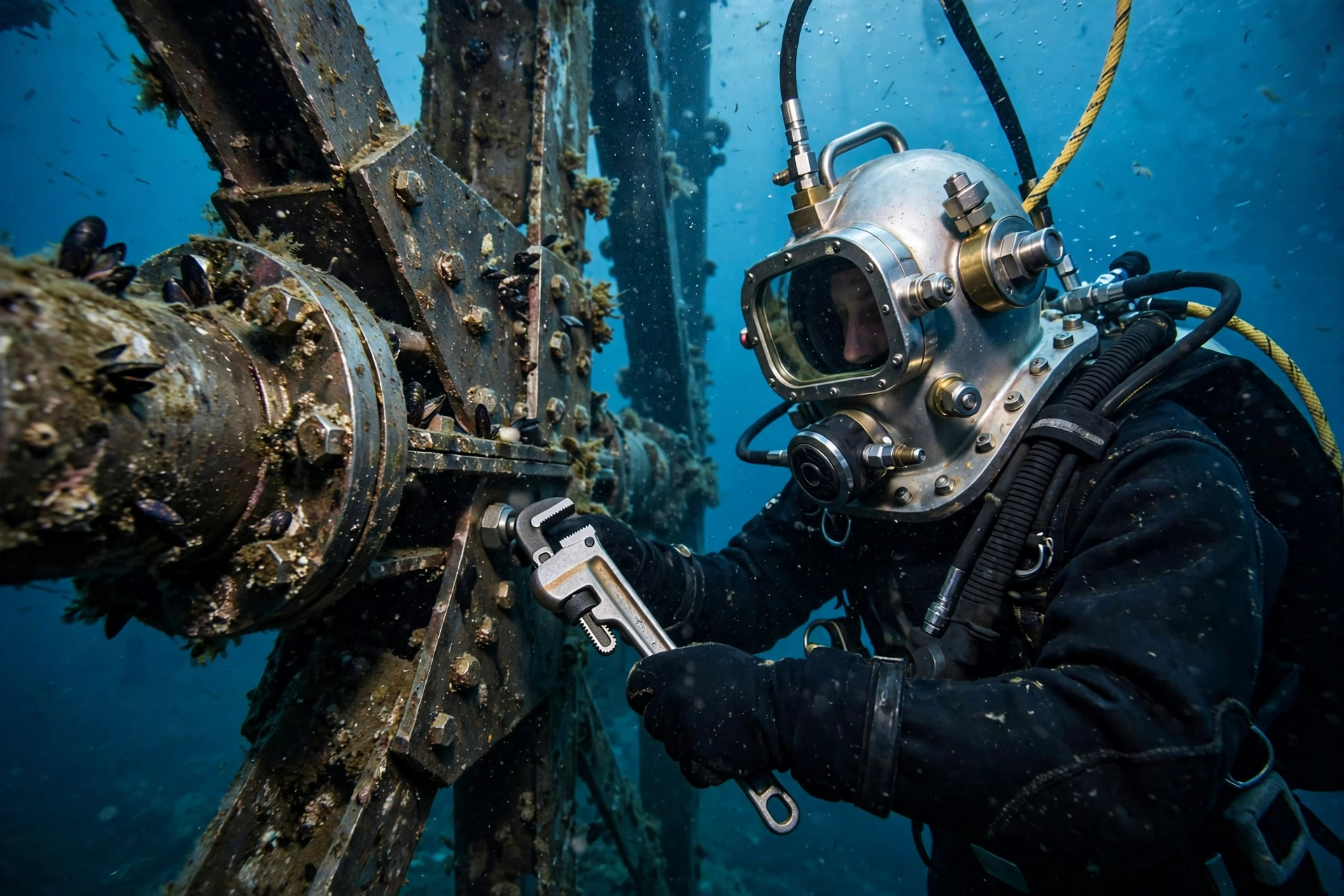
A commercial diving helmet is a rigid helmet that covers the diver’s whole head and seals against the water, usually with a neck seal or a seal around the suit. It is connected to the surface by an umbilical, which carries breathing gas, a communications cable and sometimes hot water for the diver’s suit. The helmet has a faceplate or viewport that the diver looks through, and a regulator that delivers breathing gas on demand.
Inside the helmet, the diver can breathe normally, speak to the surface team through a microphone and earphones, and hear instructions and warnings. The helmet also protects the head from knocks against structures, from debris in the water, and from cold water on the face and ears. In general terms, it is both a life-support device and a piece of protective headgear.
Commercial diving helmets are made from strong materials such as fibreglass, metal or tough plastics, and they are built to withstand pressure, knocks and the corrosive effects of seawater. They are heavier than a recreational diving mask, and they are worn with a diving suit and a harness that takes the weight and keeps the umbilical secure.
How Does a Commercial Diving Helmet Work?
A commercial diving helmet works by supplying breathing gas from the surface through the umbilical, rather than from a tank on the diver’s back. The gas flows into the helmet, and a regulator inside the helmet delivers it to the diver as they breathe in. Used gas is vented out of the helmet through an exhaust valve, which keeps the pressure inside the helmet balanced with the water pressure outside.
The helmet is sealed against the water by a neck dam or a seal that connects to the diving suit. This keeps the diver’s head dry and prevents water from entering the helmet, even when the diver is working upside down or in a strong current. The faceplate is made from tough, clear material, and it is designed to give a wide field of view while withstanding pressure and knocks.
Communication is built into the helmet. A microphone and earphones let the diver talk to the supervisor on the surface, who can give instructions, check on the diver’s condition and warn them of hazards. In general terms, the helmet is part of a system that includes the umbilical, the surface gas supply, the communications unit and the diver’s suit, and all of those parts need to work together for the dive to be safe.
How Is a Commercial Diving Helmet Different from Scuba Kit?
A commercial diving helmet is very different from recreational scuba equipment. A scuba diver wears a mask that covers the eyes and nose, breathes from a tank on their back, and has no direct communication with the surface. A commercial diver wears a sealed helmet, breathes gas supplied from the surface, and stays in voice contact with the surface team throughout the dive.
The level of protection is different as well. A scuba mask leaves the rest of the head exposed to the water, while a commercial diving helmet covers the whole head, keeps it dry, and protects it from knocks and from cold water. The helmet also allows the diver to work with both hands free, using tools and carrying out tasks that would be difficult with a scuba setup.
The work itself is different too. Commercial diving is industrial work, often in poor visibility, at greater depths and for longer periods than recreational diving. The helmet is designed for that kind of work, with a robust build, a reliable gas supply and a communications system that keeps the diver connected to the team on the surface.
What Should You Know Before Working with a Commercial Diving Helmet?
Commercial diving is a professional activity that requires proper training, certification and supervision. A diver needs to be trained in the use of the helmet, the umbilical system and the communications equipment, as well as in the diving and work skills the job requires. The training covers how to fit and check the helmet, how to respond if the gas supply is interrupted, and how to work safely with the surface team.
Equipment checks are a routine part of the job. Before a dive, the helmet, the umbilical, the gas supply and the communications system are all checked, and the diver’s suit and harness are inspected. During the dive, the supervisor on the surface monitors the diver’s gas supply, depth and condition, and the standby diver is ready to help if needed. If you want to understand one of the technologies used in modern helmets, reading about what MIPS is for helmets can help you compare different helmet designs, though commercial diving helmets work very differently from sports helmets.
Maintenance matters too. After a dive, the helmet is cleaned, rinsed with fresh water if it has been in the sea, and dried before storage. Seals, valves and the faceplate are checked regularly, and worn parts are replaced following the maker’s guidance. A commercial diving helmet is a piece of life-support equipment, and it needs to be maintained to a high standard.
Frequently Asked Questions
Q: Can a recreational diver use a commercial diving helmet?
A: In general terms, no. Commercial diving helmets are part of a surface-supplied system that requires professional training, a surface team and specialist equipment. They are not a substitute for recreational scuba kit.
Q: How do commercial divers talk to the surface?
A: Through a communications system built into the helmet, with a microphone and earphones connected by a cable in the umbilical. The diver can speak to the supervisor on the surface throughout the dive.
Q: Do commercial divers breathe from a tank?
A: In general terms, no. Commercial divers usually breathe gas supplied from the surface through an umbilical. They may carry a small emergency supply as a backup, but the main supply comes from the surface.

Olivia
Writer at Helmet Today, covering helmet reviews, fit and riding safety.