
A DOT sticker by itself proves almost nothing, because anyone can buy the sticker and put it on a novelty helmet — a genuinely certified helmet backs that mark up with real substance: solid weight, a thick EPS energy-absorbing liner, and proper manufacturer labels inside. In general terms, motorcycle helmets sold as DOT compliant are self-certified by the manufacturer to the federal FMVSS 218 standard, which means the maker’s own testing and labeling stand behind the claim. Learning to check the signs beyond the sticker is the difference between real protection and a costume.
This matters because novelty helmets — thin shells sold for looks — sometimes carry a DOT-style sticker that was simply purchased and applied. The helmet underneath has little or no energy-absorbing foam and was never tested to the standard. Here is how to tell a genuinely certified helmet from a stickered novelty, using checks anyone can do in a shop or at home.
How Does DOT Certification Actually Work?
Under the US system, in general terms, the manufacturer tests its own helmets against FMVSS 218 and certifies that they comply. The government does not approve each model in advance the way some other systems do, although compliance testing is carried out and non-compliant helmets can be pulled from the market. The DOT marking on the back of the helmet is the manufacturer’s declaration that the helmet meets the standard.
Because the mark is a declaration rather than a government-issued seal, its value depends on the honesty and competence of the company behind it. Established manufacturers stake their reputation and legal responsibility on that declaration. Unknown sellers of novelty helmets do not — and an aftermarket sticker applied to a helmet the maker never certified is, in general terms, simply a fake claim.
This is why riders are advised to treat the sticker as the start of the check, not the end of it. The helmet itself should look and feel like the tested product the sticker claims it is.
What Physical Signs Point to a Genuinely Certified Helmet?
Weight is the first clue. A certified motorcycle helmet has a substantial shell and a thick liner, and it feels like it. Novelty helmets are noticeably light and flimsy, with thin shells that can flex when you press them. If a helmet feels more like a plastic bowl than protective equipment, believe your hands.
Next, look at the edge of the shell and inside it. A certified helmet has a thick layer of EPS foam — the dense, firm energy-absorbing liner — visible at the shell edge and lining the inside. In general terms, this liner is roughly an inch thick on a real motorcycle helmet. Novelty helmets often have only a thin comfort pad or a token layer of soft foam, which cannot absorb serious impact energy.
Then check the inside labels. A genuine helmet carries proper manufacturer labeling inside: the maker’s name, the model, the size, the month and year of manufacture, and the required certification and warning wording. The inside of the helmet is also where you can see its protective construction — the thick EPS liner itself, and on equipped models a low-friction rotational layer such as the one explained in our guide to how MIPS works inside a helmet. Missing, vague, or misspelled inside labels are a serious warning sign.
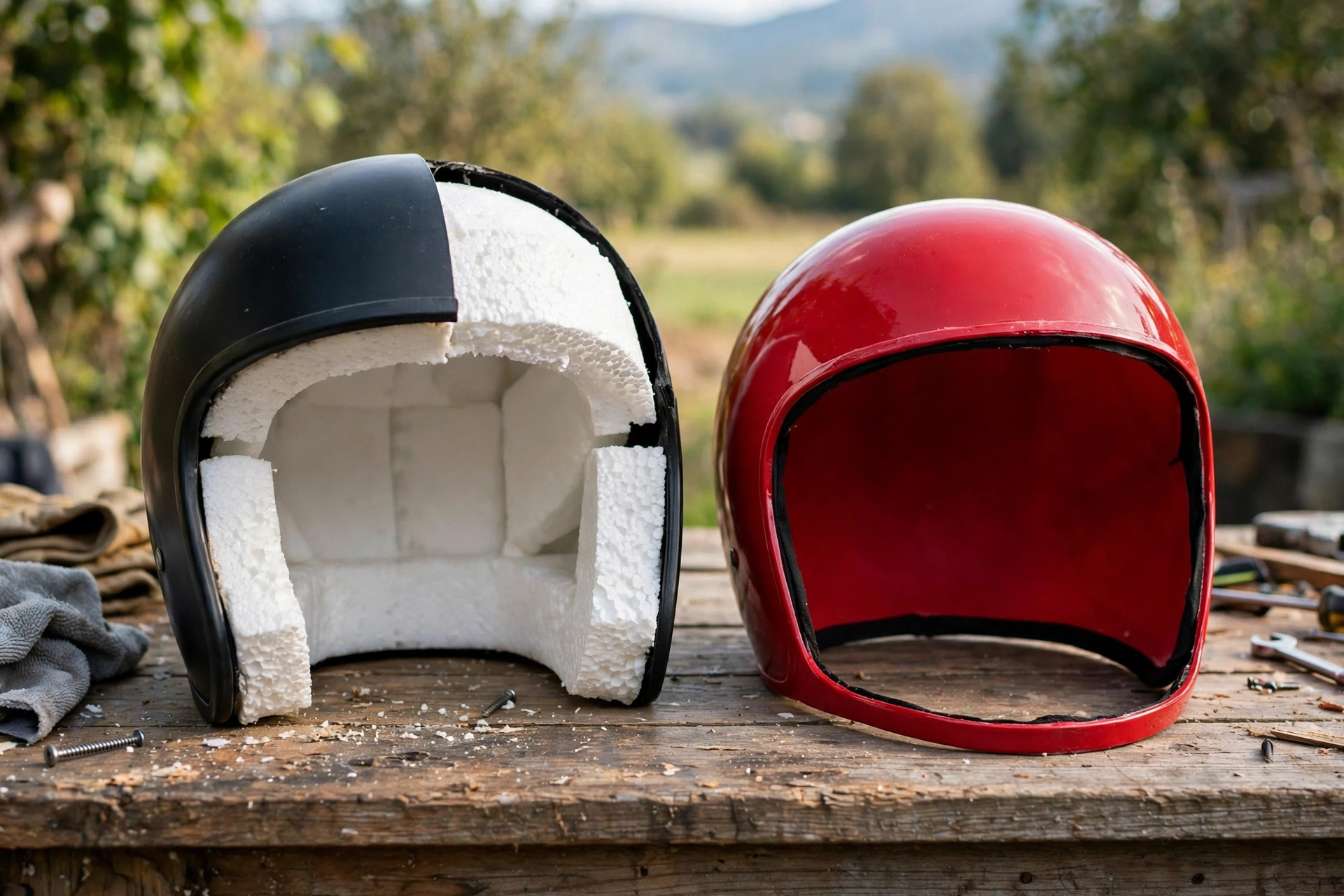
What Are the Red Flags of a Fake DOT Sticker?
The most obvious red flag is the source. Helmets sold cheaply at flea markets, swap meets, and no-name online listings — especially with styling that emphasizes looks over coverage, such as very small “beanie” shells that barely cover the top of the head — are where stickered novelty helmets concentrate. In general terms, a helmet that covers less of the head has less room for protective foam, and tiny shells paired with a DOT sticker deserve extra skepticism.
Look at the sticker itself. On a genuine helmet the rear marking is applied neatly by the manufacturer and matches the branding and labeling elsewhere on the helmet. A sticker that is crooked, peeling, oddly sized, or printed with blurry lettering may have been added later. Some novelty helmets are even sold with the sticker supplied loose, leaving the buyer to apply it.
Also be wary when the seller’s own description hedges — phrases suggesting the helmet is “for novelty use” or “not intended for highway use” while a DOT-style mark appears in the photos. A helmet cannot be both a novelty item and a certified one.
Does an Additional Snell or ECE Marking Help?
Yes, as extra assurance. A helmet that also carries a Snell certification has been submitted to an independent foundation’s testing program, in general terms, rather than relying only on manufacturer self-certification. A helmet carrying an ECE marking has been type-approved under the European system, which involves approval testing before sale. Either mark, genuinely applied, means another testing regime looked at the helmet.
The caution is that counterfeiters can fake these marks too, so the same physical checks still apply. Extra markings raise confidence when everything else about the helmet — weight, liner, inside labels, seller — also checks out. They cannot rescue a helmet that fails the basic substance tests.
For most riders the practical rule is simple: buy a helmet from an established brand, through a real dealer, that carries the certification required where you ride, and treat any additional genuine certification as a bonus.
Where Should You Buy to Avoid the Problem Entirely?
The easiest way to avoid a fake DOT sticker is to buy from an authorized dealer or a reputable motorcycle retailer, in person or through their official store. Real dealers source helmets through the manufacturer’s distribution chain, which keeps stickered novelty products out of the supply entirely.
Be far more careful with marketplace listings, auction sites, and social media sellers, particularly for used or “new without box” helmets at prices that seem too good. If you do buy used, run the full set of checks: weight, EPS liner thickness, inside labels with maker, model, and date, and consistency between all of them. Remember too that a used helmet’s crash history is unknowable, which is a separate reason many riders buy new.
If a helmet you already own fails these checks — thin shell, no real liner, no proper inside labels — the honest conclusion is that it should not be trusted as protective equipment, sticker or no sticker. Replacing it with a verifiably certified helmet from a real dealer is the fix.
Frequently Asked Questions
Q: Can you get in trouble for wearing a helmet with a fake DOT sticker?
A: In general terms, helmet laws in states that have them require a compliant helmet, and a novelty helmet with an added sticker is not compliant — so it may not satisfy the law, quite apart from offering little protection. Rules and enforcement vary by state, so check your local requirements.
Q: How thick should the foam liner be on a real DOT helmet?
A: In general terms, roughly an inch of firm EPS foam lines a certified motorcycle helmet, and you can see its thickness at the shell edge. A helmet with only thin soft padding has not been built to absorb impact energy to the standard.
Q: The DOT sticker looks official. Isn’t that enough?
A: No. Because the mark is manufacturer-applied and stickers can be bought separately, the sticker alone is the weakest evidence. Weight, a thick EPS liner, complete inside manufacturer labels, and buying from a reputable dealer are what actually confirm a certified helmet.

Olivia
Writer at Helmet Today, covering helmet reviews, fit and riding safety.