
To fit a skateboard helmet for vert skating, choose a size that sits level on your head, feels snug all the way around without pressing painfully, and stays put when you shake your head gently. The straps should fasten snugly under your chin, and the helmet should not slide forward over your eyes or backward off your forehead when you move. If it wobbles or tips easily, it is not the right fit yet, even if the size label looks correct.
Vert skating puts a particular demand on a helmet. You ride a steep transition, gain speed, and spend time high above the flat bottom, so a helmet that shifts at the wrong moment can block your vision or move away from the area it should cover. In general terms, the best fit is the one you barely notice once it is on, because it moves with your head instead of against it.
What Makes Fitting a Helmet for Vert Skating Different?
Vert ramps are taller and steeper than most street obstacles, and the speeds involved tend to be higher. Your helmet must therefore stay stable through bigger changes in direction and through the forces of dropping in and landing on a transition. A helmet that feels fine standing still on flat ground may still shift when you pump hard, so test the fit in motion, not only in front of a mirror.
Coverage matters too. In general terms, a skateboard helmet for vert use should sit low enough to cover the forehead and the back of the head, without sitting so low that it blocks your view of the coping or the ramp ahead. The front edge should sit just above your eyebrows, so you can look up the transition without the helmet tipping into your line of sight. A helmet that rides high may feel lighter, but it likely leaves part of your head less covered than it should be.
How Should a Skateboard Helmet Sit on Your Head for Vert?
Start with the helmet level. Place it so that it sits straight, not tilted forward or backward, with the front edge just above your eyebrows. The sides should sit over your ears without pressing hard against them, and the back should cover the rear of your head. From the side, the helmet should look level rather than tipped up like a cap pushed back on your head.
Next, check snugness all the way around. The helmet should feel close against your head on the sides, front, and back, without a loose spot you can easily push inward with a finger. At the same time, it should not create a painful pressure point on your forehead or temples. A snug fit feels secure and even; a tight fit squeezes one spot. If you feel a sharp pressure point, try adjusting the internal fit pads before deciding the size is wrong, because a small pad change can make a real difference.
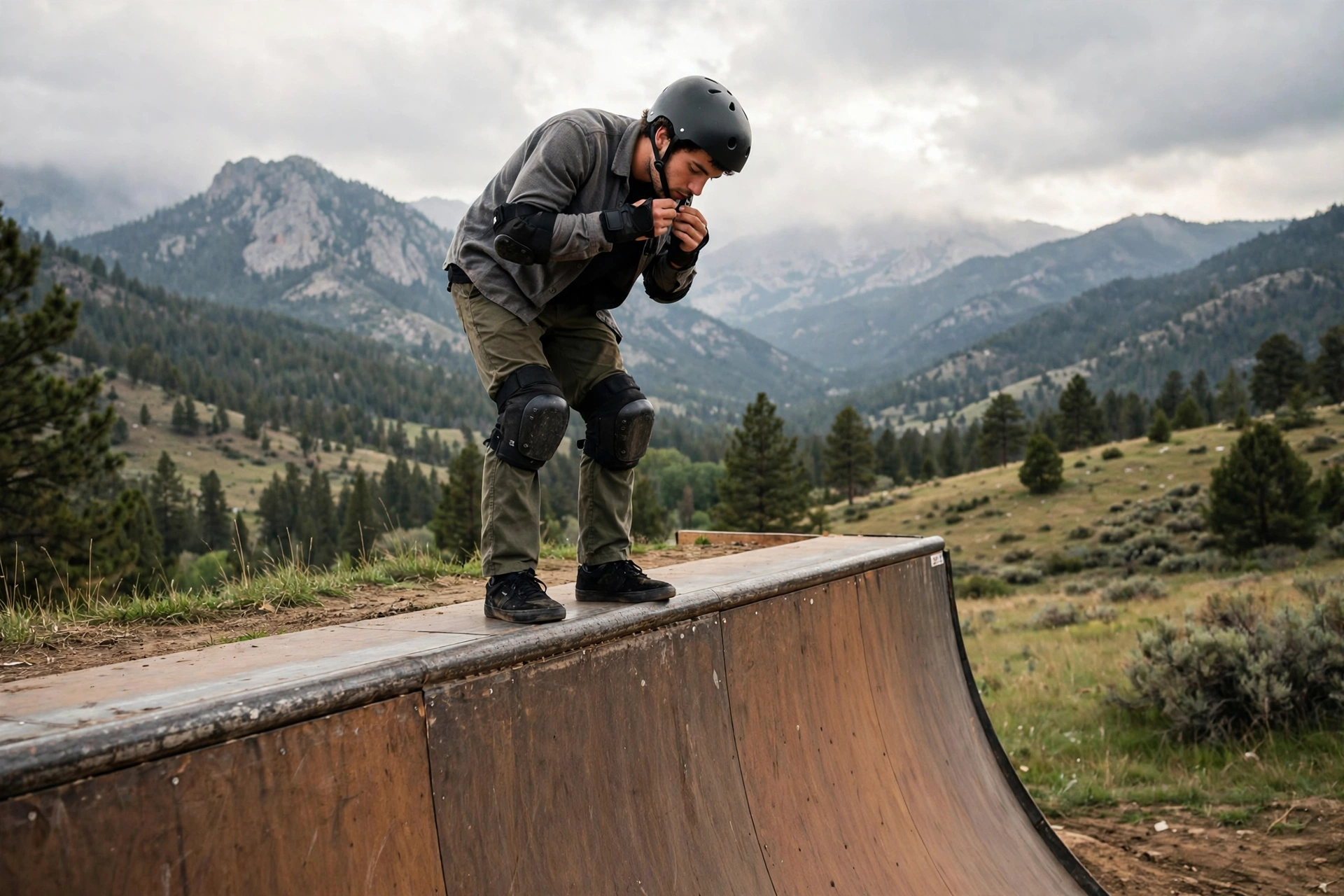
How Do You Adjust the Straps and Fit System Correctly?
Begin with the fit system, if your helmet has one, before you touch the straps. Many helmets use a dial or sliding pads at the back that let you tighten or loosen the inner band. Set this first so the shell itself feels snug, and only then adjust the straps to hold that position. Adjusting the straps first can mask a shell that is too loose.
For the straps, the side straps should meet just below each ear, sitting close to the jaw without pulling the helmet forward or backward. The chin strap should fasten snugly under your chin, with only a small amount of slack. In general terms, you should be able to fit about one or two fingers between the strap and your chin, but not much more. A loose strap lets the helmet shift more easily; a strap that digs into your throat is too tight.
Once the straps are set, open your mouth wide and check whether the helmet pulls down slightly on your forehead. A small amount of movement here is normal and suggests the chin strap is holding the helmet. Then look up, down, and side to side, and make sure your vision stays clear and the helmet stays level. If adjusting one strap pulls the helmet off level, reset both sides evenly.
How Can You Test the Fit Before Dropping In?
Do not make your first real test a drop-in. Warm up on flat ground and on a smaller transition if one is available. Pump gently, carve, and practise the head movements you will use on the vert ramp. Pay attention to whether the helmet stays level, whether the straps stay comfortable, and whether anything shifts when you look up toward the coping. A fit that passes a standing check but fails during pumping needs adjusting before you commit to a taller ramp.
What Are the Signs That the Fit Is Wrong?
Several warning signs are easy to spot. A helmet that slides forward over your eyes when you nod, or backward when you look up, is not sitting securely. A helmet that rocks side to side, or that you can rotate easily with the straps done up, is too loose or the wrong shape for your head. A helmet that leaves a red mark in one spot after a short session, or that gives you a headache, may be too tight there or may need different padding.
Other signs are more subtle. If you keep pushing the helmet back into place during a session, the fit is not holding. If the straps keep slipping, or the chin strap ends up loose after a few runs, the adjustment may need resetting. If you skate with the chin strap undone because it feels uncomfortable, that is also a fit problem. A comfortable, well-fitted helmet should be easy to keep fastened for a whole session, and learning what MIPS does can help you understand one technology you may see listed on modern skate helmets.
How Often Should You Recheck Your Helmet Fit?
Recheck your fit at the start of every session, even if nothing has changed. Straps can loosen in a bag, pads can compress over time, and a fit dial can shift. A quick level check, strap check, and shake test takes less than a minute and can catch a problem before you drop in. Make it part of your routine, like checking your board and your shoes.
Frequently Asked Questions
Q: How tight should a skateboard helmet feel for vert skating?
A: It should feel snug and even all the way around, moving with your head when you shake gently, without a painful pressure point or a loose spot you can easily push inward.
Q: Should a vert skateboard helmet sit low on the forehead?
A: Yes, in general terms it should sit just above your eyebrows and low enough to cover the forehead and the back of the head, while still leaving your vision of the ramp clear.
Q: What should I do if my helmet keeps sliding during a session?
A: Stop and readjust on flat ground: reset the fit system first, then even out the straps, and if it still slides after adjustment, try different pads or a different shell size.

Olivia
Writer at Helmet Today, covering helmet reviews, fit and riding safety.