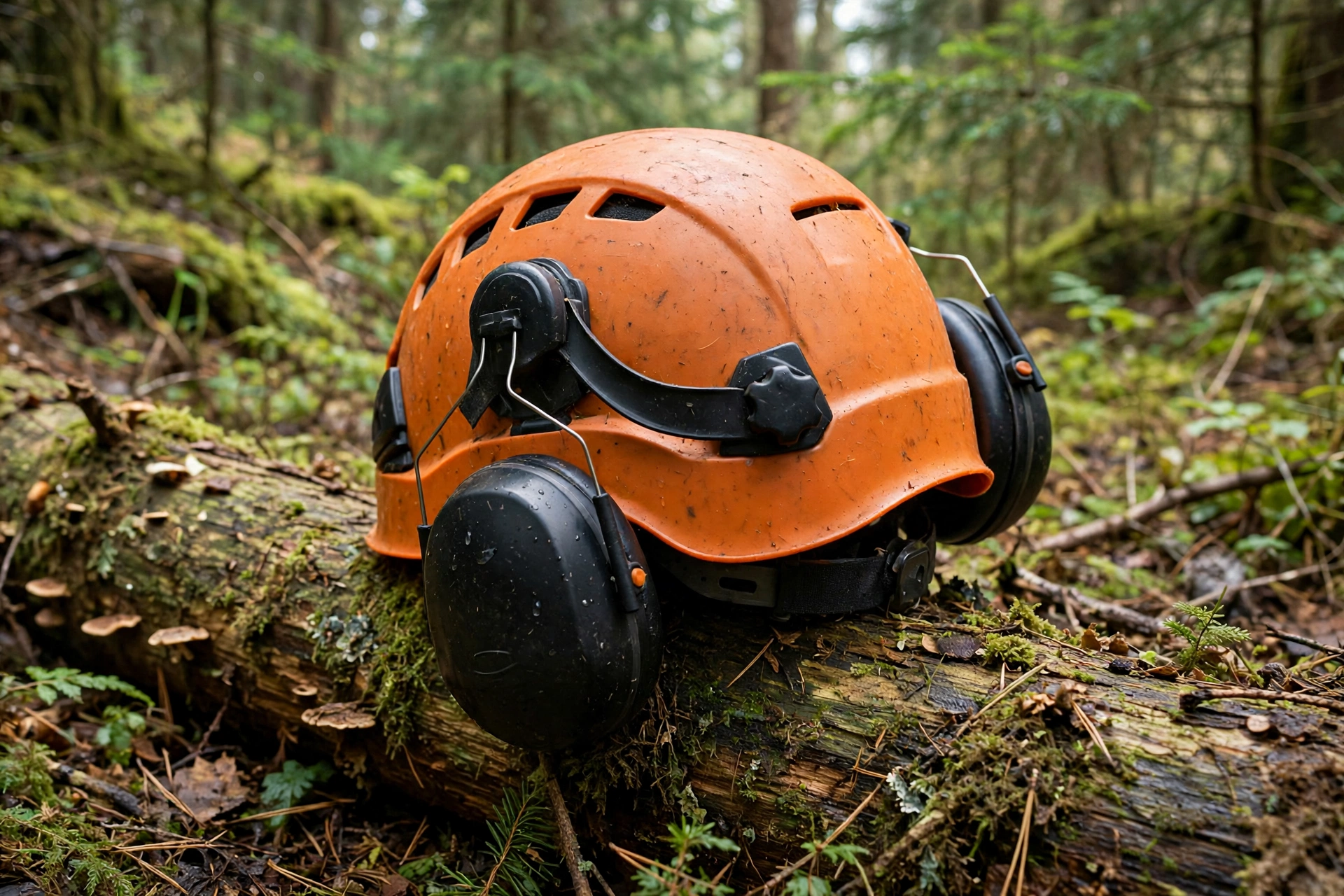
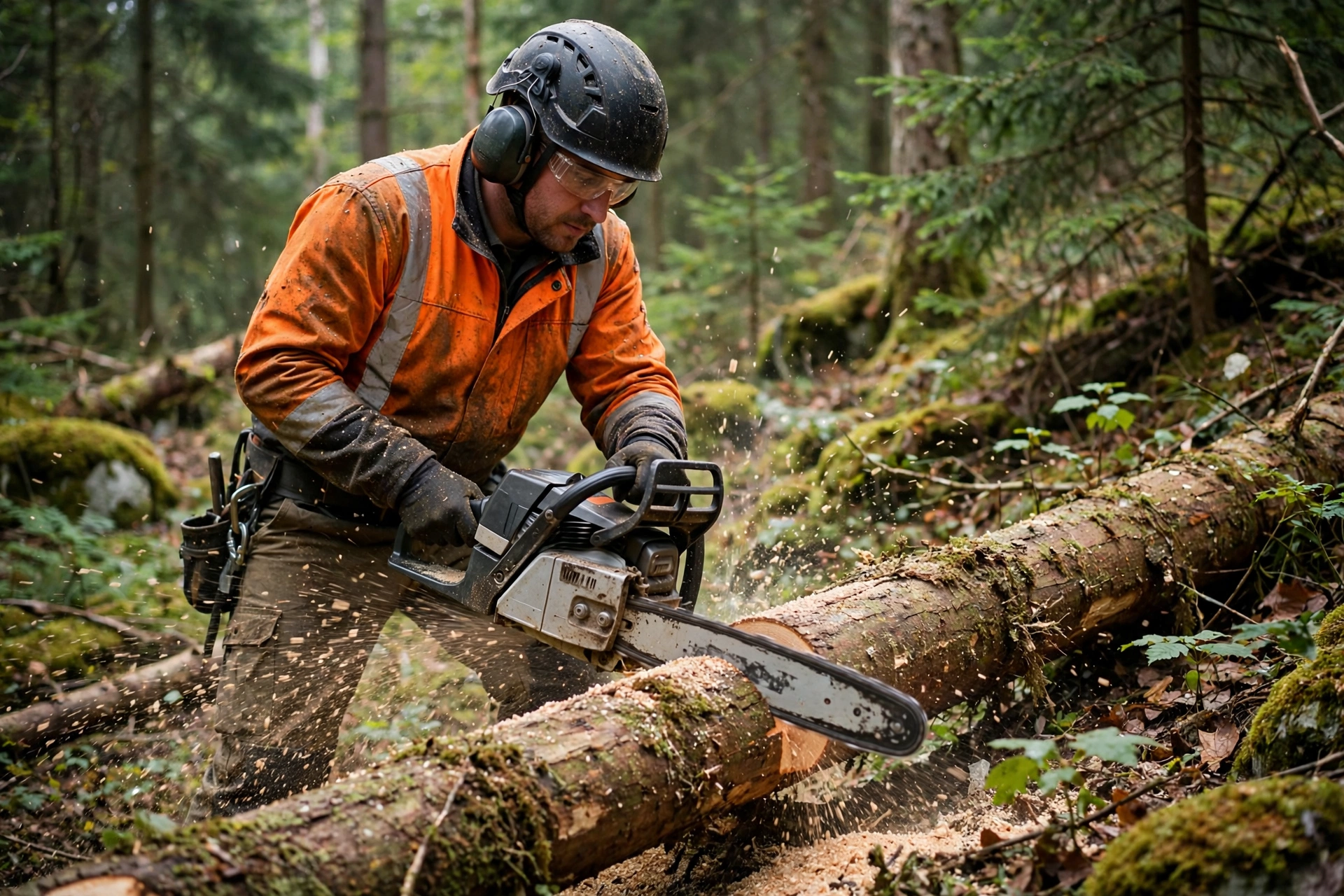
A forestry helmet with integrated hearing protection is a helmet that carries ear muffs mounted directly on the shell, so hearing protection is always with the helmet and always in the same position. In general terms, this setup is designed for chainsaw and forestry work, where loud equipment is used for hours at a time and separate ear defenders can be forgotten, lost, or worn incorrectly. Because the muffs are part of the helmet system, you lower them when the saw starts and raise them when it stops, without handling a separate piece of kit.
Integrated hearing protection differs from simply wearing ear muffs alongside a helmet. The mounts are built into the shell, the muffs are sized to match the helmet, and the whole system is tested and used as one unit. This article explains how the system works, what to look for when choosing one, and how to keep it protecting your hearing over time.
How Does Integrated Hearing Protection Work?
The ear muffs attach to mounting slots or arms on the sides of the helmet shell. When lowered, the cups press against the sides of your head and form a seal that reduces the sound reaching your ears. When raised, they park above or behind the ears, out of the way, so you can hear conversation, warnings, and your surroundings clearly. Most systems let you move the muffs with one hand, which matters when your other hand holds a saw or a branch.
The seal is the key to performance. Hearing protection only works when the cups sit flat against your head with no gaps. Hair, hats, glasses arms, and helmet straps can all break the seal, so check the fit with everything you normally wear. In general terms, a small gap can let in a surprising amount of noise, which is why a consistent, repeatable fit matters more than the muff’s rating on paper.
Some integrated muffs include electronic features, such as microphones that let speech and warning sounds through while blocking loud noise. These can be useful for crew communication, but they add weight, need batteries, and cost more. For many forestry workers, simple passive muffs are enough, and their reliability is a benefit in wet, dusty conditions.
What Should You Look for When Choosing a System?
Start with fit and comfort. Try the helmet on, lower the muffs, and check that the cups seal evenly without pressing painfully on your ears. Wear it for several minutes if you can, since pressure that seems minor at first can become painful over a long shift. Check that the muffs stay in the raised position when parked, rather than flopping down over your ears when you do not want them there.
Check compatibility with the rest of the helmet. The muffs should not clash with the visor, the chin strap, or the suspension. Lower the visor with the muffs down and confirm both sit correctly, and raise the visor with the muffs up to make sure nothing catches. A system where the parts fight each other will frustrate you daily and may end up used incorrectly.
Consider the noise levels you actually face. Chainsaws, chippers, and brush cutters are all loud, and different muffs offer different levels of reduction. In general terms, choose muffs rated for the loudest equipment you use regularly, and remember that the rating assumes a proper seal. If your work includes very loud machinery, you may need higher-rated muffs or a combination of protection, following your site’s guidance.
How Do You Maintain Integrated Ear Muffs?
Keep the cushions clean and in good condition. Wipe them with a damp cloth after dusty work, and check regularly for cracks, hardening, or flattening. Cushions are wear items, and replacing them restores the seal. In general terms, cushions that no longer sit flat should be replaced rather than kept in use, since a poor seal undermines the whole point of the muffs.
Check the mounts and pivots too. Sawdust and sap can stiffen the pivot mechanism, making the muffs hard to raise or lower. Brush out debris and wipe the mounts clean, and confirm the muffs still lock in both positions. If a mount is cracked or bent, replace that part if spares are available, or retire the helmet if the damage affects the shell.
Store the helmet with the muffs in a position that does not squash the cushions. Hanging the helmet by its strap or pressing it under heavy kit can flatten the cushions over time. A shelf or helmet bag keeps the system in shape and ready for the next shift, and it also stops the muffs from being knocked out of adjustment in transit, which saves a refit at the start of the next shift.
How Do You Use the System Correctly Each Day?
Make lowering the muffs part of starting the saw, the same way fastening the chin strap is part of putting the helmet on. Lower them before the first cut, not after you have already been exposed to noise, and keep them down for the whole cutting session. Raise them during breaks and conversation, then lower them again before restarting work.
Check the seal each time you lower the muffs. A quick press on each cup and a glance in a mirror or a check by feel is enough to catch a cup sitting on a strap or folded ear. If you wear a beanie or hood in cold weather, test the seal with it on, since thick layers under the cups break the seal and reduce protection.
Finally, remember that hearing protection works together with the rest of the helmet system. A helmet that fits well, a visor that stays clear, and muffs that seal properly all depend on regular checks. For background on how helmet liners handle impact, what MIPS for helmets means is a useful explainer on one modern liner technology.
Frequently Asked Questions
Q: Are integrated ear muffs as effective as separate ear defenders?
A: In general terms, yes, when they fit and seal properly. The advantage of integration is consistent positioning, since the muffs sit in the same place every time you lower them.
Q: Can you replace the ear muffs on a forestry helmet?
A: Often yes, if the maker supplies compatible muffs or cushions for your helmet model. Check that replacements match the mounting system before buying.
Q: Should you wear ear plugs as well as helmet muffs?
A: In general terms, combined protection is used for very loud work, but follow your site’s guidance, since over-protection can also block warning sounds you need to hear.

Olivia
Writer at Helmet Today, covering helmet reviews, fit and riding safety.