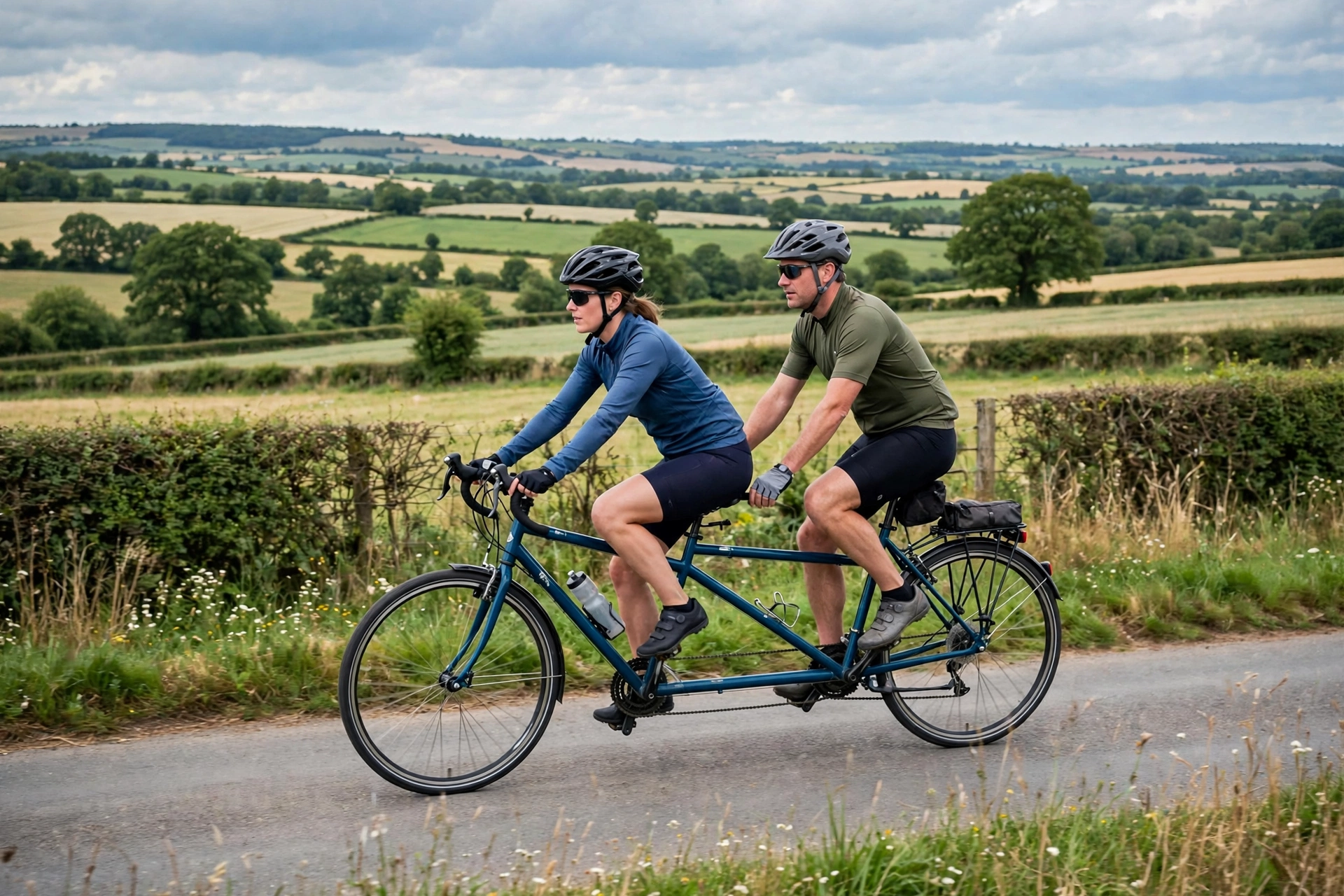
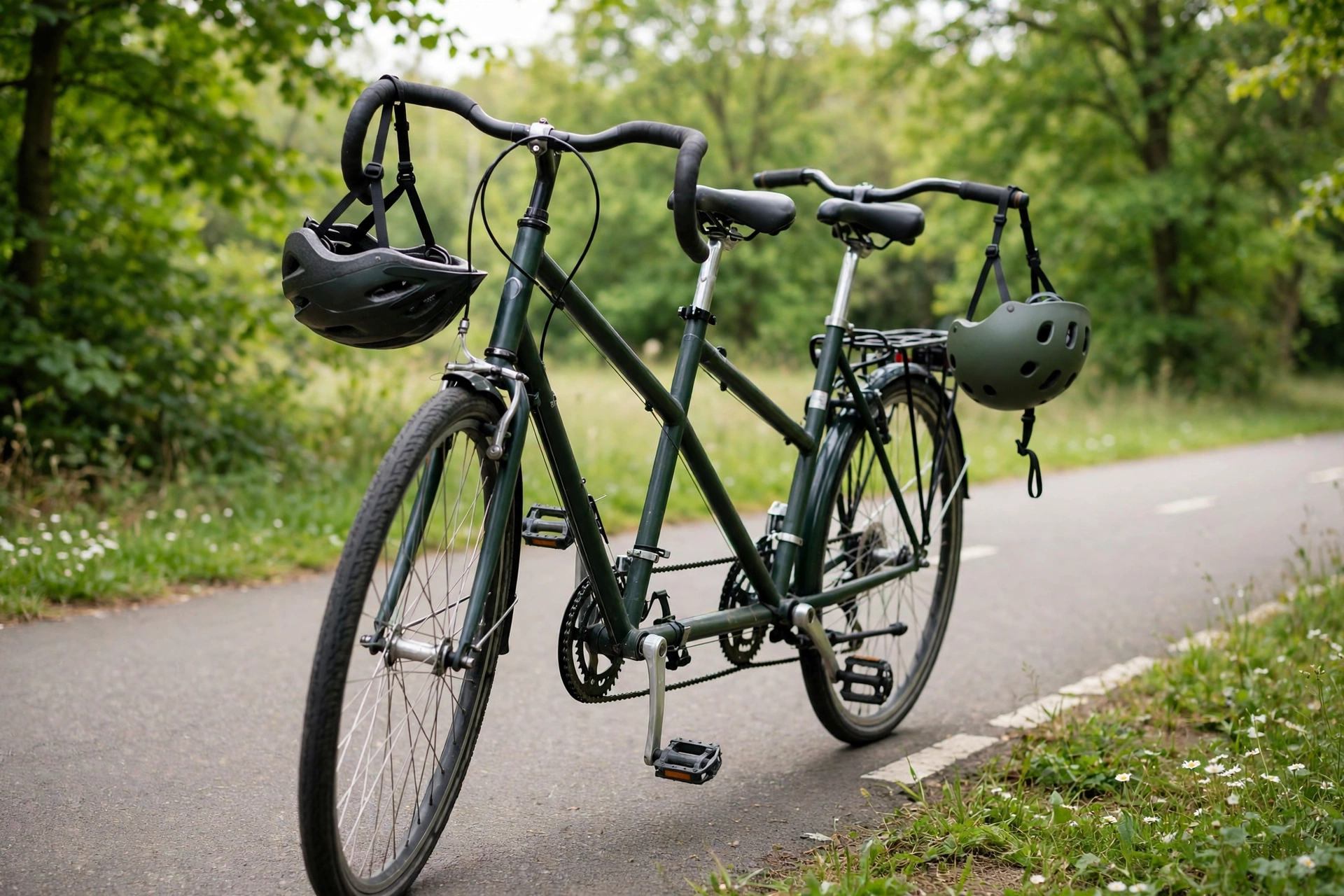
A blind tandem rider, known as the stoker, wears a well-fitting cycle helmet, just like any other cyclist, because the helmet gives head protection if the pair falls or is involved in a crash. On a tandem, the blind rider sits at the back while a sighted rider, the captain or pilot, steers from the front. The stoker cannot see the road ahead, so they rely on the captain for balance, braking, and warning of bumps. A helmet is a simple, practical part of that teamwork.
Tandem cycling is a popular sport for blind and partially sighted riders, and it is also a way for blind riders to enjoy cycling with a friend, a family member, or a club. The stoker still pedals, and on many tandems the stoker also helps with balance and power. The helmet does not need to be a special kind. What matters is that it fits well, is comfortable for a long ride, and stays in place.
What kind of helmet should a blind tandem rider wear?
A standard cycle helmet that meets a recognised safety standard is the right choice. Look for a helmet certified to a standard such as EN 1078 in Europe or CPSC in the United States, and check the label inside the shell. A road cycling helmet is light and well ventilated, which suits long rides, while a helmet with more coverage at the back can give a little extra protection.
Fit matters more than brand. The helmet should sit level on the head, low on the forehead, with the front edge about two finger widths above your eyebrows. It should feel snug all the way around, without pressing hard in one spot. Because the stoker cannot check their own helmet in a mirror, the captain or a helper should check the fit before the ride starts, including the chin strap and the adjustment dial.
How do the captain and stoker communicate on a tandem?
Clear communication is the heart of tandem riding. The captain calls out what is coming, using short, agreed words for bumps, turns, stops, and starts. A common system is to call “bump” before a pothole or a speed cushion, “slowing” before braking, and “stopping” before a full stop. The stoker can then brace, keep pedalling steadily, or stop pedalling as needed.
Many pairs also use a simple intercom or a pair of small radios so they can talk without shouting, especially in wind or traffic. Some stokers use a hand on the captain’s back or shoulder as a way to feel the captain’s movements, although this depends on the pair and the type of tandem. Whatever system you use, agree on the words and signals before you set off, and practise them on quiet roads first.
What safety checks should be done before the ride?
Before every ride, the captain should check the tandem over, including the brakes, tyres, chain, and steering. The stoker can help by checking their own pedals, saddle height, and helmet fit. Tyres should be pumped to the right pressure, and the brakes should work firmly on both wheels, because a tandem is heavier than a solo bike and takes longer to stop.
The captain should also check that the stoker’s feet are secure on the pedals, either with toe clips, straps, or clip-in pedals, and that nothing is loose or catching. A quick check of the helmet is part of this routine. Look for cracks in the shell, check that the straps are not twisted, and make sure the chin strap is fastened snugly. If anything is damaged, replace it before you ride.
How does the stoker help with balance and pedalling?
The stoker is not a passenger. On a tandem, both riders pedal, and the stoker’s power makes a real difference, especially on hills. The stoker also helps with balance by keeping their body still and centred, and by pedalling smoothly rather than pushing hard in bursts. Sudden movements from the stoker can unsettle the bike, so smooth, steady pedalling is the goal.
Trust builds over time. New pairs should start on quiet roads or traffic-free paths and build up to busier routes. The captain should give plenty of warning before any change of speed or direction, and the stoker should say if they feel unsure or uncomfortable. Some helmets include a slip layer such as MIPS to reduce rotational forces in an angled impact, which is a useful extra for any rider, including a stoker.
What should a blind rider wear besides a helmet?
Bright, high-visibility clothing helps other road users see the tandem, which matters because a tandem is longer than a solo bike and takes more space on the road. A bright jacket or a high-visibility vest on both riders is a good idea, and reflective details help in low light. Gloves protect the hands in a fall and improve grip on the handlebars.
Eye protection is worth considering too, even for a rider who cannot see. Glasses or clear cycling glasses protect the eyes from wind, insects, and debris, and they also protect the eye area in a fall. Sunglasses are not a substitute for proper eye protection, because they can shatter. A light rain jacket is useful as well, because getting cold and wet makes it harder to concentrate and to pedal well.
How can a blind rider get started with tandem cycling?
The best first step is to contact a local tandem club or a charity that supports blind cyclists. Many clubs lend tandems, pair new stokers with experienced captains, and run taster sessions on traffic-free paths. A taster session lets you try the position, the pedalling, and the communication system before you commit to buying a bike or joining a club.
It also helps to talk to other blind tandem riders, because they can share practical tips on helmets, clothing, and communication that only come from experience. In general terms, start slowly, ride with a captain you trust, and build up distance over weeks rather than trying a long ride on your first day. If you have any health concerns, talk to your clinician or coach before you start, as you would with any new sport.
Does the stoker need a different helmet from the captain?
No. The stoker wears the same kind of cycle helmet as the captain. The only difference is that the captain or a helper should check the stoker’s helmet fit before the ride, since the stoker cannot check it in a mirror.
Can a blind rider ride a tandem without a helmet?
In general terms, a helmet is strongly advised for both riders on a tandem. The stoker cannot see hazards coming, so they cannot brace for a fall in the same way a sighted rider can, which makes head protection even more important.
What if the stoker feels nervous on their first ride?
That is normal. Start on a quiet, traffic-free path, keep the first ride short, and use clear communication throughout. A calm, experienced captain and a well-fitting helmet make a real difference, and confidence grows quickly with practice.

Olivia
Writer at Helmet Today, covering helmet reviews, fit and riding safety.