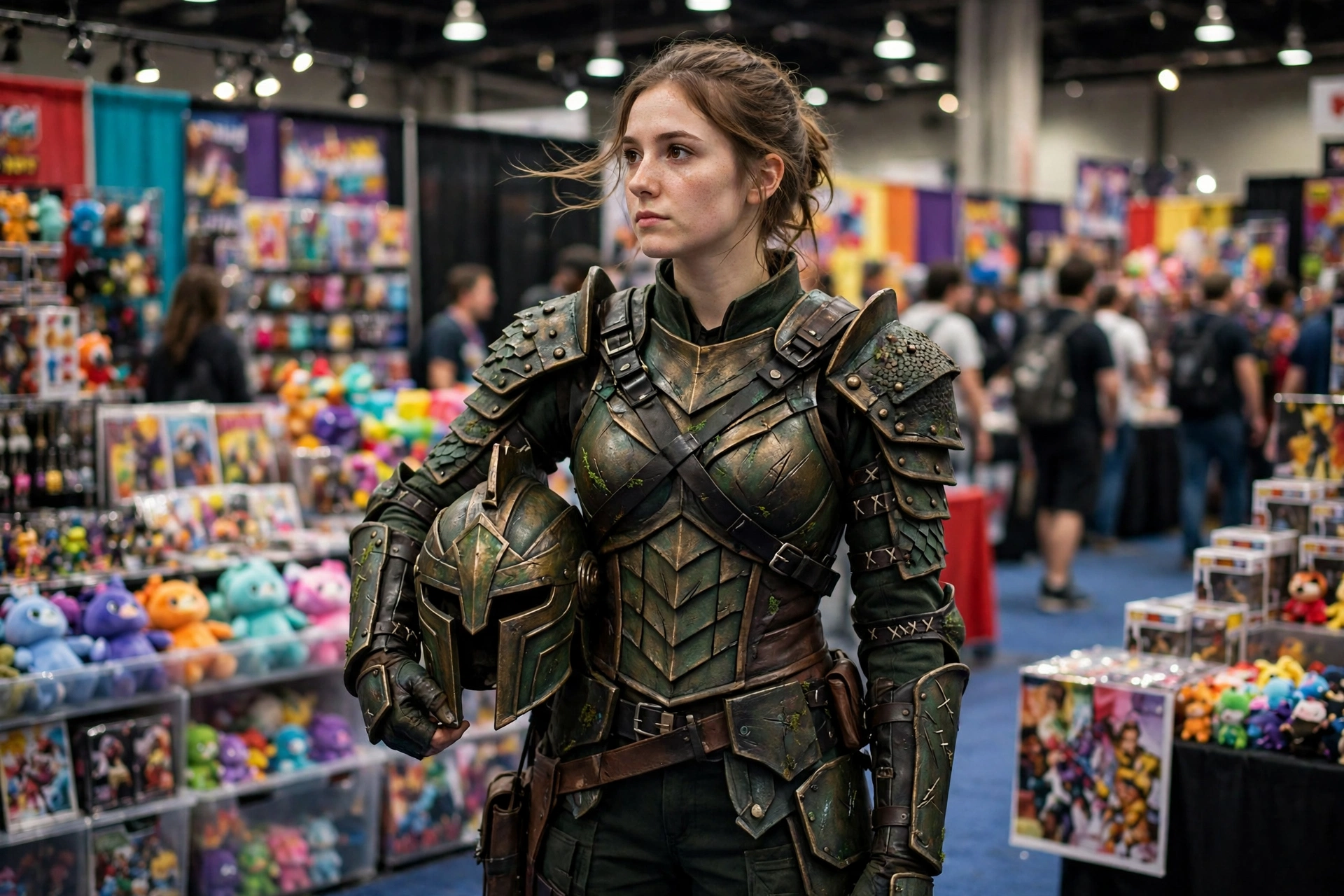
Cosplayers often wear a helmet as part of a costume, but it is usually a prop, not a protective helmet: in general terms, a cosplay helmet is made from foam, plastic, or resin to look like a character’s headgear, and it is not designed to protect the head in a fall or an impact. That surprises some people, because cosplay helmets can look solid, detailed, and very convincing. But the job of a cosplay helmet is to look right in photos, not to absorb an impact, and it should never be mistaken for safety equipment.
This guide explains which cosplayers wear helmets, what cosplay helmets are actually made from, what head risks cosplayers do face at conventions, and when wearing real protection might be sensible. In general terms, the honest answer is that most cosplayers wear a prop, and their safety comes from planning, visibility, and a handler rather than from the helmet itself.
Do cosplayers wear helmets?
Yes, many cosplayers wear helmets, because so many popular characters wear one. A Mandalorian, a Spartan, a Power Ranger, a knight, or a robot character all need a helmet to look right, and for many cosplayers the helmet is the centrepiece of the costume. It is often the first piece they build and the one they spend the most time on, because a good helmet makes the whole costume convincing.
But the helmet a cosplayer wears is usually a prop. It is made from EVA foam, thermoplastic, fibreglass, or resin, shaped and painted to match the character, and it is built to be light enough to wear all day at a convention. In general terms, it is judged on how it looks in photos, not on how it protects, and no cosplay helmet is tested against impacts the way a real helmet is.
What are cosplay helmets made from?
Most cosplay helmets are made from EVA foam, which is light, cheap, and easy to cut and shape, and which can be heat-formed to follow the curves of a character’s design. The foam is sealed, primed, and painted, and details are added with more foam, plastic, or 3D-printed parts. A foam helmet can look like metal, but it will flex and dent if it is squeezed, and it will not protect the head in a fall.
Other cosplayers use thermoplastic, which is heated and shaped over a mould, or fibreglass and resin, which are heavier and more solid but still not tested for impacts. A few use 3D printing, building the helmet in pieces and joining them together. In general terms, all of these materials are chosen for looks, weight, and cost, and none of them are chosen because they absorb impact energy. A cosplay helmet is a piece of art, not a piece of safety equipment.
What head risks do cosplayers face?
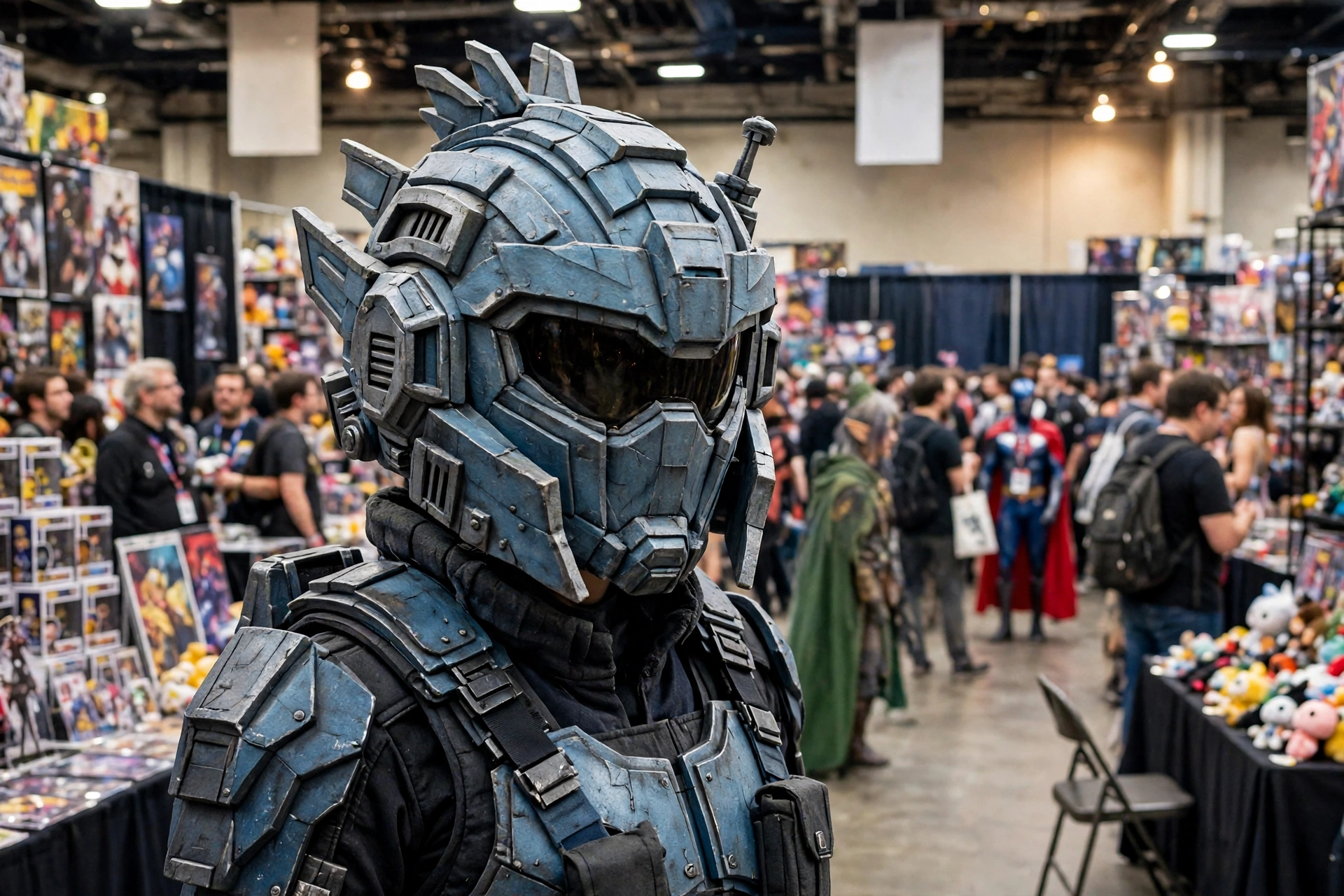
Cosplayers face real but limited head risks, mostly from the convention itself rather than from the costume. A large helmet limits vision, so a cosplayer may not see a step, a cable, a low doorway, or another person, and a fall on a hard convention floor can cause a cut, a bruise, or in rare cases a concussion. The weight of a helmet can also strain the neck over a long day, and the heat inside a closed helmet can cause dizziness.
Other risks come from the crowd. A cosplayer can be bumped, pushed, or knocked over in a busy hall, and a helmet that sticks out can catch on a doorframe or a display. In general terms, these are the same kinds of accidents that can happen to anyone wearing a bulky costume in a crowded place, and the risk is highest at large conventions, where the halls are full and the floors are hard.
Can a cosplayer wear a real helmet instead?
Yes, a cosplayer can wear a real helmet as part of a costume, and some do, especially when the character wears a helmet that looks like a real one. A motorcycle helmet can be painted to match a character, a hard hat can be dressed up as part of a builder character, and a sports helmet can be hidden inside a larger costume helmet as a liner. The real helmet adds weight, but it also adds real protection.
The trade-off is comfort and accuracy. A real helmet is heavier than a foam prop, it may not match the character’s design, and it can be hot to wear all day. Most cosplayers decide the benefits are not worth it for a normal convention, when they are walking, posing, and taking photos. But for a cosplayer who performs stunts, rides a vehicle in costume, or takes part in a stage fight, a real helmet is a reasonable, honest option to consider.
How do cosplayers stay safe in a helmet?
Cosplayers stay safe through planning and help. A good cosplay helmet has wide eye holes or a mesh panel so the wearer can see, vents or a small fan for air, and a chin strap or padding to keep it steady. The wearer learns to move slowly, to turn their whole head rather than just their eyes, and to ask for help on stairs or in crowds rather than trying to see through a small visor.
Many cosplayers also bring a handler, a friend who walks with them, guides them around obstacles, and watches for dangers the cosplayer cannot see. The handler carries water, helps with breaks, and steps in if the cosplayer starts to feel dizzy or unsteady. In general terms, the safety system for cosplayers is built on visibility, ventilation, and a handler, and it works well enough that most cosplayers can wear a costume helmet all day without trouble.
When might a cosplayer consider real head protection?
A cosplayer might consider real head protection when the costume involves stunts, such as stage combat, acrobatics, or riding a bike or a skateboard in character. In that setting, the chance of a hard fall is much higher than in a normal convention, and a foam prop will not help. A real helmet, worn under or as part of the costume, can add a little protection without ruining the look, and many stage performers already do this.
Another case is a cosplayer who has had a previous head injury, or one who wears a heavy helmet for long hours. A performer who feels exposed in that setting may choose a light, padded liner inside the costume helmet for peace of mind, and nobody in the audience will notice. A cycling or skate helmet is not ideal, because it is bulky, but a light, well-fitting padded cap is the sensible choice if one is worn at all. Some modern helmets include a system designed to reduce rotational forces in a fall, such as MIPS, and a cosplayer choosing head protection should look for something light, cool, and well-fitting, rather than the cheapest option.
Do cosplayers wear helmets?
Many do, as part of a costume. In general terms, a cosplay helmet is a prop made from foam, plastic, or resin, and it is not designed to protect the head in a fall or an impact.
Is a cosplay helmet the same as a real helmet?
No, a cosplay helmet is made to look right in photos, not to absorb impacts. It may look solid and convincing, but it has not been tested for safety and should never be used as protective gear.
What should a cosplayer do if they feel dizzy in a helmet?
Take the helmet off, sit down, and drink water at once. In general terms, dizziness in a closed helmet is usually caused by heat, and the cosplayer should not carry on until they feel fully recovered.

Olivia
Writer at Helmet Today, covering helmet reviews, fit and riding safety.