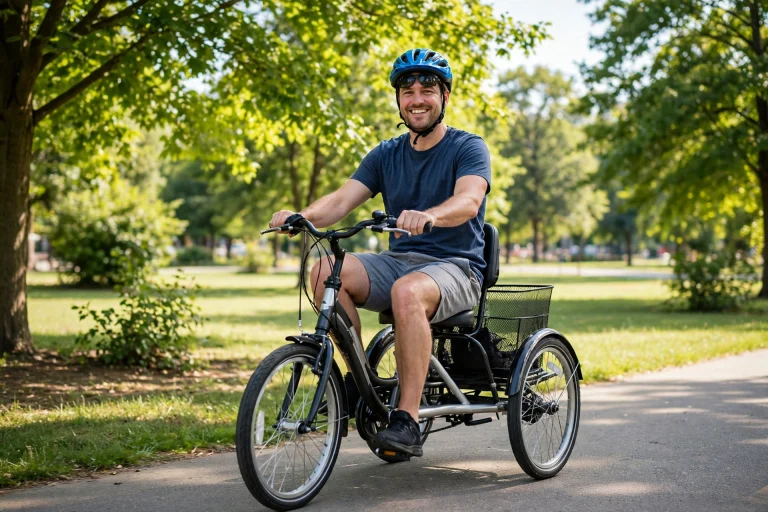
A helmet for riders with multiple sclerosis is a cycling or riding helmet chosen with extra care for fit, comfort, and ease of use, so that a rider living with multiple sclerosis can enjoy cycling safely and comfortably. Multiple sclerosis affects people in different ways, and symptoms can vary from day to day, so there is no single helmet made only for these riders. The task is to find a helmet that fits well, feels comfortable, and suits the rider’s needs on the day.
Why Does Fit Need Extra Attention?
Fit is the most important part of choosing any helmet, and it deserves extra attention for a rider with multiple sclerosis. In general terms, changes in balance, strength, or sensation can make a secure, stable helmet more important, since a helmet that shifts or wobbles is both uncomfortable and less protective. A helmet that fits well stays in place and lets the rider focus on the ride.
Trying on several helmets in a shop is the best way to find a good fit, rather than ordering online without checking. A helmet should sit level on the head, cover the forehead, and stay put when the rider shakes their head gently. The chin strap should be snug but not tight, and the fit system at the back should adjust smoothly. In general terms, the time spent finding a helmet that fits properly is time well spent.
What Features Help With Comfort and Heat?
Heat can be a concern for some people with multiple sclerosis, and a helmet that lets air flow over the head can help keep the rider cooler on a warm day. A well-ventilated helmet with large vents is often a good choice, and a light-coloured helmet can feel cooler in the sun than a dark one. Some riders also wear a thin, moisture-wicking cap under the helmet, which can help with comfort.
Weight matters too, since a lightweight helmet puts less strain on the neck and shoulders, which can be welcome on a longer ride. Soft, well-padded straps and a smooth lining can also help, especially for a rider who is sensitive to pressure or discomfort. If you want to understand one of the safety technologies used in modern helmets, reading about what MIPS is for helmets is a good place to start, since it is offered in many cycling helmets today.

How Can Putting On a Helmet Be Made Easier?
Putting on a helmet can be harder on days when grip, strength, or coordination are affected, so a helmet with a simple, easy-to-use strap system is worth looking for. A magnetic buckle or a large, easy-to-grip fit dial can make fastening the helmet simpler, and it is worth trying these features in the shop before buying. A family member, carer, or friend can also help at first, showing how the straps fasten and how the fit dial works.
It can help to practise putting the helmet on and taking it off at home, in a calm moment, before the first ride. Making the helmet part of a routine, so that putting it on becomes a familiar step before every ride, can also help. In general terms, patience and practice matter more than rushing, and a calm fitting at home is better than a rushed one at the start of a ride.
What Kind of Riding Suits a Helmet Like This?
A well-fitting cycling helmet suits all kinds of everyday riding: a gentle ride around the neighbourhood, a trip along a traffic-free cycle path, a ride in a park, or a family ride on a quiet trail. Many people with multiple sclerosis enjoy cycling as a way to get outside, stay active, and spend time with family and friends, and a good helmet is part of making that safe and enjoyable.
Some riders use adapted bikes, such as tricycles, recumbent bikes, or e-bikes, which can make cycling easier and more comfortable. A helmet is needed on any of these bikes, and the same fitting rules apply. In general terms, the right helmet is the one that fits the rider and the kind of riding they enjoy, and the choice should be guided by the rider’s own preferences and by how they feel on the day.
How Should a Helmet Be Cared For?
A helmet should be checked regularly for signs of wear, such as cracks in the shell, frayed straps, or worn padding. It should be cleaned with mild soap and water and left to dry naturally, rather than being left in a hot car or in direct sunlight for long periods. A helmet that has been in a crash or a hard impact should be replaced, even if it looks fine, since the lining inside may be damaged in a way that cannot be seen.
Storing the helmet in a cool, dry place helps it last longer, and it is worth checking the fit from time to time, especially if the padding has compressed with use. In general terms, a helmet is a piece of safety equipment with a working life, and replacing it when it no longer fits well or shows signs of wear is the sensible thing to do.
When Should You Ask for Help Choosing a Helmet?
Asking for help is a good idea whenever the fit is not clear, and it is worth speaking to staff at a bike shop who have experience fitting helmets. They can measure the head, suggest sizes, and show how the straps and fit system work. An occupational therapist or a cycling instructor who works with disabled riders may also be able to help, especially if the rider uses an adapted bike.
It is also worth involving the rider in the choice as much as possible, since a helmet they have picked themselves is one they will want to wear. In general terms, the best fitting is a team effort between the rider, the people who support them, and someone who knows helmets well, and there is no rush to get it right on the first try.
Is there a special helmet made only for riders with multiple sclerosis?
No, there is no single helmet made only for riders with multiple sclerosis. The task is to find a standard helmet that fits well, feels comfortable, and is easy to use, with help from a bike shop if needed.
What matters most when choosing a helmet?
In general terms, fit matters most: the helmet should sit level, cover the forehead, and stay put without pressing or wobbling, and it should be comfortable enough to wear for the whole ride.
Can a rider with multiple sclerosis enjoy cycling?
Yes, many people living with multiple sclerosis enjoy cycling for fun, exercise, and time with family and friends, and a well-fitting helmet is part of making that safe and enjoyable.

Olivia
Writer at Helmet Today, covering helmet reviews, fit and riding safety.