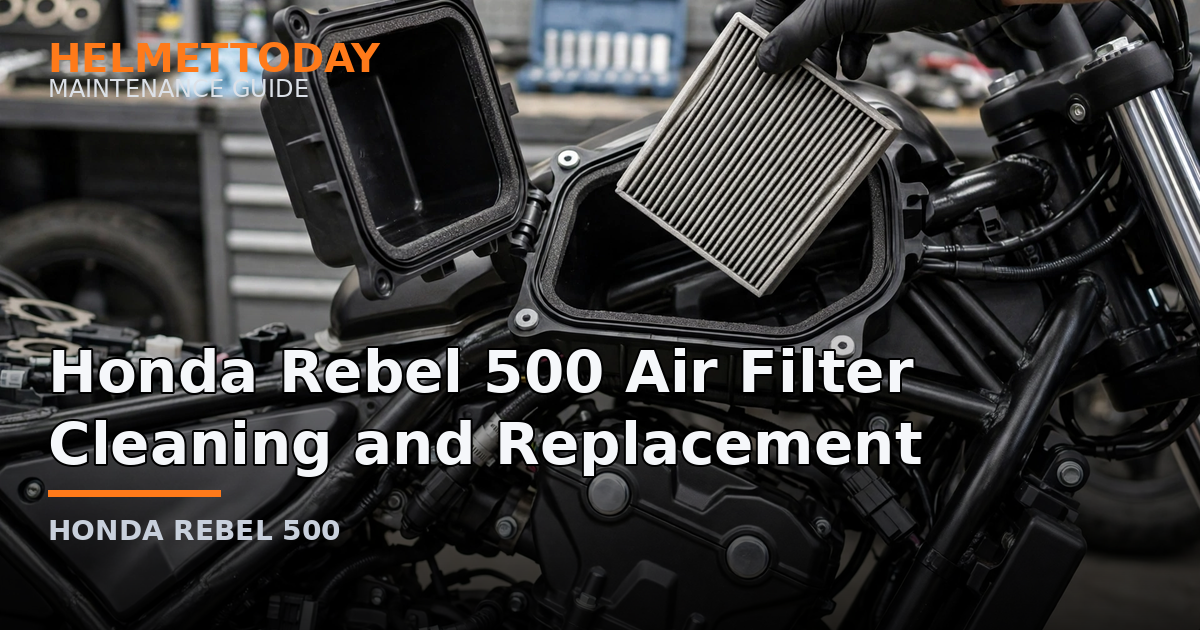
Your Honda Rebel 500’s air filter keeps dust and grit out of the engine. A clogged filter chokes airflow, hurting power and fuel economy — and in dusty conditions it loads up fast.
Check the filter at every service. Paper filters get replaced; foam filters can be washed, re-oiled, and reused.
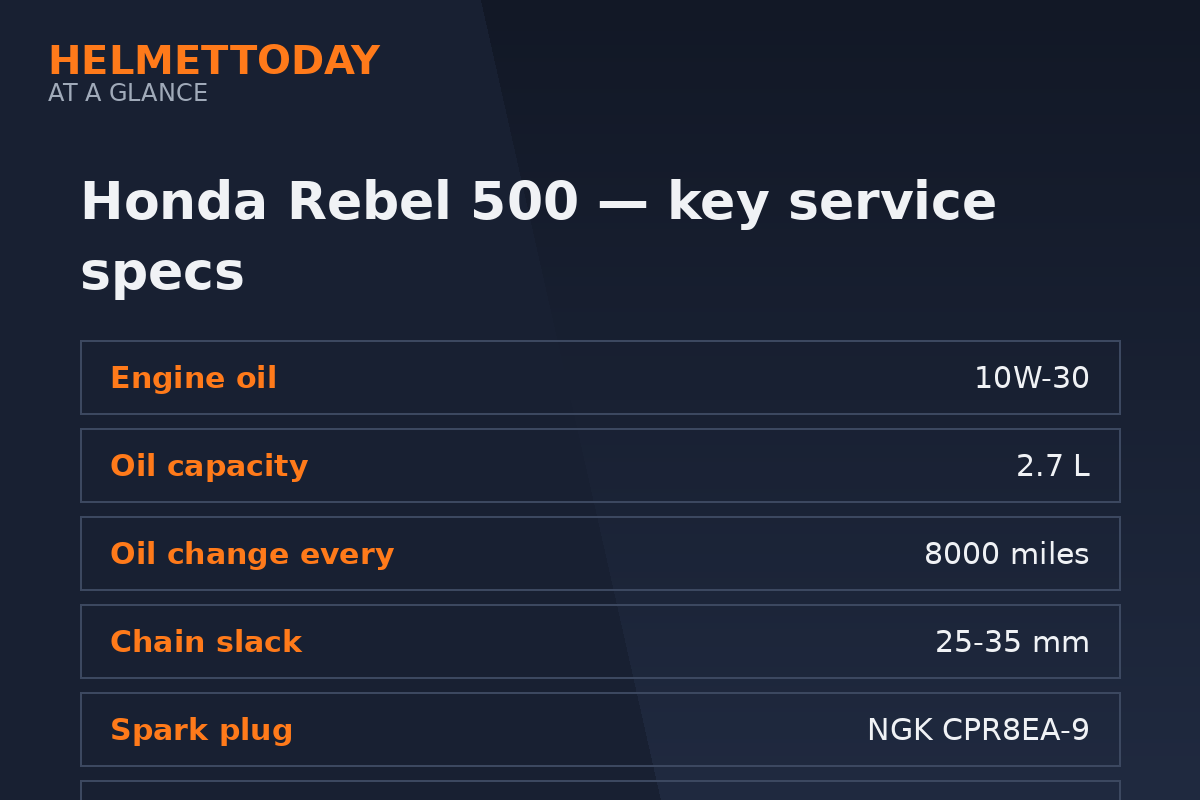
Honda Rebel 500 quick service specs
| Item | Specification |
|---|---|
| Engine oil | 10W-30 |
| Oil capacity | 2.7 liters |
| Oil change interval | 8000 miles |
| Chain slack | 25-35 mm |
| Spark plug | NGK CPR8EA-9 |
| Tire pressure (F/R) | 29 PSI front / 29 PSI rear |
| Battery | 12V 7Ah (YTZ8V) |
How to service the air filter, step by step
- Remove the seat and/or side panels to access the airbox (check your manual for the exact fasteners).
- Open the airbox and note the filter’s orientation before removing it.
- Inspect: hold a paper filter up to light — if you can’t see light through it, replace it. Tap out loose dust first.
- For foam filters, wash in filter cleaner or warm soapy water, rinse, let dry fully, then apply foam filter oil evenly.
- Clean any dust from inside the airbox with a damp rag before refitting.
- Reinstall the filter in the correct orientation, close the airbox, and refit bodywork.
Common mistakes to avoid
- Re-oiling a paper filter — oil ruins paper elements; replace them.
- Running without a filter ‘for more power’ — you’ll dust the engine’s internals in short order.
- Over-oiling foam — excess oil gets sucked into the intake and fouls sensors and plugs.
FAQ
How often should I service the Honda Rebel 500 air filter?
Inspect every service; replace paper elements per the manual (usually 7,500-12,000 miles) and sooner in dusty riding.
OEM or aftermarket filter?
OEM fits perfectly and filters well. Aftermarket high-flow filters add minimal power on a stock bike — keep it simple unless the bike is tuned.
Can a dirty filter cause poor fuel economy?
Yes — restricted airflow richens the mixture and the ECU compensates, costing you both power and mileage.
Related guides

Dan Heiman
Writer at Helmet Today, covering helmet reviews, fit and riding safety.