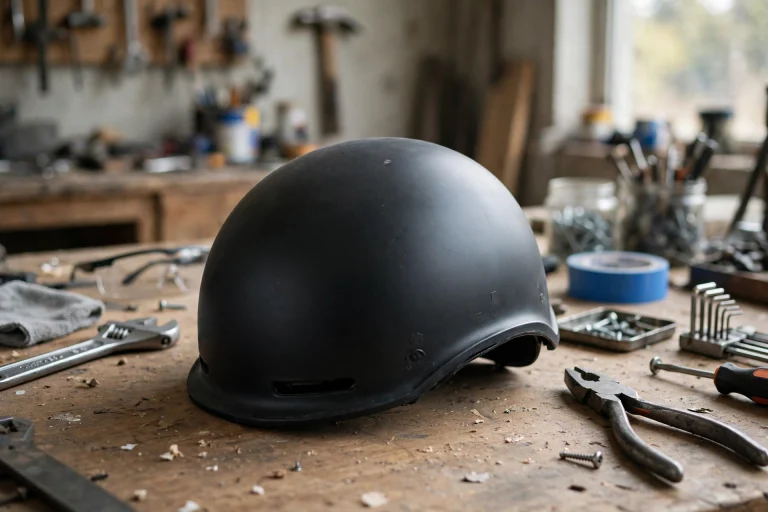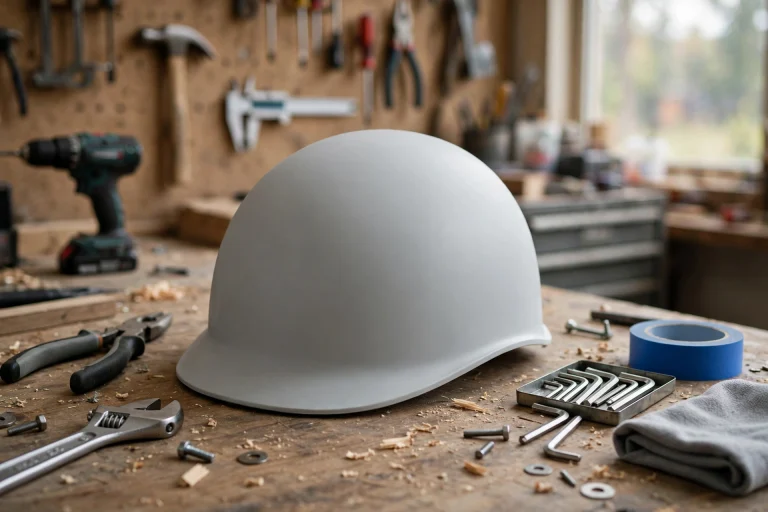
Helmet vents are made by moulding openings into the shell and the foam liner during manufacture, with channels inside the helmet that let air flow in through the front and out through the back, cooling the rider’s head. In general terms, the vents are not cut into a finished helmet: they are formed as part of the shell and the liner, so that the openings line up and air can pass freely through the helmet. Vents are found on most cycling, motorcycle, ski, and sports helmets, and the way they are made depends on the type of helmet and on how much airflow the rider needs.
How Are Vents Formed in the Shell?
Vents are formed in the shell during moulding, when the shell material is shaped in a mould that already has the vent openings built into it. For a plastic shell, the melted plastic is forced into a mould with raised sections where the vents will be, so the finished shell comes out with clean, shaped openings. For a composite shell, the fibre layers are laid around the vent openings in the mould, so the vents are part of the shell from the start.
Once the shell is out of the mould, the vent openings are trimmed and smoothed, so they have clean edges and no sharp spots that could catch on anything. In general terms, the shape and size of the vents are set by the design of the helmet: larger vents let in more air, while smaller vents keep the shell stronger, so the designer has to balance airflow against strength.
How Are Vents Formed in the Liner?
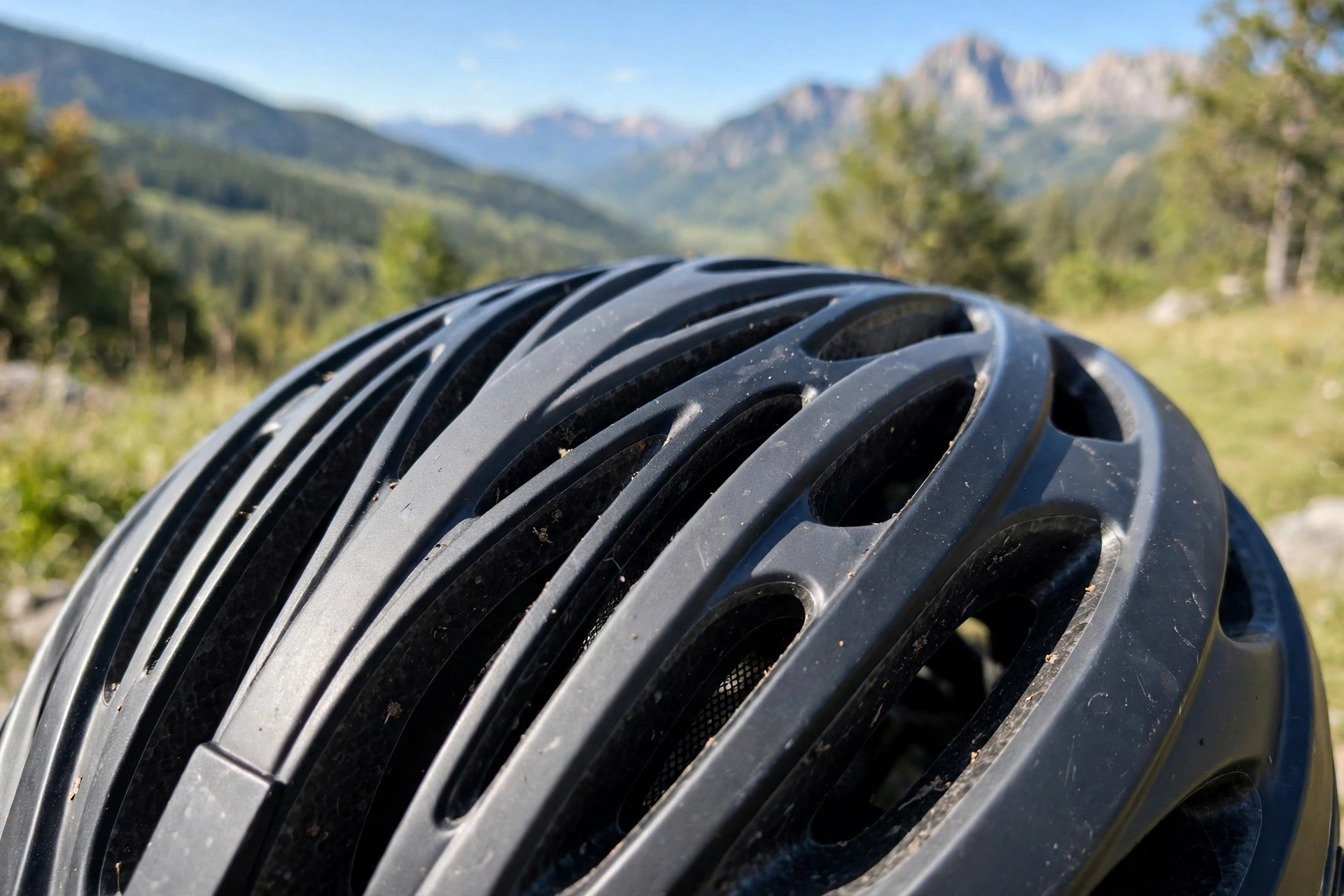
Vents are formed in the foam liner by moulding channels into the foam as it is made. The foam is expanded in a mould that has raised sections where the air channels will run, so the finished liner has grooves and passages that line up with the openings in the shell. Air enters through the front vents, flows along the channels over the head, and leaves through the vents at the back.
Some liners also have holes drilled or cut through the foam to let air pass from the shell into the channels. In general terms, the liner channels are just as important as the shell openings: without them, air would enter the helmet but have nowhere to go, and the cooling effect would be lost. The channels are kept clear of padding so that nothing blocks the airflow.
What Are Vent Covers and Sliders Made From?
Many helmets have vent covers or sliders that let the rider open or close the vents, and these are usually made from thin moulded plastic. The slider is a small plate that moves across the vent opening, blocking it or opening it up, and it is held in place by a simple track or clip moulded into the shell. Some helmets have a mesh cover over the vents, made from a fine plastic or metal mesh, which keeps insects and debris out while still letting air through.
In general terms, these small parts are made to be light and simple, since they need to work reliably with gloved hands and in all weathers. If you want to understand one of the safety technologies used in modern helmets, reading about MIPS is a good place to start, though the vents themselves are a separate part of the helmet and do not affect the liner system.
How Do Helmet Vents Keep the Head Cool?
Helmet vents keep the head cool by letting air flow over the scalp and carry heat and sweat away. When the rider moves forward, air is pushed into the front vents, flows along the channels inside the helmet, and leaves through the rear vents, taking warm air with it. That steady flow of air stops heat from building up inside the helmet and helps sweat evaporate, which cools the head.
The effect depends on speed and on the design of the vents: a helmet with well-placed vents will feel cooler at riding speed than one with few or poorly placed vents. In general terms, vents work best when the rider is moving, and they do little when the rider is standing still, which is why some helmets have vents that can be closed in cold weather to keep the head warm.
How Do You Look After Helmet Vents?
Looking after helmet vents is mostly a matter of keeping them clear and checking them from time to time. Dirt, mud, and insects can block the openings and the channels, so the vents should be rinsed with clean water and any debris brushed out gently. A soft brush or a blast of air can clear the channels inside the liner, and the vent sliders should be moved back and forth to make sure they are not stuck.
The vents should be checked for cracks around the openings, since a crack in the shell near a vent can weaken the helmet. If a vent cover or slider is broken, it should be replaced, following the maker’s instructions. As with any helmet, a hard impact means the helmet itself should be replaced, even if the vents still look fine, because damage to the shell or the liner may not be visible.
What Should You Look For in Helmet Vents?
When choosing a helmet, it is worth looking at the number, size, and position of the vents, and at whether they can be opened and closed. A helmet with plenty of front vents and rear exhaust vents will usually feel cooler, while a helmet with closable vents is more useful in cold or wet weather. The vents should be large enough to let air in, but not so large that they weaken the shell.
It is also worth checking that the vents are covered with mesh if the helmet will be used where insects are a problem, and that the sliders move easily with gloved hands. In general terms, the best vents are the ones that suit the rider’s climate and type of riding, giving enough airflow to stay cool without letting in too much rain or cold air.
Do more vents make a helmet safer?
In general terms, no. Vents are for cooling, not for protection, and a helmet with many vents is not safer than one with fewer. The safety of a helmet comes from its shell, its foam liner, and its fit.
Can helmet vents be closed in winter?
Yes, in general terms. Many helmets have sliders or covers that close the vents to keep the head warm in cold weather, and they can be opened again when the weather warms up.
Do vents weaken a helmet?
In general terms, vents are designed into the helmet from the start, so the shell is still strong enough to meet safety standards. Cutting extra holes into a finished helmet, however, would weaken it and should never be done.

Olivia
Writer at Helmet Today, covering helmet reviews, fit and riding safety.