To choose a bike helmet for commuting, start with a certified helmet that fits your head correctly, then pick commuter-friendly features: good rear coverage, a small visor, reflective details, and a way to mount lights. In the US, every bike helmet sold must meet the CPSC safety standard, so certification is the floor — fit and everyday usability are what separate a good commuter helmet from a drawer ornament.
A commute helmet works harder than a weekend helmet. It goes out in rain, dawn, dusk, and traffic, gets locked to the bike or carried into the office, and has to stay comfortable day after day. Here is how to choose one that does all of that well.
What Certification Should a Commuter Bike Helmet Have?
In the United States, bicycle helmets must meet the CPSC (Consumer Product Safety Commission) standard by law. Look for the CPSC sticker inside the helmet. If a helmet has no CPSC label, do not buy it for riding on US roads, no matter how good it looks.
Beyond the baseline, many riders choose a helmet with a rotational protection system such as MIPS — a low-friction layer designed to reduce rotational forces in angled impacts. It adds little weight and is available at many price points, and for a helmet worn daily in traffic it is a sensible upgrade.
European helmets carry the EN 1078 mark instead; that is fine in Europe, but US commuters should look for CPSC first. Dual-certified skate-style helmets (CPSC plus ASTM F1492) also exist and add coverage, though they tend to be heavier and warmer.
Which Features Matter Most for a Daily Commute?
Coverage. Commuter and urban-style helmets usually extend lower at the back and sides than minimalist road lids. That extra coverage suits upright riding positions and city speeds.
Vents and weather. Lots of vents feel great in July but let rain straight through in November. Commuters in wet climates often pick fewer vents, wear a helmet cover, or keep a cycling cap underneath. In hot, dry climates, ventilation wins.
A visor. A short visor cuts sun glare and keeps some rain off your glasses. Many commuter helmets include one; avoid long mountain-bike peaks that can catch wind and block your view when you look up at traffic lights.
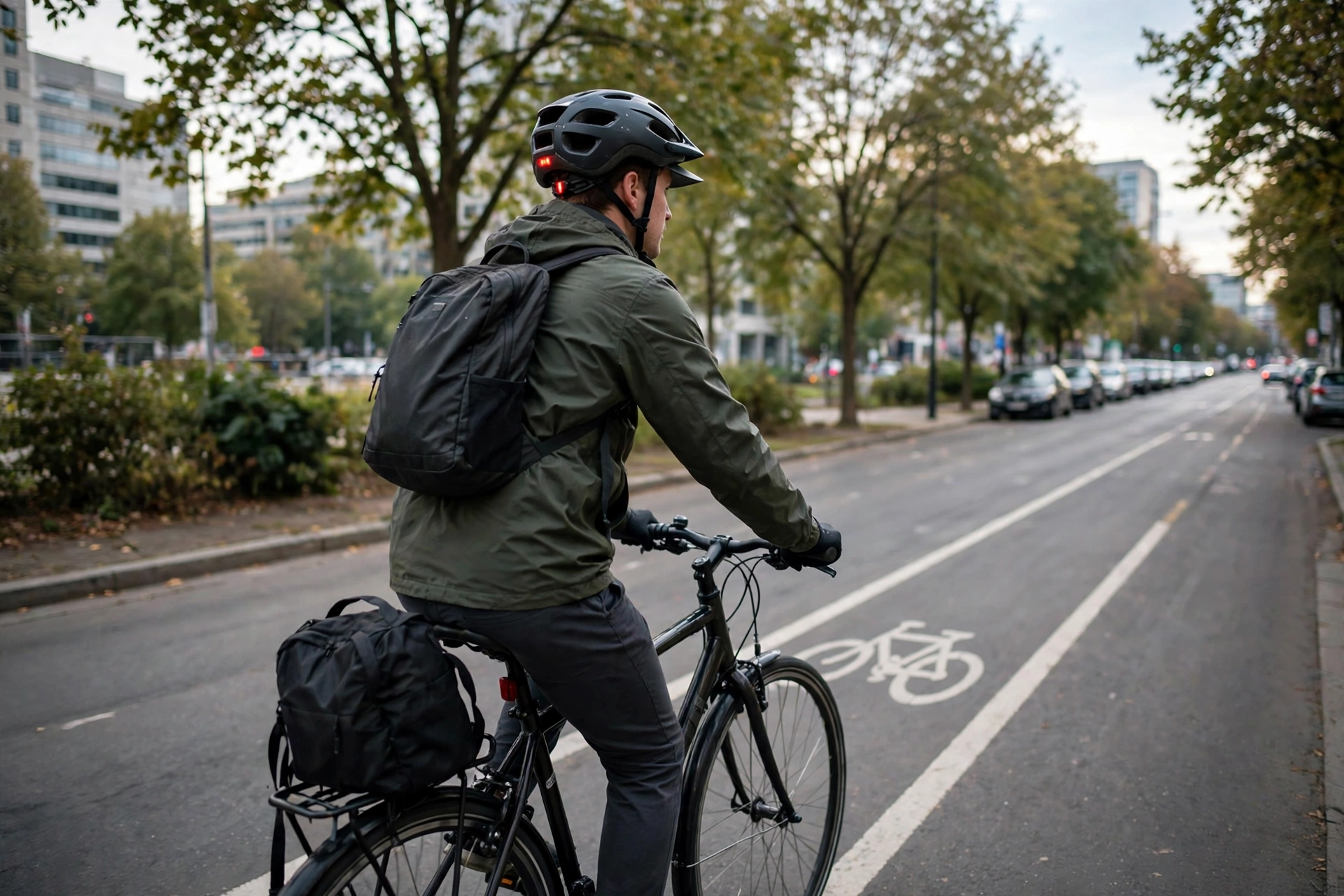
Visibility. Reflective trims, bright or light-colored shells, and rear light mounts all help on dawn and dusk rides. Some helmets have integrated rechargeable rear lights or magnetic light mounts — convenient, but keep your regular bike lights as the primary setup because helmet lights sit higher and move with your head.
Weight and daily handling. A commuter helmet gets carried, hung on hooks, and knocked around in lockers. Very light road helmets feel wonderful on the bike but their thin shells dent more easily in daily handling. A slightly sturdier urban shell shrugs off the commute routine better. Also check how the helmet works with a lock: some models let a U-lock or cable pass through a vent so you can leave it with the bike, while others are best carried with you.
Finally, check the manufacture date on the inside label before you buy, especially on discounted stock. A helmet that has sat in a warehouse for years has used up part of its service life before your first ride, whatever the price tag says.
How Should a Commuting Helmet Fit?
Fit decides whether the helmet protects you and whether you will actually wear it. Measure your head circumference just above your eyebrows and ears, match it to the maker’s size chart, and try the helmet level — about two finger-widths above your eyebrows.
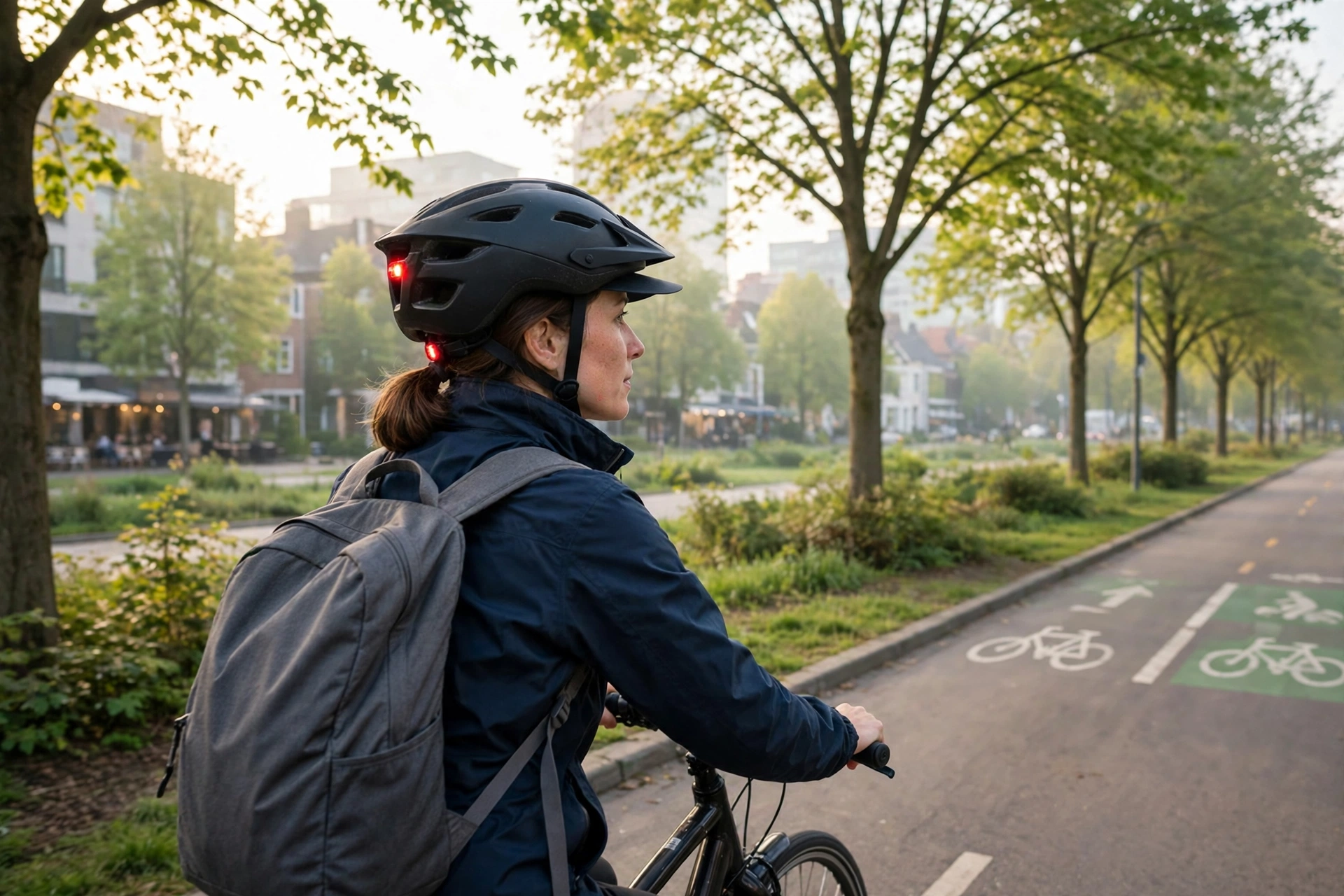
Use the rear dial to snug the fit, set the side straps into a V under each ear, and buckle the chin strap so one or two fingers fit underneath. The helmet should stay put in a head-shake test without a painful pressure point. If you wear your hair in a ponytail, look for a helmet with a ponytail-friendly rear or a fit system you can route around it.
If your commute involves a train or bus leg, consider how the helmet carries: some commuter models have a lock-through vent or a more compact shape for a bag. And remember a bike helmet is not interchangeable with other helmets — our comparison of bike helmet vs motorcycle helmet designs explains why each is built for its own job.
Urban Helmet or Road Helmet — Which Style Suits Commuting?
Urban helmets (rounded, fewer vents, more coverage) are the classic commuter pick: they handle knocks in a locker, shrug off light rain, and look fine walking into a shop. Many add reflective piping and light mounts.
Road helmets (light, heavily vented) suit long, fast commutes where heat is the enemy. They cool better and weigh less, but the open vents admit rain and the sleek shells show scuffs more easily.
Hybrid and gravel-style helmets split the difference — moderate venting, a small visor, decent coverage. There is no wrong answer here; match the style to your distance, climate, and how much of your ride is stop-start city traffic versus open road.
Do E-Bike Commuters Need a Different Helmet?
Often, yes. E-bikes cruise at higher average speeds and Class 3 models assist to 28 mph, which raises impact energy in a crash. The Netherlands created the NTA 8776 standard specifically for speed e-bike helmets: it requires more coverage at the back and sides and higher impact performance than a standard bike helmet.
NTA 8776 helmets are appearing in the US market and are a smart choice for Class 3 commuters. Riders on Class 1 and 2 e-bikes at city speeds can stay with a quality CPSC helmet, ideally with rotational protection. Either way, the higher your cruising speed, the more coverage and certification you should look for. The same logic applies to cargo bikes carrying children or heavy loads: more mass and more momentum argue for more coverage, not less.
Frequently Asked Questions
Is MIPS worth it on a commuter helmet?
For most commuters, yes. Rotational protection addresses the angled impacts common in real crashes, it adds almost no weight, and it is available at modest prices. Fit still comes first — a well-fitting standard helmet beats a loose premium one.
Can I commute in a skate-style helmet?
Yes, if it is CPSC certified for cycling. Skate-style lids offer good coverage but are heavier and hotter on long or hilly commutes. Check the label: some skate helmets are certified only for skating.
How much should I spend on a commuter helmet?
All certified helmets meet the same safety standard, so spend on fit, comfort, and the features you will use — not on certification, which is already included. Replace the helmet after any crash impact.

Olivia
Writer at Helmet Today, covering helmet reviews, fit and riding safety.