
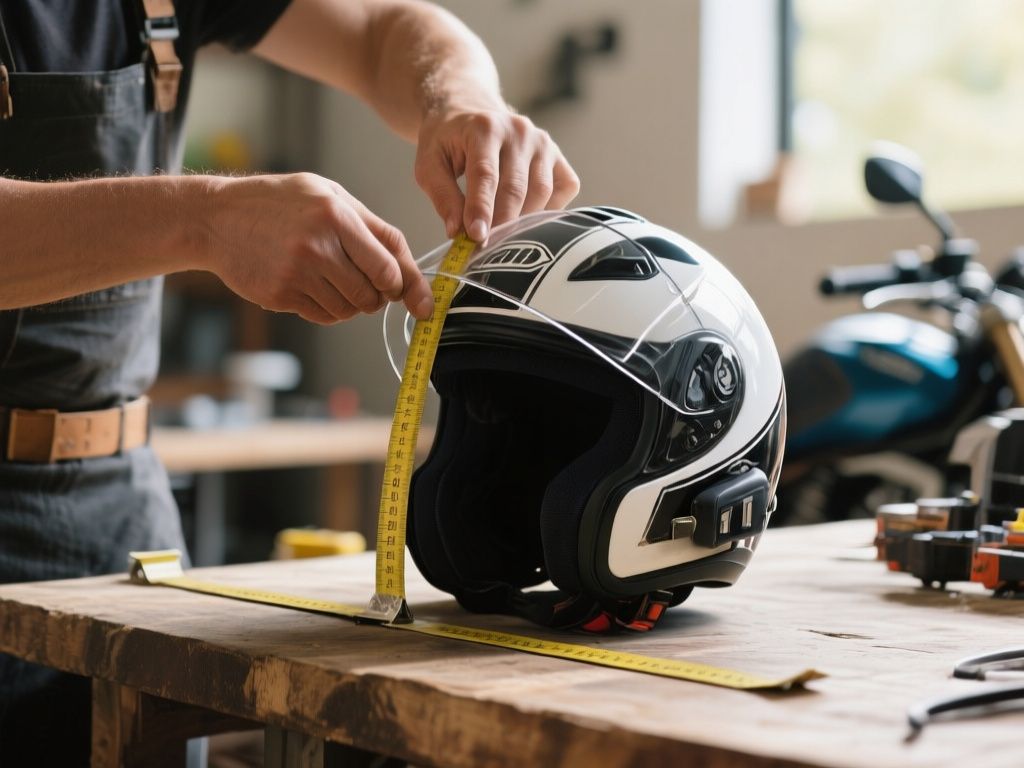
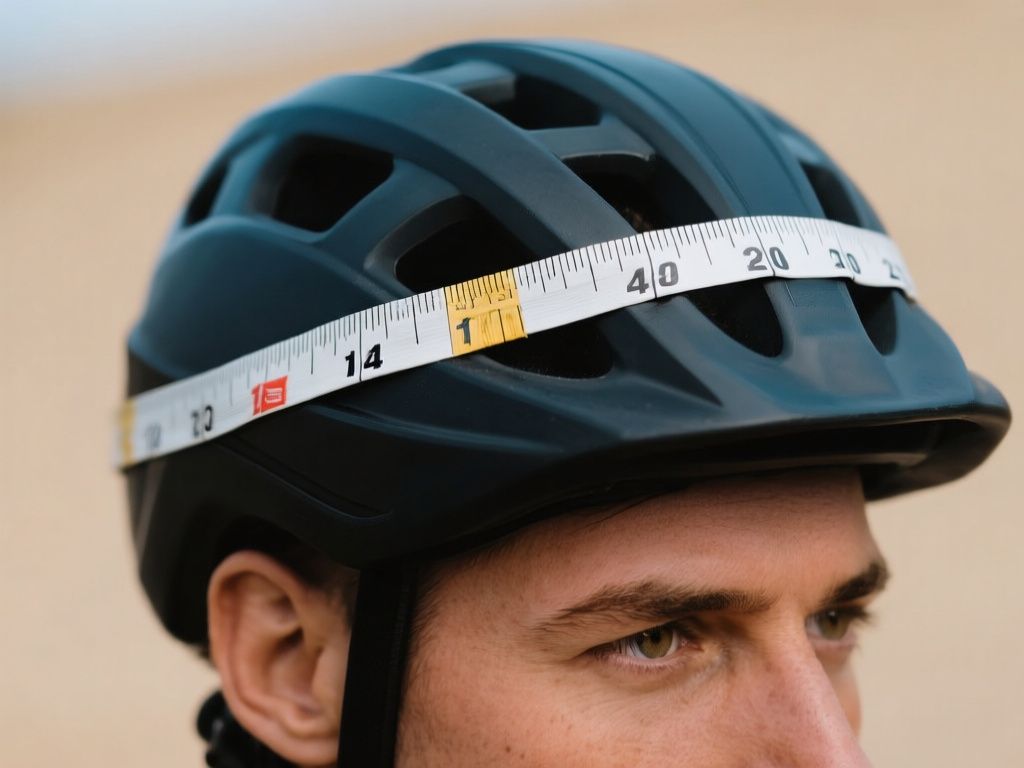
To measure for a motorcycle helmet, wrap a soft tape measure around the widest part of your head, about 1 inch (2.5 centimeters) above your eyebrows and just above your ears. Record the measurement in centimeters, then compare it with the specific helmet manufacturer’s size chart. Try the helmet on afterward because head shape and brand fit matter as much as circumference.
What do you need to measure for a motorcycle helmet?
A soft tailor’s tape measure gives the most reliable head measurement. If one is not available, use a piece of string and measure the string against a ruler or rigid tape measure.
- A flexible tape measure, preferably marked in centimeters
- A mirror or another person to help keep the tape level
- A notebook or phone for recording the measurement
- The manufacturer’s sizing chart for the exact helmet model
Measure with your hair arranged as it normally sits under a helmet. Do not measure over a thick hat, beanie, ponytail, bun, or bulky hairstyle. A helmet needs to fit the head itself, not the extra material around it.
Where should the tape measure sit?
The tape should pass around the largest circumference of your head. For most people, this means placing it roughly 1 inch above the eyebrows, keeping it just above the ears, and wrapping it around the widest point at the back of the skull.
The tape must stay level from front to back. If it slopes upward at the back, the measurement may be too small. If it sits too low over the forehead or ears, it may be too large. Use a mirror or ask someone to check the position while you stand naturally.
- Stand upright and look straight ahead.
- Place the tape across the forehead, about 1 inch above the eyebrows.
- Guide it just above the tops of both ears.
- Wrap it around the fullest part of the back of the head.
- Pull the tape snugly against the skin without compressing it.
- Write down the measurement in centimeters.
- Repeat the measurement two or three times.
A properly snug tape should touch the head all the way around but should not dig into the skin. If repeated measurements differ, use the largest accurate result rather than averaging a clearly incorrect one.
How do you convert a head measurement into a helmet size?
Use the measurement in centimeters as a starting point, not as a guaranteed final size. Helmet sizes are not standardized across all brands or models, so a 58-centimeter head may fit a medium in one model and a large in another.
| Head circumference | Common helmet size range |
|---|---|
| 53–54 cm | Small |
| 55–56 cm | Medium |
| 57–58 cm | Large |
| 59–60 cm | X-Large |
| 61–62 cm | XX-Large |
These ranges are only general examples. The manufacturer’s chart takes priority because shell sizes, interior padding, and sizing labels vary. Some brands use different ranges for full-face, modular, open-face, and off-road helmets.
If your measurement falls between listed sizes, do not automatically choose the larger helmet. Try both sizes when possible. A new helmet should feel quite snug, and the cheek pads should press firmly against the cheeks without causing sharp or concentrated pain.
Why does head shape matter?
Head shape describes how a helmet’s interior proportions match the shape of the wearer’s skull. Brands commonly describe interiors as round oval, intermediate oval, or long oval, although the exact terms vary.
- Round oval: The head is relatively similar in front-to-back and side-to-side length.
- Intermediate oval: The head is slightly longer front to back than side to side. This shape fits many riders.
- Long oval: The head is noticeably longer from forehead to the back of the skull and narrower from ear to ear.
Circumference alone cannot identify head shape. Two people can both measure 58 centimeters and need different helmets because one has more width at the temples while the other has more length from forehead to neck.
Pressure points are useful clues. Pain at the forehead may indicate that the helmet is too round or too short front to back. Pressure at the temples may mean the interior is too narrow. A large gap at the forehead, combined with side-to-side tightness, can signal a poor shape match rather than the wrong size.
How should a new motorcycle helmet fit?
A correctly fitted helmet feels evenly snug around the head, with firm but comfortable contact at the forehead, temples, and back of the skull. The interior liner should touch the head without leaving loose areas, and the helmet should not wobble when the wearer moves the head.
Expect a new helmet to feel tighter than a casual bicycle helmet or a worn-in cap. Helmet padding compresses with use, often by a small but noticeable amount. A helmet that feels comfortably loose in the shop may become unsafe after the liner settles.
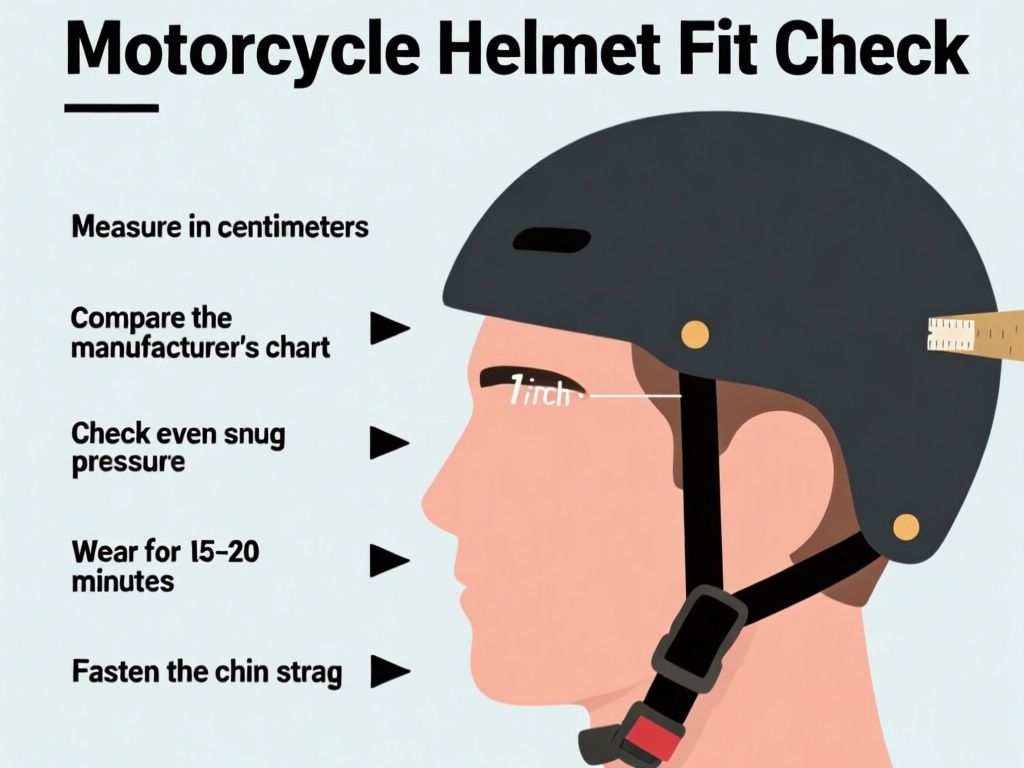
Use this practical fit check:
- Put the helmet on from front to back, spreading the straps slightly if needed.
- Fasten the chin strap according to the manufacturer’s instructions.
- Check that the top edge of the eye port does not block normal vision.
- Try to rotate the helmet side to side and up and down.
- Watch the skin on your forehead and cheeks in a mirror as you move the shell.
- Wear the helmet for at least 15 to 20 minutes.
The helmet should move the skin with it when you try to rotate it. If the shell slides across the skin while the head stays still, the helmet is too loose or the interior shape is wrong. The chin bar, if present, should sit in front of the chin rather than press directly against it.
How can you tell if a helmet is too tight?
A helmet is too tight when it creates sharp, concentrated pressure that does not ease after several minutes. Common warning areas include the temples, forehead, crown, and the ridge behind the ears.
General snugness is normal, especially with fresh cheek pads. Severe headache, numbness, tingling, or a single painful pressure spot is not normal. Do not assume that painful padding will simply “break in.” Padding may soften, but the shell and basic interior shape will not expand enough to fix a fundamentally poor fit.
Some helmets have replaceable cheek pads or comfort liners in different thicknesses. These parts can fine-tune fit, but they should not be used to compensate for a helmet that is clearly the wrong shell size. Ask the manufacturer or an authorized dealer which replacement parts are approved for that model.
How can you tell if a helmet is too loose?
A helmet is too loose if it shifts independently of the head, creates visible gaps, or can be pulled upward without moving the scalp. Loose helmets can move during riding and may not remain correctly positioned during a crash.
Try the roll-off test carefully. With the chin strap fastened, hold the rear edge of the helmet and attempt to roll it forward over the forehead. Then hold the front edge and try to roll it backward. The helmet should resist both movements and should not come off the head.
The chin strap also needs proper adjustment. It should sit under the chin, not across the throat or loosely below the jaw. A typical strap should allow only enough room for about one or two fingers, but the helmet’s instructions take priority because strap designs differ.
Should you measure more than once?
Yes, because small measuring errors can change the recommended size. Take at least three measurements at the same tape position, preferably at different times of day or with another person checking the tape’s alignment.
Record the largest consistent number. For example, measurements of 57.5, 57.7, and 57.6 centimeters indicate a head circumference of about 57.6 centimeters. A result of 56, 58, and 60 centimeters usually means the tape position or tension changed and should be checked again.
Round only as the manufacturer’s chart instructs. If the chart lists whole centimeters, compare the actual measurement with the nearest ranges rather than rounding down automatically.

Does helmet type change the measuring process?
The measuring process is essentially the same for full-face, modular, open-face, and off-road helmets. The difference comes during the fit check because each design contacts the head and face differently.
| Helmet type | Extra fit checks |
|---|---|
| Full-face | Check cheek pressure, chin-bar clearance, and eye-port visibility. |
| Modular | Check fit with the chin bar closed and verify that the locking mechanism works correctly. |
| Open-face | Check forehead and side fit carefully because there is less facial structure to stabilize the helmet. |
| Off-road | Check crown and cheek fit while moving the head as it would during standing riding. |
A modular helmet should be tested in its intended riding configuration. If it is designed to be worn with the chin bar closed, the closed position must fit correctly. Riders should follow the manufacturer’s instructions about whether the helmet may be used with the chin bar raised.
What mistakes should you avoid when measuring?
- Measuring over hair or a hat: This inflates the head circumference.
- Using a rigid tape measure: It can leave gaps and produce an inaccurate circumference.
- Pulling the tape too tightly: Compression makes the measurement too small.
- Choosing by size label alone: A medium from one brand may not match a medium from another.
- Ignoring pressure points: The correct circumference can still have the wrong interior shape.
- Buying an oversized helmet for comfort: Loose fit is a safety problem, not a comfort feature.
- Forgetting the return policy: Helmets should be tried indoors on clean hair before a purchase is finalized.
Do not rely on a retailer’s claim that all helmets fit the same. Even helmets from the same manufacturer can differ because their shells and liners are designed for different riding positions, face coverage, and intended uses.
What safety label should a motorcycle helmet have?
A helmet should meet the safety standard required where it will be used. In the United States, riders commonly look for a DOT certification label, while other countries may require standards such as ECE 22.06 or the applicable national approval.
Check the actual certification label and the manufacturer’s information rather than relying only on an online product description. A correctly measured helmet still needs the appropriate legal approval, intact components, and a genuine source. Avoid helmets with missing labels, altered straps, cracked shells, or unknown history.
Helmet age and condition also matter. Replace a helmet after a significant impact, even if there is no obvious damage, because the energy-absorbing liner may have compressed. Follow the manufacturer’s replacement guidance for normal aging, storage, and care.
Frequently Asked Questions
Can I measure my head with a string?
Yes. Wrap non-stretch string around the correct part of the head, mark where it meets, and measure the marked length against a ruler. Keep the string level and snug, then record the result in centimeters.
Should a motorcycle helmet feel uncomfortable at first?
A new helmet should feel snug, but it should not cause sharp pain, numbness, or a severe headache. Firm cheek pressure is normal; concentrated pressure at the temples or forehead usually indicates a poor size or head-shape match.
What if my head measurement falls between two sizes?
Try both sizes and compare the fit after wearing each for at least 15 to 20 minutes. Choose the smaller size only if it provides even, tolerable pressure without painful points and passes the movement checks.
Can thicker or thinner cheek pads fix the wrong helmet size?
Approved replacement pads can fine-tune cheek pressure, but they cannot correct a helmet shell that is too large, too small, or the wrong shape. The shell must already fit securely before replacement padding is considered.
How tight should the chin strap be?
The strap should sit under the chin and hold the helmet securely without cutting into the throat. It should not hang loosely below the jaw. Use the adjustment guidance supplied with the helmet, since fastening systems vary.
Can I wear glasses with a motorcycle helmet?
Try the helmet with the glasses used for riding. The temples should pass through the helmet without forcing the frames into the face or creating pressure points. Some helmets have channels for eyewear, but fit still depends on the frame and helmet design.
The most dependable method is simple: measure carefully, use the exact manufacturer’s chart, and spend enough time wearing the helmet to identify pressure points before riding. A secure, evenly snug fit is more valuable than a familiar size label.

Olivia
Writer at Helmet Today, covering helmet reviews, fit and riding safety.