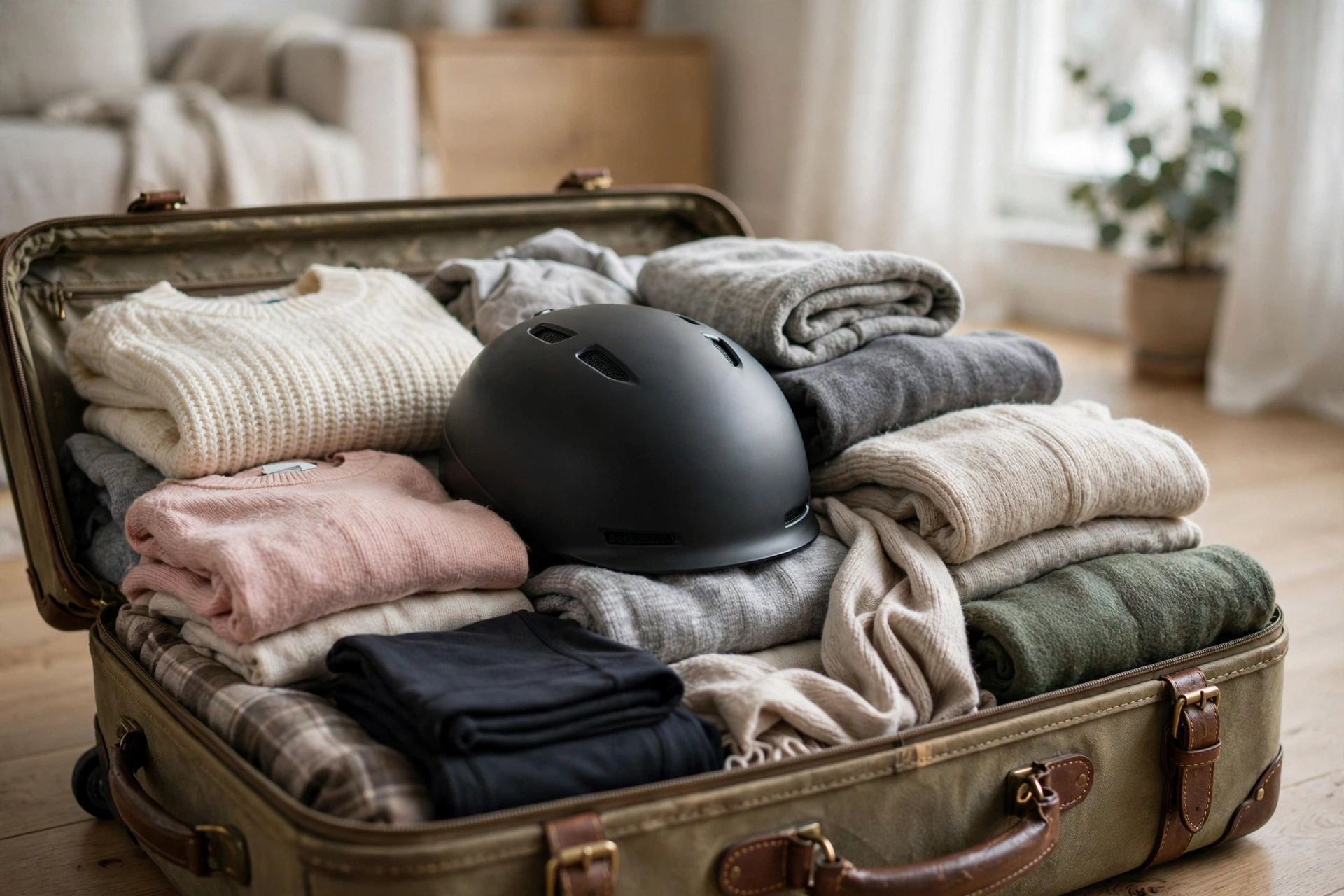
The safest way to travel with a ski helmet is in your carry-on, worn or clipped to your personal item — a helmet is light but its foam can be crushed or cracked by rough baggage handling, and a damaged helmet may not protect you at the other end. If it must go in a checked bag, nest it in the center of the suitcase surrounded by soft clothing, with gloves and base layers stuffed inside the shell.
Helmets are awkward luggage: too bulky to pack flat, too fragile to toss in carelessly. But skiers fly with them every day, and the trick is simply understanding what can hurt a helmet — point loads, compression, and hard knocks against the shell — and packing to prevent exactly those things. This guide covers carry-on versus checked, how to pack step by step, and what to check on arrival.
Should Your Helmet Go in a Carry-On or a Checked Bag?
Carry-on is the safer choice for the helmet itself. In the cabin, nobody throws your bag, stacks suitcases on it, or leaves it on a wet tarmac. Many skiers clip the helmet to the outside of a backpack with its own chin strap or a carabiner, carry it through the airport, and stow it under the seat or in the overhead bin — a widely accepted practice on ski routes, though airline size rules for personal items vary.
Checked baggage is the risky option, not the forbidden one. Thousands of helmets survive checked bags every season, but the bag will be tossed, stacked, and compressed, and the helmet inside absorbs all of it. If your trip leaves no alternative, checked is workable — you just have to pack defensively, as described below.
A third option is a rigid helmet case or a boot bag with a padded helmet compartment. These exist precisely for this problem and make checked travel much safer. A soft helmet bag alone adds scratch protection but almost no crush protection, so do not mistake one for a case.
How Do You Pack a Helmet in a Suitcase Step by Step?
Start with the helmet itself: remove any action camera and mount accessories, take out removable audio chips and batteries if your setup has them, and let the liner dry fully before packing — a damp helmet sealed in a bag for a day arrives smelling like it.
Fill the inside of the shell. Stuff the cavity with the softest items you have: ski socks, base layers, neck gaiter, glove liners. This supports the foam from inside so the shell cannot flex inward as easily, and it uses space you would otherwise waste — a helmet shell is mostly air.
Then position the helmet at the center of the suitcase, never against a wall or corner, and surround it on all sides with soft clothing. Heavy or hard items — boots, bindings tools, bottles — go as far from the helmet as the bag allows. Close out the packing by making the bag snug overall, because a half-empty suitcase lets everything shift and collide in transit.

Can You Wear Your Helmet on the Plane Instead?
Wearing it during the flight is unusual and you will get looks, but carrying it onto the plane by hand or clipped to your bag is completely normal on flights to ski destinations. Cabin crew on winter routes see helmets constantly. The practical approach is to carry it to your seat and place it in the overhead bin shell-down, or under the seat in front of you if it fits without forcing.
One caution: do not wedge a helmet into an overhead bin by slamming the door on it, and do not let other passengers pile heavy roller bags on top of it. If the bins are packed, holding the helmet on your lap for takeoff and landing is not allowed in general terms, so ask the crew — they will usually find a spot in a closet or a less crowded bin.
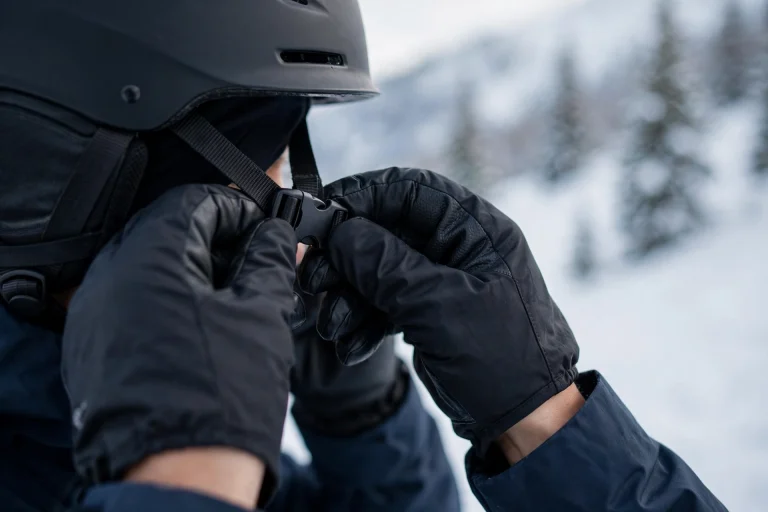
If you clip the helmet to a backpack, make sure the strap buckle is fastened and the helmet hugs the bag. A dangling helmet swinging through the terminal knocks into door frames, seats, and other travelers, collecting exactly the small impacts you are trying to avoid.
What About Goggles, Cameras, and Other Gear?
Pack goggles separately from the helmet, ideally in their hard case or a microfiber pouch inside your carry-on. Goggles clipped to a helmet inside a bag get scratched lenses and bent frames, and the helmet strap clip can press into the foam padding. Treat them as two fragile items, not one unit.
Action cameras and mounts should come off the helmet before any form of travel packing. A rigid mount glued or clamped to the shell creates a hard point that concentrates force in a crush or drop — the same reason many riders review mount safety in guides like our explainer on what MIPS is and how it works, which discusses how add-on systems interact with a helmet’s protective design. Pack the camera in its own small case in your carry-on, with batteries handled under airline rules for lithium cells.
Boot bags deserve a mention: a helmet tossed loose into a big boot bag with two heavy boots is one of the most common ways helmets get cracked on trips. If the boot bag has a separate padded helmet compartment, use it — and only it.
What Should You Check When You Arrive?
Inspect the helmet before your first run, every trip. Run your hands over the shell for new cracks, soft spots, or dents, and look inside at the foam for crumbling, cracks, or areas that feel compressed compared with the rest. Check that the chin strap, buckle, and fit dial all work normally.
If you find damage after a flight, retire the helmet. It is a miserable start to a trip, but ski towns have rental shops and sports stores for exactly this reason, and a rental certified helmet beats your own crushed one. Foam damage is not always visible, either — a hard drop onto concrete in transit can compromise a helmet that still looks fine, which is why the carry-on route is worth the small hassle.
Finally, unpack the helmet when you get home and store it loose and dry, not still stuffed with clothes in a closed bag. Travel packing is a short-term squeeze; long-term storage in a compressed state is hard on pads and foam.
Frequently Asked Questions
Q: Do airlines allow ski helmets in carry-on baggage?
A: Yes, in general terms. A helmet is not a restricted item, and carrying one on board or clipped to a personal item is common on ski routes. It still has to fit within the airline’s cabin baggage rules, so check your carrier’s size policy if your bag is borderline.
Q: Will the pressure changes in a plane damage my helmet?
A: No. Cabin and cargo hold pressure changes do not harm helmet foam or shells. The real travel risks are crushing, stacking weight, and hard knocks during handling — all packing problems, not altitude problems.
Q: Is a helmet case worth buying for one ski trip a year?
A: If you fly with your helmet in checked bags, a hard or well-padded case pays for itself the first time it prevents a crack. If you always carry your helmet on board, a simple soft bag for scratches and a careful hand is usually enough.

Olivia
Writer at Helmet Today, covering helmet reviews, fit and riding safety.