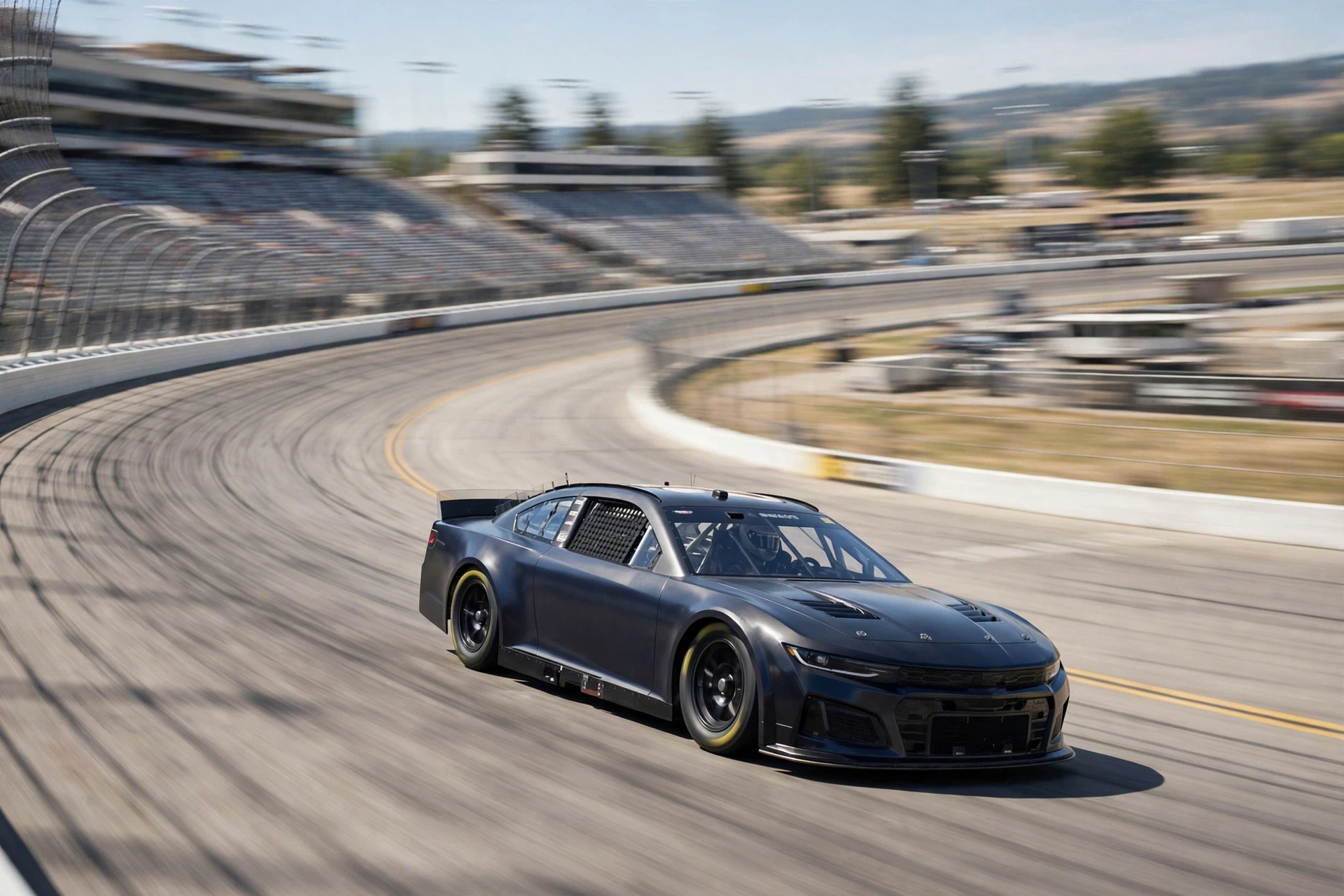
A NASCAR helmet is a full-face racing helmet worn by drivers in NASCAR stock car racing, built to protect the head in high-speed crashes and to work with the head and neck restraint systems used in the sport. NASCAR cars race close together at high speeds on oval tracks, so the helmet has to cope with hard impacts, fire, and long races in a hot cockpit, all while letting the driver see clearly and hear the team on the radio.
What Is NASCAR Racing?
NASCAR is a form of stock car racing that takes place mainly in the United States, with cars racing on oval tracks and some road courses. The cars look like ordinary road cars from the outside, but underneath they are purpose-built race cars with powerful engines and strong safety cages. Races can last for several hours, with dozens of cars running close together at speeds that are often well over 150 miles per hour on the straights.
Because the cars race in a tight pack, contact between cars is common, and crashes can involve several cars at once. The cars also run on banked ovals, where a crash can send a car spinning into the wall or rolling across the track. In general terms, the helmet is one of the most important pieces of safety kit a NASCAR driver wears, because the head is at risk in every kind of crash the sport produces.
How Is a NASCAR Helmet Different From Other Racing Helmets?
A NASCAR helmet is a full-face helmet with a strong shell, a fire-resistant lining, and a wide visor that gives the driver a clear view of the track and the cars around them. It is built to a high safety standard for motorsport, with a shell that can take a hard impact against the roll cage, the steering wheel, or the wall. The helmet also has to work with a HANS device, the head and neck restraint that stops the head from snapping forwards in a crash.
Unlike helmets for open-wheel racing, a NASCAR helmet is used inside a closed car with a roof, so it does not need the same level of wind protection, but it does need to cope with heat. The cockpit of a stock car can get very hot during a long race, so the helmet has ventilation that brings in fresh air without letting in too much noise. If you want to understand one of the safety technologies used in modern helmets, reading about what MIPS is for helmets is a good place to start, though professional motorsport helmets use their own specialised systems.
What Safety Standards Do NASCAR Helmets Meet?
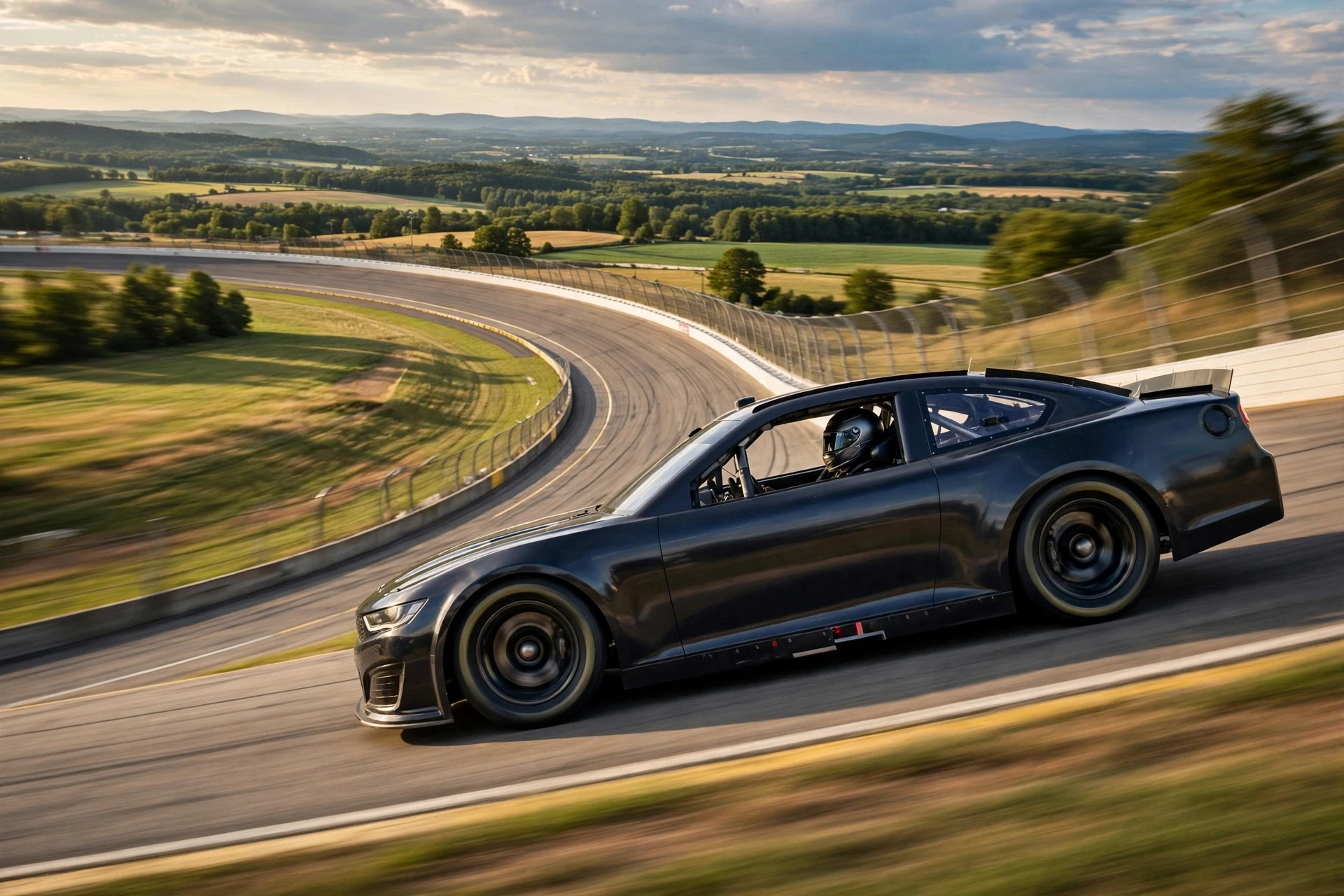
NASCAR helmets are built to the safety standards set by the sanctioning body and by motorsport safety organisations, and they must pass tests for impact absorption, penetration, and fire resistance. The shell is usually made from carbon fibre or a composite material that is both light and strong, while the liner inside is designed to absorb the force of an impact and spread it over a wider area.
The helmet is used together with a HANS device, which is attached to the helmet and to the driver’s shoulders, and which limits how far the head can move forwards or sideways in a crash. This combination has become standard in NASCAR and in most professional motorsport, because it protects against the kind of neck injuries that were once a serious risk. In general terms, the helmet and the restraint work as a system, and neither is as effective on its own.
How Does a NASCAR Driver Communicate Through a Helmet?
A NASCAR helmet has a radio system built in, with earpieces and a microphone that let the driver talk to the crew chief and the spotter during the race. The spotter watches from above the track and tells the driver about cars around them, while the crew chief gives instructions about pit stops and strategy. Clear communication is essential, because the driver cannot see everything around the car.
The radio has to work in a very noisy environment, with the engine, the wind, and the sound of other cars all competing with the driver’s voice. The helmet’s earpieces are designed to block out much of that noise while still letting the radio come through clearly. The driver can also drink through a tube built into the helmet, which matters on a long, hot race where dehydration is a real concern.
What Is It Like to Wear a NASCAR Helmet in a Race?
Wearing a NASCAR helmet in a race means sitting in a hot, noisy cockpit for hours, with the helmet on the whole time. The helmet is snug and close-fitting, which is necessary for protection, but it can feel heavy and warm over a long race, especially on a summer afternoon. Drivers get used to it through practice and training, and the helmet becomes part of the routine of getting into the car.
Vision is also important: the visor must stay clear of fog and dirt, and the driver needs to be able to see the cars ahead, the track markings, and the pit signals. Many drivers use tear-off strips on the visor that can be pulled away during the race to reveal a clean layer underneath. In general terms, a helmet that is comfortable, clear, and easy to communicate through lets the driver focus on racing rather than on the kit.
When Should a NASCAR Helmet Be Replaced?
A NASCAR helmet should be replaced after a crash or a hard impact, even if it looks fine from the outside. The liner inside a helmet can be damaged by a heavy knock without any visible sign on the shell, and a helmet that has already absorbed an impact may not protect as well the next time. Professional teams inspect helmets regularly and retire them after any serious incident.
Age and wear matter as well. The padding, straps, and visor can wear down over a season of use, and the helmet may no longer fit as snugly as it once did. Teams also replace helmets when safety standards change, so that drivers are always using kit that meets the latest rules. In general terms, a helmet is a piece of safety equipment with a working life, and it should be replaced before it stops doing its job properly.
Do NASCAR drivers wear full-face helmets?
Yes, NASCAR drivers wear full-face helmets that cover the whole head and face, with a visor for vision and a radio system built in for communication with the team.
What is a HANS device in NASCAR?
A HANS device is a head and neck restraint that attaches to the helmet and the driver’s shoulders, limiting how far the head can move in a crash and helping to prevent neck injuries.
Are NASCAR helmets fire resistant?
Yes, in general terms NASCAR helmets are built with fire-resistant linings and materials, since fire is a risk in a crash, and the helmet must protect the driver while they get out of the car.

Olivia
Writer at Helmet Today, covering helmet reviews, fit and riding safety.