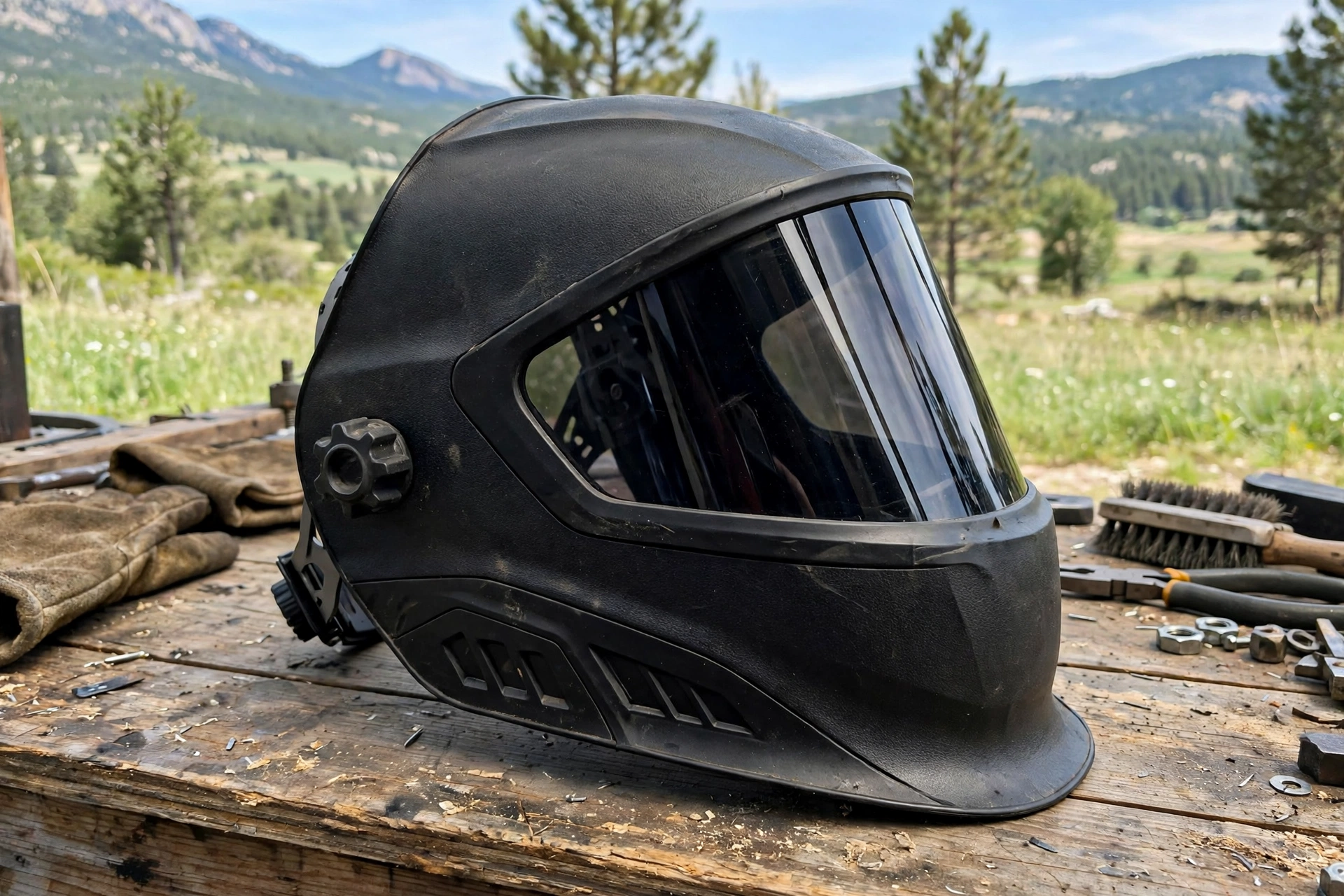
Panoramic side windows are fixed, lightly tinted panels built into the sides of some welding helmets that widen your peripheral view of the workshop while you weld. They give you awareness — a sense of movement, people and obstacles beside you — but they do not darken like the main filter, and they are not protection for looking at an arc. The main auto-darkening filter does the welding protection; the side windows are windows, not a second filter.
Panoramic helmets look distinctive and cost more than standard shells, so it is fair to ask what the side windows actually do. This guide explains how they differ from the main lens, where they help, and where their limits are.
What Are Panoramic Side Windows, Exactly?
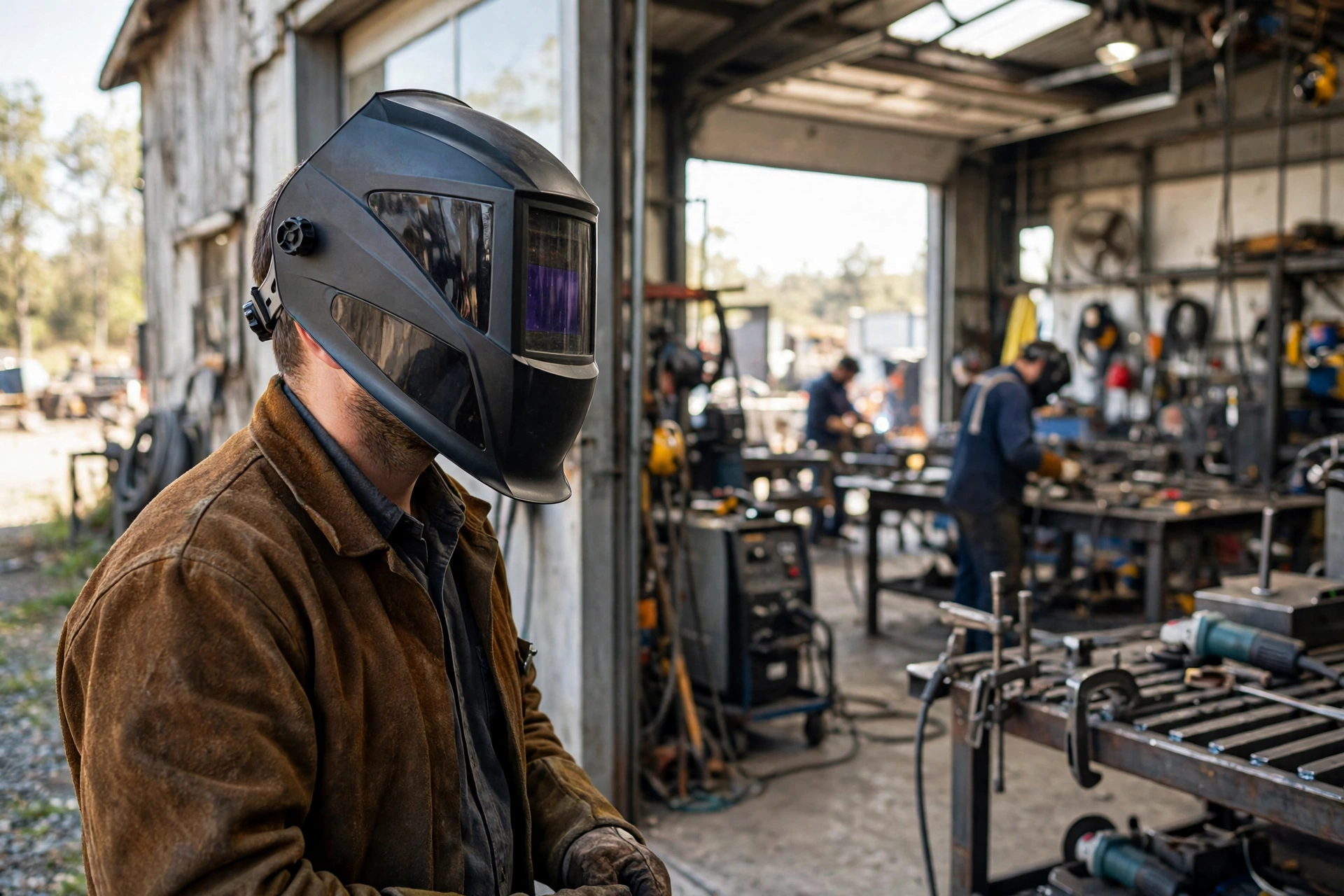
A standard welding helmet is a tunnel: your whole view is the rectangle of the filter in front of your eyes. A panoramic design extends the shell’s window area around the sides of the head, wrapping the view so you can sense what is happening at your left and right without turning.
The side panels are a fixed tint, in general terms a light shade that takes the edge off bright shop light but stays far lighter than a welding shade. They are part of the shell, not electronics — there is nothing to switch, charge or fail, and nothing that changes when an arc starts.
Combined with the wider main filters many panoramic helmets also carry, the effect is a noticeably less closed-in feeling under the hood, which is the main reason welders who try them tend to keep them.
How Do Side Windows Differ From the Main Filter?
The main filter is the protective device: it detects the arc and darkens to your set shade in a fraction of a blink, and it carries the UV and infrared filtering that protects your eyes at every shade, even its light state. The side windows do none of that switching. Their tint is fixed at all times.
That distinction decides how you are allowed to use them. You weld by looking through the main filter. The side windows exist for peripheral awareness — motion, light changes, someone approaching — the way you use the edge of your vision when driving. You should not deliberately view an arc, yours or a neighbor’s, through a side window; in general terms the fixed tint there is not a welding shade and is not rated as one.
Reputable makers are clear about this in their documentation, and it is worth reading yours. If a side panel’s tint and purpose are not stated, treat it as a viewing window only and keep your arc-watching strictly through the main filter.
What Do Side Windows Actually Help With?
Awareness is the headline benefit. In a shared shop, welders work hooded and deaf to much of what is around them. Peripheral vision catches the forklift passing behind, the colleague stepping into your bay, or the grinder starting up beside you — things you would otherwise only notice when you lift the hood.
Positioning is the second benefit. On long workpieces and assemblies, being able to sense the edge of the part, a clamp or the end of the joint without turning your head helps you keep your place, especially on long seams where drifting off line is easy inside a narrow tunnel view.
Comfort is the third, and it is real even though it is subjective. Some welders find a fully enclosed view claustrophobic or fatiguing over a long shift. A wider, lighter-feeling field of view reduces the sense of isolation and can make the hood easier to wear for hours at a time.
What Are the Trade-Offs and Limits?
Cost and weight come first. Panoramic shells are premium products, and the larger window area adds structure that can make the helmet heavier than a basic hood — balance and headgear quality matter even more than usual if you wear one all day.
Light management is second. More window area means more ambient light entering around the filter, and in very bright environments or with arcs flashing nearby, some welders find stray light at the edges distracting. The flip side of awareness is that the side panels never darken, so a close neighbor’s arc in your periphery will be bright — a cue to reposition or screen the bay, not something the helmet can fix.
Finally, the side panels are shell parts. A cracked side window is not a cheap cover-lens swap; repairs mean maker parts or a new helmet. If your work is rough on equipment, factor that in.
Who Benefits Most From a Panoramic Helmet?
Welders in busy shared shops get the clearest win, because the awareness benefit is aimed at exactly their environment. Fabricators working on large assemblies, where keeping orientation on the part matters, are a close second. Production welders doing long runs of the same seam may also simply prefer the less enclosed feel.
A hobby welder working alone in a garage gets less from the side windows — there is less to be aware of — and may be better served putting the same money into optical clarity or a larger main filter. As with most premium features, the value depends on the work in front of you, not the feature list.
Whatever you choose, the basics stay the same: the protection lives in the main filter, kept clean and tested, in a helmet that fits. It is the same thinking riders apply with MIPS and other liner systems in cycling helmets — extra features add value around a sound protective core; they never replace it.
Frequently Asked Questions
Q: Can I watch another welder’s arc through the side windows?
A: No. The side panels are a fixed light tint for awareness, not a welding shade, and in general terms they are not rated for viewing an arc. Look away or through your main filter, and use welding screens between bays where arcs are frequent.
Q: Do the side windows darken when I strike an arc?
A: No. Only the main auto-darkening filter switches shade. The side windows stay at their fixed tint at all times — that is exactly why they are for peripheral awareness rather than protection.
Q: Are panoramic helmets worth it for a home workshop?
A: For most solo hobby welders, they are a comfort upgrade rather than a safety one. If you work alone, the awareness benefit is small, and the same budget usually goes further on a clearer main filter or better headgear. If you simply prefer the wider view and will wear the helmet more because of it, that is a legitimate reason too.

Olivia
Writer at Helmet Today, covering helmet reviews, fit and riding safety.