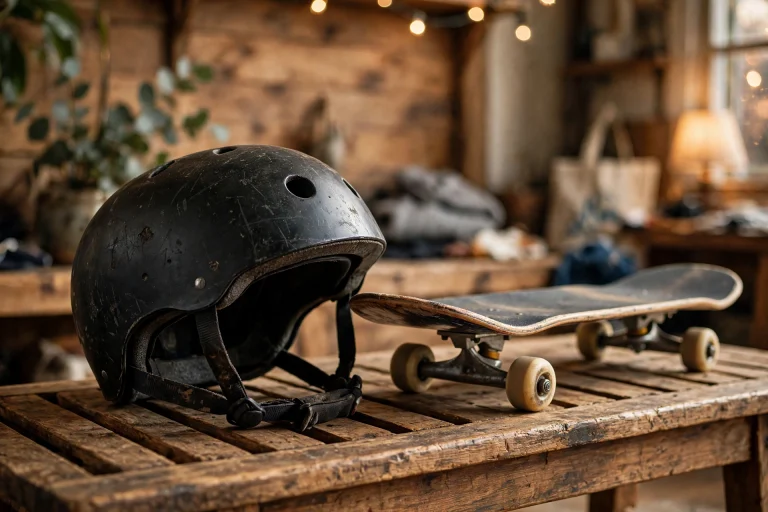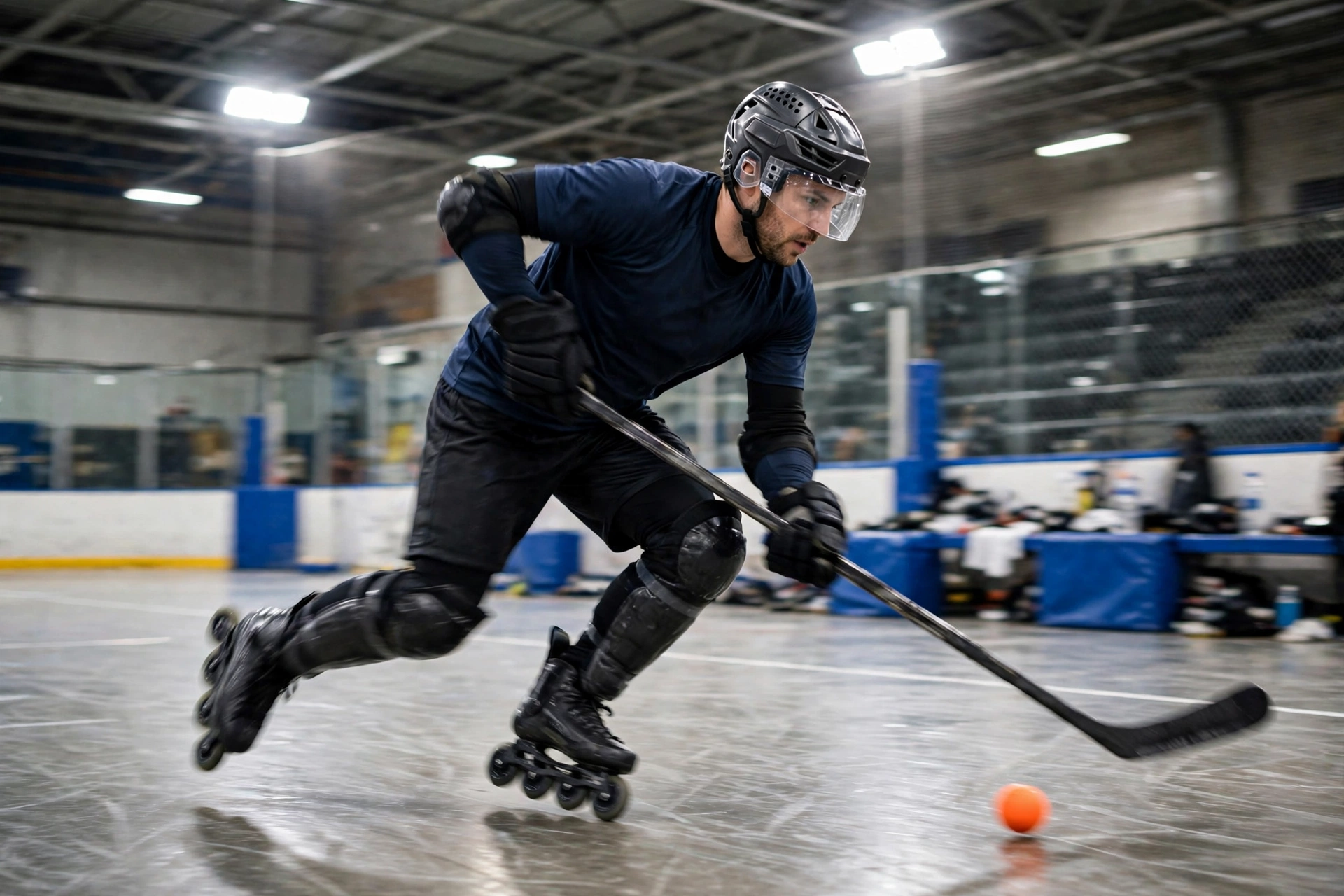
In general terms, roller hockey helmets and ice hockey helmets look similar but differ in ventilation, weight, and the impacts they are designed for — and they are not automatically interchangeable. Ice hockey helmets are built for a cold rink, high-speed collisions, and board impacts, while roller hockey helmets are lighter, better ventilated, and tuned for a warmer, faster-flowing game on a hard rink surface.
Players switching between the two versions of the game often assume one helmet covers both. Sometimes it does, sometimes it does not, and the difference lies in the details. This guide explains what separates the two, and how to choose if you play both.
What Is a Roller Hockey Helmet Designed For?
Roller hockey — played on inline skates on a hard surface, usually indoors or outdoors in warm conditions — demands a helmet that breathes. Roller hockey helmets tend to be lighter, with larger vents and less insulation, because players overheat quickly in a warm rink. Weight matters too: a lighter helmet is less tiring over a fast, end-to-end game with frequent shifts.
The impacts in roller hockey are also different. There are no boards to be checked into in the same way as ice hockey, and the game generally involves less full-body collision, though falls onto a hard rink surface are common and can be hard. Roller hockey helmets are typically certified for the skating and hockey impacts relevant to that game, with a visor or cage option depending on the league.
Many roller hockey helmets share DNA with ice hockey helmets — some models are essentially the same shell with different padding or venting — but the tuning reflects the game. A helmet that feels perfect on ice may feel hot and heavy on a summer outdoor rink.
What Is an Ice Hockey Helmet Designed For?
Ice hockey helmets are built for a colder, more physical game. The shell and liner are tuned for high-energy impacts: body checks, falls onto ice, collisions with the boards, and contact with sticks and pucks. Ice hockey certification reflects that impact profile, and leagues at many levels require helmets meeting the ice hockey standard specifically.
Insulation is less of a concern on ice — in fact, a helmet that retains a little warmth is no disadvantage in a cold rink — so ice helmets often have smaller vents and denser padding than roller helmets. They are also commonly worn with a full cage or a visor, and the helmet’s design must work with that face protection as a system.
Fit systems on ice helmets tend to be highly adjustable, because ice players wear them for long seasons and share a helmet across growth in youth leagues. Tool-free length adjustment is common, letting one helmet cover a range of head sizes as a young player grows.
Can You Use an Ice Hockey Helmet for Roller Hockey?
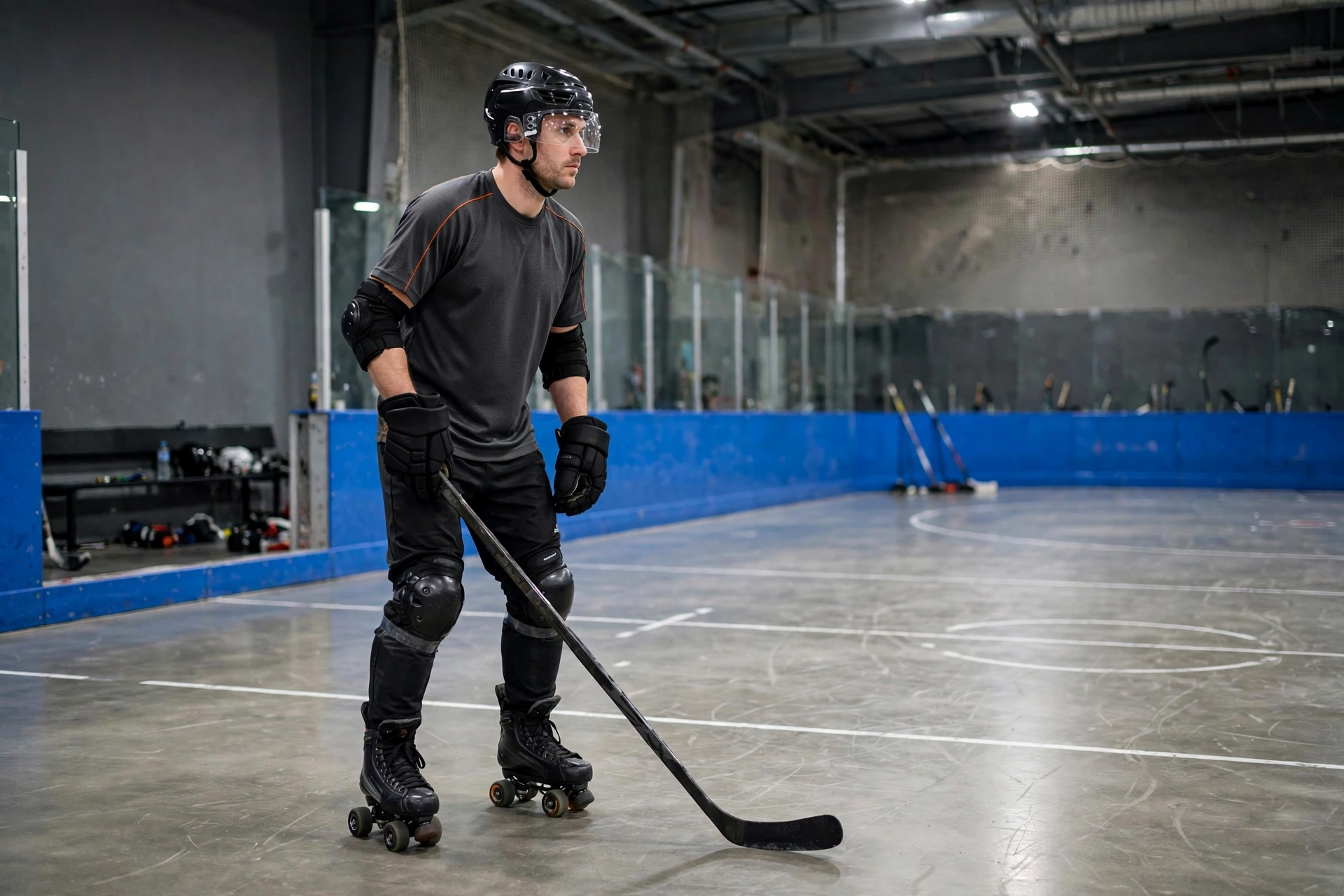
In general terms, yes — an ice hockey helmet is usually accepted for roller hockey, and it offers strong impact protection. The main downsides are comfort: it will be warmer and heavier than a roller-specific helmet, which matters in a hot rink or an outdoor summer game. If your league accepts it and you can tolerate the heat, an ice helmet is a safe choice for roller hockey.
Check your league’s rules first, because some roller leagues specify their own helmet requirements. Most accept any certified hockey helmet, but a few name a particular standard. A quick check with the league before the season avoids a problem on game day.
Also consider the face protection. If you wear a cage on ice, you may find it unnecessary or restrictive for roller hockey, where many players wear a visor or no face protection at all depending on age and league rules. Make sure whatever face protection you use is compatible with the helmet and the league’s rules.
Can You Use a Roller Hockey Helmet for Ice Hockey?
This direction is riskier, and the answer is usually no for organised ice hockey. Ice hockey leagues generally require helmets certified to the ice hockey standard, and a roller-only helmet may not carry that certification. Even if it looks identical, the certification is what the league checks, and an uncertified-for-ice helmet may not be accepted.
Beyond the rules, the protection profile differs. An ice hockey game involves harder collisions and board impacts than roller hockey, and a helmet tuned for a lighter, warmer game may not be optimised for those impacts. Using a roller helmet on ice is a compromise that saves nothing if it fails a league check or performs worse in a heavy collision.
The practical answer for players who do both is simple: if you must own one helmet, own an ice hockey helmet and use it for both games, accepting the extra warmth on roller days. If you play both regularly, owning a helmet for each game is more comfortable and avoids any rules problem.
What Should You Look for When Buying Either Helmet?
Certification comes first. Check the label inside the helmet and confirm it meets the standard your league requires. Do not assume a helmet is certified for both games because it looks like a hockey helmet — check the actual label.
Fit comes second. A hockey helmet should sit level, cover the forehead, and stay put when you shake your head. Adjust the length and the straps until it is snug without pressure points. A helmet that shifts in a collision protects poorly, whatever its certification.
Face protection is the third decision. Cages offer the most protection and are often required for younger players, while visors offer better vision and ventilation and are common at higher levels. Whichever you choose, make sure it is designed to fit your helmet model — a mismatched cage or visor can leave gaps or interfere with the helmet’s fit.
Finally, think about rotational impact protection. Hockey falls and collisions are often angled, and some modern helmets include systems designed to reduce twisting forces in such impacts. This guide to what MIPS means for helmets explains how one such system works.
Frequently Asked Questions
Q: Is a roller hockey helmet lighter than an ice hockey helmet?
A: In general terms, yes. Roller helmets are usually lighter and better ventilated, because the game is played in warmer conditions and involves less heavy body contact than ice hockey.
Q: Do I need a cage for roller hockey?
A: It depends on your league and age group. Many leagues require a cage or visor for younger players, while adult leagues may allow a visor or no face protection. Check your league’s rules before buying.
Q: How often should a hockey helmet be replaced?
A: Replace it after any hard impact, and replace a heavily used helmet showing cracked shells, crushed foam, or worn straps. In general terms, a helmet that has served several hard seasons is worth inspecting closely and replacing if its condition has deteriorated.

Olivia
Writer at Helmet Today, covering helmet reviews, fit and riding safety.