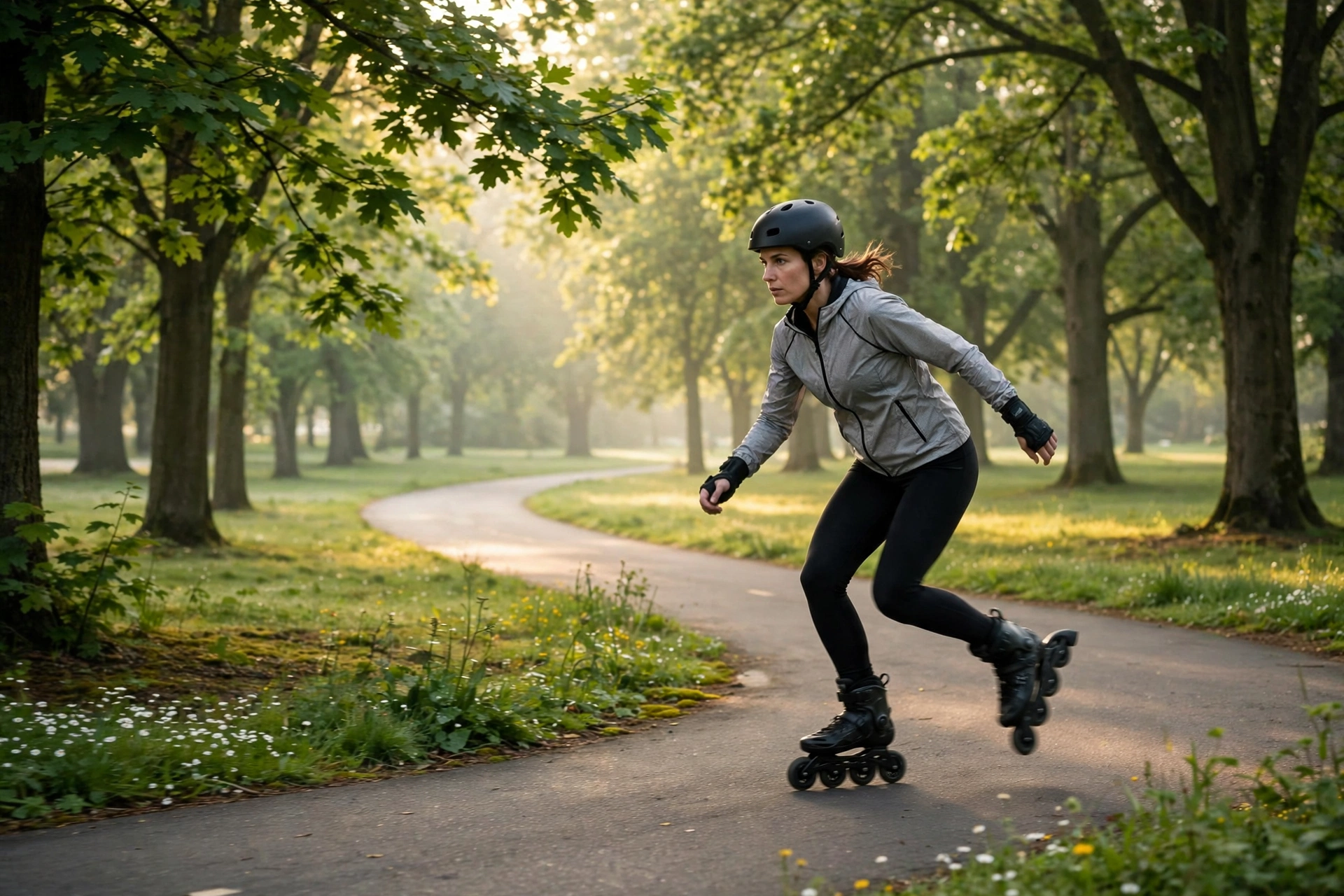
Yes, you need a helmet for rollerblading on bike paths. Bike paths feel safe because there are no cars, but they still have hard surfaces, other users moving at different speeds, and unexpected obstacles, and a fall at skating speed can hurt your head badly. In general terms, the absence of cars lowers one risk while leaving most others untouched.
Many skaters treat a bike path as a relaxed, low-risk ride, and that is exactly when helmets get left behind. This guide explains why paths still deserve a helmet, what kind suits path skating, and how to share the path safely with everyone else on it.
Why Do Bike Paths Still Pose a Risk to Rollerbladers?
Speed is the first reason. Rollerblades roll fast on smooth path surfaces, and even a comfortable cruising pace is fast enough for a hard fall. A crack, a tree root lifting the pavement, a patch of wet leaves, or a stone on the path can stop your wheels while your body keeps moving.
Other path users are the second reason. Cyclists approach from behind at speed, walkers change direction without looking, dogs run on long leads across the path, and children dart sideways without warning. A skater needs room to stop or swerve, and on a busy path that room is not always there.
Junctions and crossings add a third risk. Paths cross driveways, side roads, and car parks, where drivers may not expect a fast-moving skater. A driver edging out of a driveway is looking for cars and pedestrians, not for someone arriving on blades at speed. A helmet does not prevent these encounters, but it reduces what they can cost you.
What Kind of Helmet Suits Bike Path Rollerblading?
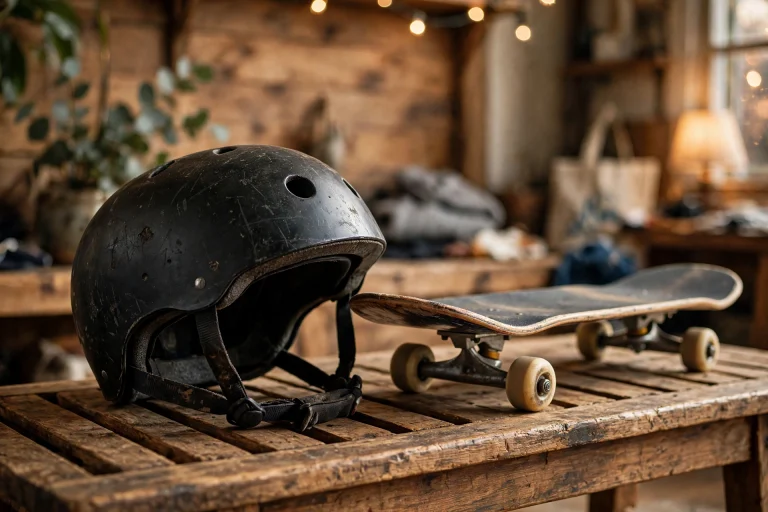
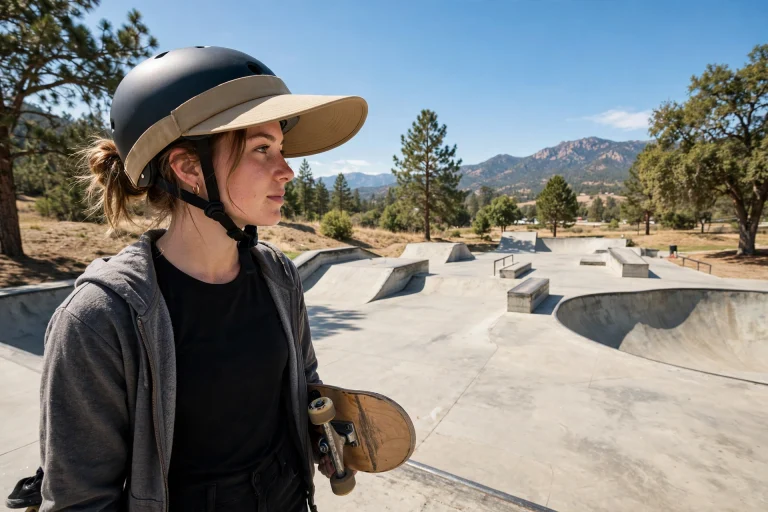
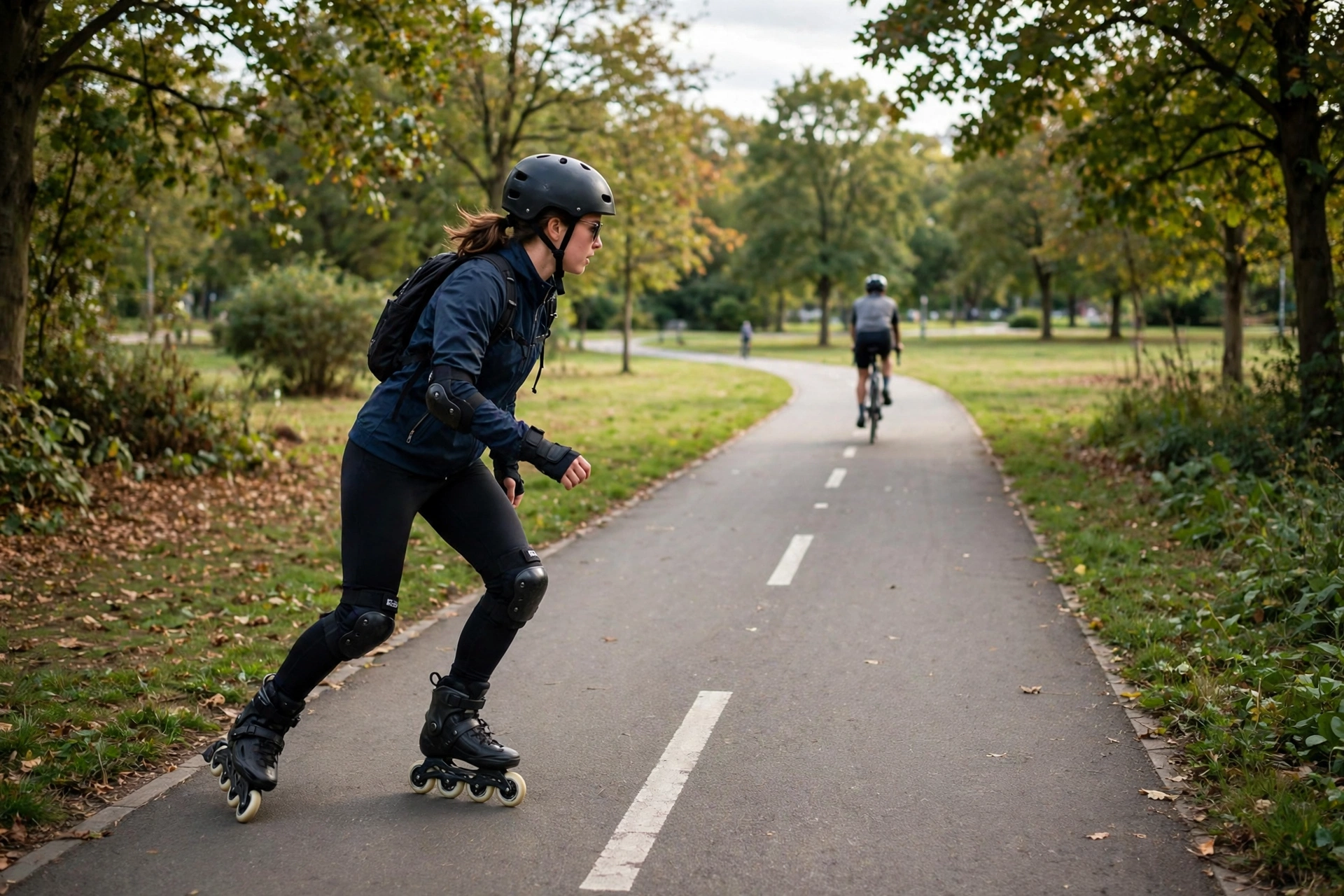
A skate-style or multi-sport helmet is a good choice for path skating. It sits low, covers the back and sides of the head, and handles the backwards and sideways falls that skaters commonly have. A road cycling helmet also works, but it usually has a higher cut at the back and less coverage where skaters tend to hit.
Ventilation matters on longer path rides. A helmet with good front-to-back airflow keeps you cooler and more willing to keep it on for the whole ride, rather than carrying it after the first few miles. Try the helmet on and wear it for a few minutes before buying, since a hot helmet is a helmet that gets left at home.
Visibility is worth considering too. A bright-coloured helmet helps cyclists and walkers spot you earlier, especially on shaded paths or at dusk. It is a small choice that makes you easier to share the path with, and it costs nothing in comfort.
How Should a Path-Skating Helmet Fit?
Measure around your head just above your eyebrows and ears, and compare the result with the maker’s size chart. The helmet should sit level, about two fingers above your eyebrows, and feel snug all the way around without pressure points. Shake your head: the helmet should move with your head, not slide over it.
Adjust the side straps into a V under each ear and tighten the chin strap until it is snug but comfortable. Check the fit again after a few rides, since padding settles and straps stretch slightly. A helmet that fitted perfectly in the shop may need a small tweak after a week of skating.
If you are choosing between models, it helps to understand what MIPS for helmets means, since some path-skating helmets include this slip layer designed to reduce rotational forces in angled impacts. It is a useful feature, but it never compensates for a loose or poorly positioned helmet.
How Do You Share a Bike Path Safely on Blades?
Keep to the correct side of the path and pass other users with room and warning. A friendly call or a bell before you pass gives walkers time to hold their line, and passing wide avoids the sudden swerve that causes collisions. Slow down where the path narrows, bends, or passes a playground or car park entrance.
Watch the surface as you skate. Wet patches, fallen leaves, gravel washed onto the path, and painted lines can all be slippery on blades. Scan ahead rather than looking at your feet, and practise stopping techniques, such as the heel brake and the T-stop, until they are automatic.
Skate within your stopping distance. If you cannot stop before a blind bend, a junction, or a group ahead, you are going too fast for the conditions. Speed is enjoyable on an open path, but the ability to stop is what keeps a shared path safe for everyone.
When Is a Helmet Most Important on a Bike Path?
Every ride deserves a helmet, but busy times, evening rides, and unfamiliar paths raise the stakes. A crowded weekend path means more unpredictable movements around you, low light means you are harder to see, and a new path means you do not yet know where the cracks, crossings, and narrow spots are.
Group skates deserve the same discipline. It is easy to feel safer in a group, but a group also means more wheels, more speed changes, and more chances of someone stopping suddenly ahead of you. If everyone in the group wears a helmet, newer skaters follow the standard without having to be told.
Short trips count too. A quick skate to the shop or a short loop near home is still a skate on a hard surface with other users around. Keeping the helmet with your skates, so you pick up both together, removes the decision and makes the habit automatic.
Frequently Asked Questions
Q: Do I legally have to wear a helmet rollerblading on a bike path?
A: In general terms, rules vary by place, and some areas require helmets for skating while others do not. Check your local rules, but wear a helmet either way, since the safety case does not depend on the law.
Q: Is a bike helmet fine for rollerblading?
A: Yes, a bike helmet is much better than no helmet. A skate or multi-sport helmet usually covers more of the back of the head, so it is often the better choice if you skate regularly.
Q: When should I replace my rollerblading helmet?
A: Replace it after any hard impact, and also when the padding is worn, the straps are frayed, or the fit has loosened. In general terms, a helmet used for regular path skating over several years is due for a fresh check.

Olivia
Writer at Helmet Today, covering helmet reviews, fit and riding safety.