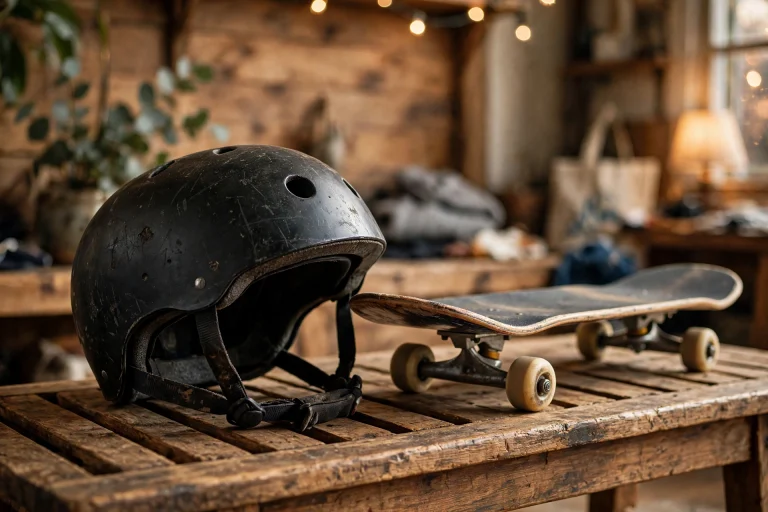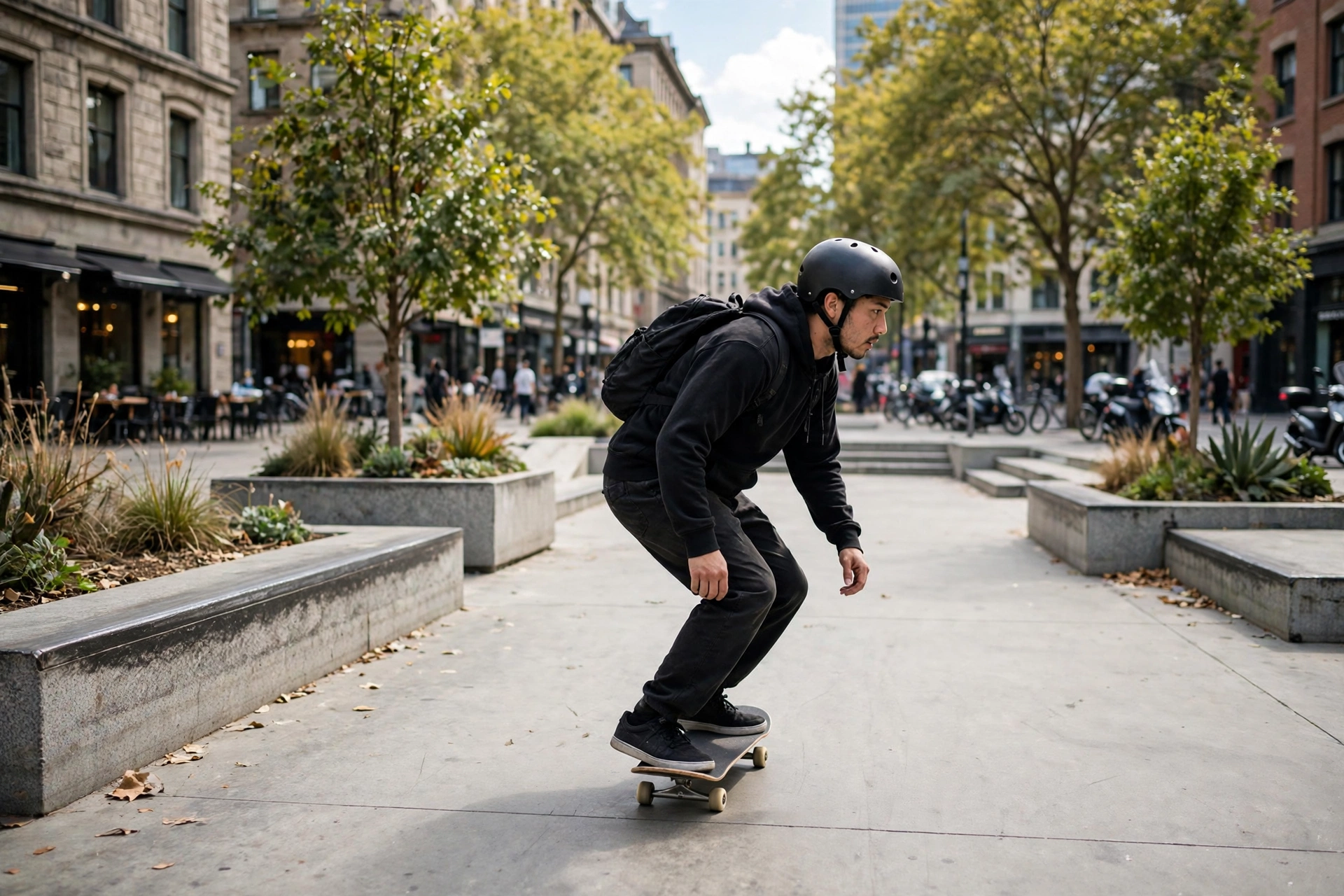
For street skating, look for a skate helmet that fits snugly and sits level, covers your forehead and the back of your head, feels comfortable enough to wear for a full session, and stays in place when you move. A low-profile shape, a secure strap system, and enough ventilation to keep you cool all matter, but fit comes first: the best-looking helmet is not the right one if it slides, rocks, or presses painfully. Choose the helmet you will actually keep fastened, session after session.
Street skating is different from skating a ramp or a park bowl. You deal with ledges, stairs, rails, gaps, and rough ground, often in changing light and weather, and you may skate for hours with breaks in between. Your helmet needs to handle that mix: it should protect without getting in the way of your vision, stay comfortable as you sweat, and be easy to take on and off without losing your fit settings. In general terms, the right street helmet is the one that disappears once you start skating, because it fits well and suits the way you actually ride.
What Should You Look for in a Street Skate Helmet?
Start with fit and coverage, because these matter more than any extra feature. The helmet should sit level on your head, just above your eyebrows, and cover the forehead and the back of your head. The sides should sit close without squeezing your temples, and the helmet should move with your head when you shake it gently. If it slides forward over your eyes, tips backward, or rotates easily, it is not fitting well, whatever the size label says.
Next, consider shape and profile. Many street skaters prefer a lower-profile helmet that sits closer to the head and feels less bulky, especially when wearing a hood or skating in a group. A lower profile can feel more natural, but it should not come at the cost of coverage. In general terms, a helmet that looks slim but rides high on the forehead is a poor trade, because it leaves part of your head less covered. Compare helmets by how they sit on your head, not only by how they look on a shelf.
How Important Is Fit Compared with Style?
Fit matters more than style, and it is worth saying plainly, because street skating culture puts a real emphasis on how gear looks. A helmet that matches your outfit but slides around when you land a trick is not doing its job well. On the other hand, a helmet that fits perfectly but that you refuse to wear because you dislike how it looks will not help you either. The goal is to find the overlap: a helmet that fits securely and that you are happy to be seen in.
One way to approach this is to narrow your choice by fit first, then by style. Try on several helmets, check each one for level fit, snugness, and stability, and set aside any that fail those checks, no matter how good they look. Among the ones that pass, choose the colour, shape, and profile you like best. In general terms, most skaters find this easier than the reverse, because a shortlist of well-fitting helmets still leaves plenty of room for personal taste.
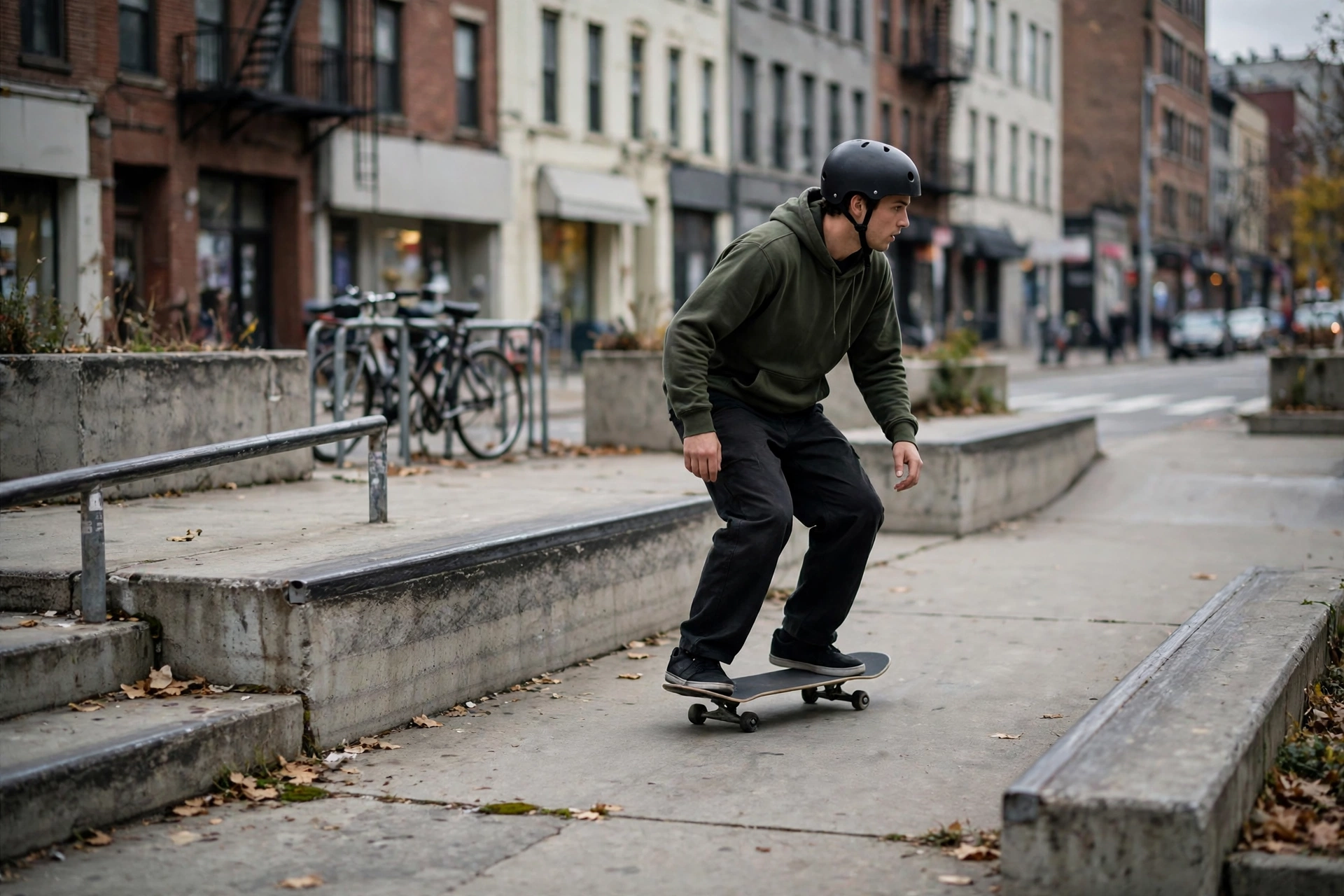
What Kind of Coverage and Protection Should Street Skaters Expect?
Street skaters should expect a helmet that covers the main areas at risk in a fall: the forehead, the sides, and the back of the head. Falls in street skating can happen in any direction, from clipping a ledge to slipping out on a landing, so even coverage matters more than extra bulk in one spot. Check the helmet from the side and the back as well as the front, and make sure it does not leave a large gap at the rear.
It is also worth understanding the features listed on a helmet, without treating any single feature as a guarantee. Some helmets include a low-friction layer designed to allow a small amount of movement between layers during certain angled impacts, and learning what MIPS does can help you make sense of that listing when you compare models. In general terms, such features are an addition to a good fit, not a replacement for one, and a well-fitting basic helmet is a better choice than a poorly fitting helmet with extra features.
How Do Ventilation and Comfort Affect a Street Helmet?
Ventilation affects whether you will keep your helmet on for a whole session. A helmet with well-placed vents lets air flow over your head as you move, which helps with sweat and heat on warm days. Too few vents can leave you hot and distracted, while vents placed only at the front may not move air well when you skate slowly between spots. In general terms, look for vents spread around the helmet, and test how it feels when you are actually moving, not only when standing still.
Padding plays a similar role. Soft, even padding helps the helmet feel comfortable and can fine-tune the fit, but padding that is too thick in one area can create a pressure point, and padding that compresses quickly can make a snug helmet feel loose over time. If a helmet offers different pad thicknesses, use them to even out the fit rather than to force a wrong size to work. Removable pads are also easier to wash, which matters when you skate regularly.
What Should You Check Before Buying a Skate Helmet for Street Skating?
Before buying, measure your head and compare it with the size guide for the specific helmet you are considering, because sizing can vary between models. Measure around your head just above your eyebrows and ears, and use that measurement as a starting point, not as a final answer. Then try the helmet on, check that it sits level, and run through a gentle shake test with the straps fastened. The helmet should move with your head, not independently across it.
Check the straps carefully. The side straps should meet just below each ear, and the chin strap should fasten snugly with only a small amount of slack. Open your mouth wide and see whether the helmet pulls down slightly, which suggests the strap is holding it. Look up, down, and side to side, and make sure your vision stays clear. If adjusting one strap pulls the helmet off level, reset both sides evenly.
Frequently Asked Questions
Q: Is a low-profile skate helmet safe enough for street skating?
A: In general terms, a low-profile helmet can be a good street choice as long as it fits snugly, sits level, and covers your forehead and the back of your head without riding high or sliding.
Q: How do I know if a street helmet fits correctly?
A: It should sit level just above your eyebrows, feel snug all the way around without a painful pressure point, and move with your head, not slide across it, when you shake gently with the straps fastened.
Q: Should I prioritise ventilation or protection when choosing a street helmet?
A: Start with fit and coverage, then choose the best ventilation you can find among helmets that fit well, because a helmet you keep on comfortably is the one that will be there when you need it.

Olivia
Writer at Helmet Today, covering helmet reviews, fit and riding safety.