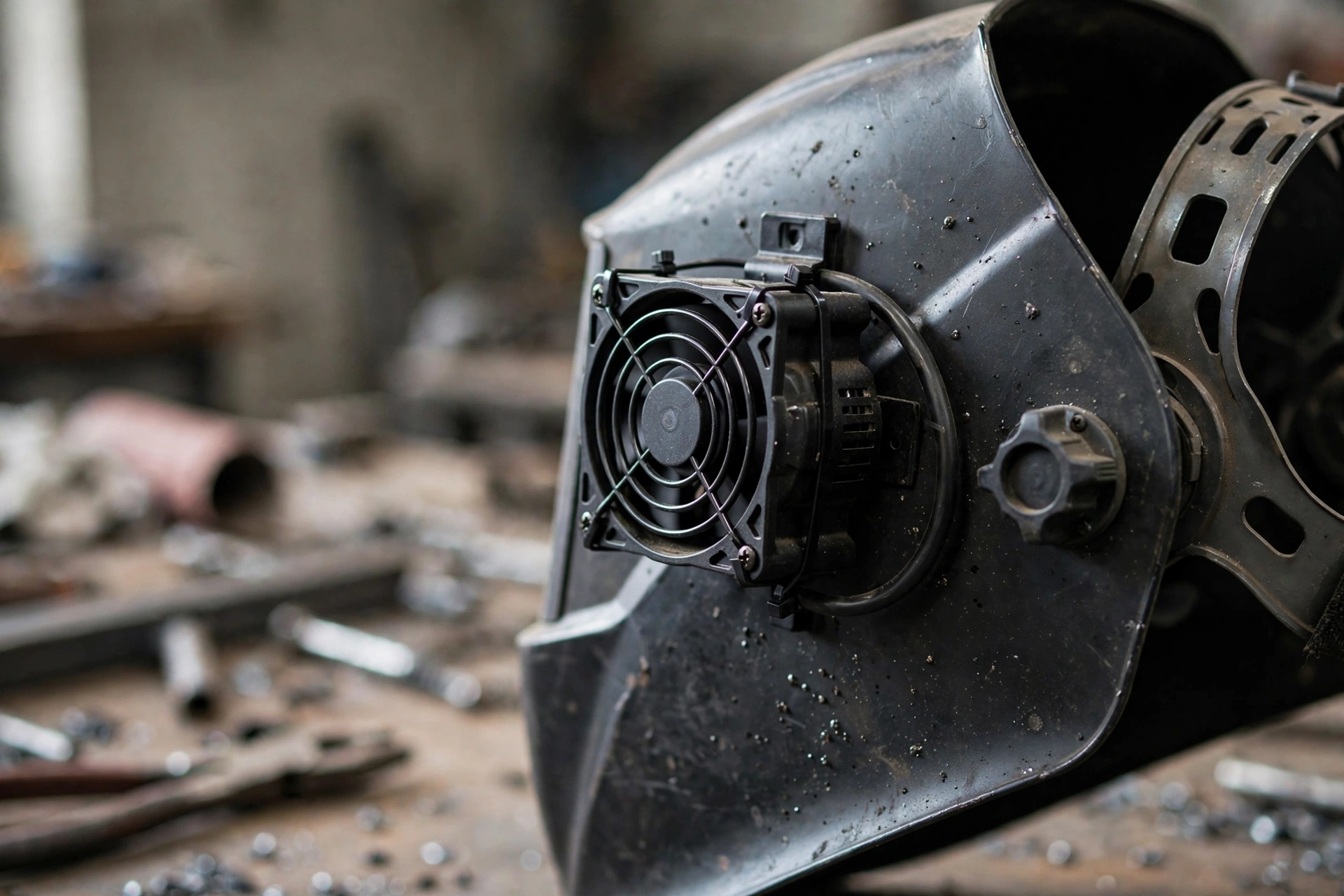
Welding helmet ventilation fans are small fans built into or attached to a welding helmet that draw fresh air across the welder’s face, reducing heat, sweat, and fogging — in general terms, they make long welding sessions far more comfortable, and when combined with a filtered air supply they also help keep the air inside the helmet cleaner.
Welding is hot work in a closed hood. The welder’s own breath, body heat, and the heat of the arc all build up inside the helmet, and on a long shift that heat becomes a real problem: sweat runs into the eyes, the lens fogs, and concentration drops. A ventilation fan addresses exactly that.
How Do Welding Helmet Fans Work?
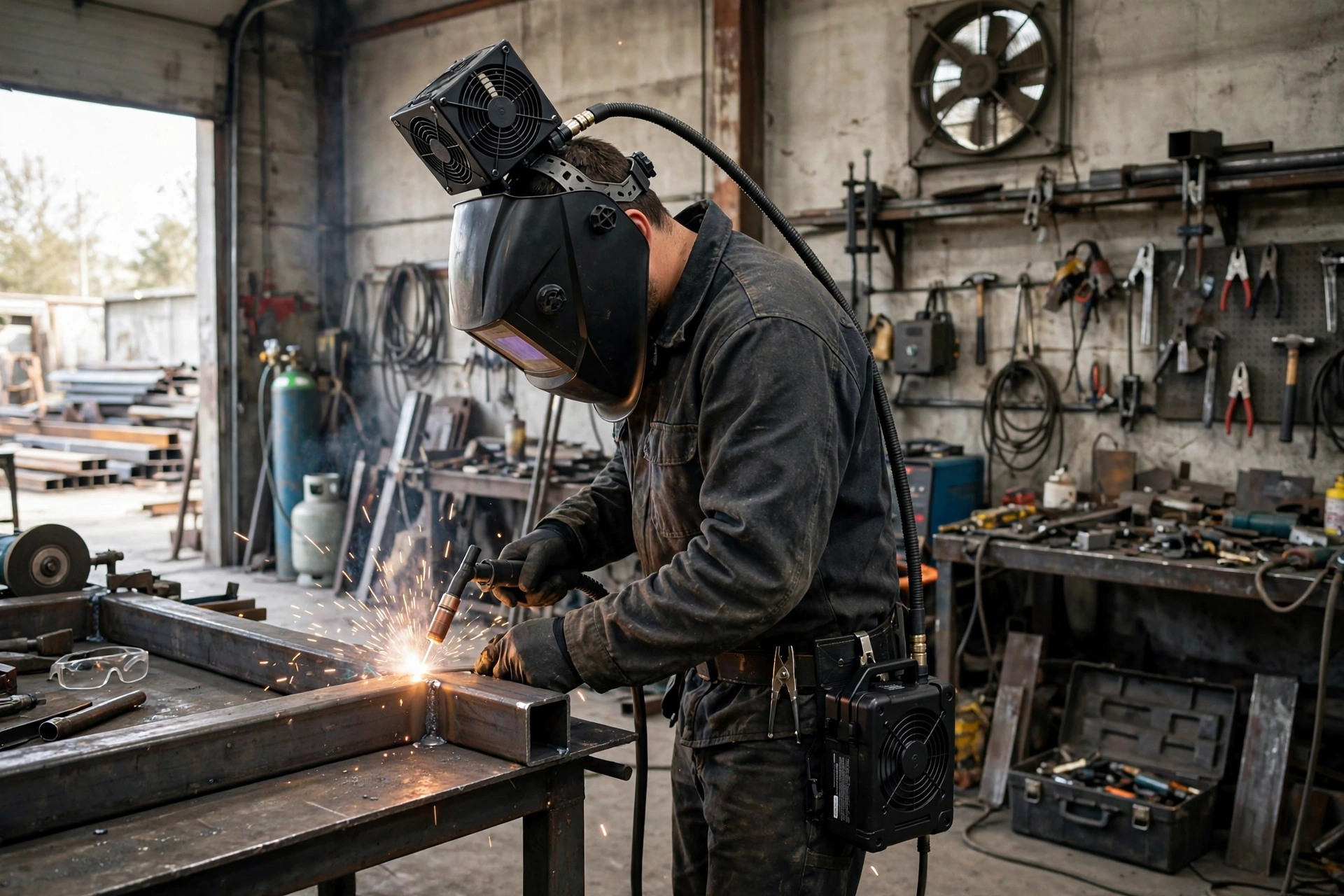
A fan unit — usually a small, battery-powered fan mounted at the top, side, or rear of the helmet — draws outside air in and directs it across the welder’s face and over the inside of the lens. The airflow carries heat and moisture away, which cools the face and reduces fogging on the lens.
Some fans are simple: they move air and nothing else. Others are part of a powered air-purifying respirator system, where the fan draws air through a filter before delivering it into the helmet, so the welder breathes filtered air as well as enjoying the cooling effect. The two types look similar but do different jobs, and the distinction matters for safety.
Fan speed is usually adjustable, with two or three settings. A low setting gives gentle cooling for light work; a high setting gives strong airflow for hot, heavy welding. Battery life varies with speed — higher settings drain the battery faster — so most welders run the lowest setting that keeps them comfortable.
What Is the Difference Between a Fan and a PAPR System?
A plain fan moves unfiltered air. It cools and defogs, but it does not remove welding fume from the air you breathe — it may even stir fume around inside the helmet if the airflow is poorly directed. A plain fan is a comfort device, not respiratory protection, and should never be treated as one.
A powered air-purifying respirator (PAPR) system filters the air before it reaches your face. The fan draws air through a particulate or combination filter, then delivers clean air into the helmet, usually through a hose or a duct built into the helmet. This both cools and protects, and it is the system used where welding fume exposure needs controlling.
The difference is visible in the hardware: a PAPR has a filter unit, usually worn on a belt or mounted on the helmet, and a sealed air path into the helmet; a plain fan has neither. If you need fume protection, a plain fan is not enough — and if you are unsure which you have, check the maker’s documentation before relying on it.
What Should You Look for in a Helmet Fan?
Airflow direction matters most. A fan that blows air across the face and over the lens cools and defogs; a fan that blows straight down the neck or straight up does neither well. Look for a unit whose airflow path is designed for the helmet it fits, not a generic fan bolted on anywhere.
Noise is a practical concern. A loud fan running inches from your ears for eight hours is tiring and can mask warning sounds in the workshop. Quieter fans, and fans with a low setting that is genuinely quiet, are worth paying for on long shifts.
Battery life and weight matter too. A fan that dies mid-shift is worse than no fan, since you have planned around it, and a heavy fan mounted high on the helmet changes the helmet’s balance and strains the neck. Check the battery rating at the speed you will actually use, and keep a spare battery charged.
- Airflow path: across the face and lens, not down the neck
- Filtered or not: PAPR filters fume; a plain fan only cools
- Noise: quiet at working speed, so warnings stay audible
- Battery: lasts the shift at your usual speed, with a spare available
Do Fans Cause Any Problems?
They can, if fitted badly. A fan that is not designed for the helmet can interfere with the headgear, change the helmet’s balance, or obstruct the flip-up mechanism. Only use fans made or approved for your helmet model, and fit them exactly as the maker directs.
Airflow can also affect welding in some processes. Strong airflow near the weld can disturb shielding gas in gas-shielded processes, which affects weld quality — so in delicate gas-shielded work, a lower fan speed or a PAPR with a directed air path is preferable to a high-speed plain fan blowing freely.
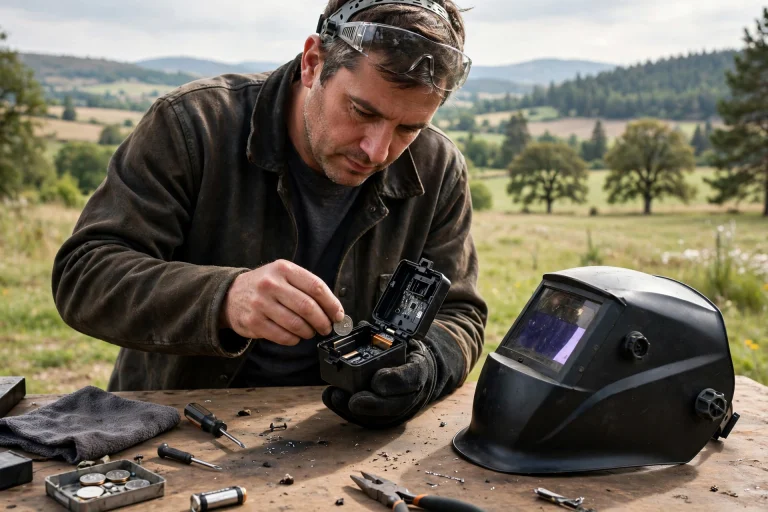
Maintenance matters. Fan intakes collect dust and fume particles, filters clog, and batteries age. Clean the intake regularly, replace filters on the maker’s schedule, and check the fan’s mounting before each shift — a fan that works loose and rattles inside the helmet is a distraction you do not need.
When Is a Helmet Fan Worth It?
For long sessions, hot environments, and welders who fog lenses or sweat heavily, a fan is a clear comfort win — and comfort affects safety, since a welder who can see clearly and is not distracted by heat works more safely. For short, occasional welding, a fan is a convenience rather than a necessity.
Where fume exposure is a concern, a PAPR system is worth it for a different reason: it is respiratory protection, not just comfort, and it should be chosen on the basis of a proper exposure assessment for the welding being done, not on comfort alone.
Whatever system you choose, remember the helmet still has to do its basic jobs: shade the eyes from the arc, protect the face, and fit properly. A fan is an addition to a good helmet, not a substitute for one — and the same principle applies to every helmet discipline, where protection such as the rotational-force management explained in this guide to what MIPS is for helmets only works when the helmet itself is correctly fitted and used.
Frequently Asked Questions
Q: Does a helmet fan protect me from welding fume?
A: Only if it is part of a PAPR system with a proper filter. A plain ventilation fan cools and defogs but does not filter fume, so it should never be relied on as respiratory protection — check whether your unit has a filter before assuming it protects your lungs.
Q: Can I fit any fan to any welding helmet?
A: No — use only fans made or approved for your helmet model, fitted as the maker directs. A mismatched fan can upset the helmet’s balance, interfere with the headgear or flip-up mechanism, and may not direct air where it is needed.
Q: Will a fan disturb my shielding gas?
A: In general terms, strong airflow near the weld can disturb shielding gas in gas-shielded processes, so use the lowest fan speed that keeps you comfortable for delicate work, and prefer a PAPR with a directed air path where fume protection is also needed.

Olivia
Writer at Helmet Today, covering helmet reviews, fit and riding safety.