The right toddler bike helmet size comes from your child’s head measurement, not their age. Measure around the head just above the eyebrows: most toddler helmets fit heads of roughly 18 to 20.5 inches (about 46 to 52 cm), and you should buy the size that fits snugly right now — never a bigger one to grow into.
Those numbers are typical ranges, not guarantees. Brands size differently, so always match your measurement to the size chart of the specific helmet you are buying. Here is how to measure, fit, and check a toddler helmet properly.
How Do You Measure a Toddler’s Head for a Bike Helmet?
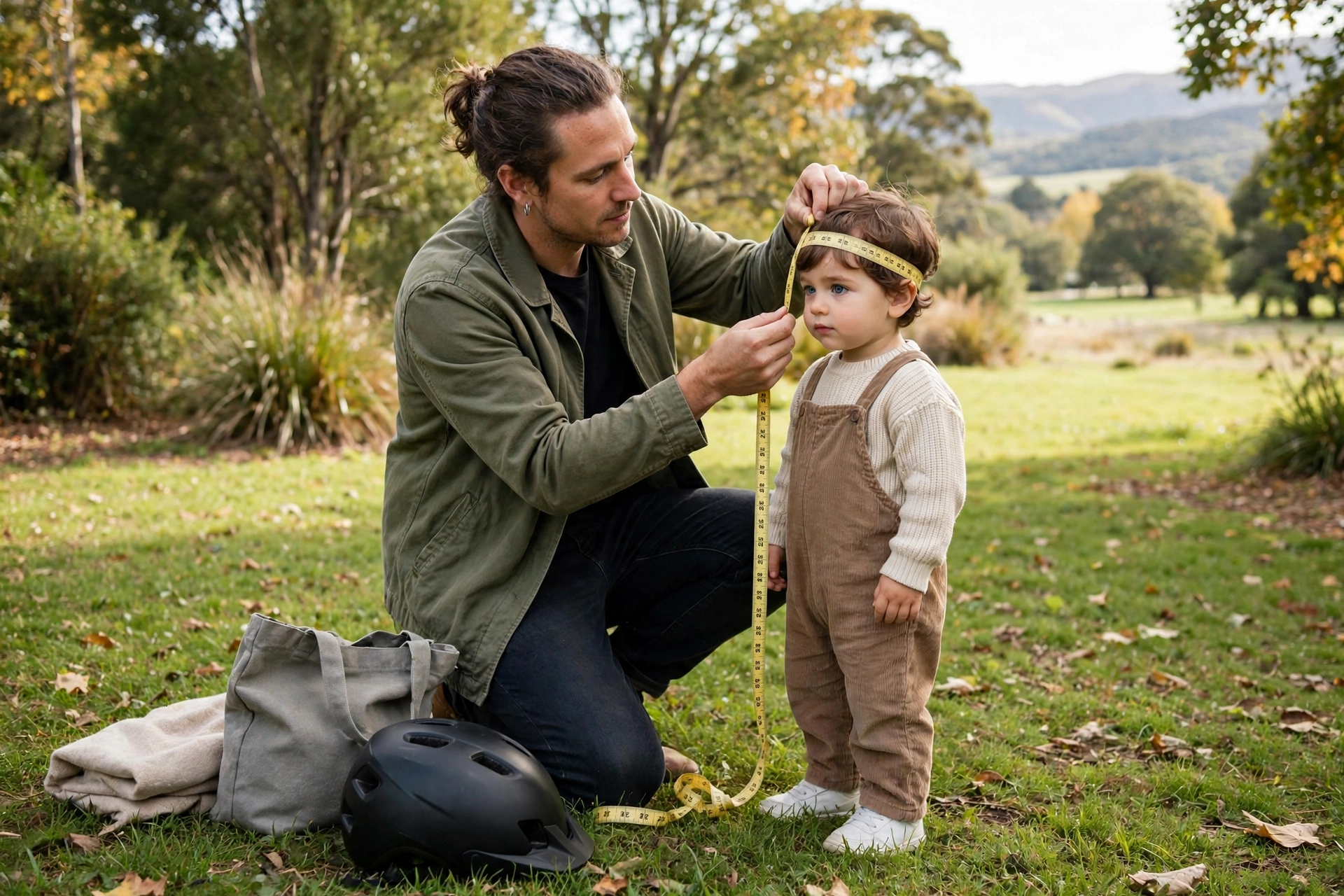
Use a soft measuring tape — or a piece of string you can lay against a ruler afterward. Wrap it around your toddler’s head at the widest point, roughly an inch above the eyebrows and ears, keeping it level all the way around. The tape should be snug but not tight, sitting flat against the hair rather than over it.
Measure two or three times and use the largest consistent number. Toddlers wriggle, and a tape that slips down at the back will read small. If your child is between sizes on a brand’s chart, most makers advise choosing the smaller size and fine-tuning with the fit pads and adjustment dial, because a loose helmet cannot protect properly.
Write the measurement down with the date. Toddler heads grow quickly, and you will want the number again in a few months when it is time to recheck the fit.
When you shop, bring the measurement with you and try the helmet on your child in the store whenever you can. Size charts are a good filter, but heads vary in shape as well as circumference — a rounder or longer head can fit poorly in a helmet that matches the number on paper.
What Helmet Size Fits Most Toddlers?
Most helmets sold as “toddler” sizes cover roughly 46 to 52 cm (18 to 20.5 inches), often labeled as an extra-small or toddler size for ages 1 to 3 or 3 to 5, depending on the brand. Age labels are only a rough guide — two 3-year-olds can have head sizes several centimeters apart, which is why the tape measurement always wins over the age printed on the box.
Every toddler helmet sold for cycling in the US must meet the CPSC bicycle helmet standard, so check for that certification sticker inside. Beyond the base standard, some toddler helmets add a low-friction rotational liner; if you are comparing options, our explainer on what MIPS is for helmets covers why that extra layer is worth having at any age.
Weight matters more for toddlers than for any other rider. A small child’s neck muscles are still developing, so choose the lightest helmet that fits and is properly certified. A heavy helmet that tips forward, makes the head droop, or gets pushed off in frustration is the wrong helmet, even if the size chart says it fits.
Can a Baby Under 1 Year Old Ride in a Bike Helmet?
No — pediatric guidance, including from the American Academy of Pediatrics, is that children under 12 months should not ride as passengers on a bicycle at all, in a seat or a trailer. A baby’s neck is not yet strong enough to support the weight of a helmet through the bumps and jolts of a ride, and helmets are not made or certified for infants under 1.
From age 1 and up, a properly fitted toddler helmet is the right gear for child bike seats, cargo bikes, and trailers. Trailer passengers need helmets too: the trailer’s roll cage is not a substitute, and many local laws require helmets for children in trailers just as they do for children on bikes.
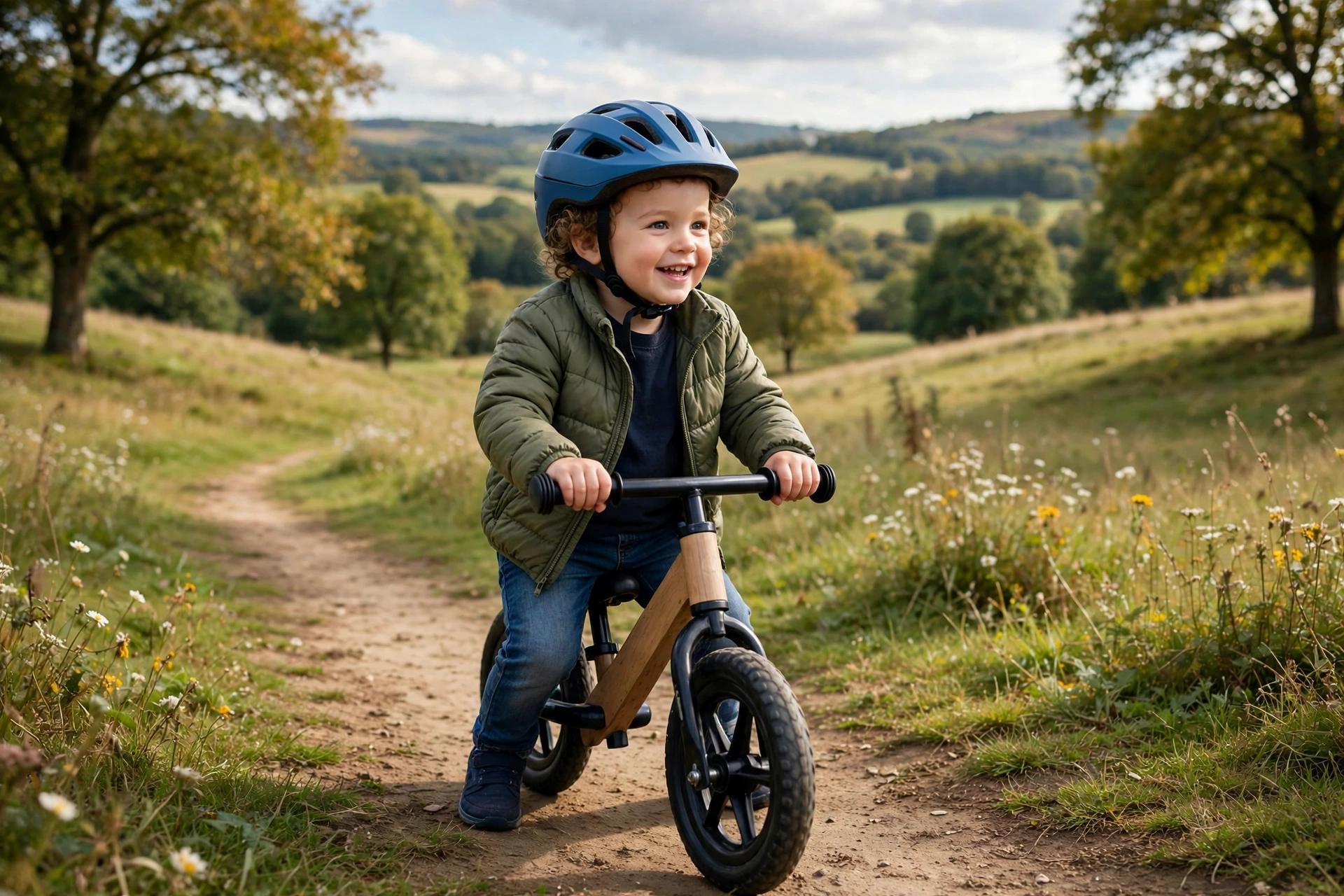
Once your toddler graduates to a balance bike or their own trike, the helmet habit should already be in place. Falls from a balance bike happen at walking-to-running speed, but a small head meeting pavement still needs certified protection.
How Should a Toddler Helmet Fit Once It Is On?
The helmet should sit level on the head, with the front edge about two finger-widths above the eyebrows — not tilted back like a cap and not pushed down over the eyes. It should feel snug all the way around, with no big gaps at the temples and no rocking side to side when your child shakes their head.
Fasten the strap so the side straps form a V just under each earlobe, and adjust the chin strap so you can fit one finger between the strap and the chin. The helmet should not slide forward or backward when you gently push it. If it moves easily no matter how you adjust the pads and dial, it is the wrong size or the wrong shape for your child’s head — try another brand rather than forcing it.
Do a fit check at the start of every ride and a full re-measure every few months. Toddler growth spurts can outgrow a helmet in a single season.
Why Shouldn’t You Buy a Toddler Helmet to Grow Into?
An oversized helmet shifts on impact, which means the foam may not be over the part of the head that strikes the ground. It can also slide down over the eyes or twist sideways during normal riding, which is distracting and dangerous, and most toddlers respond by pushing it off entirely.
Thick extra pads are not a safe fix for a shell that is fundamentally too big; pads fine-tune a size, they do not create one. The safe approach is simple: buy the size that fits today, and expect to replace it as your child grows — the same way you do with shoes.
And if a helmet has been in a crash, dropped hard onto concrete, or chewed on by the dog, replace it even if it still seems the right size. Impact foam protects once.
Frequently Asked Questions
What if my toddler is between helmet sizes?
Choose the smaller size and adjust it with the included fit pads and rear dial. If the smaller size still leaves pressure marks or will not sit level, try a different brand — head shapes vary, and another maker may fit better.
How often should I recheck my toddler’s helmet fit?
Glance-check the position and strap at every ride, and re-measure the head every two to three months. Replace the helmet as soon as it no longer fits snugly, even if it looks fine.
Does my toddler need a helmet in a bike trailer?
Yes. Children age 1 and older riding in trailers or child seats should wear a certified, well-fitted helmet, and many state and local laws require it. Children under 12 months should not ride along at all.

Olivia
Writer at Helmet Today, covering helmet reviews, fit and riding safety.