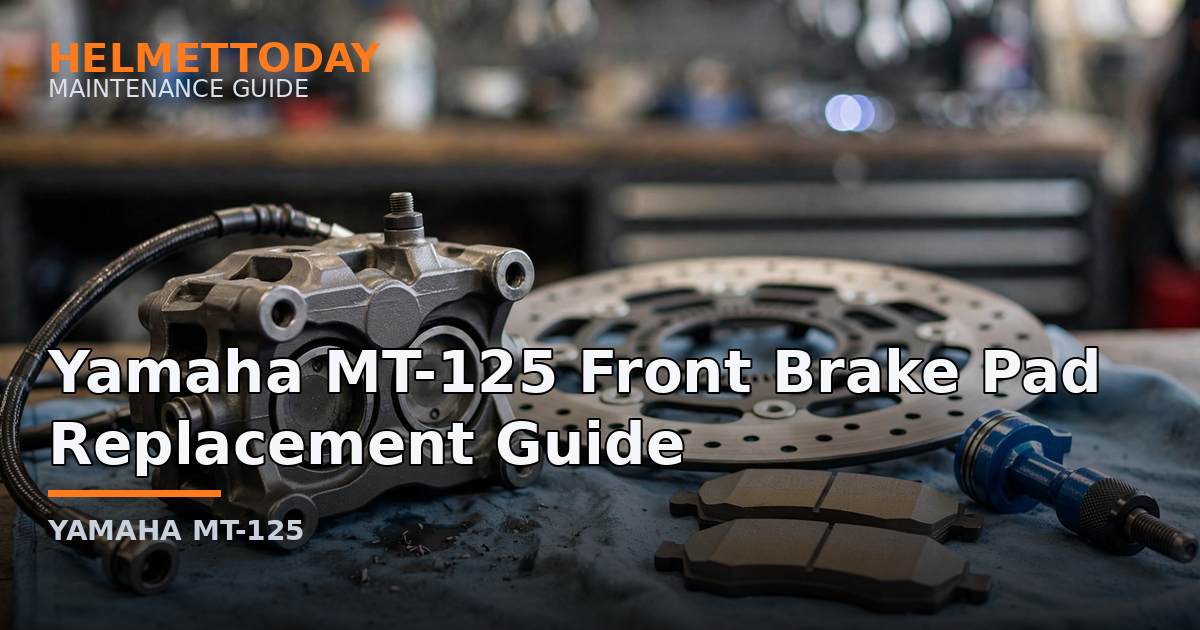
Thin, glazed, or squealing front pads are a safety issue on your Yamaha MT-125. Pads wear faster than you think, especially with a lot of city riding and hard braking — and they are cheap and quick to change.
Inspect the pads at every service and replace them when the friction material is near the wear line or if braking feels weak or noisy. Always use the correct DOT 4 brake fluid when bleeding the brakes after pad replacement.
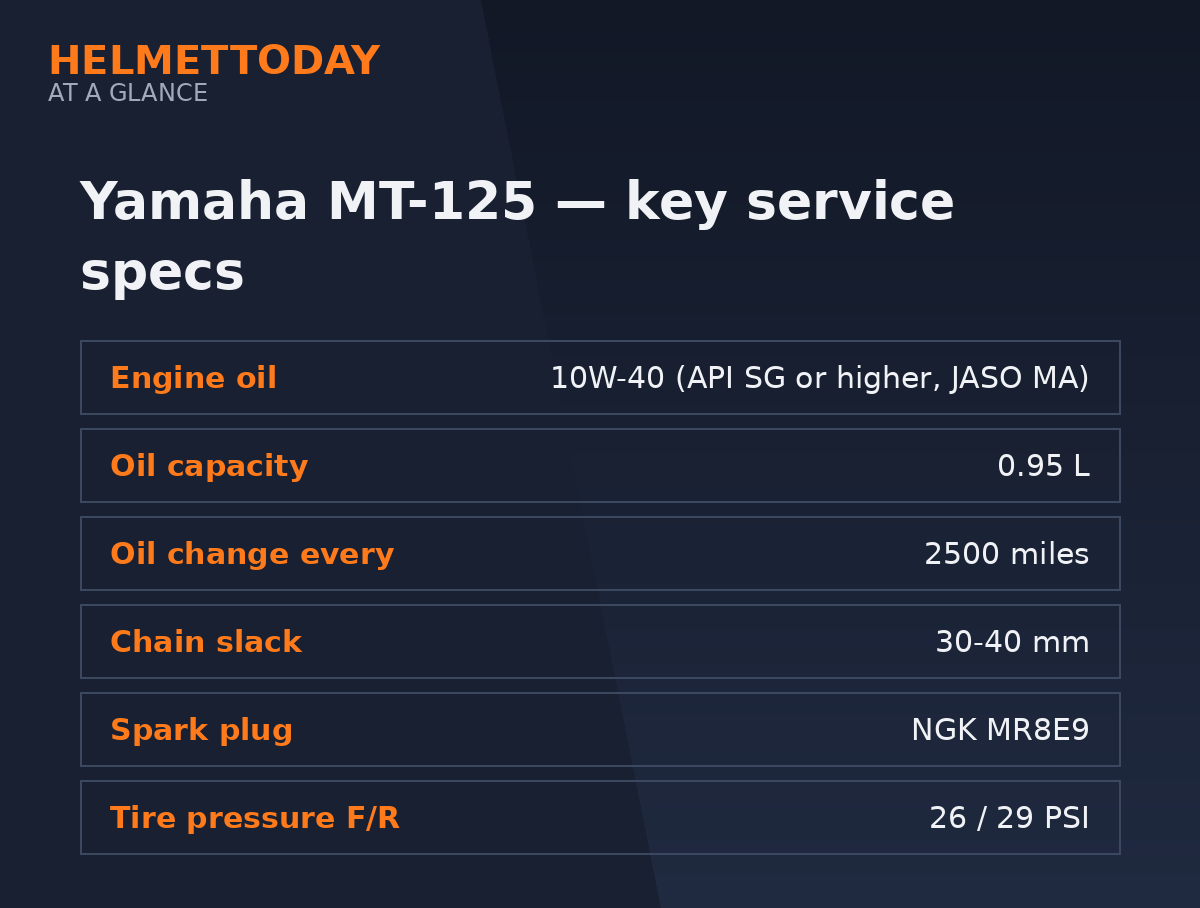
Yamaha MT-125 quick service specs
| Item | Specification |
|---|---|
| Engine oil | 10W-40 (API SG or higher, JASO MA) |
| Oil capacity | 0.95 liters |
| Oil change interval | 2500 miles |
| Chain slack | 30-40 mm |
| Spark plug | NGK MR8E9 |
| Tire pressure (F/R) | 26 PSI front / 29 PSI rear |
| Battery | your owner’s manual |
How to replace the front brake pads, step by step
- Put the bike on a stand and remove the front caliper bolts. Slide the caliper off the disc and support it — don’t let it hang by the brake hose.
- Remove the pad retaining pin or clip and slide the old pads out. Note their orientation.
- Clean the caliper and pad area with brake cleaner. Check the pistons move freely and the seals look good.
- Push the pistons back into the caliper with a piston tool or a flat screwdriver wrapped in cloth — go slowly so brake fluid doesn’t overflow the reservoir.
- Fit the new pads in the same orientation as the old ones, then refit the retaining pin or clip.
- Reinstall the caliper, torque the bolts to spec, and pump the brake lever until it feels firm before riding.
- Bed the new pads in with gentle stops first, then progressively harder stops over the next 100 miles.
Common mistakes to avoid
- Forgetting to pump the lever before riding — the first pull can go straight to the bar.
- Letting the caliper hang by the hose — it can damage the line and fittings.
- Touching the pad surface with greasy hands — contamination ruins braking and causes squeal.
FAQ
How do I know when my brake pads need replacing?
Check the friction material thickness against the wear line. Squealing, grinding, or a longer stopping distance also mean the pads are done.
Can I replace just the front pads?
Yes — front and rear pads wear at different rates, so replace whichever axle needs it. Always replace pads as a pair on the same caliper.
Do I need to bleed the brakes after changing pads?
Not usually — but if the lever feels soft or spongy, bleed the system with fresh DOT 4 fluid until it firms up.
Related guides

Dan Heiman
Writer at Helmet Today, covering helmet reviews, fit and riding safety.