

Most motorcycle helmets should be replaced about five years after you start wearing them, even if they still look fine on the outside. That five-year guidance comes from helmet manufacturers and from the Snell Foundation, and it is based on how the materials inside age with use. There is no legal expiry date stamped on a helmet, but age, sweat, sunlight, and wear slowly reduce how well it can protect you.
If your helmet has been in a crash, or has taken a hard drop onto a solid surface, the answer is much simpler: replace it immediately, whatever its age. Below we explain why helmets age, how to spot a helmet that is past its best, and how to get the full safe life out of a new one.
Why Helmets Age Even When They Look Fine
The part of your helmet that does most of the work in a crash is the EPS foam liner hidden under the shell. EPS is designed to crush once, absorbing energy so your head does not have to. Over years of use, that foam gradually hardens and degrades, and a hardened liner cannot absorb impact the way it was designed to. The comfort padding on top of it also compresses, which is why an old helmet often feels looser than it did when it was new.
Everyday life speeds the process up. Sweat and the natural oils from your skin and hair work into the liner every ride. Heat from a hot garage or a car trunk, cleaning chemicals, and general knocks and scrapes in storage all add wear. None of this damage is dramatic or easy to see, which is exactly why the time-based replacement guidance exists: it protects you from degradation you cannot spot with your eyes.
The outer shell ages too, though more slowly. Composite and polycarbonate shells can be affected by long-term ultraviolet exposure and by solvents such as fuel, strong adhesives, and some paints, which is one reason manufacturers warn against applying stickers or paint unless the product is known to be helmet-safe.
The Five-Year Replacement Guideline Explained
The five-year figure you will see quoted most often runs from the date you start wearing the helmet, not strictly from the date it was made. Manufacturers including Shoei and Arai, along with the Snell Foundation, recommend replacement after roughly five years of use because that is the point where the combined effects of sweat, wear, and material ageing can no longer be ignored. A helmet that sat unworn in its box in a cool, dark store has aged far less than one worn daily for five summers.
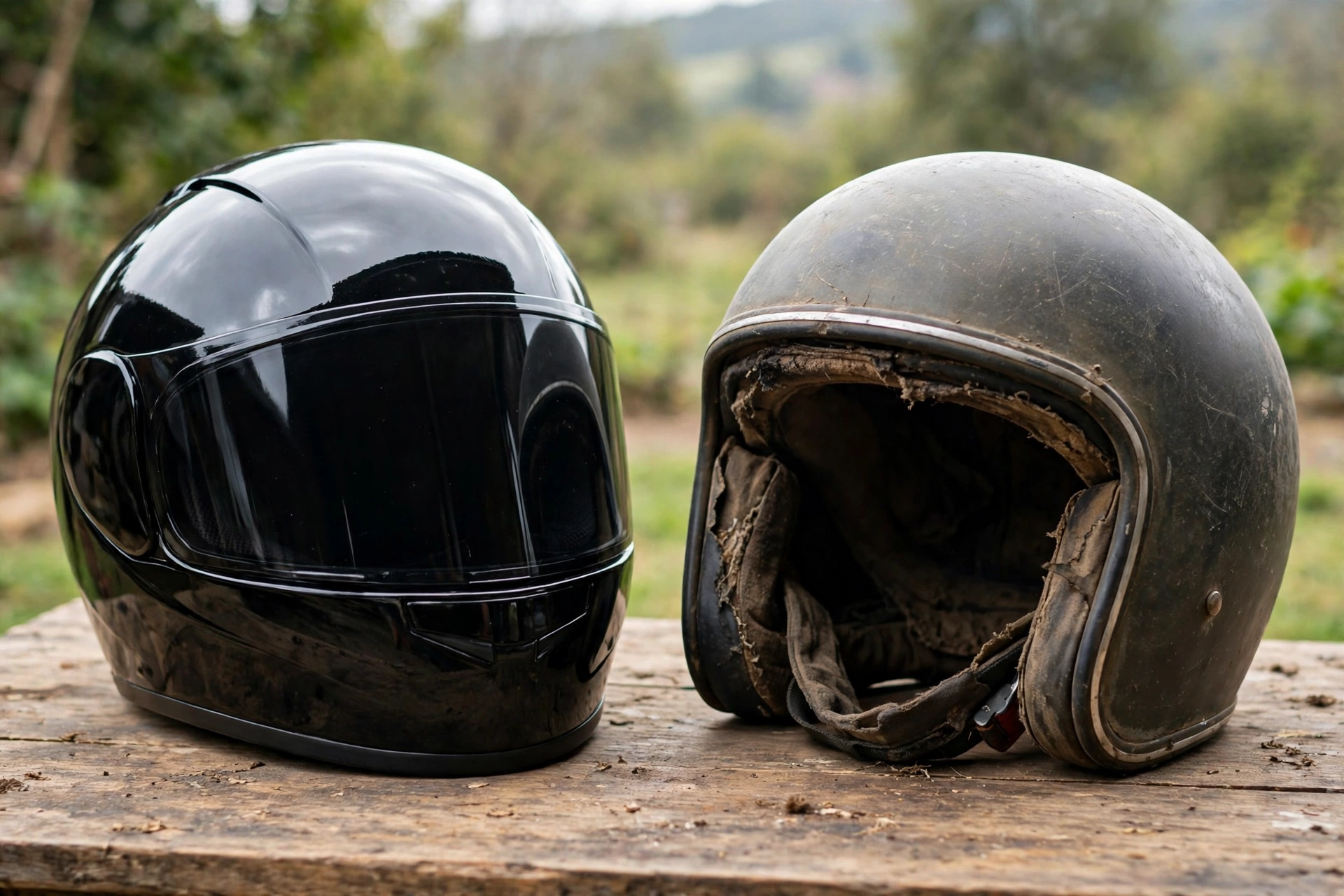
This is also why you should check the manufacture date before buying a discounted helmet. A model that has been sitting in a warehouse for three years is not automatically unsafe, but you are paying for a helmet whose clock started ticking earlier, and a deep discount should reflect that. If a deal looks unusually cheap for a premium model, the age of the stock is often the reason.
Signs Your Helmet Needs Replacing Now
Age is not the only reason to retire a helmet. Fit changes are one of the clearest warnings. If the helmet moves when you shake your head, feels loose where it once felt snug, or the cheek pads no longer press gently against your face, the padding has compressed beyond its useful life. Replacement pads can help for a while, but when the whole interior feels tired, a new helmet is the better answer.
Look for visible clues too: the comfort liner crumbling or leaving dark flakes in your hair, straps that are frayed or stiff, a retention system that no longer clicks positively, or a visor mechanism that will not hold the shield in position. Cracks in the shell, deep gouges, or damage around the chin bar area are all stop-riding signs, not cosmetic faults.
While you are checking, it is a good time to think about what your next helmet should include. Rotational protection systems are now common at many price points, and our explainer on what MIPS is for helmets is a helpful starting point if you are upgrading from an older helmet without it.
Dropped or Crashed? Replace It Immediately
A helmet is a single-impact device. In a crash, the EPS liner crushes at the point of impact and does not spring back. That crushed area will not protect you a second time, and the damage is usually hidden under the shell, so the helmet can look almost untouched while being effectively worn out where it matters most.
The same logic applies to a hard drop, for example off a bike seat or a high shelf onto concrete. A short fall onto a soft surface is unlikely to matter, but a solid impact onto a hard one can start the liner crushing. Some manufacturers offer an inspection service after a drop, which is worth using if it is available for your model. If inspection is not an option and the drop was hard, replacing the helmet is the cautious and correct choice. Never buy a second-hand helmet with an unknown history, for exactly this reason: you cannot see what its liner has already absorbed.
How to Check the Date and Make a Helmet Last
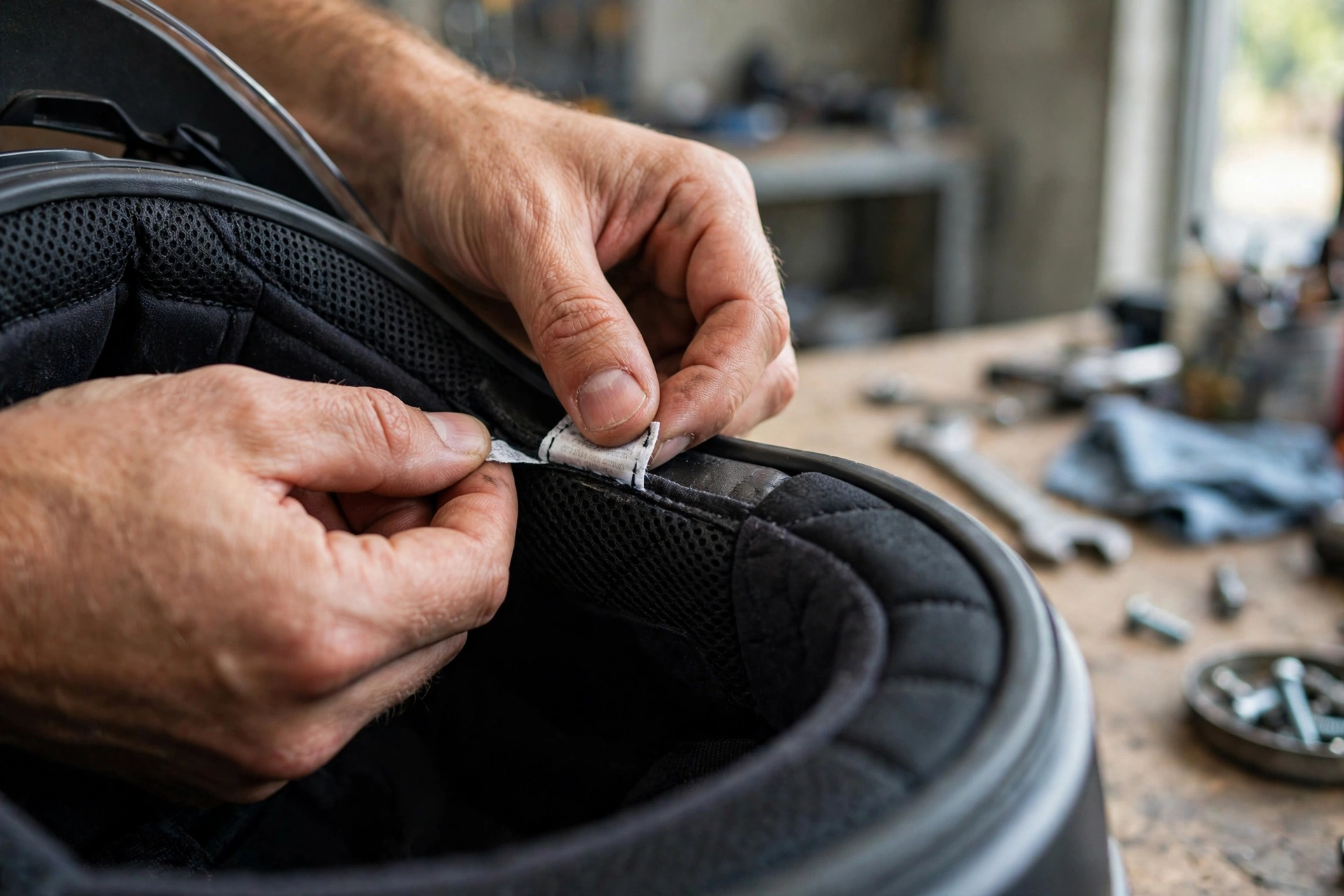
Every certified helmet carries a production date somewhere. Look for a sticker under the comfort liner, a label sewn onto the strap or liner edge, or a date printed on the EPS itself near the crown. It is usually shown as a month and year. If you cannot find it, the seller or manufacturer can often date the helmet from its model and serial information.
To get the full life from your helmet, store it somewhere cool, dry, and out of direct sunlight, ideally on a flat surface or a helmet hook rather than hanging by its strap. Keep it away from fuel, solvents, and strong cleaning sprays, and clean it only with mild soap and water as the maker recommends. Let the liner dry naturally after wet or sweaty rides, and wash or replace the comfort padding when it starts to hold odors.
Finally, treat the helmet gently. Do not sit on it, do not use it as a shopping basket, and avoid dropping it onto hard floors. Those small habits are the difference between a helmet that reaches its five-year mark in good shape and one that needs replacing early.
Frequently Asked Questions
Is there a legal expiry date for motorcycle helmets?
No. There is no law that makes a helmet illegal after a set date. The five-year figure is safety guidance from manufacturers and the Snell Foundation based on how the materials age, not a legal deadline.
Does the five-year clock start from manufacture or first use?
The guidance is mainly about years of use, because wear, sweat, and heat do most of the ageing. Still, check the manufacture date when buying, and avoid very old stock, since materials do age slowly even on the shelf.
Can I keep using a helmet after a small drop?
A gentle fall onto a soft surface is usually no concern. A hard drop onto concrete can damage the hidden liner, so either have the helmet inspected by the manufacturer if they offer that service, or replace it to be safe.

Olivia
Writer at Helmet Today, covering helmet reviews, fit and riding safety.



Pingback: Can You Paint a Motorcycle Helmet Safely?