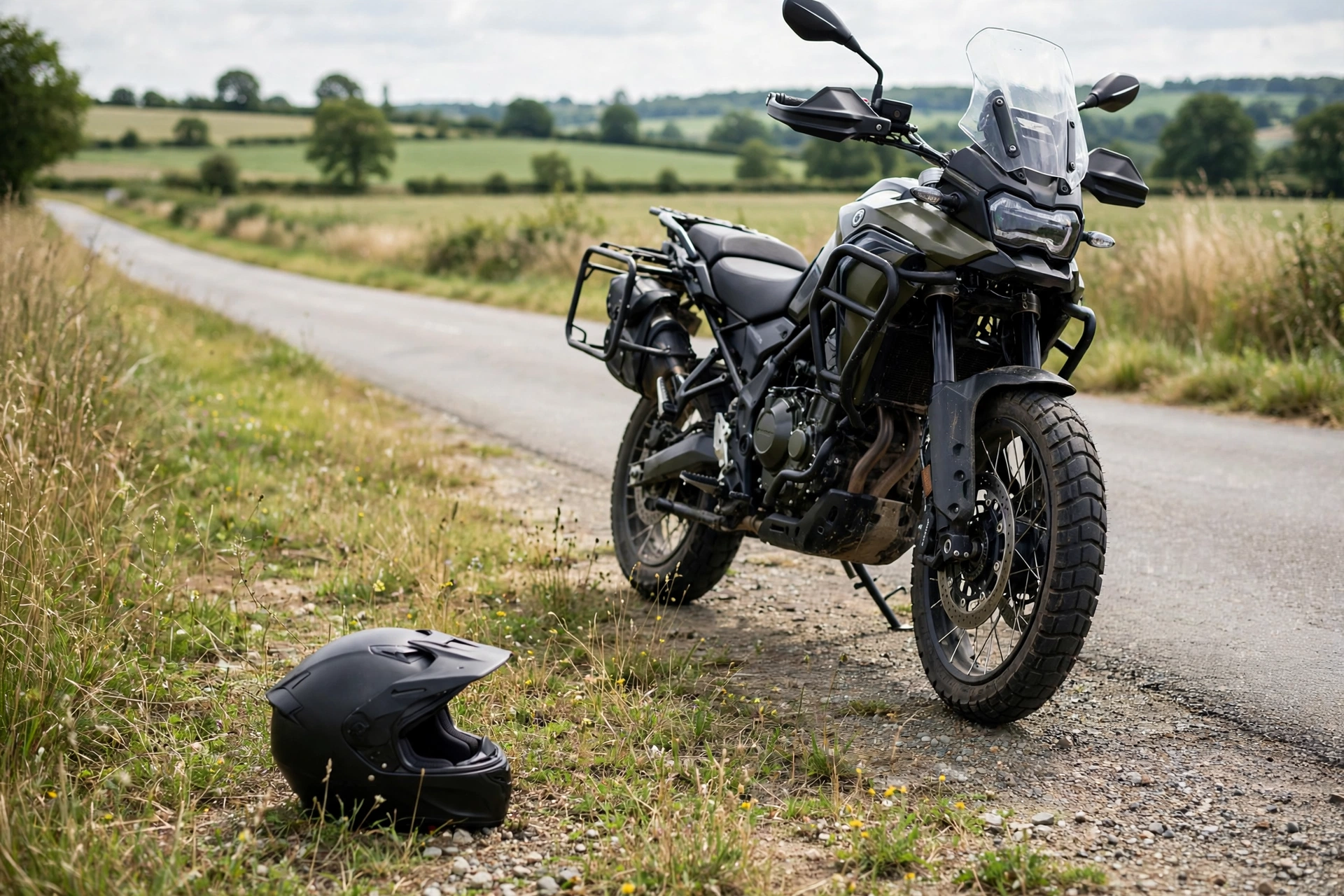
When a biker places a helmet on the ground beside or behind a stopped motorcycle, it is widely shared among riders as a distress signal: the rider needs help. It is the motorcycle world’s quiet way of asking for assistance when a rider cannot flag someone down, has broken down, or has come off the bike. If you see a helmet set deliberately on the ground next to a stopped bike, treat it seriously and check whether the rider is okay.
The signal works precisely because riders normally never put a helmet on the ground. A helmet dropped or knocked about on hard ground can be damaged, and most riders place theirs on a seat, a mirror, or a tank instead. Setting it on the ground is a deliberate break from that habit, which is what makes it noticeable to others who know the code.
Where This Biker Signal Comes From
Nobody can point to a single day this custom began, and that is part of its nature: it has been passed rider to rider, repeated in motorcycle forums, shared in safety posts, and taught informally to new riders for years. It belongs to an unwritten culture of looking out for each other that motorcycling has always had, because riders know they are more exposed and more vulnerable than people in cars.
The logic is practical. A rider who is injured, stuck with a dead bike, or unable to walk to get help cannot easily wave down traffic from the roadside, especially on a quiet road. A helmet on the ground by the bike is a visible, lasting sign that does not depend on the rider being conscious, standing, or holding a phone with signal. Passing riders who recognize it know to stop, and drivers who have learned it can alert help as well.
It sits alongside other small courtesies in the same culture, like the low wave between passing riders or tapping signals between bikes. Our guide to what it means when a biker taps his helmet explains the best-known of those in-ride warnings, and the two are worth learning together.
What the Signal Normally Looks Like
The classic version is simple: the motorcycle is stopped at the side of the road, and the rider’s helmet is placed on the ground next to the bike, often just behind the rear wheel where approaching riders and drivers can see it. The rider may be with the bike, may be sitting nearby, or in a more serious situation may not be visible at all, for example if they have been thrown clear or have gone to find shade or shelter.
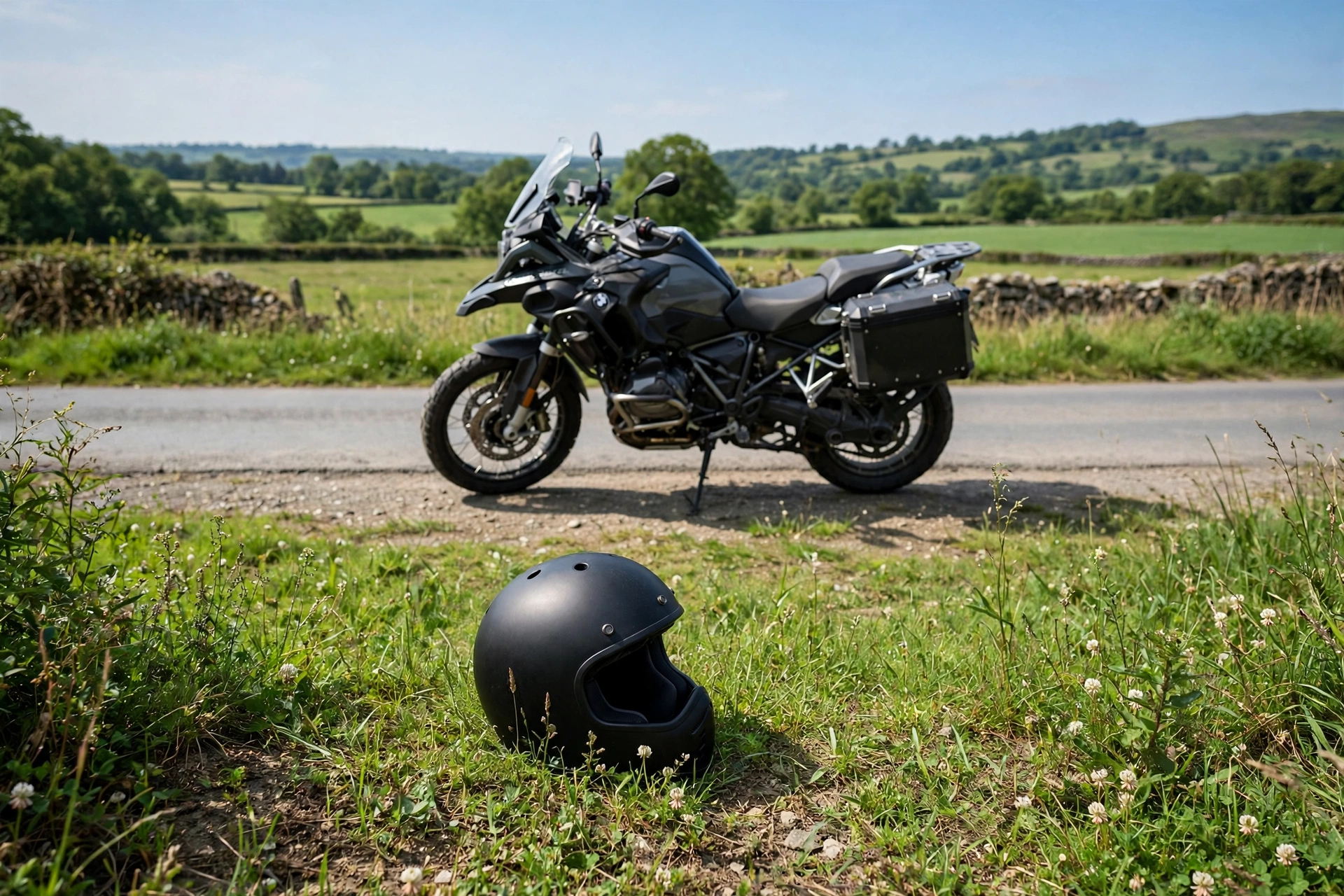
Context matters. A helmet on the ground in a gas station parking lot while a group chats over coffee means nothing of the kind. The signal is about a lone, stopped bike in a place where stopping is unusual: a shoulder, a lay-by, a rural road, or the edge of a highway.
What to Do If You See a Helmet on the Ground
First, slow down and assess the scene safely. If you are riding or driving, do not stop suddenly or park somewhere dangerous. Pull over well beyond the stopped bike if you can do so safely, use your hazard lights in a car, and keep yourself out of live traffic lanes at all times. Your own safety comes first, or there may simply be two people needing help.
Approach calmly and ask the obvious question: is everything okay, and do you need help? Sometimes the answer is reassuringly ordinary, a flat tire, an empty tank, a lost phone, and what is needed is a lift to a gas station, a phone call, or help lifting a heavy bike upright. Staying ten minutes to help a stranger right a dropped motorcycle is very much in the spirit of the signal.
If someone is hurt, or you cannot find the rider, treat it as an emergency. Call emergency services, give the location as precisely as you can using road names, mile markers, or a phone map pin, and follow the dispatcher’s instructions. Do not move an injured person unless they are in immediate danger, and if the rider has a suspected head, neck, or back injury, do not remove their helmet; leave that to trained responders except in the specific circumstances emergency services advise.
Is It a Law or an Official Rule?
No. The helmet-on-the-ground signal is an informal custom, not a law, not a highway code rule, and not something you will find in a licensing manual. No authority requires riders to use it and no authority requires you to respond to it. That also means awareness is uneven: plenty of riders know it, plenty do not, and most car drivers have never heard of it.
That informality cuts both ways. You cannot rely on every passing road user reading the signal if you are the one in trouble, so treat it as one tool among several: hazard lights if the bike has them, a phone call or text with your location, a high-visibility vest, and positioning the bike where it can be seen all increase your chances of getting help. And if you see the signal, the lack of any official status is no reason to ignore it. It costs little to check, and it might matter a great deal.
Other Reasons a Helmet Might Be on the Ground
To be fair, a helmet on the ground does not always mean distress. Riders sometimes set a helmet down briefly while adjusting gear, taking a photograph, checking a map, or stretching on a break, and in a group stop you may see several helmets on the ground simply because there is nowhere else handy to put them. A helmet can also end up on the ground after being knocked off a seat by wind or a careless elbow.
That is exactly why the right response is to check, not to assume the worst and not to assume nothing is wrong. A quick, friendly check sorts it out in seconds: if all is well, you will get a wave and a thank-you for stopping, which riders remember and appreciate. Nobody in the riding community minds being checked on.
If you ride, use the signal the same way: helmet on the ground when you genuinely need help, and off the ground the rest of the time, so its meaning stays clear.
Frequently Asked Questions
What does a helmet on the ground next to a motorcycle mean?
Among riders it is a shared distress signal meaning the rider needs help, whether they have broken down, run out of fuel, or been in a minor incident. Treat a deliberately placed helmet beside a stopped bike as a reason to stop safely and check.
Is the helmet-on-the-ground signal official?
No, it is an informal custom passed between riders, not a law or a rule in any highway code. Awareness varies, which is why riders should also use hazards, a phone, and visible positioning when they need help.
Should I stop if I am in a car, not on a bike?
Yes, if you can do so safely. Pull over where it is safe, keep out of traffic, and check whether the rider needs help. If someone is injured or the rider is missing, call emergency services and give a precise location.

Olivia
Writer at Helmet Today, covering helmet reviews, fit and riding safety.