


The age limit in Kansas is 18: motorcycle riders and passengers under 18 must wear a helmet, while riders 18 and older are not required to. Kansas has a partial helmet law, so adults may legally choose, but every minor on a motorcycle in Kansas must be helmeted.
That simple rule still leaves riders with practical questions — about passengers, eye protection, and what kind of helmet counts. This guide explains how the Kansas age limit works so you can ride legally and make an informed choice.
Who has to wear a helmet in Kansas?
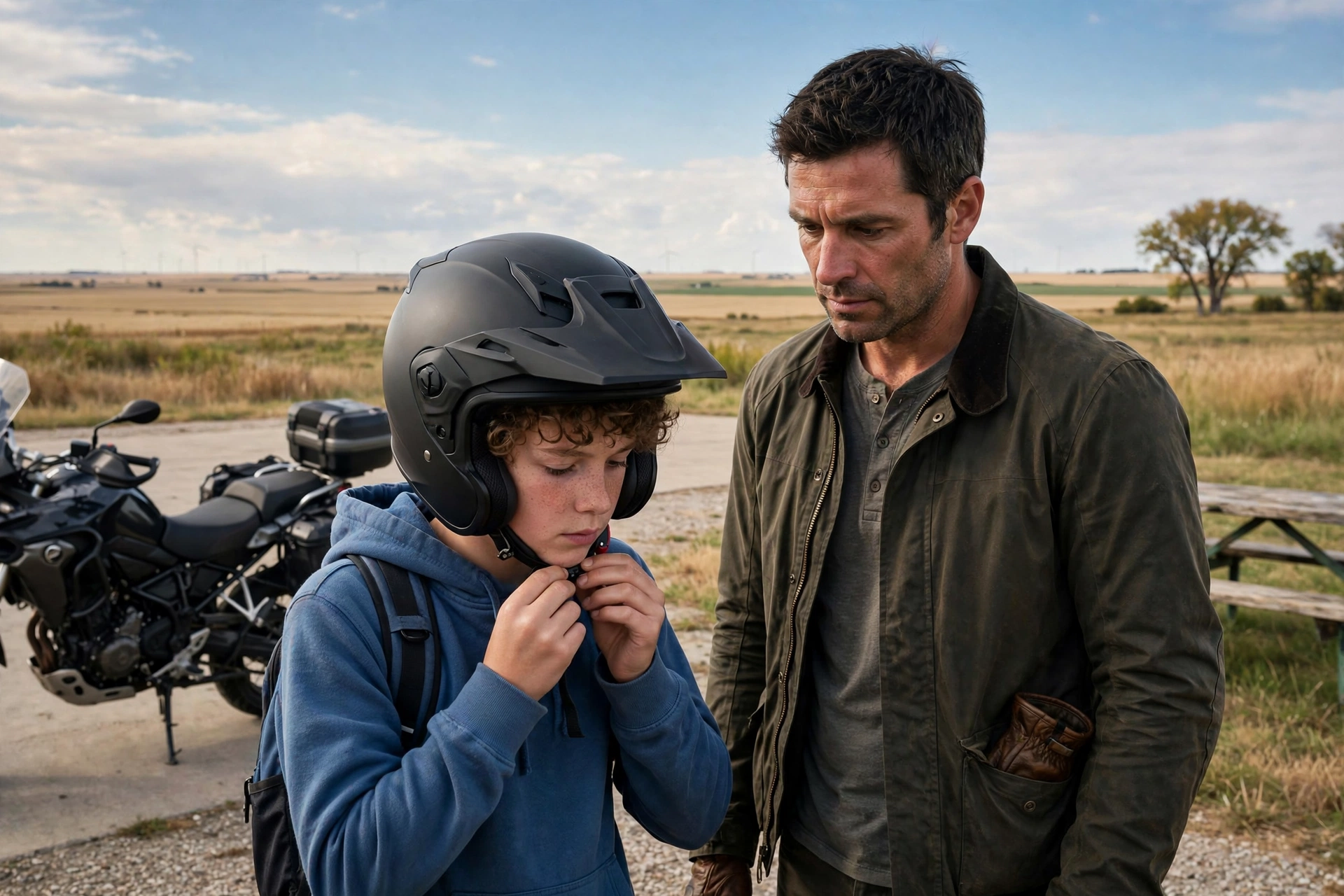
Anyone under 18 years old who operates or rides on a motorcycle in Kansas must wear a helmet. The requirement covers teen operators with a license or permit and child and teen passengers riding behind an adult. If the passenger is 16, the passenger needs a helmet even when the driver is 40 and legally riding without one.
For riders 18 and older, Kansas law does not require a helmet and does not add conditions such as extra insurance or a minimum number of years of experience. The adult choice is straightforward under state law. You can see how that compares with neighboring and national rules in our guide to helmet laws by state, which is especially useful if you ride across state lines, since nearby Missouri also has an age-based rule while other states are universal.
Because the law is age-based, parents and guardians carry most of the responsibility. A minor cannot waive the requirement, and an adult who takes a young passenger without a helmet is putting that child at legal and physical risk.
What type of helmet must Kansas minors wear?
The helmet must be a proper motorcycle helmet designed to protect the head in a crash — in practice, a DOT-compliant helmet. That means a hard outer shell, a thick energy-absorbing foam liner, and a chin strap that is fastened while riding. Helmets must be worn correctly, not perched loosely or carried on an arm.
Novelty helmets are a poor fit for this rule. They are not manufactured to DOT standards and often have little more than a thin comfort pad inside. They offer minimal protection and are not a dependable way to meet the legal requirement for a young rider or passenger.
Sizing deserves extra care for kids and teens. Never buy two sizes up to “grow into.” A youth helmet should match the child’s current head measurement, feel snug all around, sit level about an inch above the eyebrows, and stay in place during a firm head shake test with the strap fastened.
Does Kansas require eye protection?
Yes, eye protection rules apply broadly in Kansas, including to many adult riders who are exempt from the helmet requirement. Riders must protect their eyes with a face shield, goggles, or glasses, or ride behind a windscreen that provides adequate eye protection under Kansas rules.
This requirement surprises some adult riders who focus only on the helmet age limit. Going without a helmet at 25 is legal in Kansas, but riding with completely unprotected eyes is a different matter — and it is genuinely dangerous. Wind pressure at highway speed makes eyes water heavily, and a single insect or piece of gravel can cause a reflex flinch or temporary blindness at the worst possible moment.
A full-face helmet solves both issues at once, since the shield gives eye protection and head protection together. Riders who prefer an open-face style should invest in quality riding glasses or goggles with shatter-resistant lenses and a strap or snug fit for highway speeds.
What happens if a minor rides without a helmet in Kansas?
A rider or passenger who is required to wear a helmet and does not can be cited under Kansas traffic law. A violation can result in a fine, and court costs can be added; the total amount is not identical in every case, because fines vary by court and by how the citation is processed.
For teen operators, a citation can also affect insurance costs for the whole family and may lead to uncomfortable conversations with parents and insurers after even a minor incident. If an unhelmeted minor is injured in a crash, the legal claim can become more complicated, since the other side may argue the missing helmet worsened the injuries.
None of that is necessary. A basic DOT-compliant youth helmet costs far less than a single emergency room visit, and making it a non-negotiable house rule removes any debate before each ride.
Should Kansas adults wear a helmet if the law does not require it?
Nothing about turning 18 changes crash physics. Head injuries remain the leading cause of motorcycle fatalities, and helmets are proven to cut the risk of death and severe brain injury. Kansas riding often means long, fast stretches of open highway with crosswinds, grain trucks, wildlife, and sudden weather — conditions where a rider can go down through no fault of their own.
Comfort has also improved dramatically. Today’s helmets are lighter, better ventilated, and quieter, with options for drop-down sun visors, glasses channels, and Bluetooth speakers. Many Kansas riders who started out helmetless as adults switch after trying a modern vented full-face or modular helmet on a hot summer ride and finding it cooler than the wind blast on bare skin.
The law gives Kansas adults a choice. The evidence points clearly in one direction, and wearing a helmet also models the right behavior for the under-18 riders in your life, who have no choice at all.
One more situation catches Kansas riders out: crossing into a stricter state. Colorado, for example, also sets its requirement at younger riders, while other states on longer tours may require helmets for everyone. Before a multi-state trip, check each state’s rule and pack helmets for everyone on board. Carrying a helmet you end up wearing the whole way is far better than being stopped — or worse, being unprotected — in a state where your Kansas habits are not legal.
Frequently Asked Questions
What is the age limit for motorcycle helmets in Kansas?
18. Riders and passengers under 18 must wear a helmet in Kansas; riders 18 and older are not required to by state law.
Does a child passenger need a helmet in Kansas?
Yes. Any passenger under 18 must wear a proper motorcycle helmet, even if the adult driver is riding without one legally.
Is eye protection required for adult riders in Kansas?
Yes, Kansas eye protection rules apply broadly. Riders need a face shield, goggles, or protective glasses, or a windscreen that provides adequate eye protection.

Olivia
Writer at Helmet Today, covering helmet reviews, fit and riding safety.


