

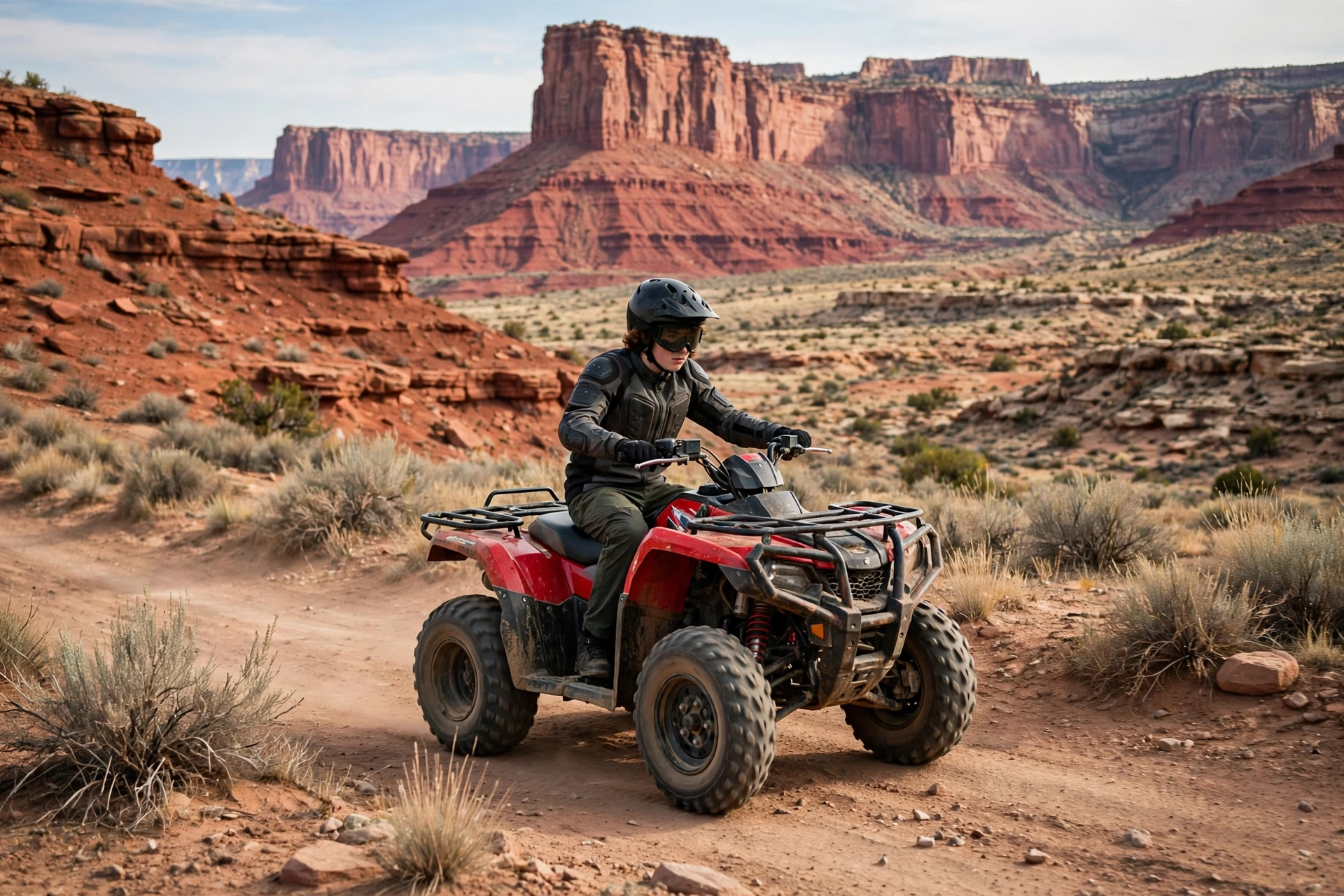
In Utah, anyone under 18 must wear a helmet when operating or riding an off-highway vehicle (OHV) or ATV on public land or public roads. Utah goes a step further for young operators: riders aged 8 to 15 need an OHV education certificate to operate on public land, earned by completing the state’s approved safety course. If your child rides in Utah, both rules matter.
Utah’s deserts, dunes, and mountain trails make it a magnet for family off-roading — and the state pairs that access with some of the clearest youth safety rules in the West. Here is what parents need to know about the helmet law, the certification requirement, and how to gear up a young rider properly.
Who Has to Wear a Helmet Under Utah’s ATV Law?
Utah’s helmet requirement applies to every rider under 18 on an off-highway vehicle — operators and passengers alike. That includes:
- Children and teens driving their own youth or adult ATV
- Minors riding as passengers on an ATV or in a side-by-side
- Young riders on other off-highway vehicles used on public land
There is no passenger loophole. A 14-year-old in the passenger seat of a side-by-side needs a helmet just as much as a 14-year-old at the controls. Adults 18 and over are not legally required to wear a helmet on an ATV in Utah — though as we will explain below, skipping one is a risk most experienced riders won’t take.
The rule is tied to where you ride: it applies on public land and public roads, which covers Utah’s state parks, national forests, BLM terrain, and designated OHV trail systems — essentially every popular riding destination in the state.
What Is Utah’s OHV Education Certificate for Young Riders?
Utah is unusual — and smart — in requiring young operators to be trained, not just helmeted. Riders aged 8 through 15 must hold a valid OHV education certificate to operate an off-highway vehicle on public land. The certificate is earned by completing Utah’s approved OHV education course, which covers safe operation, trail etiquette, environmental responsibility, and Utah-specific law.
Key points for parents:
- The course is aimed at riders aged 8–15; younger children may not be legally permitted to operate certain machines on public land
- The young operator should carry proof of certification while riding
- Riders 16 and older generally operate under adult rules, though registration and decal requirements still apply to the machine
- Utah has moved much of its OHV education online and, in recent years, expanded education expectations for adult operators too — check the current Utah State Parks OHV program guidance before your trip
Think of it as a two-part system: the certificate proves your child knows how to ride; the helmet protects them while they do it. Neither one replaces the other.
What Kind of Helmet Does a Child Need for ATV Riding in Utah?
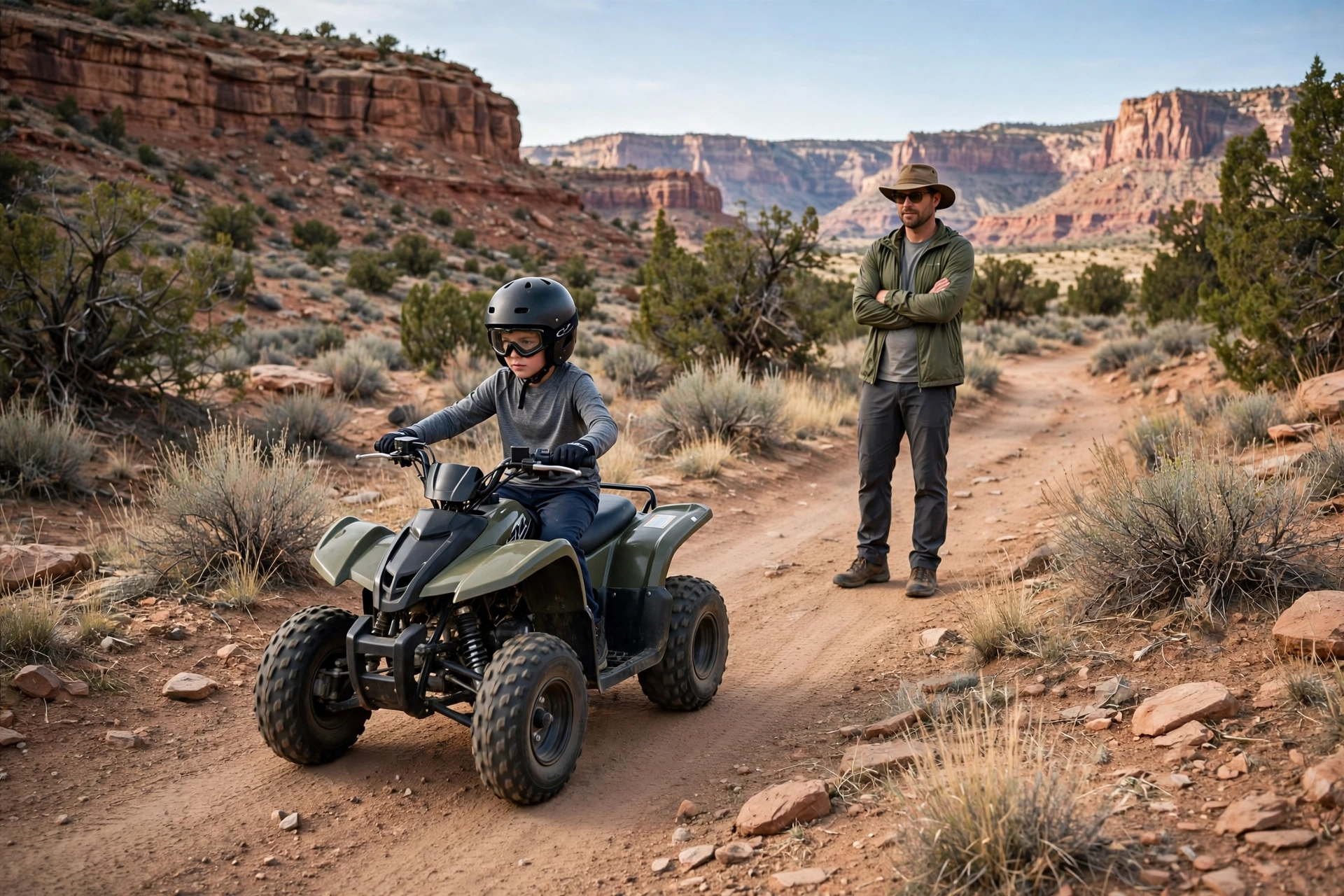
Utah expects a proper safety helmet — in practice, a DOT-approved helmet designed for off-road use. For ATV and OHV riding, the right choice is almost always a full-face motocross-style helmet, because it provides:
- Full head and chin-bar coverage
- Compatibility with goggles for dust, mud, and snow glare
- Ventilation for slow-speed trail work
- A visor peak for sun and debris
Fit is where parents most often get it wrong. Never buy a youth helmet “a size up to grow into.” A loose helmet shifts during normal riding and can come off or rotate in a crash. Measure your child’s head, follow the manufacturer’s size chart, and confirm the helmet is snug all around with the chin strap fastened. The helmet should not rock forward, backward, or side to side.
Also remember that a bicycle helmet is not an ATV helmet. Bike helmets are built for single, lower-speed impacts and lack the coverage and certification motorized riding demands. Use a helmet certified for motorized/off-road use, and replace it after any crash. For context on how Utah’s approach compares nationally, see our roundup of what states have helmet laws.
Where Do Utah’s ATV Helmet Rules Apply?
The helmet and certification rules apply on Utah’s public lands and roads — the terrain most families actually ride:
- Utah state parks and OHV open areas
- National forest and BLM trail systems
- Designated county and community OHV routes
- Sand dune recreation areas
On private land, the state rules apply differently, but outfitters, rental companies, and organized ride events typically require helmets for minors regardless. Moab-area rentals, for example, commonly require helmets for anyone under 18 — and many require them for all riders.
Make the family standard simple: if the engine is on, the helmet is on. It keeps your child legal everywhere, protected anywhere, and free of the “but we’re only on the ranch” debate.
What Else Should Parents Know Before a Young Rider Hits the Trail?
Beyond the helmet and the certificate, Utah riders must follow the general OHV framework: machines used on public land need proper registration and the Utah OHV decal, riders must stay on designated routes, and spark arrestors and noise rules apply in many areas. Exact penalties and fine amounts for violations vary, and parents can be cited when their child rides illegally.
Just as important are the judgment calls no statute can make for you:
- Match the machine to the child. Use youth-model ATVs with engine sizes appropriate to your child’s age and size.
- Supervise. Utah’s certification system assumes young riders are still developing judgment; ride with them.
- Dress for the slide, not the ride. Helmet, goggles, gloves, boots, long pants, and long sleeves.
- No passengers on single-rider machines. Weight shifts make youth ATVs unstable.
Utah gives families world-class places to ride. Following the helmet law and the education requirement is how you make sure everyone comes home from them.
Frequently Asked Questions
Q: Does Utah require helmets for children on ATVs?
A: Yes. Anyone under 18 operating or riding an off-highway vehicle on public land or roads in Utah must wear a helmet — operators and passengers alike.
Q: What is Utah’s OHV education certificate?
A: Riders aged 8–15 must complete Utah’s approved OHV education course and hold a certificate to operate an OHV on public land. It covers safe operation, trail rules, and Utah law.
Q: Are adults required to wear ATV helmets in Utah?
A: No — the state mandate covers riders under 18. Adults are strongly encouraged to wear one, and many rental companies and riding areas require helmets for everyone.

Olivia
Writer at Helmet Today, covering helmet reviews, fit and riding safety.


