To clean a matte helmet without ruining the finish, use warm water and a soft microfiber cloth first, add a matte-safe cleaner only for stubborn marks, and lay a soaked cloth over dried bugs instead of scrubbing them off. Matte paint has a textured, low-sheen surface that stains easily and — worse — can be polished into shiny patches by waxes, polishes, and abrasive pads. Once a matte finish goes shiny in one spot, there is no easy way back, so the whole method is built around softness and patience.
Why does a matte helmet finish need different care?
A glossy helmet shines because its clear coat is smooth and reflects light evenly. A matte finish does the opposite: its surface is microscopically rough, scattering light so there is no shine. That texture explains both of its weaknesses. Dirt, oils from your fingers, and bug remains settle into the texture and cling harder than on gloss paint, so matte helmets often look dirty sooner. And anything that smooths the texture — friction, abrasives, wax filling the surface — creates a permanently shinier patch that stands out against the rest.
So the rules are inverted compared with gloss paint care. You cannot polish out a scuff, you cannot wax away a stain, and rubbing harder at a stubborn mark usually makes things worse, not better. Cleaning a valuable helmet finish gently is also basic preservation: careful owners think about finish care alongside the bigger picture of how long a motorcycle helmet lasts, since a helmet that looks tired early often gets replaced before its protective life is over.
What is the safest basic wash for a matte helmet?
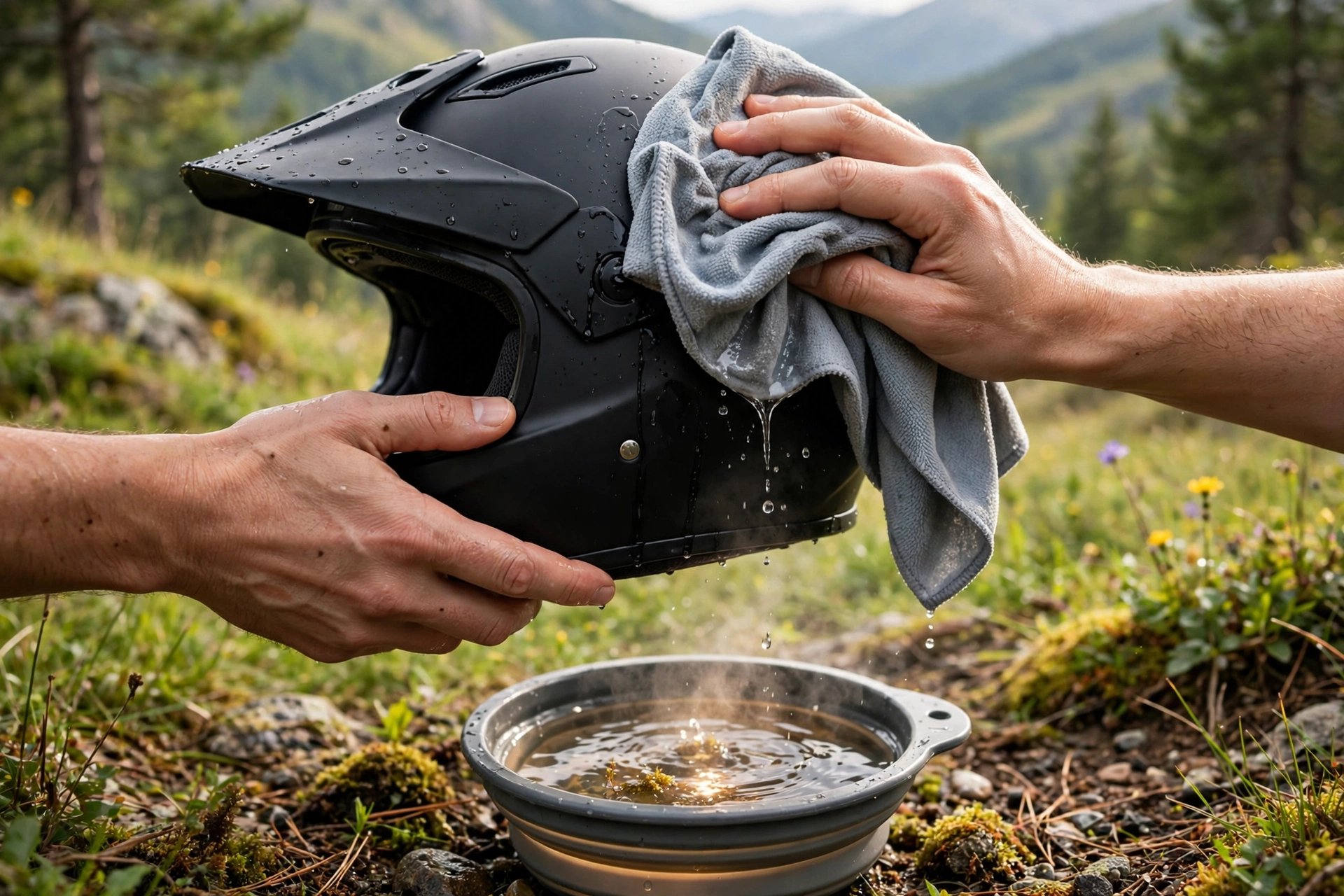
Start with the mildest method and only escalate if needed. Fill a bowl with warm — not hot — water. Soak a clean microfiber cloth, wring it out, and wipe the shell down in smooth, light passes, rinsing the cloth frequently so grit is not dragged across the finish. For general road film and light dirt, plain water is surprisingly often enough, and it carries zero risk to the finish.
If water alone does not shift the grime, add a small amount of a cleaner specifically sold as matte-safe, or a drop of mild pH-neutral soap, to the bowl. Work one panel at a time, wipe gently, then wipe again with a second cloth dampened in clean water to remove all residue — dried soap left on matte paint can leave pale streaks as the surface dries. Dry the helmet by patting and air-drying rather than buffing. Avoid paper towels and shop rags, whose fibers and trapped grit can mark the surface, and never use a sponge’s scouring side anywhere near the helmet.
Clean the visor separately with its own clean cloth and water or a visor-safe cleaner. Keeping visor care separate avoids smearing shell cleaners across your line of sight and avoids dragging visor grit over the matte paint.
How do you remove bugs and stubborn marks from matte paint?
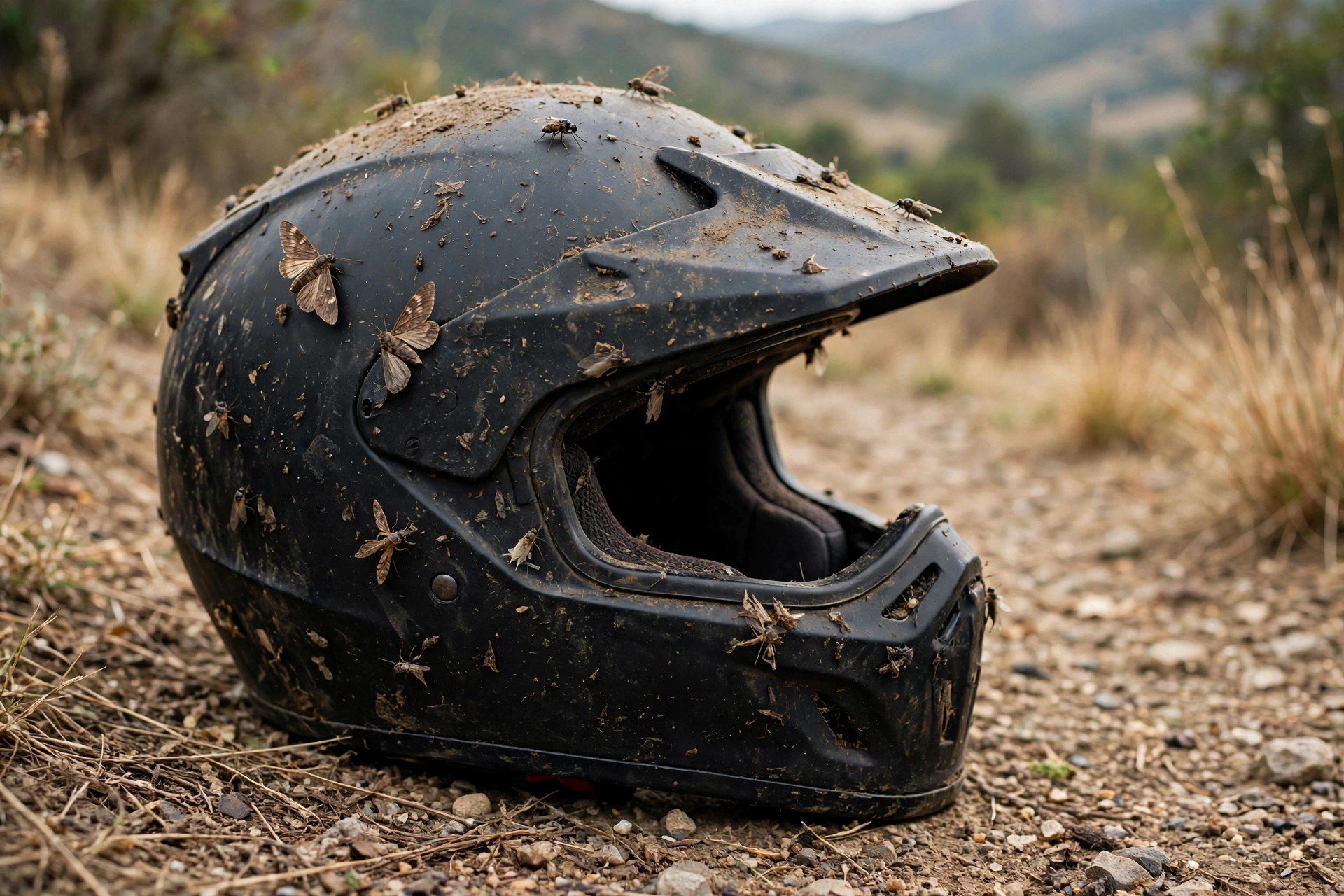
Dried bugs are the classic matte-helmet problem, because the natural instinct — scrub — is exactly what damages the finish. Use the soaking method instead. Lay a microfiber cloth soaked in warm water over the splattered area and leave it for five to ten minutes. The moisture softens and rehydrates the remains until they wipe away with almost no pressure. Repeat for the worst spots rather than pressing harder. This works for tree sap’s early stages and general tar spots too, though hardened sap may need a matte-safe bug-and-tar product used exactly as directed.
For greasy fingerprints and light oil marks, a matte-safe detail spray on a microfiber, wiped gently and then buffed off lightly with a dry side of the cloth, usually does the job. Deal with fuel splashes at the pump immediately with a damp cloth — petrol left sitting on matte paint can mark it, and the same goes for sunscreen and insect repellent transferred from your hands or neck in summer. When in doubt about any product, test it on a small, hidden area, such as under the rear trim, before using it across the shell.
What should you never use on a matte helmet?
Never use polish, wax, or any product promising shine or gloss enhancement — these fill and smooth the matte texture and leave patchy shiny areas that cannot be undone without repainting. Never use abrasive sponges, scouring pads, magic eraser sponges, or cutting compounds, all of which physically flatten the surface. Household glass cleaners and all-purpose cleaners are also out: many contain chemicals that streak matte paint or attack the finish.
Petroleum-based products and solvents deserve a special warning that goes beyond the finish: gasoline, white spirit, acetone, and strong degreasers can damage the shell’s paint and, if they reach it, the EPS impact foam underneath, which is a safety problem, not just a cosmetic one. Also avoid silicone-heavy shine sprays, dish soap used strong and undiluted, pressure washers at close range, and automatic wash brushes. Finally, keep matte helmets out of the washing-up bowl with greasy pans — it sounds obvious, but kitchen degreasers and matte paint are a bad combination.
How do you dry, store, and protect a matte finish?
After washing, pat the shell dry with a clean microfiber and let the helmet air-dry at room temperature with the visor open, away from radiators and direct strong sunlight. Do not put it away in its bag until it is fully dry, inside and out. Storage matters for matte paint: use the soft helmet bag the maker supplied, keep the helmet somewhere it will not rub against zips, buckles, or other gear, and avoid hanging it by its strap over hooks that press into the same spot daily.
For ongoing protection, the honest options are modest. Products sold specifically as matte sealants or matte protection sprays exist and can add a little resistance to fingerprints and UV without adding shine — choose only ones explicitly labeled for matte finishes and test first. Beyond that, protection is mostly behavior: handle the helmet with clean hands or gloves rather than gripping the shell with greasy fingers, wipe off bugs after a ride instead of letting them bake on for a week, and carry a small microfiber in your luggage for trips. Matte finishes reward little-and-often care far more than occasional heroic scrubbing.
Frequently Asked Questions
Can you wax a matte helmet?
No. Wax and polish fill the textured surface and create shiny patches that cannot be reversed. Only products explicitly made for matte finishes are safe.
Why has part of my matte helmet gone shiny?
That area has been smoothed — usually by rubbing, abrasion, wax, or repeated contact with straps or bags. It is a surface change, so cleaning will not restore the matte look; only refinishing would.
Is dish soap safe on a matte helmet?
Strong or undiluted dish soap can streak and dull the finish unevenly. Warm water first, then a matte-safe cleaner or a drop of mild pH-neutral soap, is the safer route.

Olivia
Writer at Helmet Today, covering helmet reviews, fit and riding safety.