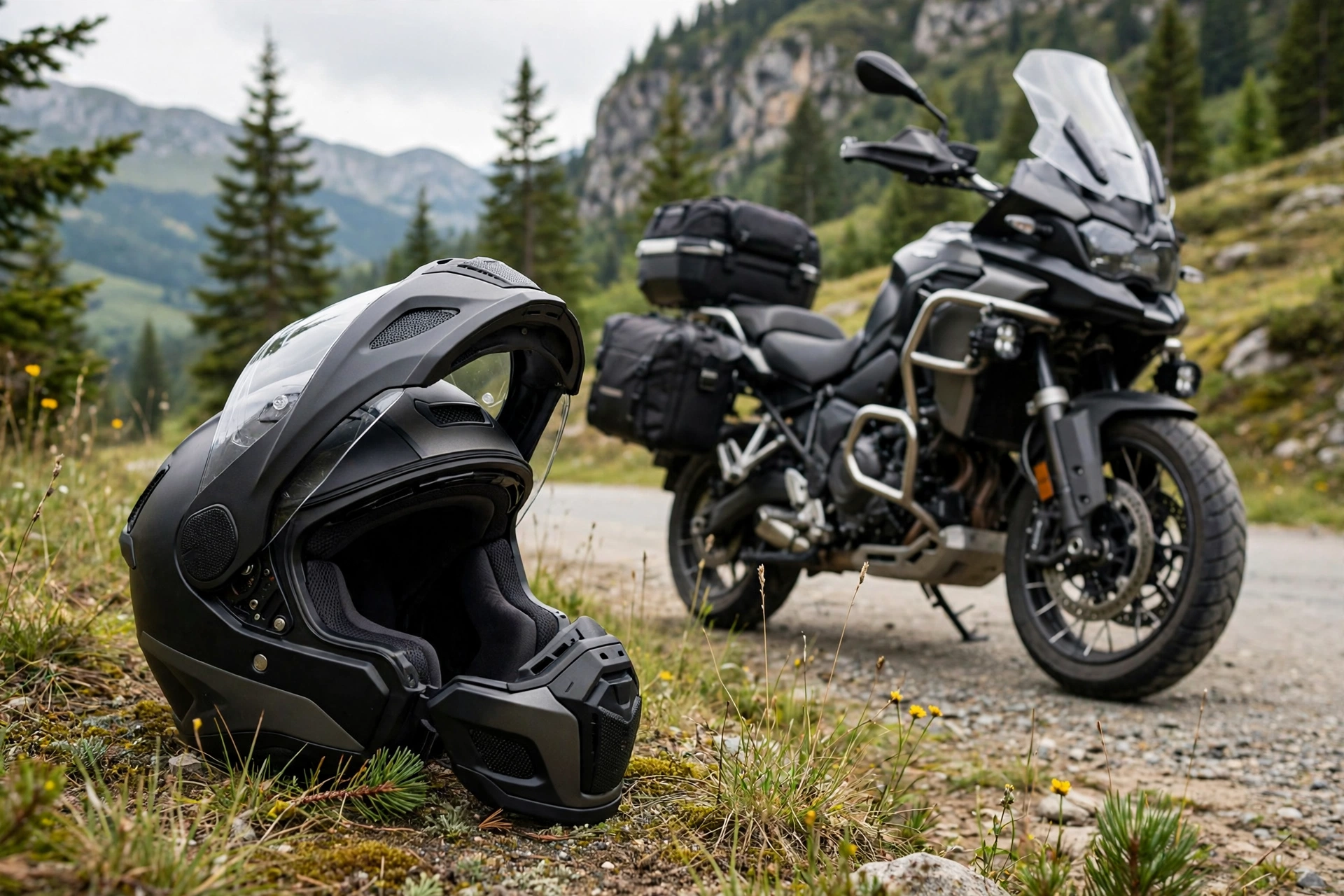
A modular (flip-up) motorcycle helmet gives you full-face protection on the move with the convenience of lifting the chin bar at stops, but it costs you extra weight, more wind noise, and a more complex mechanism than a fixed full-face helmet. For touring and commuting riders who stop often, the trade is usually worth it; for sport and track riders, a fixed full-face is still the better tool.
Modular helmets have moved well beyond the flimsy flip-fronts of twenty years ago. Many modern models are properly certified, some carry dual homologation, and premium versions are genuinely quiet and well sealed. The honest question is not whether modulars are “good” or “bad,” but whether their specific strengths match how you actually ride.
What Are the Main Advantages of a Modular Helmet?
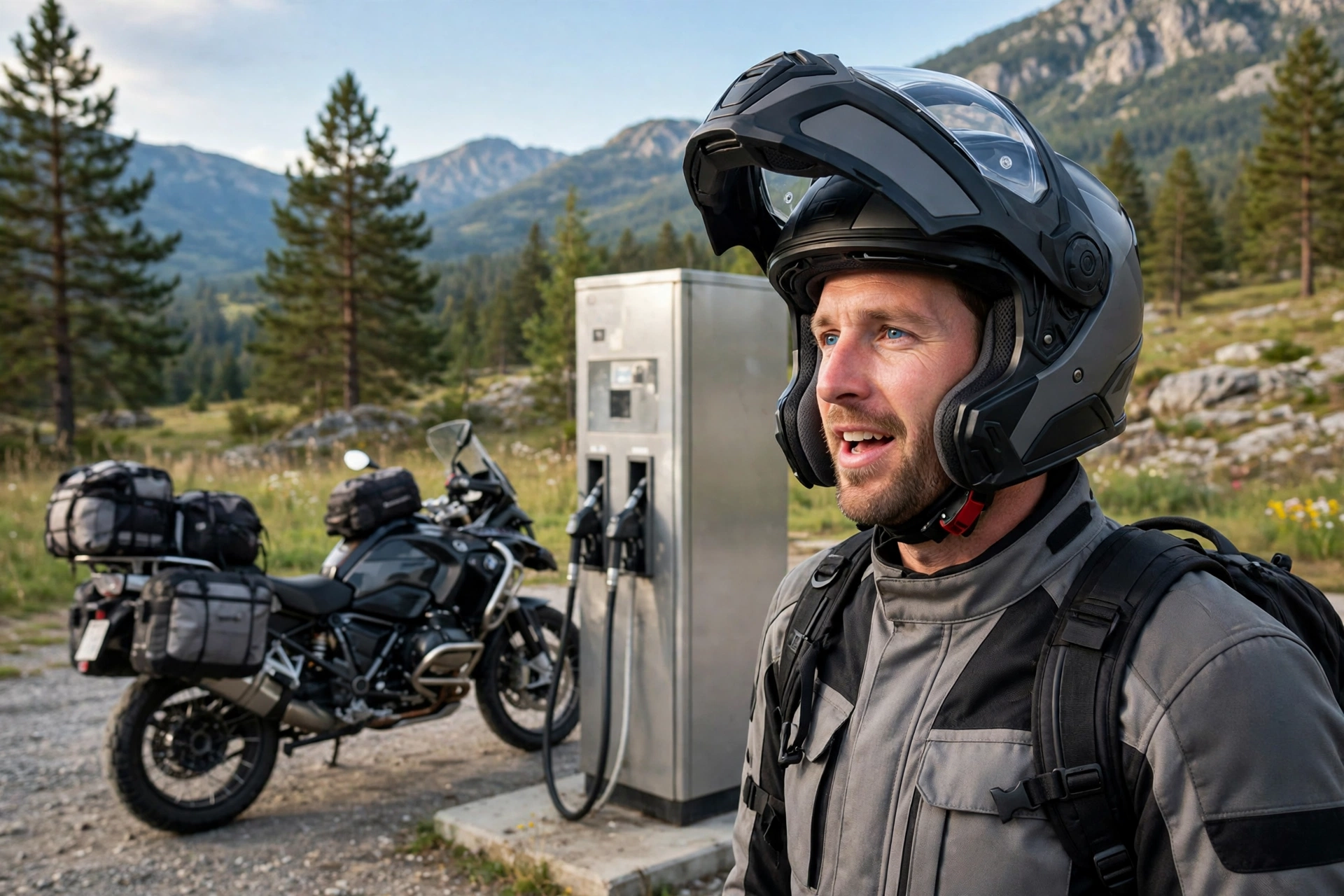
The biggest advantage is convenience at stops. You can flip the chin bar up to talk to a riding partner, pay for fuel, show your face at a border or toll booth, drink water, or read a map — all without taking the helmet off and finding somewhere to put it. For riders who wear glasses, a modular can also be easier to put on and take off, since the open front gives your frames room.
At low speed and in traffic, flipping the bar up gives you a rush of fresh air that a fixed full-face cannot match, which makes hot-weather commuting far more pleasant at walking pace. Touring riders also like being able to eat, drink, and chat at photo stops without the full helmet-off routine. Combined with common modular extras — drop-down sun visors, good speaker pockets for intercoms, and practical venting — the flip-up format is built around real daily riding.
What Are the Main Disadvantages of a Modular Helmet?
Weight is the first trade-off. The hinge hardware, locking mechanism, and reinforced chin bar area add mass, so a modular is typically heavier than a comparable full-face, and that extra weight is noticeable on long days and for riders with sensitive necks. Second is noise: the seams around the flip front give wind more edges to work on, so most modulars run louder than an equivalent fixed helmet, though the best modern designs have narrowed this gap.
The mechanism itself is another consideration. Hinges, latches, and springs are moving parts that can wear, loosen, or collect grime over years of use, and they need occasional cleaning and inspection. A modular also tends to be bulkier in shape, and if the chin bar latch ever fails or is not fully locked, the helmet cannot do its job — so the “click” check before riding off matters.
Price and fit round out the honest picture. Because of the extra engineering, a quality modular typically costs more than a fixed full-face helmet with similar materials and features, so you are paying for the flip mechanism whether or not you use it daily. Fit can also feel slightly different: the shell needs room for the hinge hardware, and some riders notice a roomier or taller feel compared with a snug sport full-face. On the other side of the ledger, modulars tend to hold their touring-friendly features well — many bundle in a drop-down internal sun visor, generous speaker cutouts, and liners designed for all-day wear, extras that would cost more to assemble around a basic fixed helmet. None of these points decides the question alone, but together they explain why two riders can try the same modular and reach opposite conclusions.
Are Modular Helmets as Safe as Full-Face Helmets?
This is the most debated point, and the fair answer is: a certified modular with the chin bar down and locked performs its certified role, but a fixed full-face has a simpler, inherently stronger structure with no hinge to rely on. In the US, a modular sold as a motorcycle helmet must meet the same DOT standard as a full-face. In Europe, look for ECE 22.06 approval, and specifically check whether the helmet is homologated as P (full-face only, chin bar locked down) or P/J dual homologation, which certifies it for riding with the chin bar raised as well as lowered.
That P/J marking is the one to look for if you ever intend to ride with the bar up. A P-only helmet is certified for use with the bar down, so riding with it open puts you outside its tested configuration. Whichever type you choose, safety also depends on fit and on the helmet staying put in a crash, which is why fit and modern impact features matter — it is worth understanding what MIPS is for helmets and similar rotational-impact systems when you compare models.
Who Should Buy a Modular Helmet — and Who Should Not?
A modular suits:
- Touring riders who stop often for fuel, photos, and border checks.
- Commuters who deal with gates, guards, and coffee stops on every ride.
- Glasses wearers who find fixed full-face helmets awkward to put on.
- Instructors, couriers, and officials who need to talk to people all day without removing their helmet.
A fixed full-face suits sport riders, track-day riders (many tracks and organizations require a fixed full-face), riders who prioritize the lightest and quietest option, and anyone who simply never feels the need to flip a chin bar up. If you rarely stop mid-ride, you are paying the weight and noise penalty for a feature you will not use.
Can You Ride With the Chin Bar Up?
Only if your helmet is P/J dual-homologated for it — and even then, treat open-bar riding as a low-speed, in-town mode, not a highway mode. With the bar up you lose the chin and face protection that defines a full-face helmet, and the raised bar catches wind, adds drag and noise, and can strain your neck at speed. Some helmets are specifically shaped so the raised bar sits close to the shell for this purpose; others clearly are not. When in doubt, bar down and locked is the default — it is the configuration the helmet was built and certified around.
Frequently Asked Questions
Are modular helmets legal everywhere?
Wherever full-face helmets are accepted, a certified modular with the chin bar down and locked is generally accepted too. Track days are the common exception — many require a fixed full-face helmet, so check the organizer’s rules.
Do modular helmets leak in the rain?
The flip-front seams give water more paths in than on a one-piece shell, so cheap modulars can dribble around the visor and chin bar in heavy rain. Well-sealed modern designs perform much better, but a fixed full-face still has the edge in a storm.
How long does the flip-up mechanism last?
With normal use and occasional cleaning, the hinges and latch should last the service life of the helmet. If the bar develops play, stops clicking positively, or the latch feels loose, have it inspected — a chin bar that does not lock firmly is a reason to retire the helmet.

Olivia
Writer at Helmet Today, covering helmet reviews, fit and riding safety.