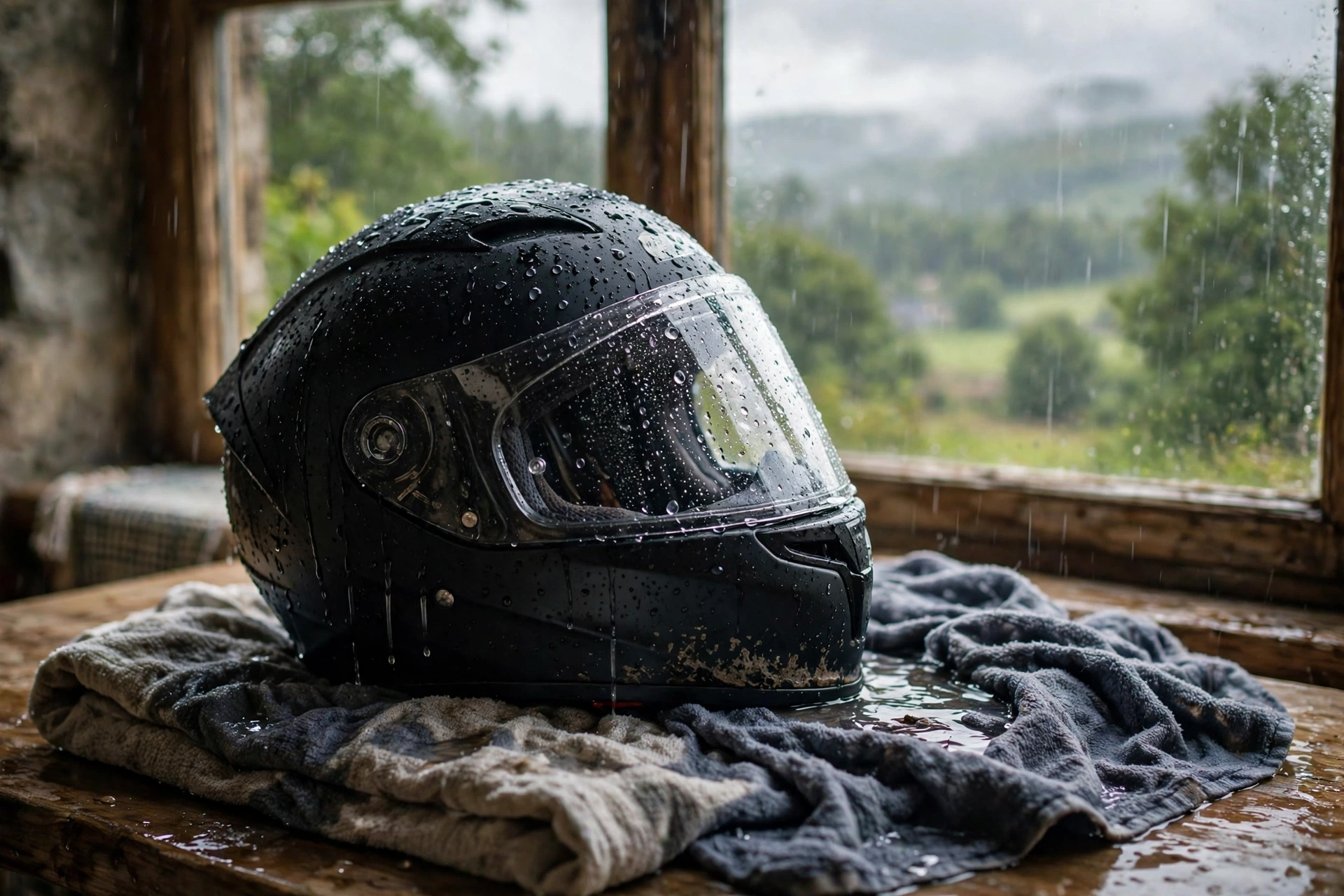
To dry a motorcycle helmet after rain, take it indoors, remove the liner and cheek pads, blot everything with a towel, and let it dry at room temperature with air moving around it — a fan in the room is ideal. Never apply direct heat: no radiators, no hair dryer on a hot setting, no airing cupboard, and definitely no microwave. Depending on humidity, a soaked helmet typically needs 24 to 48 hours before it is fully dry and ready to store or wear comfortably.
What should you do first when you get home?
The first ten minutes matter most. Take the helmet indoors rather than leaving it in a cold garage or a closed top case, where damp air sits still. Open the visor fully and open all the vents, so the interior can breathe. Shake off loose water, then blot the shell, the interior, and around the vents and chin bar with a clean towel or microfiber cloth, pressing gently rather than rubbing.
Remove everything that is designed to come out: cheek pads, crown liner, chin curtain, and breath guard. These fabric parts hold most of the water, and separating them exposes all the hidden surfaces to air. If your helmet has electronics — a fitted intercom, speakers, or a battery — follow the maker’s guidance; in most cases you leave wired speakers in place and simply keep direct water and pressure away from them, but never submerge or soak the shell to rinse it. Empty your pockets of habit too: do not stuff damp gloves inside the helmet, a common move that keeps the interior wet for days.
How do you dry the liner, pads, and shell properly?
Press the removed pads and liner between the folds of a dry towel to push out as much water as you can. Do not wring or twist them, which tears stitching and distorts the padding and backing plates. Then lay the pieces on a fresh dry towel, or hang them on a line or rack indoors where air can reach all sides.
Set the empty shell upside down or on its side on a towel so air can circulate through it, with the visor open. A fan pointed loosely toward the helmet — not blasting directly into it at close range — is the single best drying aid; moving room-temperature air does in hours what still air does in days. Turn the pads once or twice during drying so the underside gets its share of airflow. This gentle, thorough routine is part of the basic care that determines how long a motorcycle helmet lasts, because interiors that stay damp degrade and smell far sooner than dry ones.
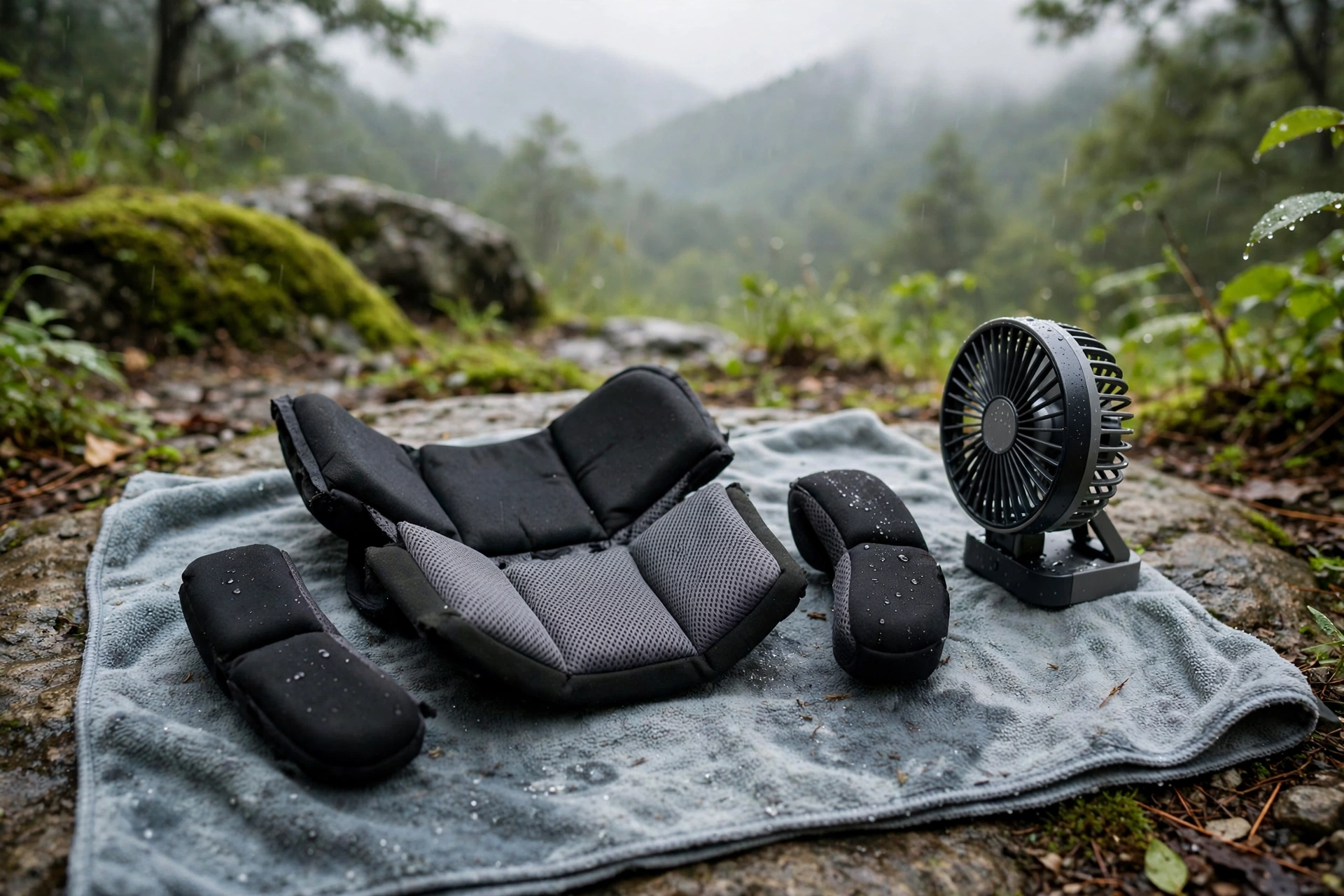
Resist the urge to speed things up once the outside feels dry. The centers of thick cheek pads and the foam interface behind the liner dry last. A helmet that feels dry at breakfast can still be damp inside by the evening commute if it was reassembled too early.
What should you never use to dry a helmet?
Heat is the enemy in every form. Radiators, heated towel rails, fan heaters, and hair dryers on hot settings can warp the shell’s finish, distort pad backing plates, damage glues, and harm the EPS impact foam inside the shell — the part that protects your head. Direct hot sun through a window is not much better. The tumble dryer is out for the same reasons, plus the tumbling itself batters snaps and stitching.
And yes, the microwave needs a specific mention, because people genuinely try it: never put any part of a helmet in a microwave. Metal snaps and fasteners, synthetic foams, and glued assemblies do not belong in one, and the result ranges from ruined pads to a fire risk. Also avoid sealing a wet helmet in its bag, a plastic box, or a top case “to deal with later,” and avoid chemical shortcuts like spraying the interior with strong disinfectant to mask damp smells — fix the moisture, and the smell problem mostly fixes itself.
How long does drying take, and how do you stop mildew and odor?
Times depend on how soaked the helmet got and on the air around it. A lightly rained-on helmet with its liner removed may be dry overnight in a ventilated room. A fully soaked helmet in a humid home can honestly need 48 hours. Use touch as the test: pads should feel dry all the way through when squeezed, the chin strap should no longer feel cool and damp, and there should be no musty smell when you put your nose inside the shell.
Mildew and odor come from the same cause — moisture left sitting in fabric and foam. Prevention is simply complete drying, every time, plus storing the helmet somewhere dry with the visor cracked open so air can move. If a helmet has already gone musty from a previous incomplete drying, wash the removable pads and liner properly with mild detergent, rinse well, and dry them fully before refitting; that resets most cases. A balaclava or liner cap on wet-weather rides also reduces how much water and sweat reach the interior in the first place.
What about the visor, vents, and final storage?
While the interior dries, look after the outside details. Dry the visor with a clean microfiber, wiping gently in one direction; gritty rain residue dragged across a visor causes fine scratches. If you have a Pinlock insert, check whether moisture got between the insert and the visor — if it did, remove the insert, let both dry separately at room temperature, and refit once dry so the seal sits cleanly. Work the vent sliders and visor mechanism a few times once dry to confirm nothing is gritty or sticking, and wipe the chin strap and buckle, which stay damp a long time.
Store the helmet only when everything is completely dry: reassemble the interior, making sure all snaps are seated and the strap threads correctly, leave the visor slightly open, and keep the helmet in its soft bag in a dry room rather than a damp garage. If you commute daily through a wet season, rotating between two helmets — or at least owning a spare liner set — is the practical trick: one dries fully while you wear the other, and neither spends its life half-damp.
Frequently Asked Questions
Can I ride in my helmet while it is still damp inside?
You can, but it is uncomfortable and keeps the interior wet for longer. For short trips it does no immediate harm; better to let it dry fully and use a spare or a liner cap meanwhile.
Is a hair dryer safe on the cool setting?
Cool, unheated air from a distance is fine and works like a fan. Any heat setting is not — heat can warp padding, glues, and foam.
How do I know the helmet is fully dry?
Squeeze the thickest part of the cheek pads: no cool, damp feeling, no moisture on your hand, and no musty smell inside the shell. If in doubt, give it another half day of airflow.

Olivia
Writer at Helmet Today, covering helmet reviews, fit and riding safety.