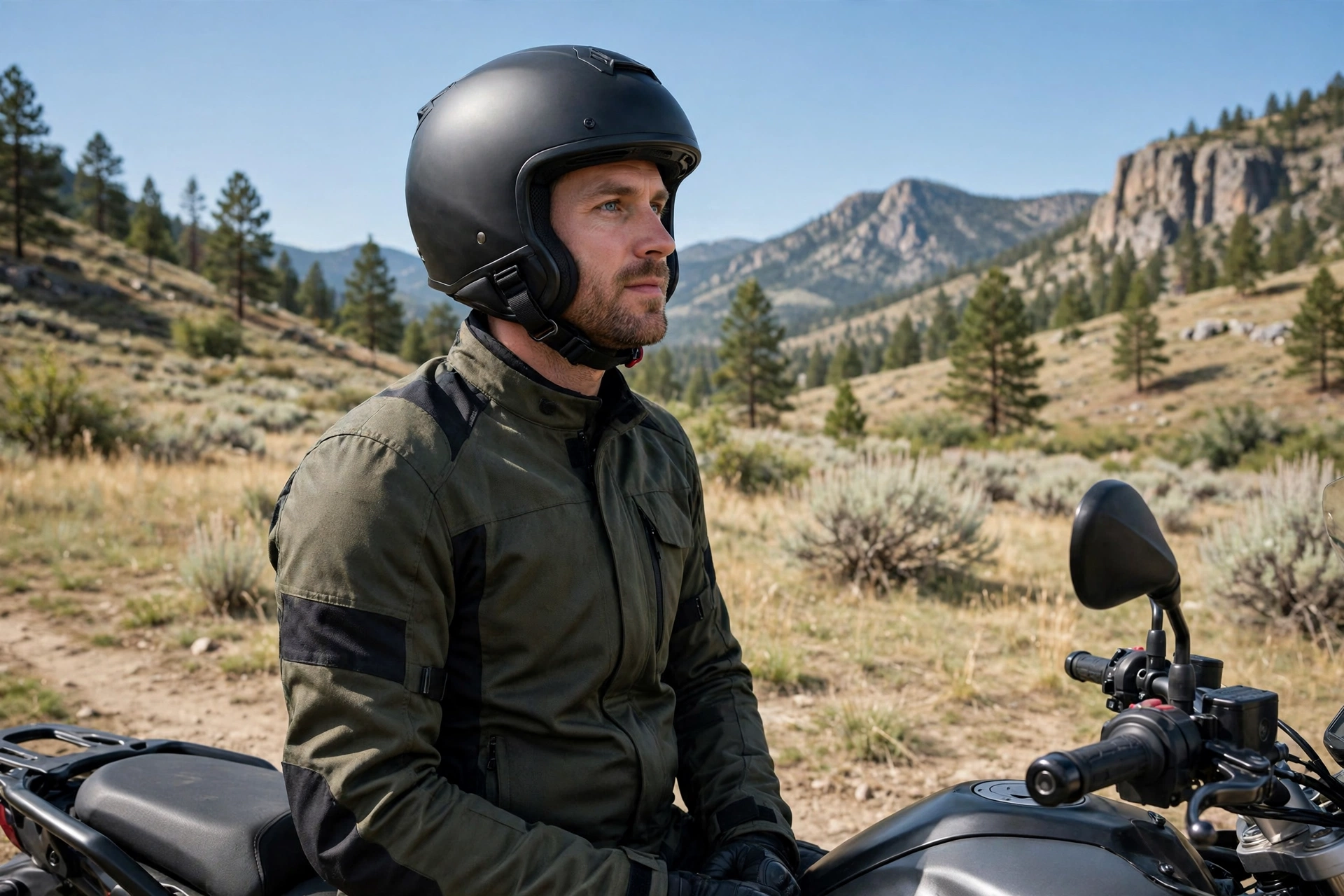
Wear a motorcycle helmet level on your head — not tilted back — with the brow edge sitting low, about two fingers above your eyebrows, and the chin strap fastened snugly enough that only two fingers fit between the strap and your chin. The helmet should feel evenly snug all around, with nothing bulky like a hat or a thick hair bun underneath.
It sounds simple, and it is — but a large share of riders wear their helmet in a way that quietly reduces its protection: perched too high, strap dangling loose, or tilted back like a cap. Those habits leave your forehead exposed and let the helmet shift or come off in a crash. Here is how to wear it properly, and the mistakes to drop.
What Is the Correct Position of a Helmet on Your Head?
The helmet should sit level, as if balanced flat. Viewed from the side, the brow edge runs just above your eyebrows — roughly two finger-widths — and the helmet’s rim is horizontal, not angled up at the front. When you look up with your eyes, you should just see the edge of the brow opening at the top of your vision.
If the helmet is tilted back, your forehead — one of the most commonly struck areas in crashes — is left exposed, and the helmet can rock backward on impact. If it sits too low, it can press on your brow and limit your upward view. Level is the position the helmet was designed and tested in, and it is the position its liner can protect you in.
How Tight Should the Chin Strap Be?
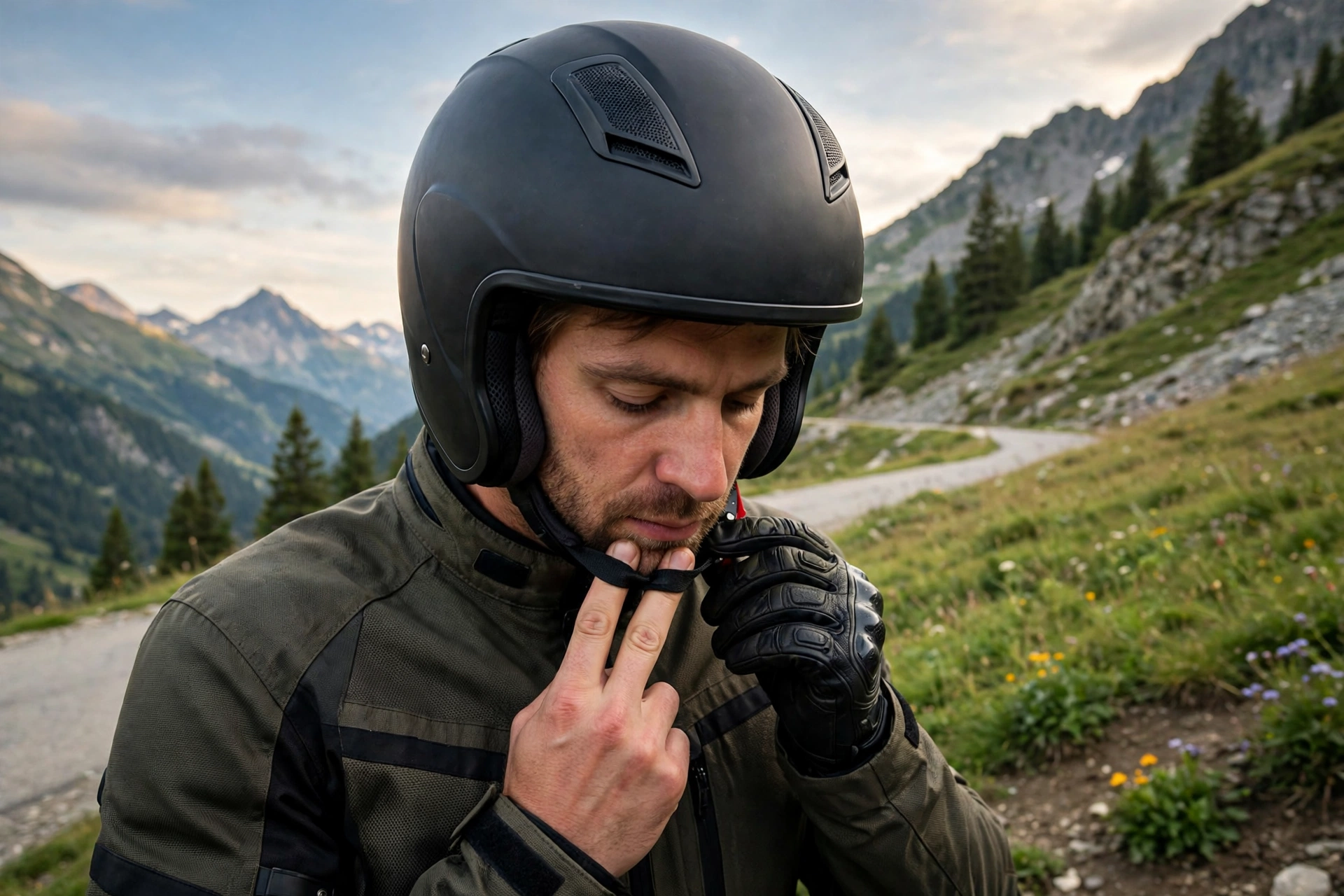
Use the two-finger rule: fasten the strap, then try to slide two fingers flat between the strap and the underside of your chin or jaw. They should fit snugly — no room for a third finger, and no slack loop hanging. The strap should sit against the underside of your jaw, not out on the point of your chin or back against your throat.
Test it: with the strap fastened, try to roll the helmet off from the back. It should resist and stay in place. Then open your mouth wide — the strap should pull the helmet down slightly against your head. An unfastened or loose strap is the single most common wearing mistake, and it defeats the helmet entirely: in a crash, an unsecured helmet can leave your head before the impact that matters.
What Should You Wear Underneath a Helmet?
Nothing bulky. Skip baseball caps, thick beanies, and hoods under the helmet — they change the fit the manufacturer designed, create pressure points, and can let the helmet move in a crash. A thin balaclava, skull cap, or helmet liner is fine and is made for the purpose; it can even improve comfort and keep the liner cleaner.
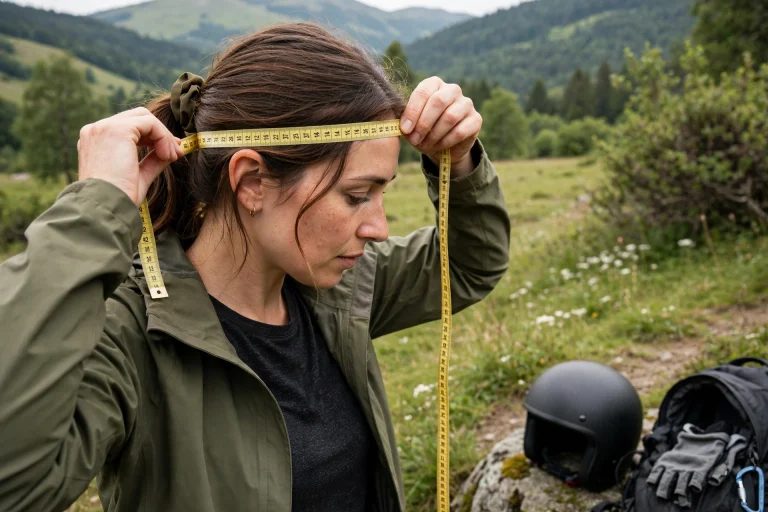
Hair is the hidden fit problem for many riders. A high ponytail or bun inside the helmet pushes it up and back and creates a hard pressure point. Wear your hair low and flat — a low ponytail exiting below the helmet’s back edge, or hair worn loose and evenly distributed — so the helmet can sit level. If the helmet only feels right when your hair is piled up, the honest fix is a different size or a hairstyle change, not forcing it.
How Should Glasses Wearers Put Their Helmet On?
Helmet first, glasses second. Put the helmet on and position it, then slide your glasses in straight from the front, guiding the arms along your temples inside the liner until they sit on your ears normally. Do not put glasses on first and drag the helmet over them — you will bend the frames and fold your ears. If the helmet’s liner grips the arms painfully, look for models with glasses-friendly channels in the cheek pads; many helmets now include them. Sunglasses follow the same rule: on after the helmet, off before the helmet comes off.
What Are the Most Common Helmet-Wearing Mistakes?
- Strap unfastened or dangling loose — the helmet can separate from your head in a crash.
- Helmet perched or tilted back — forehead exposed and the helmet free to rock backward.
- Helmet too big — it shifts when you shake your head, lifts at speed, and can rotate on impact. Remember, a bicycle-style fit check is not enough: motorcycle helmets are a different, heavier system, which is exactly the difference covered in bike helmet vs motorcycle helmet comparisons.
- Wearing a hat or hood underneath — ruins the designed fit and adds a slip layer.
- Strap twisted or fastened over the chin point — it can slip off the jaw under load.
Position also matters once you are moving. A helmet worn tilted back or worn loose will lift and chatter in the wind at highway speed, and riders often respond by overtightening the strap — which hurts without fixing the real problem, the fit and position. If your helmet feels stable in town but starts lifting, twisting, or pressing on your forehead above 50 mph, treat that as diagnostic information: either the helmet is riding too high, the size is too large, or the shape does not match your head. Aerodynamic lift is the helmet telling you it is not seated the way it was designed to sit. Fix it in the driveway — reposition it level, confirm the strap tension, and if the movement persists, get the fit checked at a shop rather than tolerating it. A helmet that moves around at speed is also the helmet most likely to move at the one moment you cannot afford it.
What Is a Quick Pre-Ride Helmet Check?
Before every ride, run a ten-second routine: helmet level, brow edge two fingers above the eyebrows; strap fastened and two-finger snug; a firm head shake producing no independent helmet movement; visor clean and closing fully. If anything fails, fix it before you roll — not at the first traffic light. These few seconds are what turn a helmet you own into a helmet that is actually protecting you.
Frequently Asked Questions
Should a motorcycle helmet cover your forehead?
Yes. The helmet should sit low and level with the brow edge about two fingers above your eyebrows, covering the forehead. If your whole forehead is visible with the helmet pushed back, it is positioned incorrectly.
How do I know if my helmet is too big?
Fasten the strap and shake your head: if the helmet slides or rotates on its own, or you can fit more than two fingers under the strap, or the helmet lifts and moves when you push up on the chin bar, it is too big or the wrong shape.
Can I wear a ponytail with a motorcycle helmet?
Yes — wear it low, at the nape of your neck, so it exits below the helmet’s rear edge. A high ponytail or bun inside the helmet pushes it out of position and creates a painful pressure point.

Olivia
Writer at Helmet Today, covering helmet reviews, fit and riding safety.