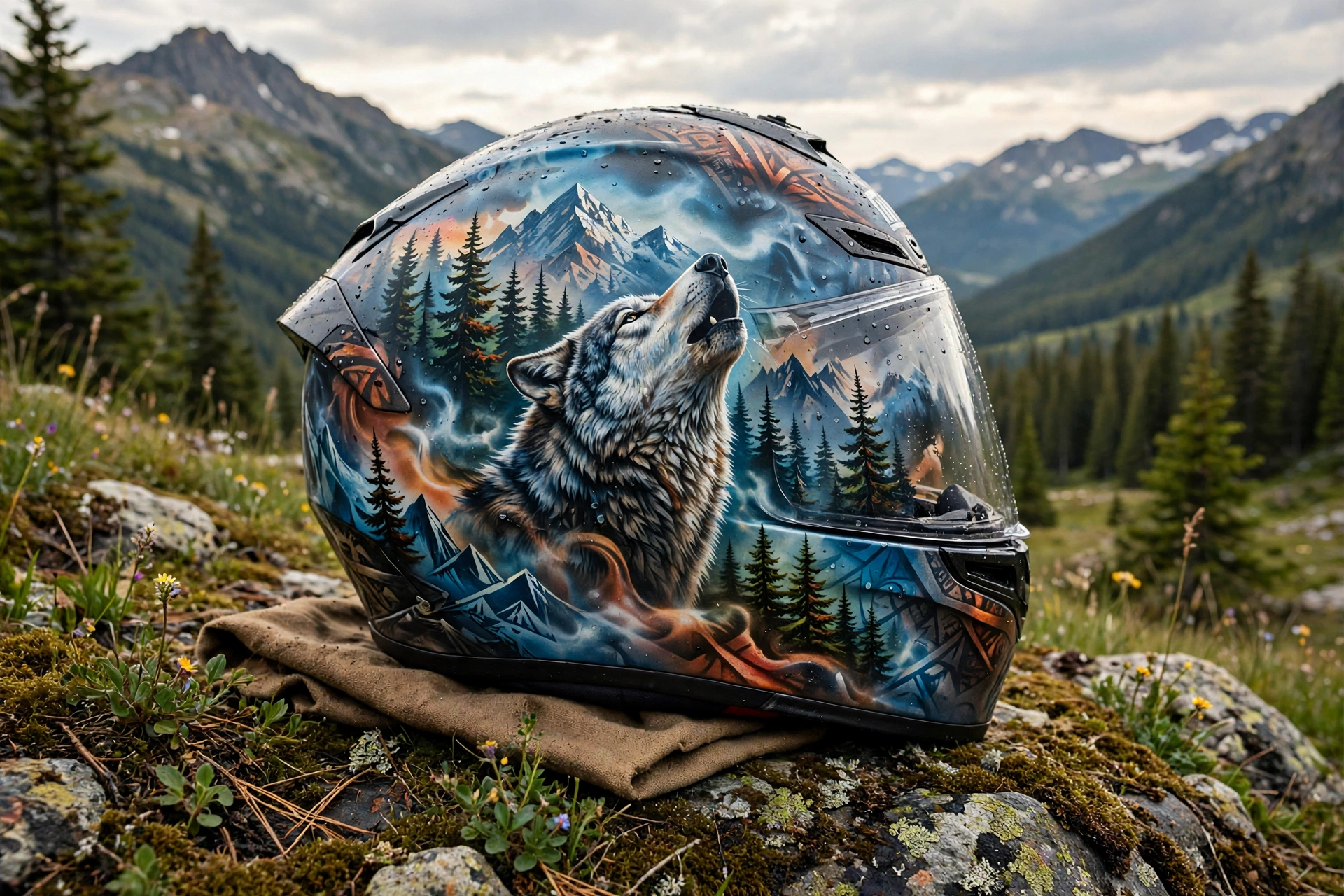
You can paint a motorcycle helmet, but doing it yourself is risky, and the safe route is a professional helmet painter. The danger is not the color — it is the chemistry. Solvent-based paints and thinners can weaken polycarbonate and ABS shells, degrade the EPS foam liner, and many manufacturers will void the warranty if the shell is repainted. If you want custom paint, use a painter who specializes in helmets, or choose a wrap or skin instead.
A custom-painted helmet looks fantastic, and race-replica paint jobs are a long tradition in motorcycling. The problem is that a helmet is not a gas tank. It is a carefully engineered energy-management system, and some of the products in a typical paint shop are chemically hostile to it. Here is what actually matters before you pick up a spray can — or decide not to.
Why Can Paint Damage a Motorcycle Helmet?
Most helmet shells are polycarbonate, ABS, fiberglass composite, or carbon fiber. Polycarbonate and ABS are plastics, and plastics can be attacked by the solvents used in many paints, primers, thinners, and clear coats. A solvent that softens the shell surface even slightly can reduce its ability to flex and distribute impact energy the way it was designed to. The damage is invisible — the helmet looks great while its protective structure has been compromised.
The foam liner is even more vulnerable. EPS (expanded polystyrene) dissolves on contact with many common solvents. During painting, overspray and fumes can reach the EPS through vents and the bottom edge if masking is sloppy. Painters who work on helmets full-time know this and use elaborate masking, water-based or helmet-safe paint systems, and low-solvent processes. A general auto body shop, or a DIY garage setup, usually does not.
Heat is a second issue. Some paint processes involve baking or heat curing. Excess heat can damage EPS and adhesives inside the helmet, which is another reason helmet painting is a specialist job rather than a weekend project.
Does Painting a Helmet Void the Warranty or Certification?
Often, yes for the warranty. Many manufacturers state that painting the helmet with non-approved products voids their warranty, because they cannot guarantee the shell after unknown chemicals touch it. If your helmet is new and under warranty, assume a repaint ends that coverage unless the manufacturer says otherwise in writing.
Certification is a grayer area. A helmet is certified as it leaves the factory; repainting does not formally “remove” a DOT or ECE approval, but painting over the certification labels can create practical problems — an officer or inspector who cannot verify the label may treat the helmet as non-compliant. Professional painters either mask the labels or reproduce the required information legally as part of the job, and they never paint over vents, seals, or moving parts. Never paint the visor, the visor seal, or the inside of the shell, and never let paint build up around vent sliders.
What Is the Safest Way to Get a Custom-Painted Helmet?
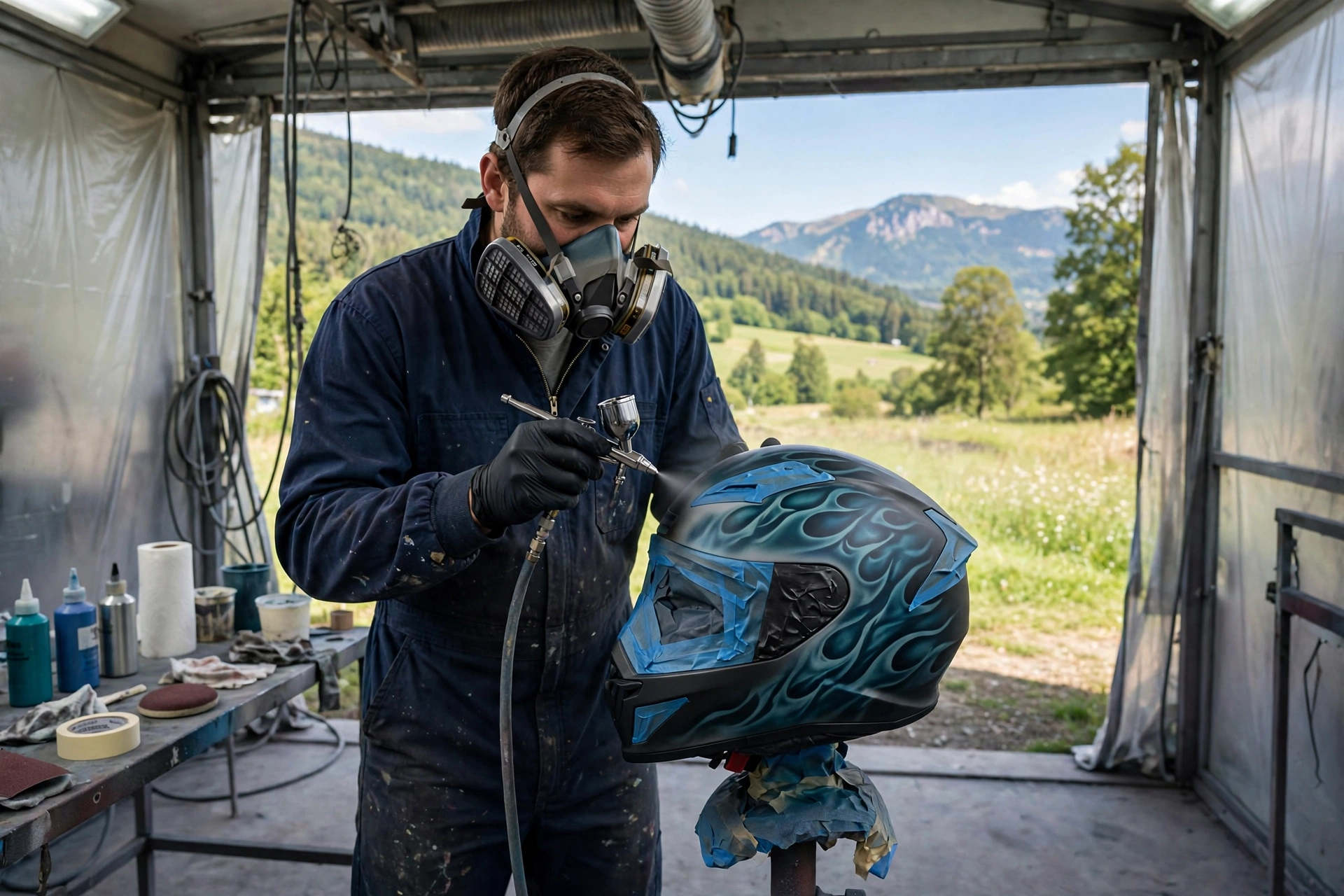
Hire a painter who specializes in helmets. They strip and prepare the shell correctly, mask the EPS, vents, and trim completely, use paint systems known to be compatible with helmet shells, and reassemble everything so liners, straps, and mechanisms end up exactly as they were. Ask directly what paints they use on polycarbonate shells and how they protect the foam — a real specialist will answer without hesitation.
Expect the process to take the helmet out of service for a while, since it is fully disassembled. That is normal and a good sign. What is not a good sign is a painter who plans to “just scuff and spray” the helmet whole, liner and all. Walk away from that.
If the helmet is older, be honest about whether custom paint is the right investment. Paint does not reset a helmet’s age, and as covered in our guide to how long a motorcycle helmet lasts, an aging helmet is better replaced than repainted — put the custom design money toward a fresh helmet instead.
Are Vinyl Wraps and Helmet Skins a Safer Alternative?
Yes, for most riders they are the smarter alternative. A vinyl wrap or pre-cut helmet skin changes the look completely without solvents touching the shell, and it can be removed later to restore the original finish. Wraps use mild adhesives similar to quality stickers, conform to compound curves with heat kept low and controlled, and add a layer that can even protect the original paint from stone chips.
Wraps are not perfect. Cheap material can wrinkle on a helmet’s tight curves, edges can lift around vents, and a bad installer can still overheat the shell. But compared with wet paint, the risk profile is far lower and the result is reversible. Skins and partial wraps — a stripe kit, a number panel, a reflective design — give most of the custom look with none of the chemistry worries.
Wraps also play well with resale and inspection. A wrapped helmet can return to its factory finish in an afternoon, factory labels stay readable underneath or are left exposed by any competent installer, and there is no question about which chemicals touched the shell because none did. For a rider who wants a personal look for a season or two rather than a lifetime commitment, a wrap is almost always the recommendation a helmet specialist will give first.
What Should You Never Paint on a Helmet?
The list is absolute: never paint the EPS foam, the interior, the straps, or the retention hardware. Never paint the visor or its sealing surface, because paint changes how the seal sits and can attack visor plastics. Never paint over certification stickers, vents, or the rubber trim where the shell meets the liner. And never use paint to “repair” or hide crash damage — a cracked or dented shell needs replacement, and paint over damage is genuinely dangerous because it hides the evidence from the next inspection too.
Frequently Asked Questions
Can I spray paint my own helmet with a rattle can?
It is strongly discouraged. Rattle-can paints and primers are typically solvent-heavy, and overspray can reach the EPS liner. On polycarbonate and ABS shells, the solvents themselves may weaken the structure invisibly.
Is a professionally painted helmet still safe?
Yes, when the painter specializes in helmets, uses shell-compatible paint systems, and masks the foam and vents properly. That process exists precisely because amateur painting is risky.
Will painting over the DOT sticker cause problems?
It can. The label verifies the helmet meets the standard, and covering it may create issues at inspection or during a traffic stop. Professionals mask or preserve certification markings rather than painting over them.

Olivia
Writer at Helmet Today, covering helmet reviews, fit and riding safety.