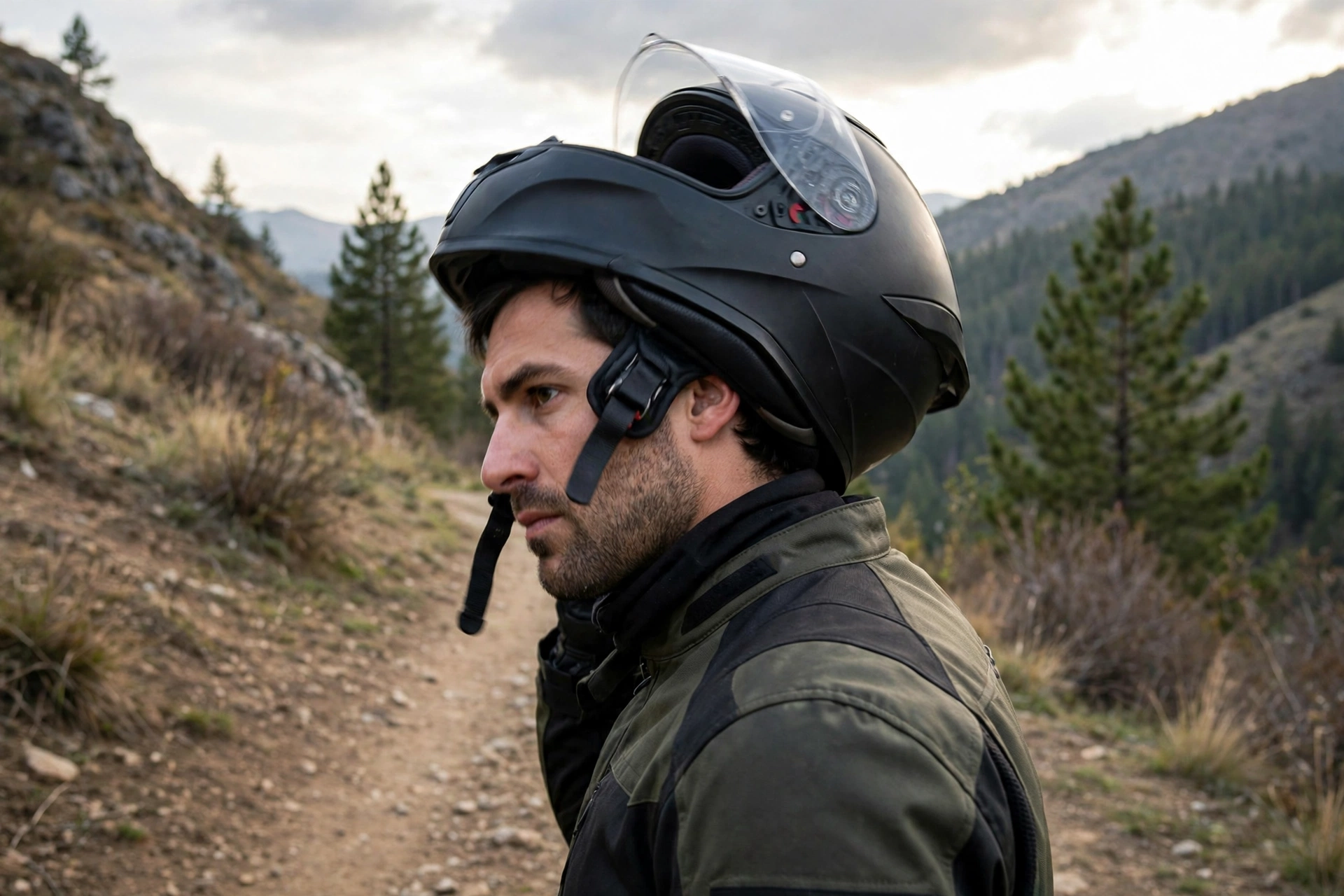
A motorcycle helmet is too big if it moves when you shake your head, shifts when you push up on the chin bar, or lets you slide a finger easily between your forehead and the liner. A correct fit feels snug all the way around with firm cheek pressure and almost no free movement. If the helmet rotates, lifts, or wiggles on your head, it is oversized — and an oversized helmet protects far less in a crash.
Fit is the single most important part of helmet safety. Certification labels matter, but a certified helmet that slides around on your head cannot do its job. Here is how to test your helmet properly, what warning signs to look for, and what to do if yours is too large.
How Do You Test If a Helmet Is Too Big?
Start with the shake test. Put the helmet on, fasten the chin strap snugly, and shake your head side to side, then up and down, like you are saying “no” and “yes” firmly. Your skin and cheeks should move with the helmet. If the helmet shifts independently — sliding across your forehead or rocking so the eye port moves out of line — it is too big.
Next, try the push-up test. Push upward on the front of the chin bar. A well-fitting full-face helmet barely moves. If the helmet tilts back noticeably or the front edge climbs up your forehead, the internal size is too large for your head.
Finally, do the roll-off awareness check. Grip the back bottom edge of the helmet and try to roll it forward and off your head while the strap is fastened. You should not be able to get it anywhere near coming off. A helmet that rolls forward easily with the strap done up is dangerously oversized. These three simple checks take less than a minute and tell you more than any size chart.
What Are the Warning Signs of an Oversized Helmet?
One of the biggest warning signs is the absence of pressure. A new helmet in the correct size feels firm — some riders describe it as tight. If a brand-new helmet feels loose and comfortable with no squeeze anywhere, it is almost certainly too big, because comfort pads compress over the first weeks of use and the fit only gets looser.
Check these specific signs:
- Forehead gap: You can slide a finger between your forehead and the liner without resistance. There should be no such gap.
- Cheek pads not pressing: On a full-face helmet, the cheek pads should push your cheeks in slightly — enough that talking feels a little like making fish lips. If your cheeks feel untouched, the helmet is too wide or too large.
- Easy head movement inside: You can turn your head inside the helmet, or the helmet moves when you look over your shoulder.
- Glasses slide in easily: If sunglasses slip on with zero resistance and wobble, there may be too much room inside.
- It sits too low or tilts: An oversized helmet often drops down over your eyebrows or tilts back when you move.
Any one of these on its own is a red flag. Two or more together confirm the helmet is the wrong size.
Why Is a Too-Big Helmet Dangerous?
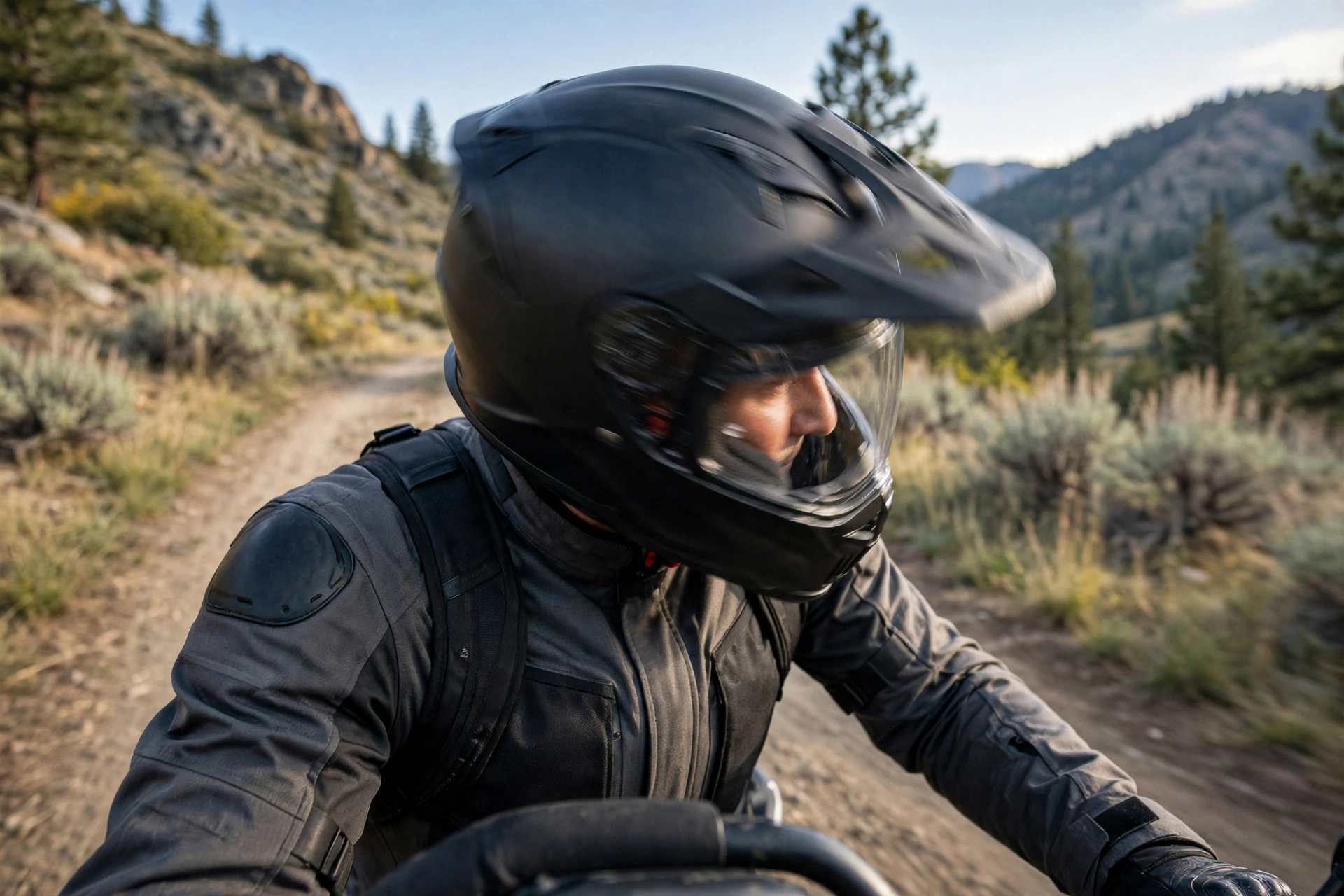
In a crash, a loose helmet can rotate on your head, exposing areas it was meant to cover, or shift so the impact lands where the energy-absorbing liner is not positioned correctly. In the worst case, a badly oversized helmet can come off entirely during a slide or tumble — which is exactly what the roll-off test checks for.
Even without a crash, an oversized helmet causes everyday problems. Wind gets underneath at speed and lifts the helmet, straining your neck and pulling the eye port out of your line of sight. That same loose fit lets in far more wind noise, which fatigues you on long rides and damages hearing over time. Some technologies also depend on close contact to work as designed; low-friction layers such as those explained in our guide to what MIPS is for helmets are engineered around a helmet that stays properly positioned on the head.
Can You Fix a Helmet That Is Slightly Too Big?
Sometimes, if it is only slightly loose. Many manufacturers sell thicker cheek pads and crown liners for the same shell, and swapping to thicker pads can take up a small amount of space. This is a legitimate fix when the shell size is right but the pads are too thin for your face shape.
What you should not do is stuff the helmet with foam inserts, wear a thick hat underneath, or add aftermarket padding not made for that helmet. These change how the helmet sits and can create pressure points or raise the helmet on your head, reducing coverage. Never try to shrink a helmet that is a full size too large — pads cannot fix a shell that is fundamentally the wrong size.
Also consider head shape. If the helmet is loose on the sides but tight front-to-back (or the reverse), the problem may be shape, not size. Helmets come in different internal shapes — round, intermediate oval, long oval — and a different shape in the same size often solves a “loose” feeling completely.
When Should You Exchange or Replace It?
Exchange the helmet if it fails the shake or push-up test when new. Most retailers allow size exchanges on unworn helmets, so test the fit indoors before removing tags or riding in it. A helmet that starts out loose will only get looser as the comfort liner breaks in — typically within the first 15–20 hours of riding.
If you have owned the helmet for years and it has gradually become loose, that is liner compression and wear, and it is a sign the helmet is near the end of its useful fit even if the shell looks fine. Replacing worn pads can restore some snugness on supported models; if fresh pads do not restore the fit, it is time for a new helmet in the correct size.
Frequently Asked Questions
Should a new motorcycle helmet feel tight?
Yes. A new helmet should feel snug and firm all around, with noticeable cheek pressure and no free movement. The comfort liner relaxes slightly with use, so “firm but no pain” when new is the right target.
Can I just wear a balaclava to make a big helmet fit?
A thin balaclava takes up almost no space and will not fix an oversized helmet. It is fine for comfort and sweat management, but it is not a sizing solution — if the helmet moves in the shake test, it is the wrong size.
How much movement is acceptable in a helmet?
Very little. With the strap fastened, the helmet should not rotate, tilt, or shift independently of your head. Your cheeks and skin should move with it when you shake your head. Any obvious sliding means it is too big.

Olivia
Writer at Helmet Today, covering helmet reviews, fit and riding safety.