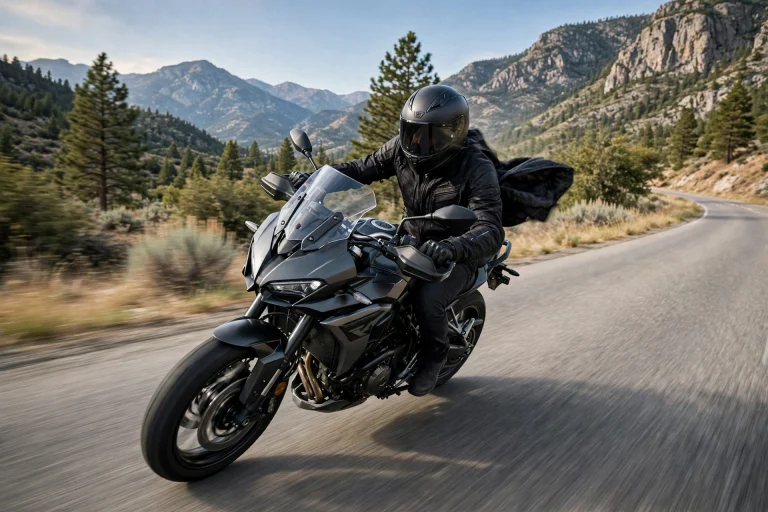
Here is the honest answer: there is no separate women’s safety standard for motorcycle helmets. A helmet sold for women must pass exactly the same DOT or ECE certification tests as any other helmet, and most “women’s” models are the same helmets as the men’s versions with different graphics, colors, and sometimes a smaller range of shell sizes or reshaped cheek pads.
That does not mean fit differences are imaginary. The variables that actually matter — head size, head shape, and hair — are real, and on average women have smaller head circumferences than men. This guide separates the marketing from the mechanics so you can buy the helmet that genuinely fits your head.
Is There a Women’s Helmet Safety Standard?
No. Certification does not come in male and female versions. In the US, every road helmet must meet the same DOT standard (FMVSS 218); in Europe and much of the world, the same ECE 22.06 standard applies to everyone. A women’s helmet with a DOT sticker has passed the identical impact tests as a men’s helmet with the same sticker.
This is actually good news. It means you never have to choose between “the women’s model” and “the safe model.” Any certified helmet in your correct size and shape protects you the same. Marketing categories can help you find a starting point, but the label on the box is the least important part of the decision. Rotational-impact systems are also unisex — if you’re comparing protection features, our explainer on what MIPS is in a helmet is a useful place to start.
What Do Women’s Helmet Models Actually Change?
Strip away the graphics and most women’s lines differ from the standard line in some or all of these ways:
- Colors and finishes. The biggest difference, and often the only one.
- Size range emphasis. Women’s lines are more likely to stock XXS and XS sizes that sell out unnoticed in the main line.
- Smaller shell sizes on some models. A few brands genuinely tool a smaller outer shell for the small end of the range instead of padding out a bigger shell — a real benefit, covered below.
- Cheek pad shape. Some women’s versions use slightly narrower or softer cheek pads, which suits some faces and not others.
- Hair-friendly details. Occasionally: a channel or softer rear padding at the back where a low ponytail sits.
Notice what’s missing from that list: a differently shaped EPS liner based on female skull geometry. Brands overwhelmingly use the same internal shapes across their range. Which is fine — because individual variation swamps group averages anyway.
Which Fit Factors Actually Matter?
Three things decide whether a helmet fits you, and none of them is the gender label:
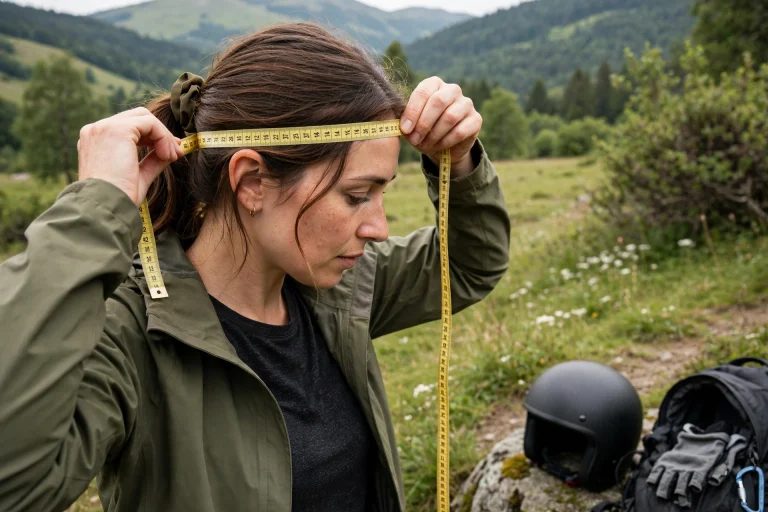
1. Head size. In general terms, average adult head circumference for women runs a little smaller than for men, which is why so many women land in XS–M sizes and why those sizes in popular models sell out. Measure yours — soft tape around the head, just above the eyebrows and ears — and shop by centimeters, not by what size you “usually” wear.
2. Head shape. Helmets are built on internal shapes that range from long-oval to round, with most brands somewhere in the middle. A long-oval head in a round helmet gets a forehead hotspot and loose sides; a round head in a long-oval helmet gets squeezed temples. This mismatch — not size — is the number one cause of “this helmet just doesn’t suit me,” for riders of every gender.
3. Hair. Hair adds real volume and changes how a helmet seats. Thick, long hair worn up under a helmet creates pressure points and pushes the helmet out of position; worn down or in a low braid, it has far less effect. Always try helmets with your hair arranged exactly as you’ll ride with it.
How Should You Shop Differently, Then?
Use the women’s section as a shortcut to small sizes and styles you like — then ignore it and fit-shop like this:
- Measure your head and note the centimeters.
- Try your measured size in several brands. Different internal shapes mean your size in one brand can feel a full size off in another.
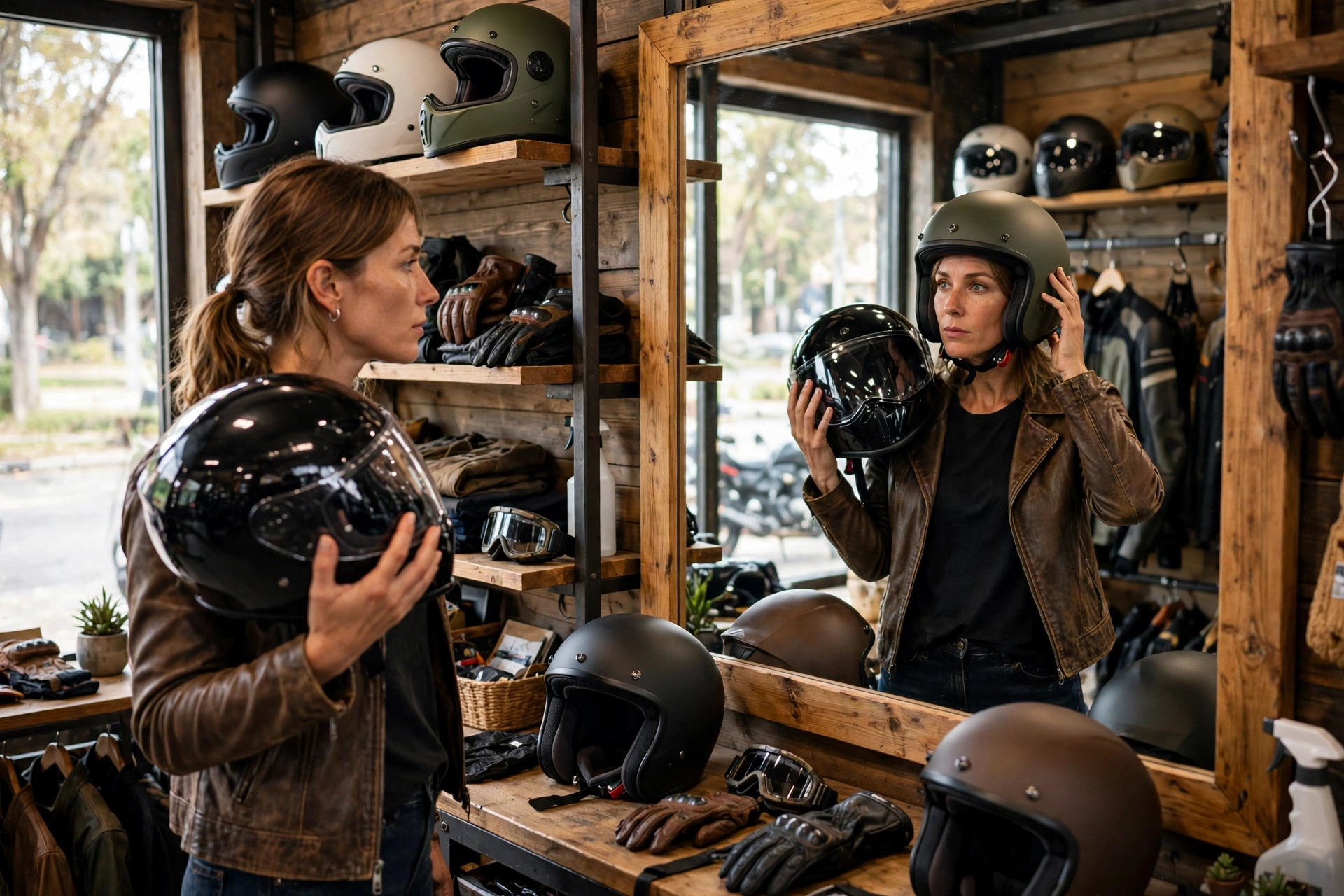
- Wear each candidate for 10–15 minutes in the store. A correct helmet is evenly snug with no single painful spot; hotspots that appear at minute two become headaches at hour two.
- Do the movement tests: shake your head, look over each shoulder, and try to roll the helmet forward from the back. It should move your skin, not slide over it.
- Check the cheek pads. On a full-face, firm cheek contact is normal when new — pads break in. If the shell fits but cheeks feel crushed, many brands sell alternate pad thicknesses to fine-tune.
One more practical note on shape: if you consistently get a sore forehead but loose cheeks, or vice versa, that is your head telling you the internal shape is wrong, not that you need a different size. Note which brands produce which discomfort — over a couple of shop visits you will learn your shape family, and every future purchase gets easier. Shops see this daily and a good fitter will steer you by shape if you describe where a helmet presses.
Should You Ever Buy a Men’s or Unisex Helmet Instead?
Absolutely — whenever it fits better. If your head is a medium or large, the unisex range gives you far more choice of shapes, features, and prices, and plenty of women ride in “men’s” helmets for exactly that reason. The reverse is true too: a small-headed man may find his best fit in a women’s-line XS with a true small shell.
The only rule that matters is the one stamped inside: correct certification, correct size, correct shape for your head. Everything else — the category, the graphics, the marketing photos — is noise.
Frequently Asked Questions
Q: Are women’s motorcycle helmets less safe than men’s?
A: No. They are tested to the identical DOT or ECE standards. Safety depends on certification, correct size, and correct internal shape for your head — not on which line the helmet is sold in.
Q: Why do helmets marketed to women cost the same but look smaller?
A: Some brands use a genuinely smaller shell for the smallest sizes in their women’s lines, which looks and feels less bulky. Others use the same shell with thicker pads. Trying the helmet on — and asking how many shell sizes the model has — tells you which you’re getting.
Q: What if my head measures between the women’s and unisex ranges?
A: Fit is individual, not categorical. Try both lines in your measured size, wear each for 10–15 minutes, and pick the one with even pressure and no hotspots, whichever shelf it came from.

Olivia
Writer at Helmet Today, covering helmet reviews, fit and riding safety.