To find a motorcycle helmet in a genuinely small size, look for adult helmet lines that offer XXS or XS with a true small shell — not just extra-thick pads in a bigger shell — and confirm the helmet carries full adult road certification (DOT in the US, or ECE). Measure your head first, then shop by internal shape as well as size. That combination is what most small-headed riders miss.
Small sizes are the hardest helmet sizes to buy: they sell out first, many shops barely stock them, and the youth section tempts riders with helmets that are not made for adult road use. This guide covers where the small sizes actually are, why shell size matters as much as pad size, and how to fine-tune the fit once you find one.
Can You Just Wear a Youth Helmet?
Generally, no — and this is the most important safety point in this article. Most youth motorcycle helmets are built and certified for off-road use: lower speeds, dirt impacts, and smaller, lighter heads. They are not a substitute for an adult road helmet unless they carry the same DOT certification as an adult model.
There is a second problem even where a youth helmet is certified: youth helmets are shaped and sized for children’s heads and necks, and their retention systems and liners are designed around that. An adult with a small head still has an adult-weight head and adult riding speeds.
The correct answer is an adult-certified helmet in XXS or XS. They exist in most major brands’ ranges — the trick is knowing where to look and ordering before the small sizes sell through, which they reliably do early in the season.
Why Does Shell Size Matter as Much as Pad Size?
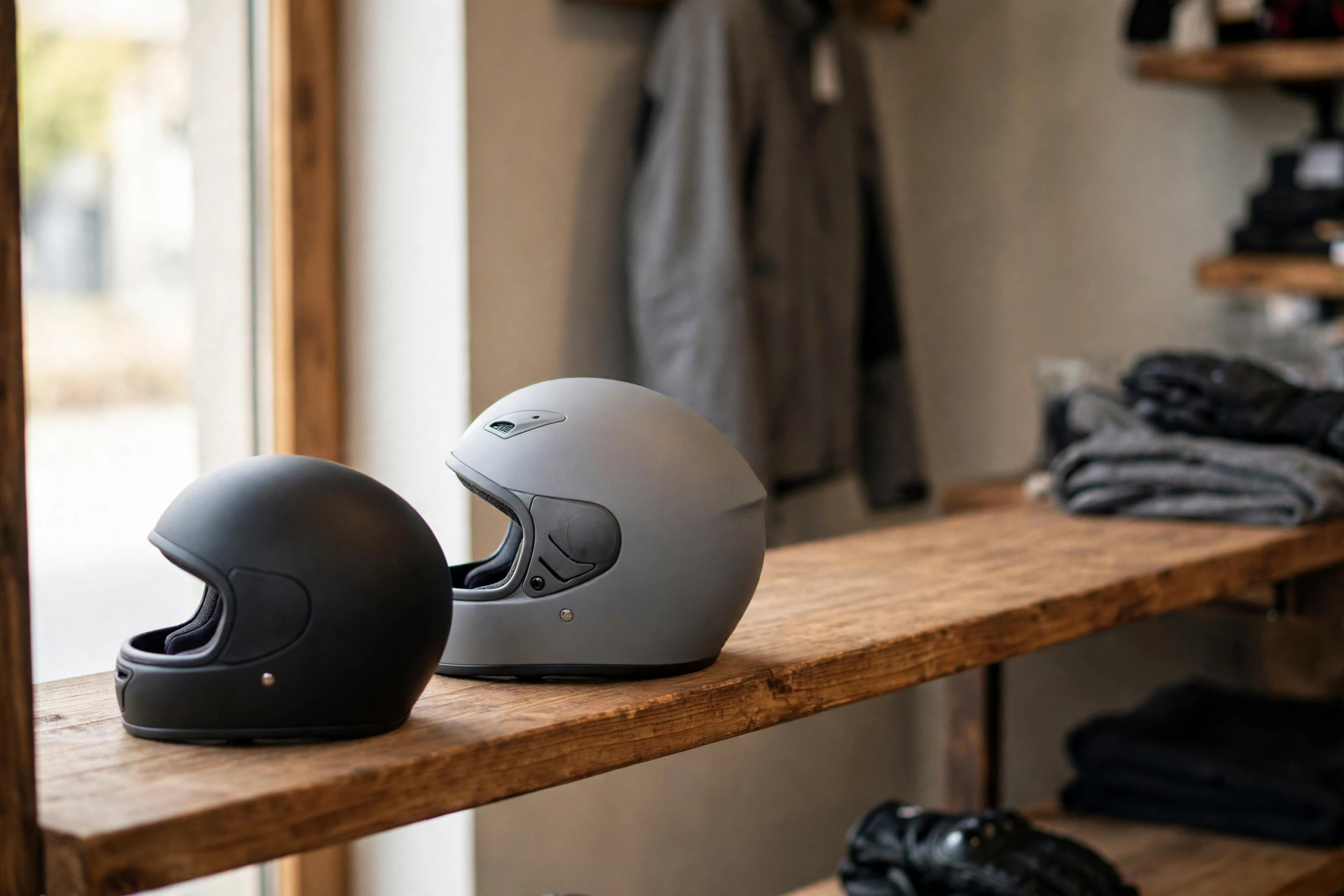
Helmet ranges are built on a limited number of outer shell sizes — often two or three shells cover the whole XS-to-XXL span. The sizes in between are made by varying the thickness of the EPS liner and comfort pads inside a shared shell.
That works fine in the middle of the range. At the small end it creates two problems:
- Bulk and looks. An XS made from the range’s big shell with very thick pads looks oversized — the classic “bobblehead” effect — and catches more wind.
- Noise and fatigue. A bigger shell is heavier and presents more surface to the wind, so a padded-down helmet is typically louder and harder on the neck over a long ride than a true small shell of the same model.
So when comparing models, ask or check the spec sheet for how many shell sizes the range has and which sizes share your shell. A model whose smallest shell covers only XXS–S will fit and feel noticeably trimmer than one whose small shell spans XS–L. This single detail makes more difference to small-headed riders than any other spec.
How Do You Measure for a Small Helmet Accurately?
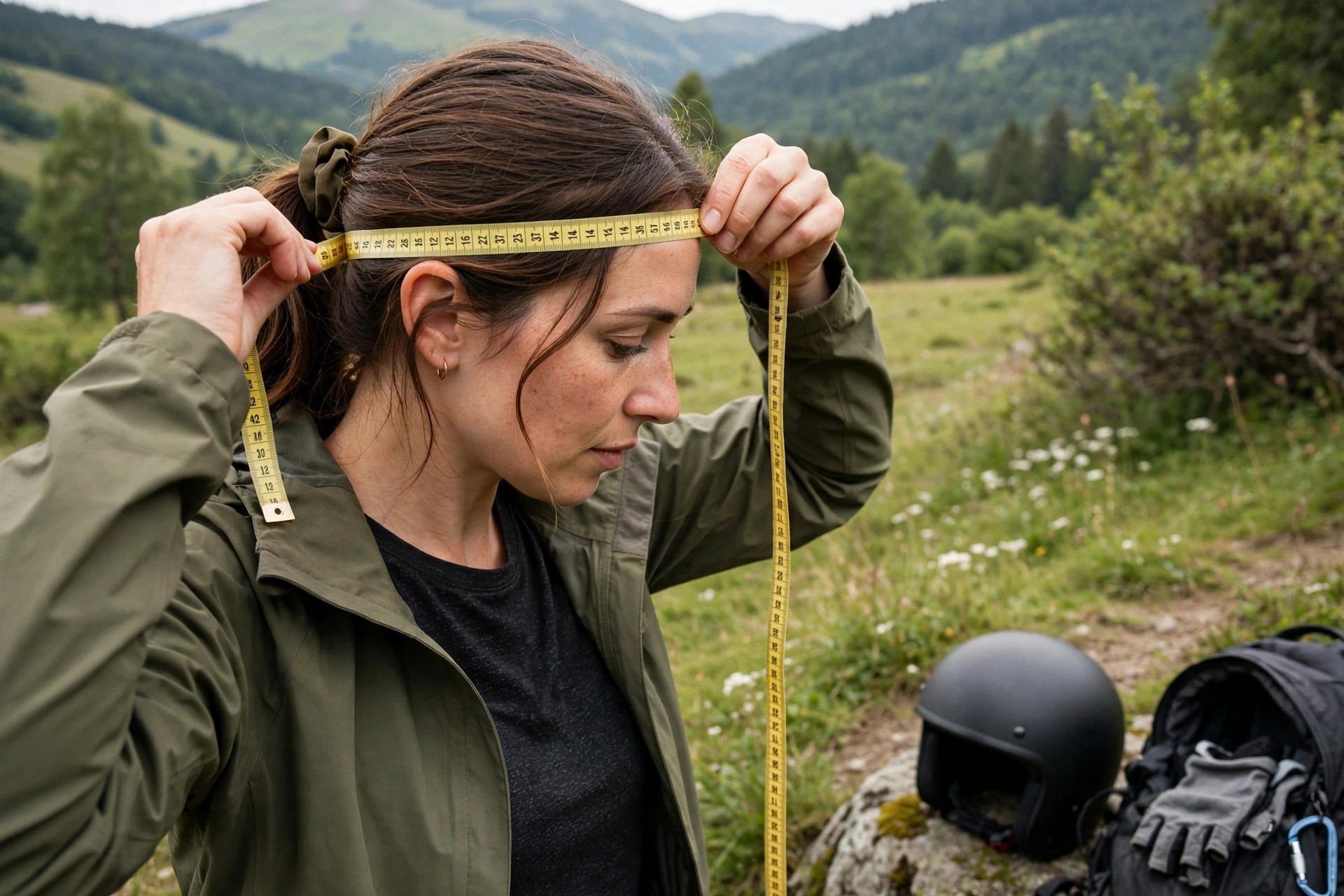
Small-size shopping lives and dies on one number, so get it right:
- Use a soft tailor’s tape (or a string marked against a ruler).
- Wrap it around the largest part of your head — roughly an inch above your eyebrows and ears, across the bump at the back.
- Keep it snug and level, take the measurement two or three times, and use the largest reading.
- Style your hair the way you will ride with it before measuring; a high ponytail under the tape inflates the number.
Then match centimeters to the maker’s chart — and note that charts differ between brands, so your size in one make is not automatically your size in another. If you fall between sizes, the smaller one is usually the better starting point for a full-face, because pads bed in with use while a loose helmet never gets tighter. Shape matters as much as circumference, though: protection add-ons like MIPS are available across small sizes too, so you don’t have to trade features for fit.
How Can Cheek Pads Fine-Tune a Small Fit?
Many mid-range and premium helmets sell interchangeable cheek pads and crown liners in several thicknesses for the same shell. This is the small-size shopper’s best friend:
- Shell fits your head length but cheeks feel loose? Fit thicker cheek pads.
- Crown feels right but the helmet sits a touch high? A thinner crown liner drops it into place.
- Between sizes? The smaller size plus one pad swap often lands closer than the bigger size ever will.
Pad swaps also extend a helmet’s useful life: as the original pads compress over a season or two, a fresh set restores the as-new snugness for a fraction of a new helmet’s price. When trying helmets on, ask the shop which pad options exist for that model — availability varies a lot between brands.
Where Do Small Sizes Sell Out, and How Do You Beat It?
Reality check: XXS and XS are produced in the smallest quantities and sell out fastest, especially in popular models and colors. Practical tactics:
- Order early in the season, or watch for restocks rather than waiting for sales — small sizes rarely survive to discount time.
- Order two sizes from retailers with free returns and keep the better fit; this is standard practice for helmets and shops expect it.
- Check the same model in other colorways — the size runs are separate, and your size may be in stock in another finish.
- Ask shops to check the distributor, not just their shelf; small sizes often sit in the warehouse rather than on display.
Whatever you do, don’t solve a stock problem by sizing up. A too-big helmet shifts in a crash, pumps in the wind, and is louder and more tiring every single ride.
Frequently Asked Questions
Q: What is the smallest adult motorcycle helmet size?
A: Most brands bottom out at XS, and many offer XXS in at least some models. In centimeters that is roughly the low-50s and below, but always check the specific brand’s chart, because conversions vary.
Q: Is a youth helmet ever OK for a small adult on the road?
A: Only if it carries the same full adult road certification (DOT) — most youth helmets are off-road designs and do not. The safe, legal choice is an adult-certified XXS or XS.
Q: My size is sold out everywhere. Should I buy the next size up?
A: No. A loose helmet is a safety problem, not a compromise. Wait for a restock, try another model with a true small shell, or fine-tune the smaller size of a different brand with its alternate cheek pads.

Olivia
Writer at Helmet Today, covering helmet reviews, fit and riding safety.