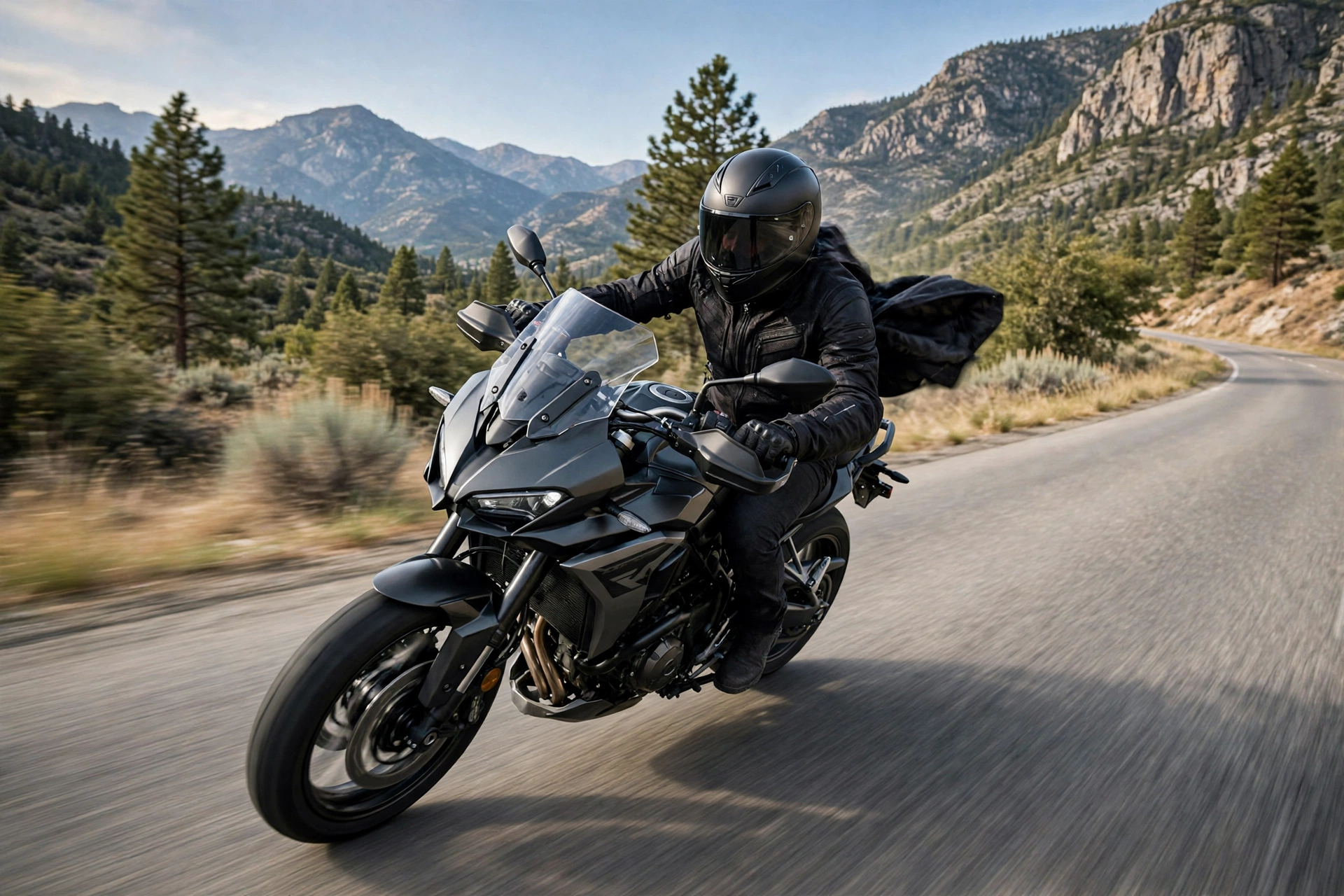
Yes — a heavy helmet can cause neck pain on long rides. In general terms, a typical full-face helmet weighs somewhere around 3 to 4 pounds, and your neck muscles hold that weight up against wind pressure, bumps, and head checks for hours at a time. But weight alone is rarely the whole story: fit, posture, wind blast, and neck conditioning usually share the blame.
The good news is that helmet-related neck pain is very fixable, and often without buying anything. This guide walks through what is actually loading your neck, how to tell which factor is yours, and the fixes — from free adjustments to what to look for at replacement time.
How Much Load Is Your Neck Really Carrying?
Your head itself weighs roughly 10 pounds, and your neck is built for that. Add a helmet and the total rises by about a third — manageable in itself. The problem is leverage and duration:
- Wind load multiplies the weight. At highway speed, air pressure on the helmet’s surface pushes your head back and around continuously. Your neck muscles aren’t just holding the helmet up; they’re bracing it against a constant, gusty force for hours.
- Head checks and looking around swing that extra mass side to side hundreds of times on a long ride.
- Vibration and small bumps mean constant micro-corrections to keep your head steady.
That is why a helmet that feels fine on a 20-minute test ride can produce an aching neck at hour three, and why two riders can disagree completely about the same helmet: their bikes, screens, speeds, and postures load it differently.
Why Isn’t Weight the Whole Story?
Before blaming the scale, check these four contributors — each one commonly outranks raw weight:
Fit. A helmet that is even slightly loose rocks and shifts with every bump and gust. Your neck fires constant tiny corrections to stabilize it, and that fatigue feels exactly like “heavy helmet” pain. A snug, stable helmet of the same weight feels lighter because your muscles can relax.
Posture. An upright adventure or cruiser posture stacks your head over your spine, the most efficient position. A tucked sportbike posture tips the head forward, so the neck extensors work against gravity all ride. The same helmet loads the neck very differently between the two.
Wind management. On a naked bike, your helmet takes the full blast and turbulence. Behind a well-set touring screen, it sits in calm air and effective load drops dramatically. Dirty, turbulent air off a badly angled screen can be worse than no screen at all — buffeting shakes your head thousands of times an hour.
Conditioning. Neck and shoulder muscles adapt like any others. A rider doing their first long ride of spring will ache in a light helmet; the same rider in July won’t. Features don’t change that math — though balanced, low-drag helmet designs and systems like MIPS are part of the modern picture, the load story above is the dominant one.

How Can You Fix Neck Pain Without a New Helmet?
Work through these in order — most riders solve it in the first three:
- Confirm the fit. The helmet should not rock when you shake your head or be pushable around on your scalp. If pads have packed down, fresh cheek pads or a crown liner often restore the original snugness.
- Adjust the screen. Small changes to screen height and angle can move turbulent air off the top of your helmet. Aim for airflow that just clears the crown.
- Fix your posture. Consciously relax your shoulders, keep a light grip (a death-grip tenses the whole shoulder-neck chain), and sit so your head stacks over your spine rather than jutting forward.
- Take micro-breaks. Two minutes every hour — helmet off, neck gently rolled and stretched — resets accumulating fatigue far better than pushing through.
- Build neck strength. Simple isometric neck exercises and general shoulder work over a few weeks noticeably raise your endurance for long rides.
What Should You Look for When You Do Replace the Helmet?
If you’ve fixed fit, screen, and posture and still ache, then yes — shop lighter at replacement time:
- Check the actual weight in your size. Weights vary by size and are usually published; compare grams, not impressions.
- Carbon and carbon-composite shells are, in general terms, the lightest route to the same certification, though they cost more. Fiberglass composites sit in the middle; basic polycarbonate shells tend to be heaviest.
- Balance matters as much as grams. A slightly heavier helmet with weight carried low and close, and a smooth aerodynamic shape, can feel lighter at speed than a lighter but top-heavy, draggy one. On the test ride, do head checks at speed if you safely can.
- Don’t trade away fit or certification for weight. The lightest helmet that doesn’t fit properly will hurt more, and protect less, than a mid-weight one that fits perfectly.
Accessories deserve an honest mention too. Add-ons change the load: an action camera on the chin or side adds a small weight in the worst place — far from the neck’s pivot — and catches wind like a tiny sail. A bulky external communicator does the same to a lesser degree. If your neck pain started around the time you mounted new gear on the helmet, remove it for a ride and see whether the ache goes with it. Sometimes the “heavy helmet” is actually a light helmet wearing heavy accessories.
When Is Neck Pain a Reason to See a Doctor?
Most helmet-related neck pain is simple muscle fatigue that fades within a day. See a doctor instead if you notice:
- Pain that persists for days after riding, or keeps returning faster each ride
- Numbness, tingling, or weakness in the arms or hands
- Pain after a crash, however minor it seemed
- Stiffness that limits how far you can turn your head — itself a riding safety issue for head checks
Those signs point to something beyond tired muscles — a disc or nerve issue, for example — and no helmet change substitutes for getting it checked.
Frequently Asked Questions
Q: How heavy is too heavy for a motorcycle helmet?
A: There is no universal number, because fit, balance, bike, and posture change the load. In general terms most full-face helmets sit around 3–4 lbs; if yours is at the heavy end AND loose or paired with heavy wind blast, that’s when necks complain.
Q: Will a carbon helmet definitely fix my neck pain?
A: Not by itself. It reduces one factor — static weight — but if your pain comes from a loose fit, buffeting, or a tucked posture, those need fixing first. Solve the free things, then let lighter weight finish the job at replacement time.
Q: My neck only hurts on the highway, not in town. Why?
A: Wind load. At town speeds the helmet is just its static weight; at highway speed, air pressure and turbulence multiply the work your neck does. Screen adjustment and buffeting fixes are the most likely cure.

Olivia
Writer at Helmet Today, covering helmet reviews, fit and riding safety.