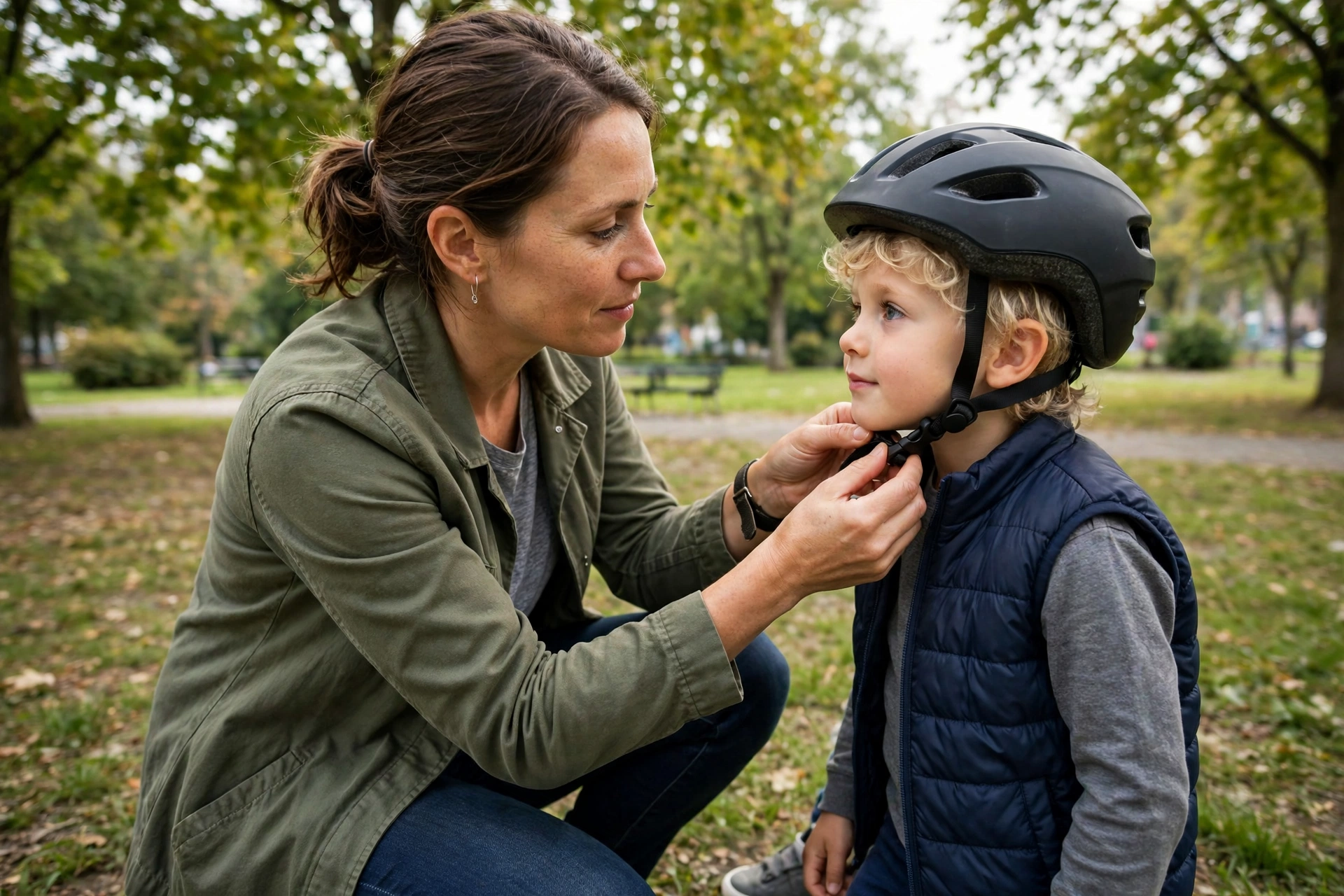
A kids bike helmet should fit snug all the way around — firm and even, with no rocking or sliding — but never tight enough to hurt, pinch, or leave deep marks. The quick parent checks: the helmet sits level, it barely moves when your child shakes their head, and the chin strap passes the two-finger test.
“Snug” is easy to say and surprisingly hard to judge on a squirming child, especially when your child insists a correct fit “feels weird” or a grandparent thinks tighter must be safer. This guide breaks the fit down into checks you can actually perform: how the shell should feel, how the straps should sit, and the clear signs that a helmet is too tight or too loose.
How Snug Should the Helmet Feel on the Head?
A correctly fitted helmet feels like a firm, even hug around the whole head. Pressure should be spread out, with no single spot digging in at the forehead, temples, or back of the head. When you place your palm on top and gently try to move the helmet, your child’s scalp and forehead skin should move with it rather than the helmet sliding over the skin.
Position matters as much as tightness. The helmet should sit level, with the front edge low on the forehead — about one to two finger-widths above the eyebrows. A helmet tipped back like a cap leaves the forehead exposed no matter how tight the strap is, and one pulled down over the eyes will be pushed back up by your child within minutes. Level first, then snug. If your child wears their hair in a ponytail or bun, check the fit with the hairstyle they will actually ride in, worn low at the back — a hairstyle bundled high under the helmet changes both the tightness and the position.
How Does the Two-Finger Strap Test Work?
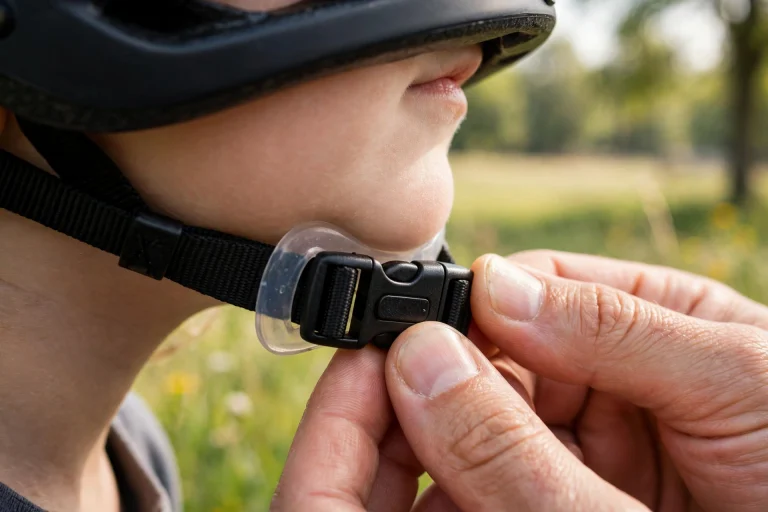
Fasten the chin strap and slide two fingers — stacked flat — between the strap and your child’s chin. That is the target: if you cannot fit two fingers, the strap is too tight and will chafe, distract, and eventually get loosened or unbuckled by your child. If you can fit more than two fingers, or slide the strap around easily, it is too loose and the helmet can shift or come off in a fall.
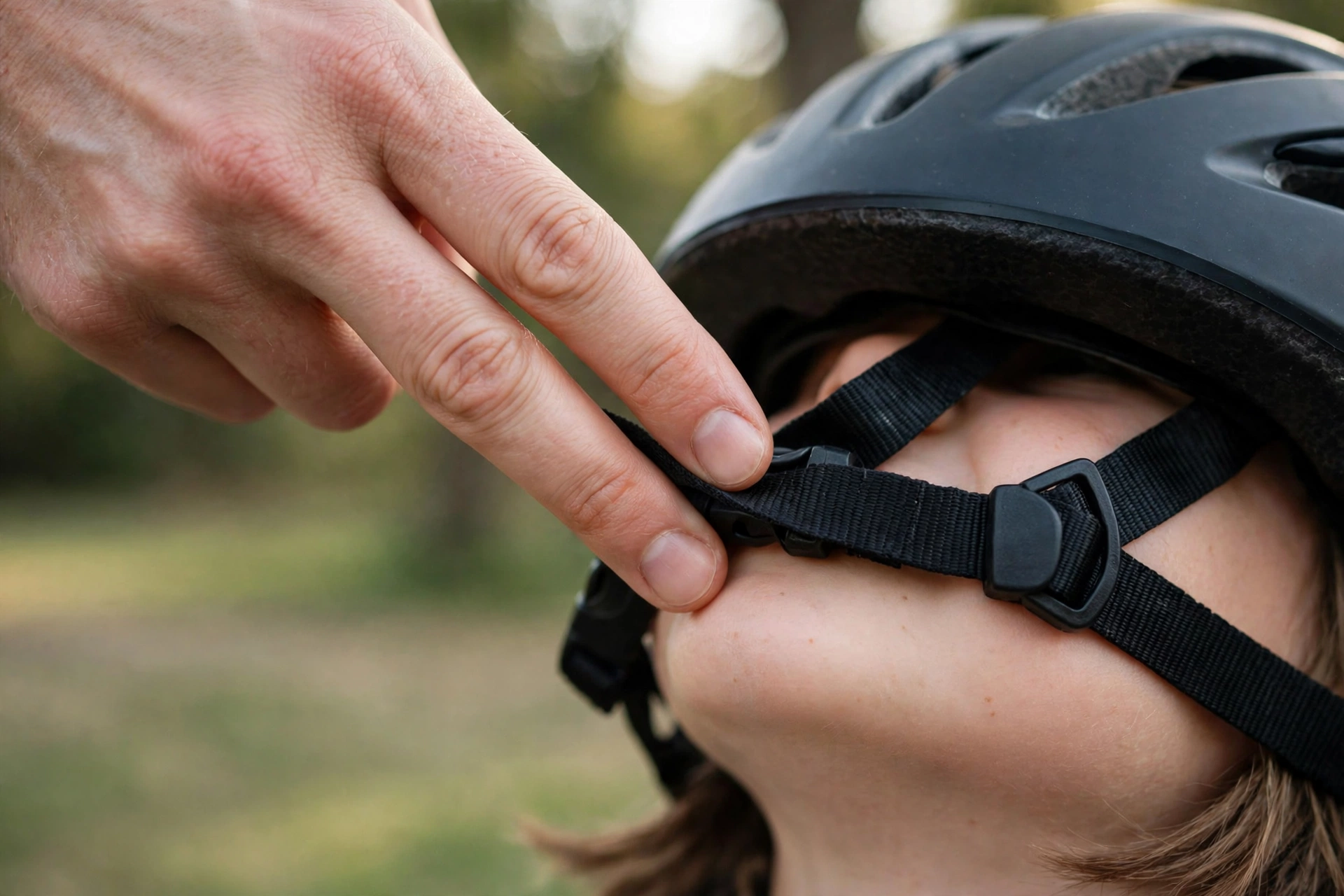
Check the side straps too. They should form a V shape that meets just below each earlobe, with the adjusters sitting under the ears rather than sliding down the strap. The chin strap only does its job when the whole strap system is set up correctly, so adjust the side straps first, then set the chin strap to pass the two-finger test.
What Are the Signs a Kids Helmet Is Too Loose?
The shake test tells you most of it: with the strap unfastened, have your child shake their head side to side and nod. A well-fitted helmet barely moves. If it rocks, slides down over the eyes, tips toward one ear, or can be pushed around with one hand, it is too loose — even if the strap, once fastened, holds it in place. The shell itself must fit; the strap is there to keep a fitting helmet on, not to clamp a loose one down.
Other loose-fit clues: you can fit your whole hand’s fingers between the helmet and the head at the back, the fit dial is already at its tightest and movement remains, or the helmet sits crooked no matter how you center it. First try the rear fit dial and any thicker comfort pads the manufacturer supplied. If it still moves, the helmet is the wrong size or the wrong shape for your child’s head.
What Are the Signs a Kids Helmet Is Too Tight?
Too tight shows up fast. Look for complaints of a headache or a single sore spot, deep red marks on the forehead that linger after the helmet comes off, a child who keeps pushing the helmet up or pulling at it, or a helmet that will only go on with a firm shove. A helmet that perches high on the head instead of settling down level is often simply too small.
A brand-new helmet feeling firm is normal — pads soften slightly with wear — but firm is even pressure, while too tight is focused pressure and pain. Never solve complaints by loosening the strap or leaving it unbuckled; a too-small helmet needs replacing with the next size up, not wearing badly.
Why Does the Right Tightness Matter So Much?
In a fall, a helmet protects by staying in the correct position while its foam crushes to absorb energy. A loose helmet can rotate, slide back, or come off entirely before or during impact, leaving exactly the area that hits the ground unprotected. A helmet also has to stay put for its design features to work: as our guide to how MIPS liners reduce rotational forces explains, modern liners are engineered to manage angled impacts — but only when the helmet itself is stable on the head.
The comfort side of tightness matters too, because it decides whether the helmet gets worn at all. A helmet at the right snugness disappears from a child’s attention within a minute or two of riding. One that is too tight becomes a daily argument, and one that is too loose wobbles enough to annoy. Getting this right is what makes “helmet on, every ride” an easy habit instead of a negotiation.
Frequently Asked Questions
Q: Should I fasten the strap extra tight to make a slightly big helmet work?
A: No. The strap keeps a correctly fitting helmet in place; it cannot fix a shell that is too big. If the helmet rocks with the strap undone, size down or try a different model rather than overtightening the strap.
Q: My child says the helmet feels tight but it passes the shake test. What should I do?
A: Check for a single pressure point — a seam, a pad edge, or the fit dial pressing in one spot — and adjust the pads. Even, firm pressure with no sore spot is correct. If there is real pinching or a lingering red mark, try the next size up.
Q: How often should I recheck the strap tightness?
A: Do the two-finger check every time the helmet goes on; it takes five seconds. Straps slip gradually, children grow, and adjusters get knocked, so a quick check before each ride keeps the fit where you set it.

Olivia
Writer at Helmet Today, covering helmet reviews, fit and riding safety.