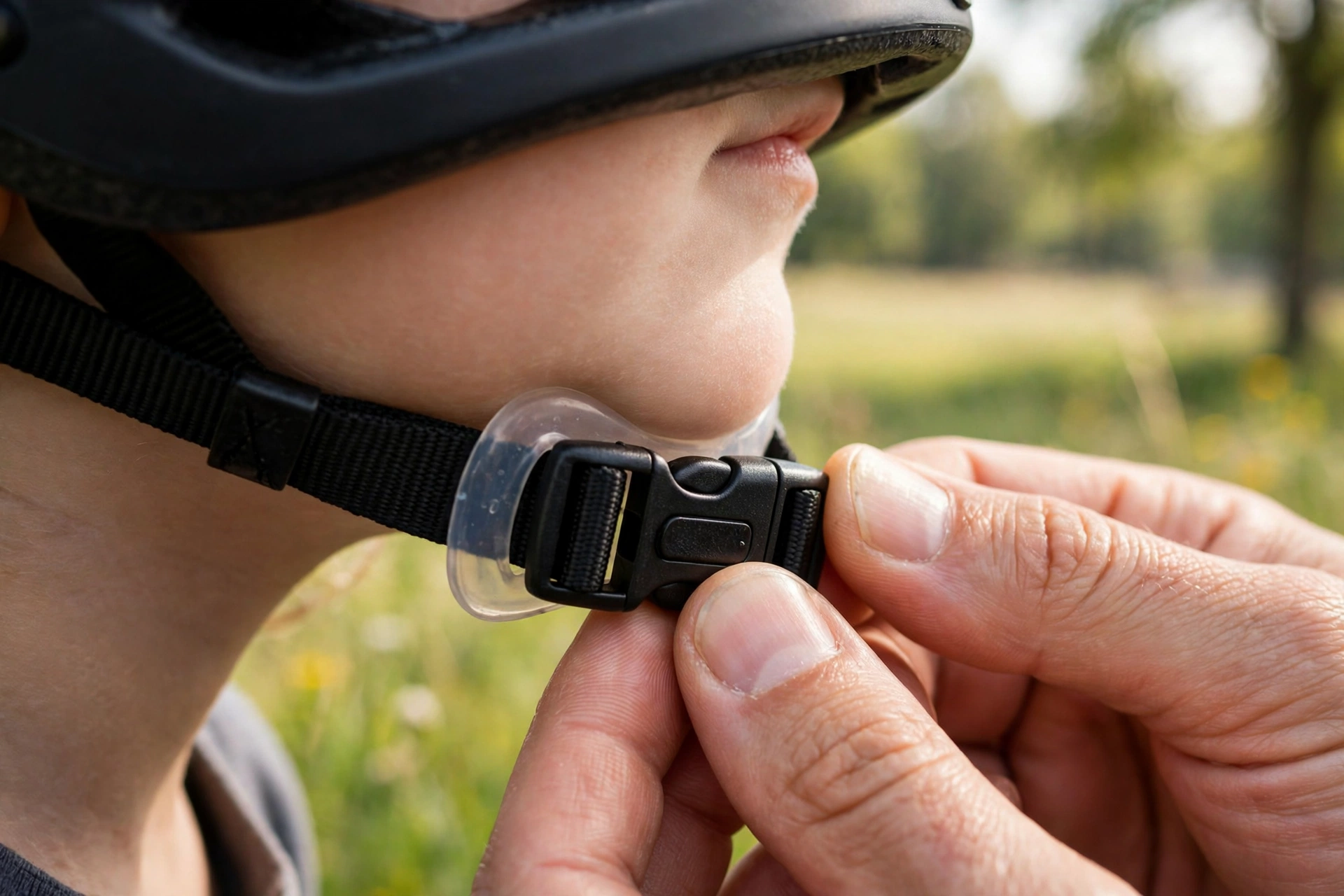
A buckle guard on a kids helmet is a small plastic shield, flap, or padded cover that sits between the buckle and your child’s chin, so the skin cannot get caught when the buckle clicks shut. Pinched chin skin is one of the most common reasons young children dread having their helmet fastened, and a guard removes the pinch point so fastening stays quick, painless, and drama-free.
It is a tiny feature that solves a very specific problem, but any parent who has heard the yelp of a chin pinch — and then fought a helmet battle every ride for a week afterward — knows it is not a trivial one. This guide explains how guards work, the designs you will see, and how to fit and check one.
What Exactly Is a Buckle Guard?
The problem it solves is mechanical. A standard helmet buckle fastens when two prongs click into a socket, and a parent usually fastens it by feel, under the child’s chin, exactly where a fold of soft skin can drift into the closing parts. One pinch is all it takes to make a toddler associate the helmet with pain.
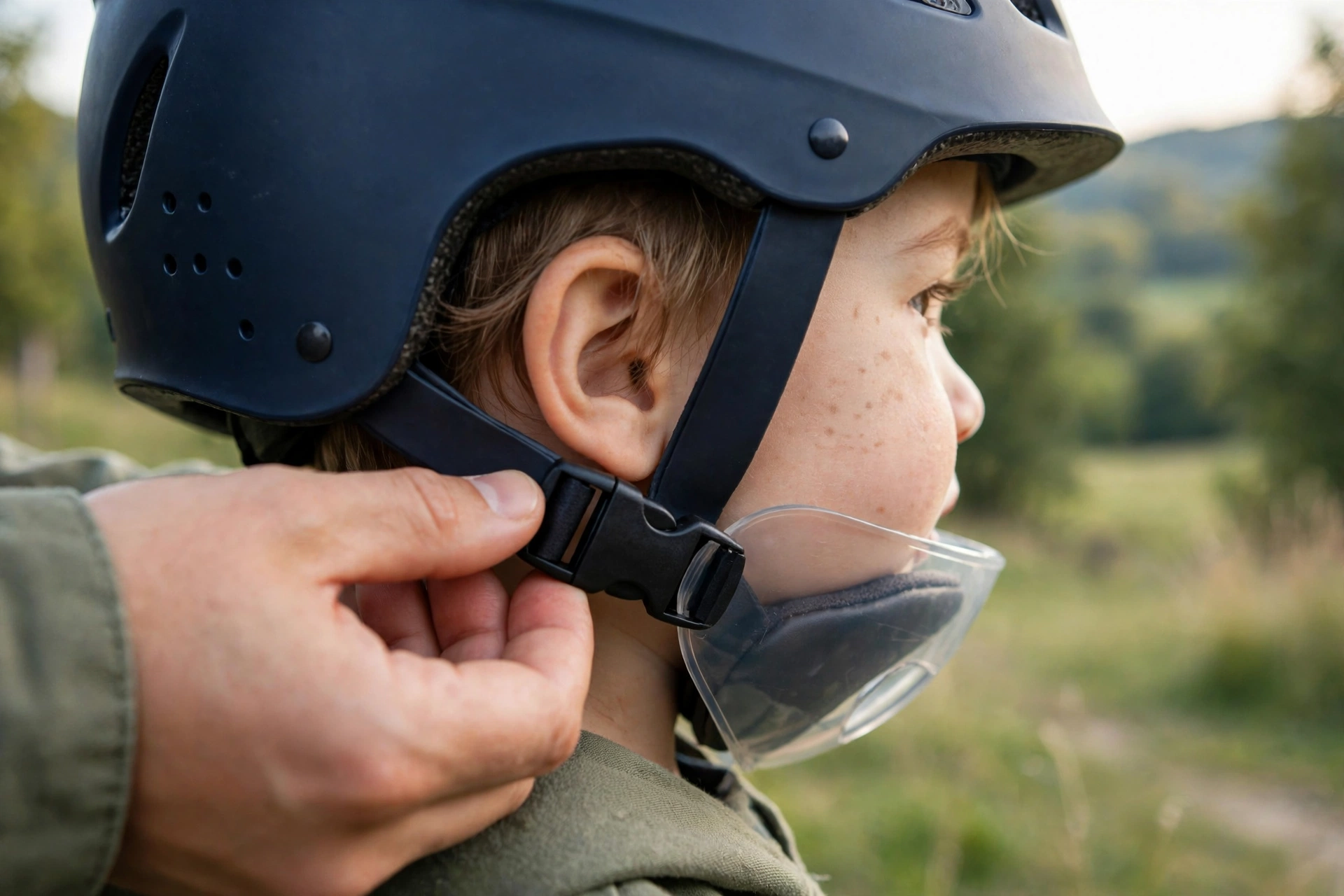
A buckle guard puts a barrier in that gap. Depending on the brand, it may be a rigid plastic shell that cups the underside of the buckle, a flexible flap attached to the strap that folds under the buckle as it closes, or a soft padded sleeve that covers the whole buckle area. All three designs do the same job: the buckle closes against plastic or padding instead of against skin.
Guards are most common on helmets for toddlers and younger children, whose chin and neck skin is softest and who cannot yet fasten their own straps. On many kids’ models the guard is a standard part of the strap system rather than an optional extra, so you may already own one without knowing its name.
How Does a Buckle Guard Stop the Pinch?
The pinch happens in the last moment of fastening, when the buckle parts come together and anything soft in between gets trapped. A guard works by making sure the only thing in between is the guard itself. With a cup-style guard, the buckle snaps into its housing while your child’s skin rests against the smooth plastic cup below it.
The guard also changes how the fastened buckle feels afterward. Without one, a buckle can press and rub directly on the skin under the chin during a ride, especially once the strap is correctly snug. The guard spreads that pressure over a wider, smoother area, which is why children often describe guarded buckles simply as “the comfy one.”
What a guard does not do is change how tight the strap needs to be. The strap still has to be snug — about one to two fingers of room under the chin — for the helmet to stay in place in a fall. The guard removes the pinch, not the snugness, and parents should resist loosening the strap as an alternative fix.
What Designs Should You Look For When Buying?
Cup and shell guards are the most foolproof for very young children, because the barrier is rigid and always in position — there is nothing for a parent to remember to fold into place. Flap-style guards work well too but rely on the flap being positioned under the buckle each time, which takes a moment of attention during fastening.
A second design worth knowing about is the pinch-free buckle itself: some manufacturers reshape the buckle so the moving parts are enclosed and skin cannot reach the pinch point at all. Magnetic buckles on kids’ helmets often work this way, guiding themselves together with the mechanism enclosed, which also makes them easier for small hands learning to fasten their own helmet.
Padded chin straps and strap covers are the soft option — a fabric sleeve that wraps the strap and buckle area. They help against rubbing, though a thin soft cover alone may not stop a determined pinch the way a rigid guard does. When shopping, fasten the buckle in the store, slowly, with your fingers where a chin would be: you will feel immediately whether skin could reach the mechanism.
How Do You Fit and Check a Buckle Guard?
Start with position. The buckle should sit centered under the chin, not off to one side, with the guard between the buckle and the skin. If the guard is a flap, check that it lies flat and fully under the buckle before you click — a flap that has folded back on itself protects nothing.
Then set the strap length correctly. With the guard in place, the strap should allow roughly one to two fingers between strap and chin. Because the guard adds a few millimeters, a strap that was perfect on a previous helmet may need slight adjustment on a guarded one; always do the final tightness check with the guard in its riding position.
Build a fastening habit that works with the guard: bring the buckle parts together slowly rather than snapping them by feel, and keep a fingertip on the guard as you close it until the routine is automatic. Teach older children the same slow technique when they start fastening their own helmets — the guard reduces the risk, and good technique removes most of what is left. A secure fit everywhere else still matters as much as ever; features like those in our explainer on MIPS and modern helmet liner technology only work if the helmet itself is properly on and fastened.
Does a Buckle Guard Affect Helmet Safety?
A guard supplied by the helmet’s manufacturer is part of the tested strap system and does not affect the helmet’s certification. It changes comfort at the buckle, not the helmet’s impact protection, fit, or retention strength.
Where you do need care is with add-on accessories. Only use guards, pads, or strap covers made or approved by the helmet’s manufacturer for that model, and fit them exactly as directed. Anything that changes how the strap runs, adds bulk under the chin that forces the strap looser, or stops the buckle from fully clicking shut is a problem — the buckle must close completely and the strap must stay snug.
Frequently Asked Questions
Q: My child still gets pinched even with a guard — what am I doing wrong?
A: Usually the flap or guard is not positioned under the buckle before closing, or the buckle is being snapped shut quickly by feel. Slow down, place a finger on the guard to hold it in position, and close the buckle deliberately. Also check the buckle is centered under the chin rather than twisted to one side.
Q: Can I add a buckle guard to a helmet that did not come with one?
A: Only with parts made or approved by the helmet’s manufacturer for that model, fitted exactly as instructed. Do not improvise with tape, foam, or third-party clips that change how the strap or buckle works — if the pinch problem is severe, a helmet with a built-in guard or pinch-free buckle is the cleaner solution.
Q: At what age do kids stop needing a buckle guard?
A: There is no fixed age. Guards matter most for toddlers and young children with soft skin who are fastened in by an adult. Once a child fastens their own helmet carefully and the skin is less delicate, the guard becomes a comfort preference rather than a necessity — but there is no downside to keeping one.

Olivia
Writer at Helmet Today, covering helmet reviews, fit and riding safety.