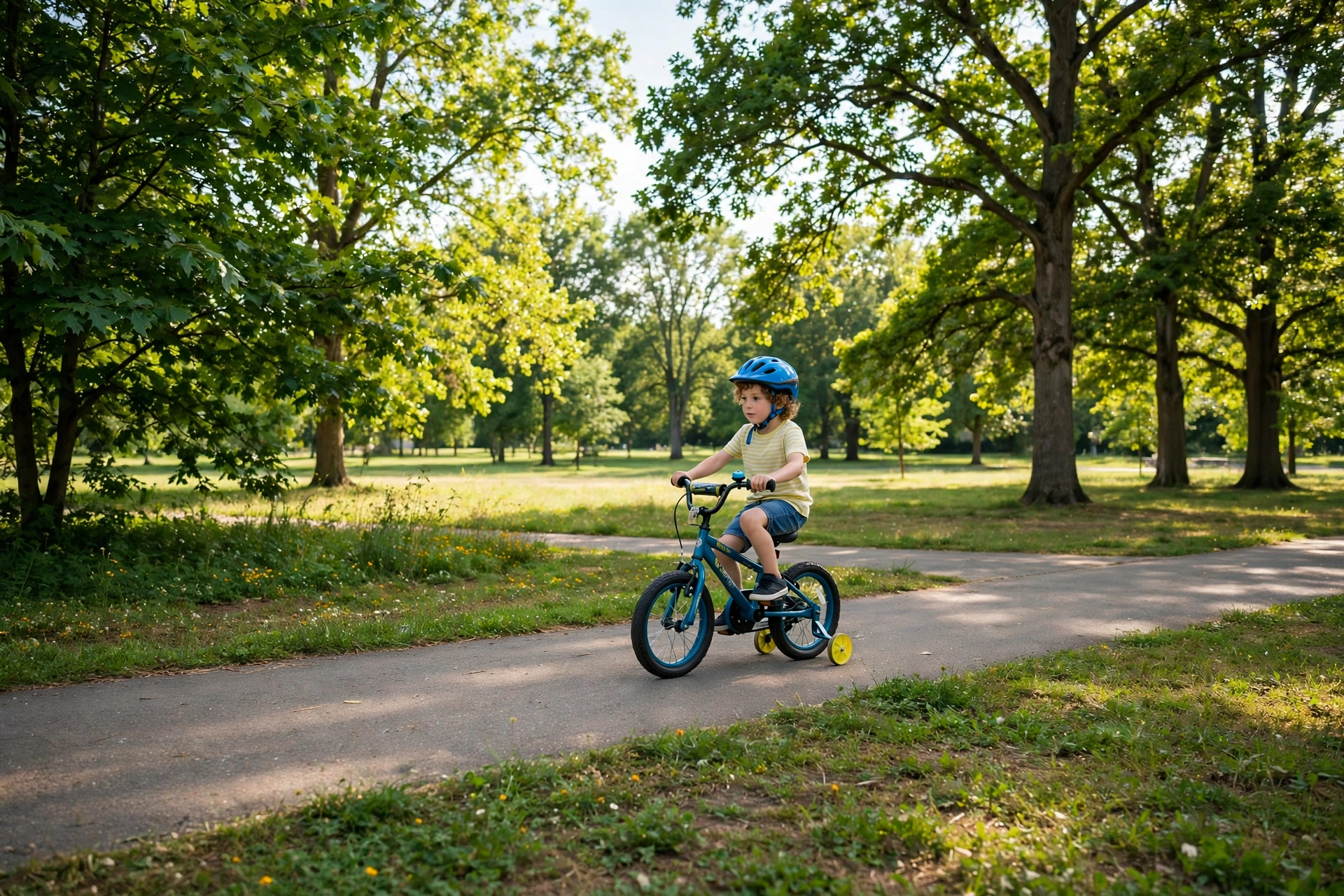
A kids helmet for riding a bike with training wheels is a light, well-fitting bike helmet that protects a young child’s head while they learn to ride with extra support. It should sit level on the head, cover the forehead, and stay snug with the chin strap fastened, so it stays in place if the bike tips over. Training wheels help a child balance, but they do not stop falls, and a young rider can still topple sideways, so a helmet is an important part of every ride.
Learning to ride with training wheels is often a child’s first taste of cycling freedom. The bike wobbles, turns feel tricky, and stops can be sudden. A good helmet for this stage is light enough that a small neck does not tire, simple enough that a parent can fit it in a minute, and comfortable enough that the child forgets it is there. A helmet that pinches, slips, or feels heavy will be pulled off, so comfort is part of safety at this age.
What makes a helmet right for training wheels?
The right helmet for training wheels is a standard kids bike helmet in the correct size. It should have a smooth shell, plenty of small vents to keep the head cool, and soft pads inside that sit evenly on the head. The helmet should feel light when the child puts it on, because a heavy helmet makes a young rider tired and less steady.
Look for a helmet with a simple size adjuster, such as a dial at the back or foam pads that can be swapped. Children’s heads grow fast, and a small adjustment keeps the same helmet fitting well for a season or more. The adjuster should be easy for a parent to turn, and it should hold its setting during a ride.
How should a kids bike helmet fit?
Fit starts with the helmet sitting level on the head, about two finger-widths above the eyebrows. The front should cover the forehead, and the helmet should not tip back, which leaves the forehead bare, or tip forwards, which blocks the child’s view. A level helmet protects the front of the head, which is where young riders often land.
The side straps should meet just below the ears, forming a neat V shape on each side. The chin strap should be snug enough that only one or two fingers fit underneath, and it should not pinch the skin or the chin. Ask the child to open their mouth wide: the helmet should pull down slightly, which shows the strap is snug enough.
- The helmet sits level, not tipped back or forwards.
- The forehead is covered, with only a small gap above the eyebrows.
- The side straps form a V just below each ear.
- The chin strap is snug, with one or two fingers fitting underneath.
Do the shake test before every ride. Ask the child to shake their head gently from side to side and nod up and down. The helmet should move with the head, not slide around on its own. If it slides, tighten the adjuster or the straps and test again.
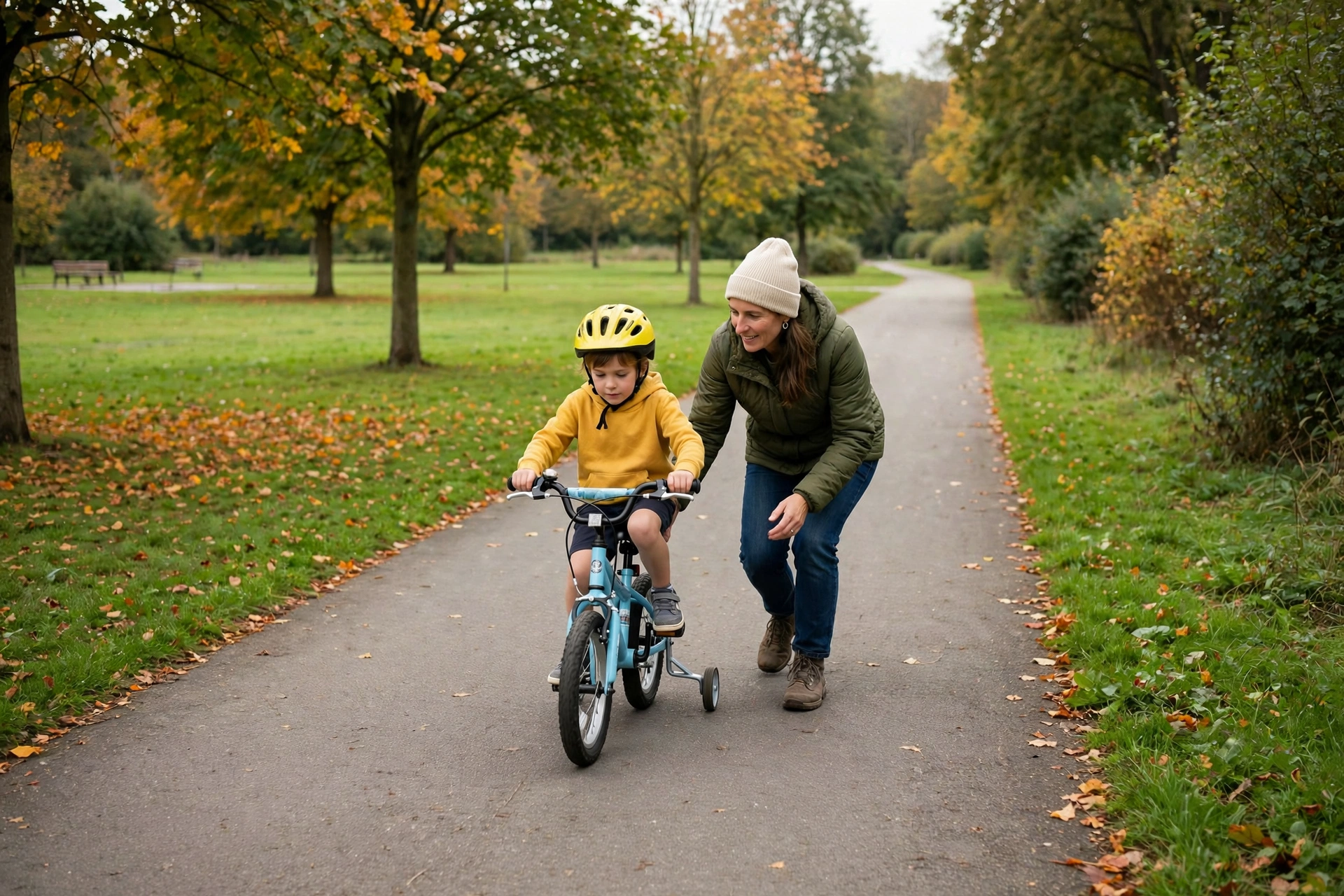
How do training wheels change the way a child falls?
Training wheels stop a bike from leaning far, but they do not make it impossible to fall. A child can still tip over sideways on a slope, catch a wheel on a kerb, or stop suddenly and slide off the saddle. The falls are usually slow and low, but a small head can still hit the ground, a kerb, or a hard path.
Training wheels can also give a false sense of balance. A child may lean hard into a turn, trusting the extra wheels, and then tip when the bike bounces over a bump. This is normal while learning, and it is one more reason a helmet matters even on a bike with training wheels.
Where should a child practise with training wheels?
The best place to practise is a flat, smooth, traffic-free area, such as a quiet park path, a playground, or a driveway. The surface should be even, with no cars, and with plenty of space to turn and stop. A gentle slope can help a child learn to pedal, but steep slopes are best avoided until they have more control.
Stay close while they ride. Walk beside the child at first, and be ready to steady the bike if it tips. As they gain confidence, give them more space, but stay within easy reach. A parent nearby makes a child braver, and it means help is there at once if they fall.
What mistakes should parents avoid?
One common mistake is buying a helmet that is too big so the child can grow into it. A helmet that is too big slides over the eyes and can come off in a fall, so it does not protect the head properly. Buy the size that fits now, measure the head first, and check the fit again every few months, because children grow fast.
Another mistake is letting the child ride with the strap unfastened. An unfastened helmet can fly off in a fall, and it can also slip down and block the child’s view. Make fastening the strap part of the routine, like putting on shoes, and check it before every ride. Some helmets also include a MIPS liner, which is designed to help manage rotational forces in a fall, so it is worth knowing what is inside the helmet you buy.
How do you look after a kids bike helmet?
After a ride, wipe the helmet with a soft, damp cloth and let it air-dry with the vents open. Do not use strong cleaners or solvents, because they can damage the shell and the foam. If the pads are sweaty, take them out if they are removable and wash them gently with mild soap, then let them dry fully.
Store the helmet in a cool, dry place, away from direct sunlight and away from heavy objects that could press on it. A shelf or a hook in a hallway works well. Avoid leaving it in a hot car, because heat can weaken the foam inside.
Check the helmet regularly for damage. Look for cracks in the shell, dents in the foam, loose straps, or a buckle that no longer clicks firmly. If the helmet has been in a crash or a hard fall, replace it, even if it looks fine, because the foam inside may be damaged. In general terms, a helmet that has taken a hard impact should not be trusted for the next fall.
Does a child need a helmet with training wheels?
Yes. Training wheels help with balance, but they do not stop falls. A child can still tip over sideways or stop suddenly, so a well-fitting helmet is an important part of every ride, even a slow one.
Can a child wear a helmet over a hat?
A thin, smooth layer under the helmet is usually fine, but a thick hat makes the helmet sit too high and slide around. Fit the helmet over the layer the child will actually wear, and check the fit again before riding.
When is a child ready to ride without training wheels?
There is no set age. A child is ready when they can pedal steadily, steer, and stop with control, and when they feel confident without the extra wheels. Let the child set the pace, and practise in a safe, traffic-free place.

Olivia
Writer at Helmet Today, covering helmet reviews, fit and riding safety.